Special Offer: Use code ILOVEPLANTS for 25% off on all digital products! Shop Now →

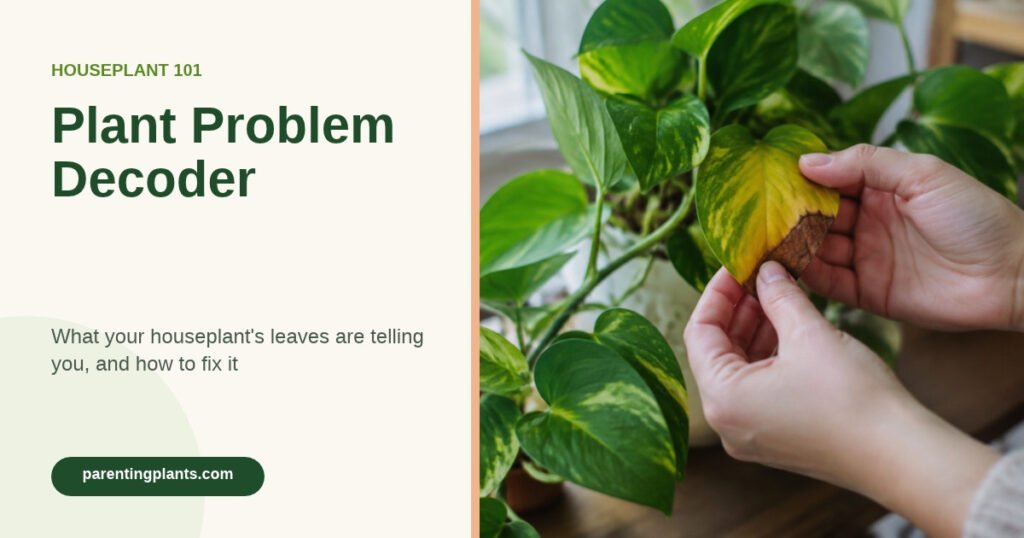
A yellow leaf, a crispy tip, a plant that suddenly flops over: houseplants can’t talk, but they’re constantly telling you what’s wrong. The trick is knowing how to read the signs. This decoder matches what you see to the most likely cause and the fix, then points you to a detailed guide when you need one. Bookmark it, because you’ll come back to it.
Short answer: Most plant problems come from water, light or pests. Before guessing, feel the soil, check for a drainage hole, think about whether anything recently changed, and look under the leaves. Yellow leaves with wet soil usually mean overwatering; crispy, brown tips with dry soil mean thirst or dry air; long, stretched stems mean too little light; webbing, sticky or speckled leaves mean pests.
In this guide
The 30-second check before you diagnose
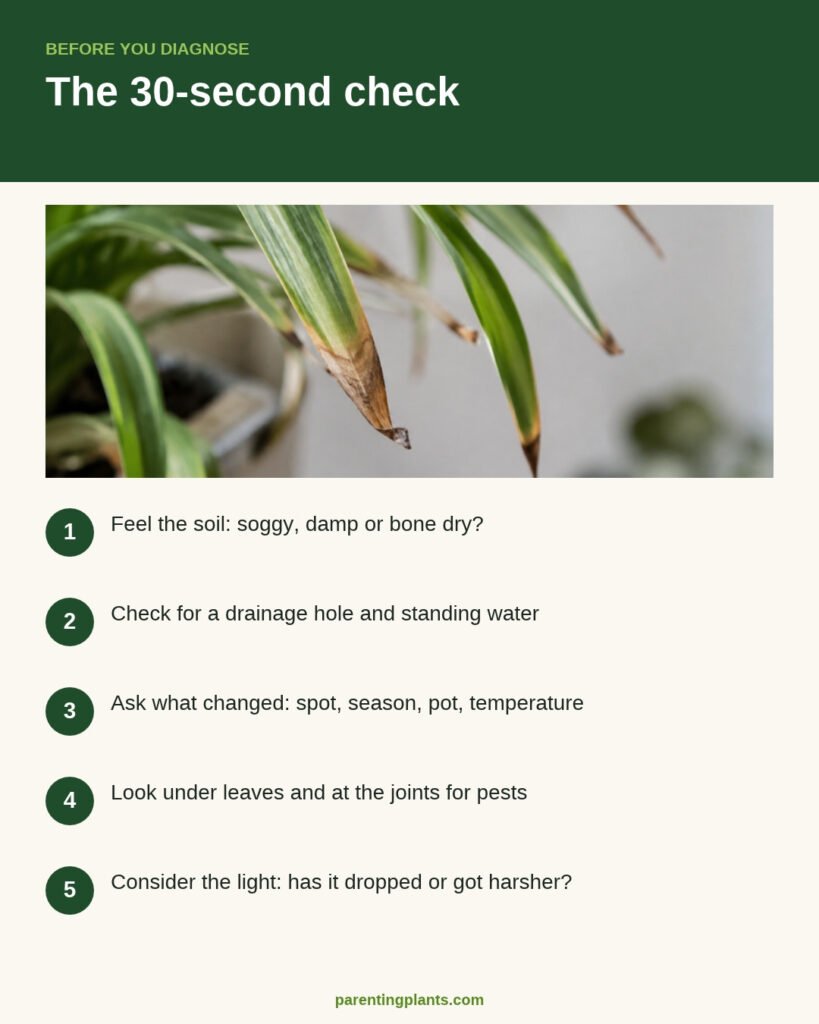
Most plant mysteries are solved before you even look at the leaves. Run through these five checks first:
- Feel the soil. Push a finger 1 to 2 inches into the pot. Is it soggy, damp or bone dry?
- Check the pot. Is there a drainage hole? Is water sitting in the saucer or decorative pot?
- Think about recent changes. New home, new spot, repotting, a cold snap or the heating coming on?
- Look under the leaves and at the joints. Webbing, white fluff, bumps, tiny insects or stickiness?
- Consider the light. Is it near a window? Has the light changed with the season?
Look at where the damage is. Problems on old, lower leaves usually point to watering or natural ageing. Problems on new growth often mean pests, cold damage or a nutrient issue. Damage on the side facing the window points to sun scorch.
Leaf problems decoder
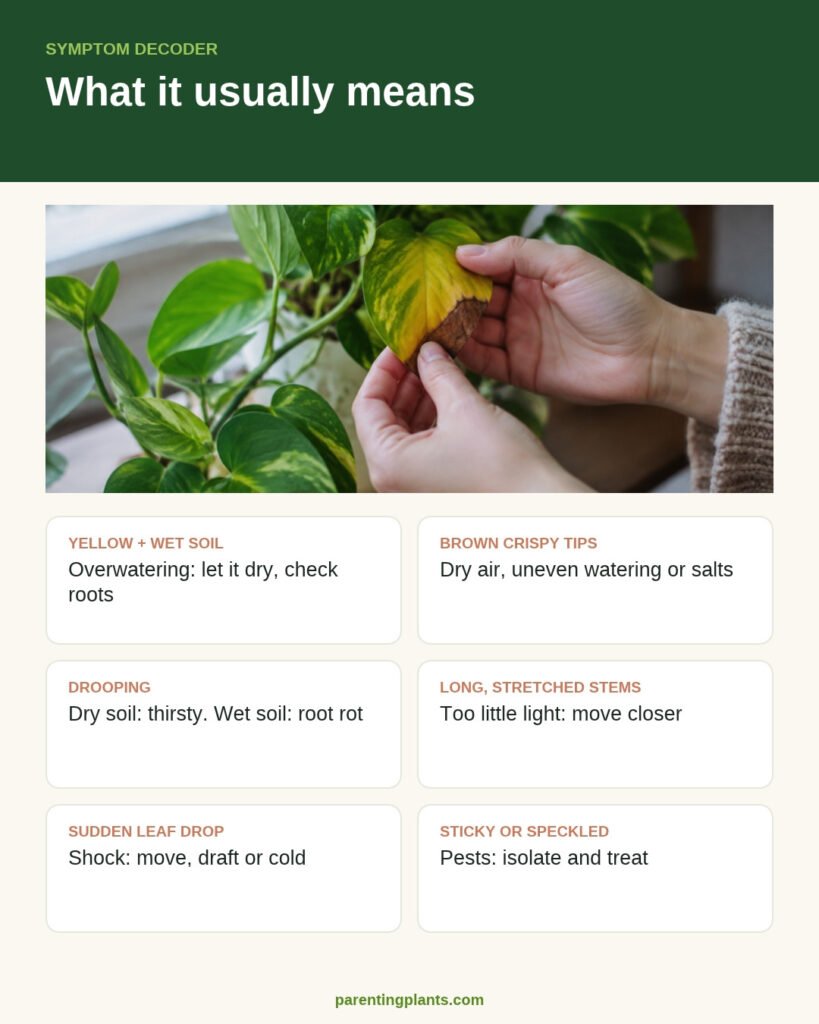
| What you see | Check this | Most likely cause | What to do |
|---|---|---|---|
| Yellow lower leaves, one or two at a time | Is the rest of the plant healthy? | Natural ageing | Normal. Snip them off once fully yellow |
| Many yellow leaves, soil wet | Soil stays damp for a week+; sour smell? | Overwatering or poor drainage | Let it dry; check roots. Root rot guide |
| Yellow, droopy leaves, soil dry | Pot feels very light? | Underwatering | Soak thoroughly; water more often |
| Pale yellow new leaves | Not fed for months? Green veins? | Low nutrients | Feed lightly in spring and summer. Feeding guide |
| Brown, crispy tips | Dry air? Tap water? Soil drying out fully? | Low humidity, uneven watering or salt buildup | Water evenly; raise humidity; flush the soil. Humidity guide |
| Brown, crispy edges or patches facing the window | Hot, direct sun? | Sun scorch | Move to bright, indirect light |
| Brown or black spots with a yellow ring | Wet leaves? Poor airflow? | Fungal or bacterial leaf spot | Remove spotted leaves; water the soil, not the leaves |
| Soft, dark, mushy patches | Near cold glass or a door? | Cold damage | Move to a warmer spot; trim damaged leaves |
| Curling leaves | Soil dry? Under-leaf pests? | Thirst, dry air, heat or pests | Water; raise humidity; check for pests |
| Wrinkled, soft leaves (succulents) | Soil dry for weeks? | Thirst | Water thoroughly; let drain |
| Mushy, translucent leaves (succulents) | Soil wet? | Overwatering | Stop watering; check roots |
| Sticky leaves or furniture | Tiny bumps or bugs on stems? | Scale, aphids or mealybugs | Wipe off; treat. Pest guide |
| Pale speckles, fine webbing | Look under leaves | Spider mites | Shower leaves; raise humidity; treat |
| Silvery streaks, black specks | Look closely at new leaves | Thrips | Isolate and treat |
Yellow leaves are the most common worry of all. Our guide to yellow leaves on houseplants goes deeper.
Whole-plant problems decoder
| What you see | Check this | Most likely cause | What to do |
|---|---|---|---|
| Drooping or wilting | Soil wet or dry? | Dry: thirst. Wet: root rot | Dry: water. Wet: check roots |
| Sudden leaf drop | Moved? Draft? Temperature change? | Shock from change or cold | Keep it in one steady spot away from drafts |
| Long, stretched stems, small leaves | How far from the window? | Too little light | Move closer to light; prune leggy stems. Light guide |
| Leaning toward the window | Has it been rotated? | Growing toward light | Rotate a quarter turn weekly |
| No new growth | Is it winter? Is it in low light? | Seasonal rest or low light | Be patient in winter; give more light |
| Variegated leaves turning plain green | Light level? | Too little light | Move to brighter, indirect light |
| No flowers | Light? Mature enough? | Too little light or wrong season | More light; check the plant’s bloom needs |
| Whole plant collapsing | Stem soft at the base? | Root or stem rot | Take healthy cuttings. Revive guide |
Stem, root and soil problems
| What you see | Check this | Most likely cause | What to do |
|---|---|---|---|
| Soft, black stem at the soil | Squeeze gently | Stem rot from overwatering | Cut above the rot and re-root healthy pieces |
| Roots growing out of the holes | Root ball packed? | Root-bound | Repot in spring. Repotting guide |
| Sour or rotten smell | Roots brown and mushy? | Root rot | Trim rot; repot in fresh, airy mix |
| White crust on soil or pot | Feeding often? Hard water? | Fertilizer or mineral salts | Flush with plenty of water; scrape off crust |
| White fuzzy mould on the soil | Soil always damp? | Harmless mould from wet soil | Scrape off; let soil dry more between waterings |
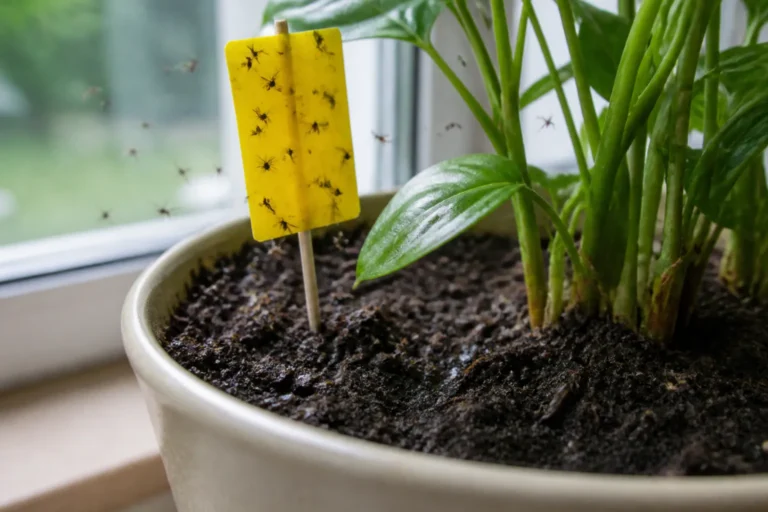
| Tiny black flies | Soil constantly moist? | Fungus gnats | Let topsoil dry; sticky traps. Gnat guide |
| Water runs straight through | Soil shrunk from the pot edge? | Bone-dry, water-repellent soil | Soak the whole pot for 20 to 30 minutes |
| Soil stays wet for 10+ days | Pot size? Drainage? Light? | Pot too big, dense mix or low light | Use a snug pot with drainage and airy mix. Soil guide |
Overwatered or thirsty? How to tell
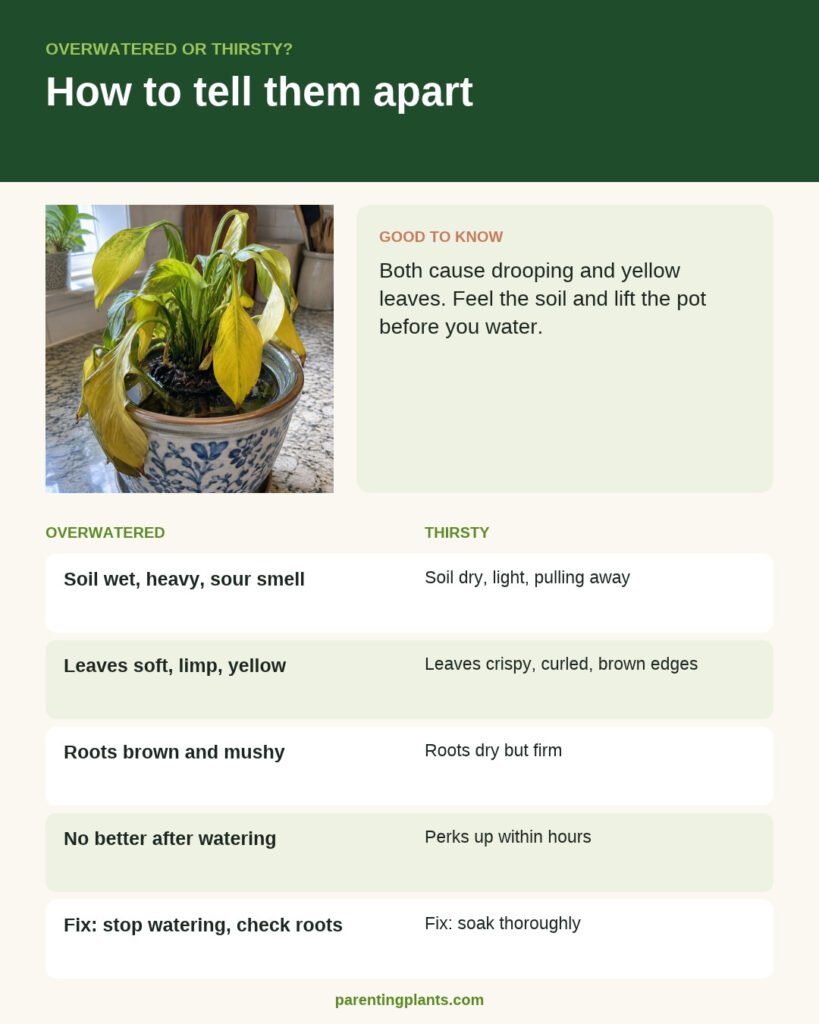
Overwatering and underwatering cause surprisingly similar symptoms: drooping and yellow leaves. Here’s how to tell them apart:
| Sign | Overwatered | Thirsty |
|---|---|---|
| Soil | Wet, heavy, may smell sour | Dry, light, pulling from the pot edge |
| Pot weight | Heavy | Very light |
| Leaves | Soft, limp, yellow; may have brown patches | Crispy, curled, dry brown edges |
| Which leaves | Often lower leaves first, then spreading | Often all over, edges and tips first |
| Stems | May be soft or dark at the base | Firm but floppy |
| Roots | Brown, mushy, smelly | Dry and shrivelled, but firm |
| After watering | No improvement or worse | Perks up within hours |
| The fix | Stop watering; check roots; improve drainage | Water thoroughly; check more often |
Learn the right way to water in our watering guide.
Pest or disease? Quick ID
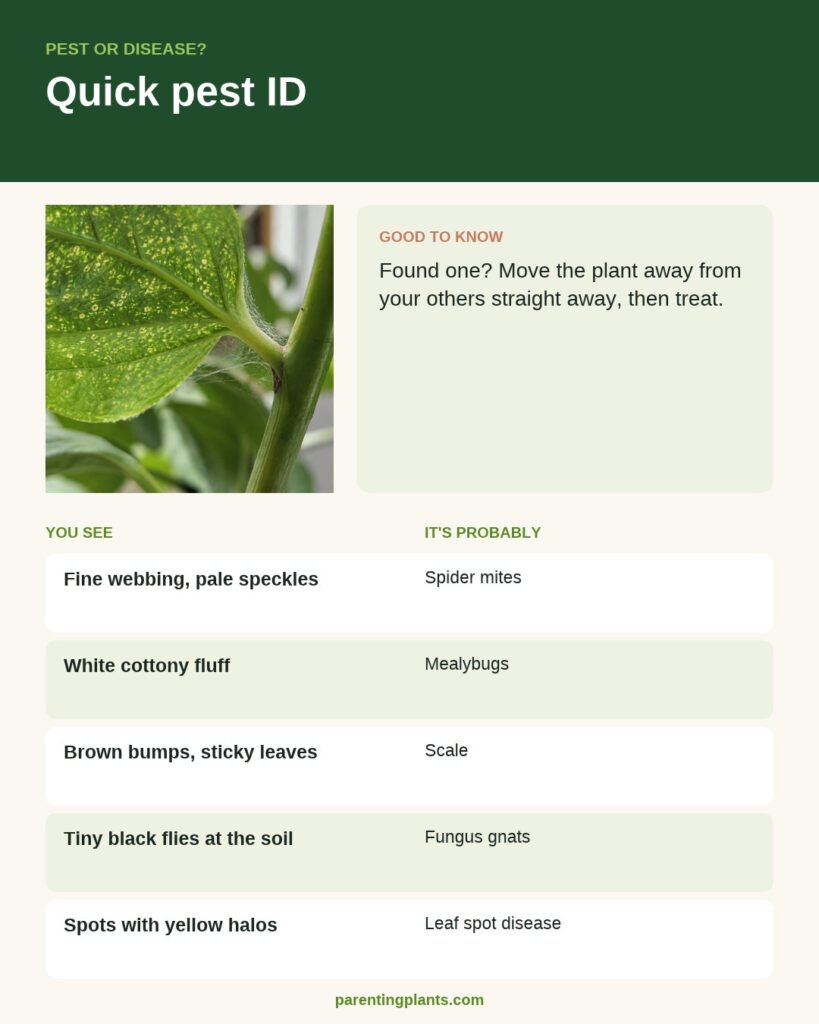
| Pest | What it looks like | Where it hides | Tell-tale sign |
|---|---|---|---|
| Spider mites | Tiny moving dots | Under leaves | Fine webbing, pale speckling |
| Mealybugs | White cotton-like fluff | Leaf joints, under leaves | Sticky leaves |
| Scale | Small brown or tan bumps | Stems and leaf veins | Sticky residue, yellowing |
| Aphids | Small green, black or white insects | New growth, buds | Curled new leaves, stickiness |
| Thrips | Tiny slender insects | On and under leaves | Silvery streaks, black specks |
| Fungus gnats | Tiny black flies | Around the soil | Flies when you water |
| Leaf spot (disease) | Brown or black spots with yellow halos | Any leaves | Spreads when leaves stay wet |
Found something? Move the plant away from your others straight away, then follow our houseplant pests and fungus gnats guides.
Is it actually a problem?
Not every change is a sign of trouble. These are usually completely normal:
- An occasional old, lower leaf yellowing and dropping as new growth appears.
- A few leaves dropping in the first weeks after bringing a plant home. See the first two weeks.
- Slow or no growth in winter, when light and warmth drop.
- Calatheas and prayer plants folding leaves up at night.
- Water droplets on leaf tips in the morning (called guttation). The plant is releasing excess water; it’s harmless.
- Flowers fading after their season.
How to fix it properly
- Fix the cause first, then the symptoms. Cutting off yellow leaves won’t help if the soil is still soggy.
- Change one thing at a time so you know what worked.
- Give it 2 to 3 weeks. Plants respond slowly. Judge the new leaves, not the old ones.
- Remove badly damaged leaves. Yellow or brown leaves won’t turn green again; trimming them tidies the plant and lets it focus on new growth.
- Save a piece if needed. If the roots are mostly rotten, take healthy cuttings and start again. See our propagation guide.
- Know when to let go. If stems are mushy all the way up and no healthy roots remain, compost it and choose a plant that suits your light better.
Keep notes. Jot down when you water, move or feed each plant. Patterns jump out fast. Our printable Houseplant Journal makes it easy.
Quick action checklist
- Feel the soil before deciding anything
- Check for a drainage hole and standing water
- Look under leaves and at the joints for pests
- Ask what changed recently: spot, season, pot or temperature
- Match the symptom to the decoder tables above
- Change one thing, then wait 2 to 3 weeks
- Isolate any plant with pests straight away
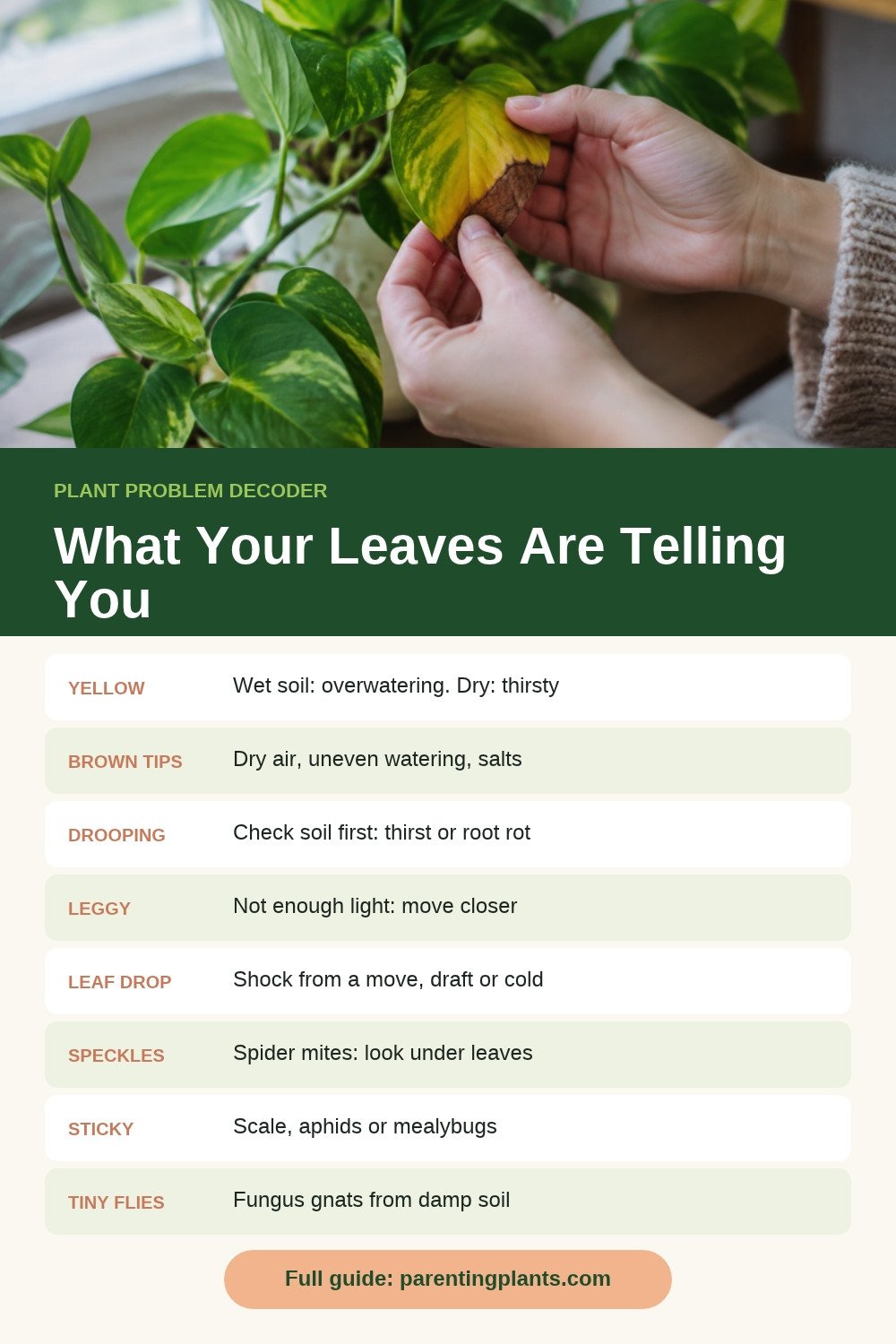
Save this for later: pin the decoder chart below so it’s there when your plant next looks unhappy.
Still not sure what’s wrong with your plant?
The Houseplant Rescue Guide matches 26 common plant problems to a clear photo, then gives you simple steps to fix each one and stop it coming back. No jargon, 50 pages, with printable checklists.
Plant problem FAQ
Why are my plant’s leaves turning yellow?
Most often overwatering, especially if the soil is wet. Other causes are underwatering, low light, natural ageing of lower leaves, or a lack of nutrients.
Why are the tips of my plant’s leaves turning brown?
Usually dry air, uneven watering (letting the soil dry out completely) or a buildup of salts from tap water and fertilizer.
Should I cut off brown or yellow leaves?
Yes, once a leaf is mostly yellow or brown it won’t recover. Cut it off at the base with clean scissors. For brown tips only, you can trim along the leaf’s natural shape.
Can a yellow leaf turn green again?
No. Once a leaf has fully yellowed, it won’t regain its color. Fix the cause and focus on keeping new leaves healthy.
Why is my plant drooping even though the soil is wet?
The roots are likely suffocating or rotting from too much water, so they can’t take water up. Let the soil dry and check the roots.
Why is my houseplant dropping leaves suddenly?
Sudden leaf drop is usually shock from a change: a move, cold draft, heater, or big shift in light or temperature.
How do I know if my plant has pests?
Look under the leaves and where leaves join stems for webbing, white fluff, small bumps, tiny insects or sticky residue.
Sources and further reading
Want to go deeper? These university extension and expert resources cover the same topic:
- University of Illinois Extension: Houseplant care
- Penn State Extension: Preventing, diagnosing and correcting common houseplant problems
- Iowa State University Extension: How to care for houseplants
- Royal Horticultural Society: Houseplant 101