Special Offer: Use code ILOVEPLANTS for 25% off on all digital products! Shop Now →

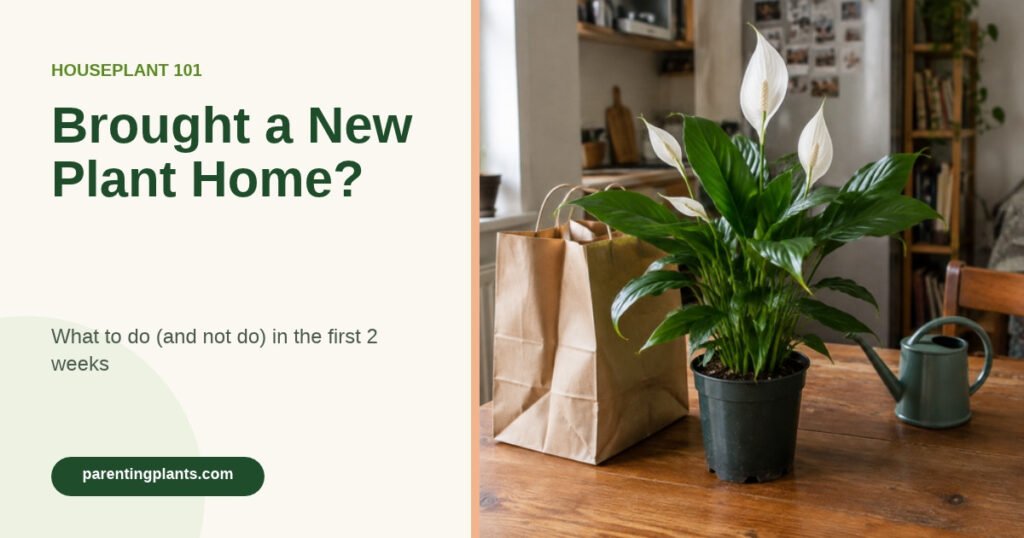
You’ve brought home a new plant, and now you want to do everything right. Here’s the secret: the first two weeks are mostly about doing less. Your plant has just moved from a greenhouse with perfect light and humidity, through a shop, into your home. It needs time to adjust, and the most common beginner mistakes are loving it too much: repotting it straight away, moving it around and overwatering it.
Short answer: For the first two weeks, keep your new plant away from your other plants to catch any pests, give it bright, indirect light in the spot where it will live, and water only when the top inch or two of soil is dry. Don’t repot, fertilize or keep moving it. Check it every few days for pests. A few yellow or dropped leaves are normal while it adjusts.
In this guide
Your first 2 weeks at a glance

| When | What to do |
|---|---|
| Day 1 | Unpack, inspect for pests, remove damaged leaves, set it in its quarantine spot |
| Days 1 to 3 | Leave it alone. Check the soil, but only water if the top inch is dry |
| Week 1 | Inspect leaves and soil every 2 to 3 days; water when needed |
| Week 2 | Keep checking for pests; expect it to settle and steady |
| Day 14 | Final pest check; move it into its long-term spot with your other plants |
| Weeks 3 to 4+ | Repot if needed and start normal feeding in the growing season |
Day 1: unpack, check and set up
- Unwrap it carefully. Remove any sleeve or packing. If it arrived by post in cold weather, let it warm up to room temperature in the box for an hour before unpacking.
- Inspect it in good light. Look under the leaves, along the stems, in new growth and on the soil surface for webbing, fluff, bumps, stickiness or tiny flies.
- Take off any foil or decorative sleeve. Foil wraps trap water and rot roots. Keep the plant in its plastic nursery pot, set inside a decorative pot or on a saucer if you like.
- Snip off broken or fully yellow leaves with clean scissors. This tidies the plant and removes places for disease to start.
- Wipe the leaves with a damp cloth if they’re dusty. It also removes any pests you missed.
- Check the soil. If it’s dry, water thoroughly in a sink and let it drain. If it’s wet, leave it.
Keep the plant label. Snap a photo of it or tuck it in the pot. Knowing the exact name makes finding the right care guide much easier.
Days 1 to 14: keep it apart (quarantine)
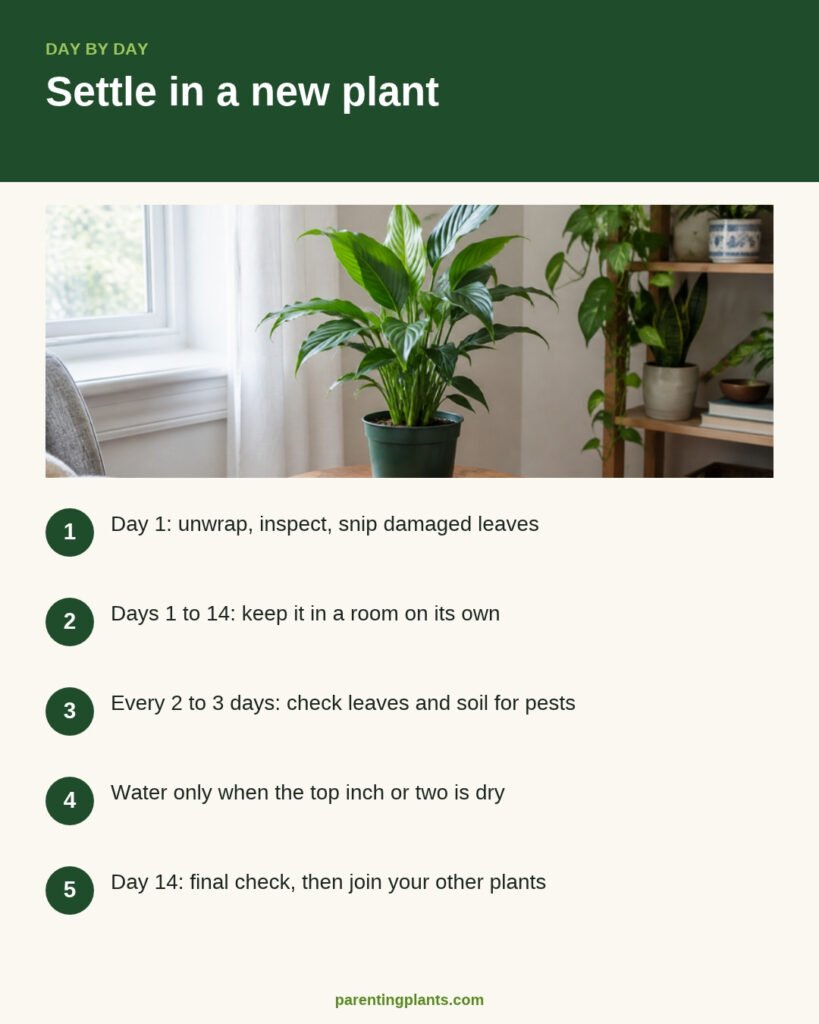
Even healthy-looking plants from good shops can carry pest eggs or tiny insects you can’t see yet. University extension services recommend keeping new plants in a separate room for a few weeks so any problem shows up before it spreads. For most people, two weeks is a practical minimum.
- Pick a spot at least a room away, or at the very least a few feet from other plants, with bright, indirect light.
- Check it every 2 to 3 days. Look under the leaves and at the joints for anything new.
- Use separate tools or wipe your scissors between plants.
- Wash your hands after handling it, before touching other plants.
If you spot pests, deal with them now, while they’re on one plant. Our guides to houseplant pests and fungus gnats explain what to do.
Choose its spot and leave it there
Plants slowly adapt their leaves to the light they’re in. Every move forces them to adjust again, which is why a plant that’s moved around constantly often drops leaves.
- Match the spot to the plant’s light needs. Use our lighting guide to check.
- Start new plants in bright, indirect light, not harsh direct sun, even if they’re sun lovers. Shop plants scorch easily until they adjust.
- Keep it away from radiators, heating and air-conditioning vents, cold windows in winter and drafty doors.
- Once you’ve chosen a spot, try not to move it for at least two weeks.
If the quarantine spot isn’t its forever spot, choose a quarantine spot with similar light so it only has to adjust once more.
Watering a new plant
Overwatering is the number one way beginners lose new plants. Shops often water on a schedule, so your plant may arrive with damp soil that doesn’t need more.
- Push your finger into the soil up to the second knuckle.
- Dry? Water thoroughly until water runs from the drainage holes, then empty the saucer.
- Still damp? Wait and check again in two or three days.
- Succulents, cacti, snake plants and ZZ plants: let the soil dry almost completely.
Learn the full method in our watering guide.
What not to do in the first 2 weeks
| Don’t | Why | When it’s OK |
|---|---|---|
| Repot it | Repotting disturbs roots while the plant is already stressed | After 2 to 4 weeks, ideally in spring, unless the soil is soggy or rotting |
| Fertilize | Shop plants usually have fertilizer in the soil; roots are sensitive | After about a month, during spring and summer |
| Keep moving it | Each move makes it adjust to new light again | Once, from quarantine to its permanent spot |
| Water on a schedule | Damp shop soil plus extra water causes root rot | Water when the soil tells you to |
| Prune heavily | It needs its leaves to recover | Trim only damaged leaves now; shape it later |
Exception: repot straight away only if the soil is waterlogged and smells sour, the plant is in a pot with no drainage hole, or the roots are rotting. See our repotting guide.
Normal or worrying? Reading the signs
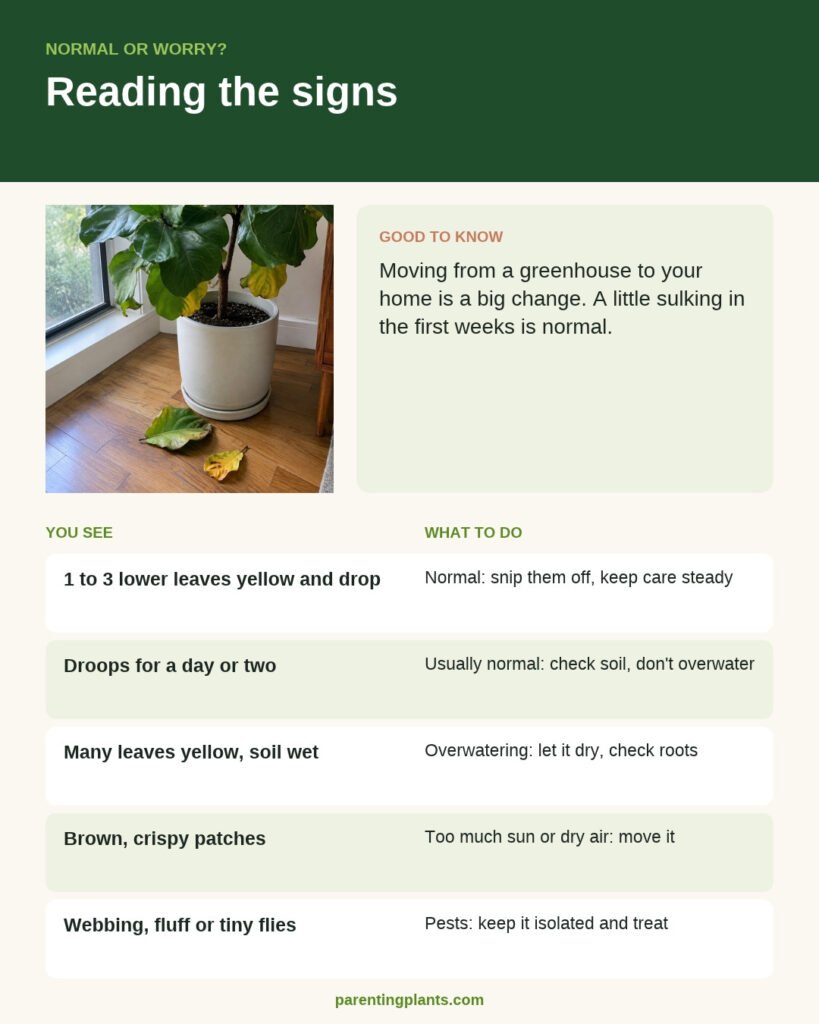
It’s normal for a new plant to sulk a little. Here’s how to tell adjustment from a real problem:
| What you see | Normal or worry? | What to do |
|---|---|---|
| 1 to 3 lower leaves turn yellow and drop | Normal adjustment | Snip them off; keep care steady |
| Leaves droop for a day or two after the move | Usually normal | Check the soil; don’t overwater |
| No new growth for a few weeks | Normal, especially in winter | Be patient |
| Many leaves yellowing at once, soil wet | Worry: overwatering | Let it dry out; check the roots |
| Brown, crispy patches | Worry: too much sun or dry air | Move it out of direct sun; raise humidity |
| Webbing, fluff, sticky leaves or tiny flies | Worry: pests | Keep it isolated and treat now |
Struggling? Our guides to yellow leaves and reviving a struggling plant will help you work out what’s wrong.
End of week 2: the final check
If your plant passes this check, it’s ready to join the rest of your plants:
- No signs of pests on leaf undersides, stems or soil after two weeks.
- Leaves look firm, with no new yellowing spreading quickly.
- Soil drying out at a normal pace, not staying soggy for a week.
- Maybe even a new leaf or bud starting to show.
From here, switch to a simple routine. Our weekly houseplant care routine takes about 10 minutes and keeps every plant healthy.
Quick action checklist
- Inspect leaves, stems and soil for pests on day 1
- Remove foil wraps; keep it in a pot with drainage
- Keep it apart from other plants for 2 weeks
- Bright, indirect light, away from vents and drafts
- Water only when the top inch or two is dry
- No repotting, fertilizing or moving it around
- Check every 2 to 3 days; a few yellow leaves are normal
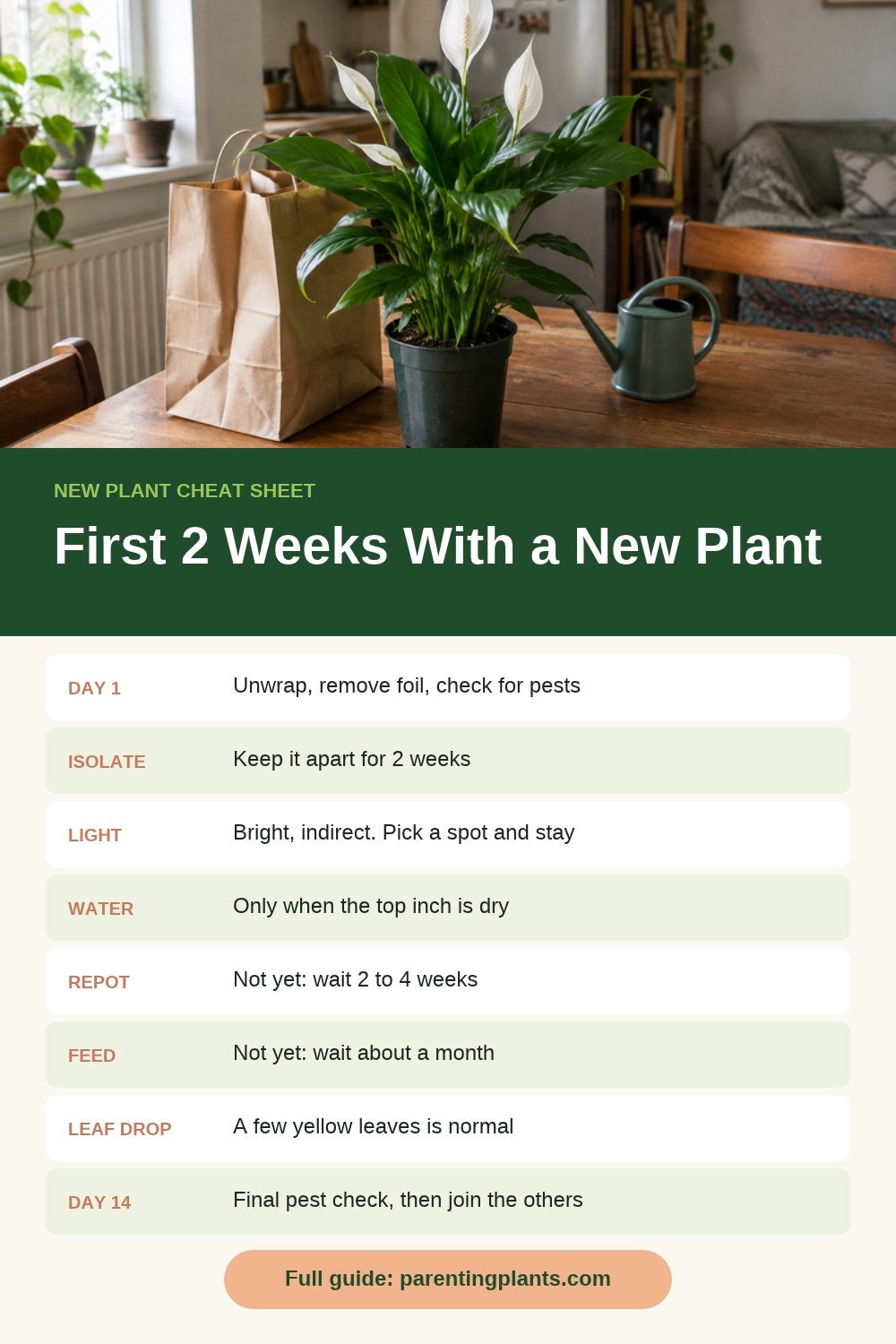
Save this for later: pin the cheat sheet below so it’s ready next time you bring a plant home.
New plant dropping leaves or looking unhappy?
The Houseplant Rescue Guide matches 26 common plant problems to a clear photo, then gives you simple steps to fix each one and stop it coming back. No jargon, 50 pages, with printable checklists.
New plant FAQ
How long should I quarantine a new houseplant?
At least two weeks, and up to four if you can. That’s long enough for most hidden pest eggs to hatch and show up.
Should I repot a new plant right away?
No. Wait at least two to four weeks so it can adjust first. Repot sooner only if it’s in waterlogged soil, has rotting roots or sits in a pot with no drainage hole.
Why is my new plant dropping leaves?
Usually it’s adjusting to lower light and drier air than the greenhouse. Losing a few older leaves is normal. If many leaves drop, check for overwatering, cold drafts or pests.
Should I water a new plant as soon as I get it home?
Only if the soil is dry. Many shops water regularly, so feel the soil first and water when the top inch or two is dry.
When can I fertilize a new houseplant?
Wait about a month, and only feed during spring and summer. Most shop plants already have fertilizer in the soil.
Is it OK to keep a new plant in its plastic nursery pot?
Yes. Many plant parents keep plants in their nursery pots inside a decorative pot because it makes drainage and watering easier.
Sources and further reading
Want to go deeper? These university extension and expert resources cover the same topic:
- Washington State University Extension: Houseplants (PNW Gardener’s Handbook)
- Penn State Extension: Preventing, diagnosing and correcting common houseplant problems
- Costa Farms: Preventing houseplant pests
- Garden Professors: House plant basics
[…] plant? Keep it on its own for two weeks before adding it to your routine. Our guide to a new plant’s first two weeks explains […]