Special Offer: Use code ILOVEPLANTS for 25% off on all digital products! Shop Now →

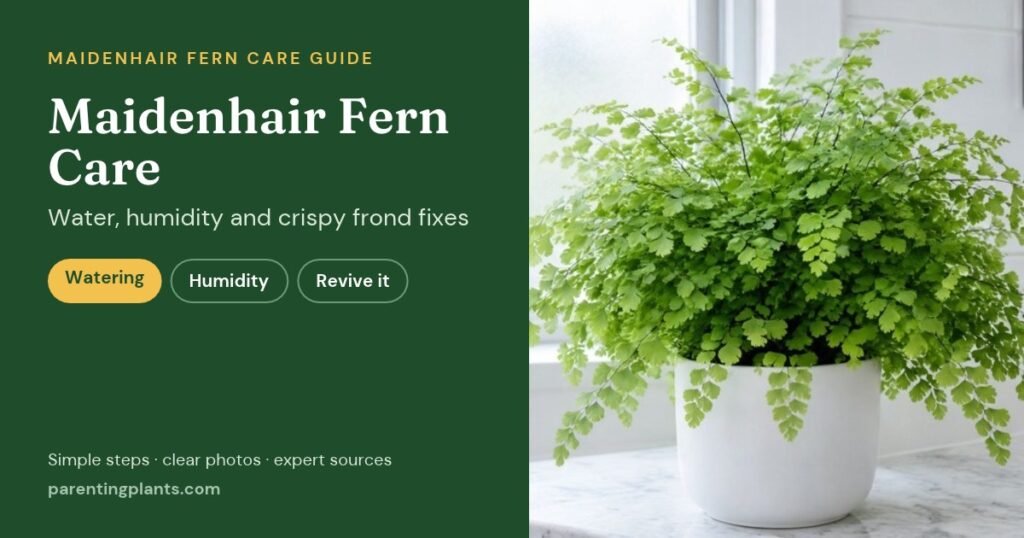
The maidenhair fern (Adiantum) is all lace and movement: tiny fan-shaped leaflets on wiry black stems. It is also famous for going crispy almost overnight. The good news is that maidenhair is not delicate so much as particular. It needs two things above all: soil that never dries out and humid air. Give it those, and it is a fast, rewarding grower. Even better, a crispy maidenhair is usually not dead, and this guide shows you how to bring it back.
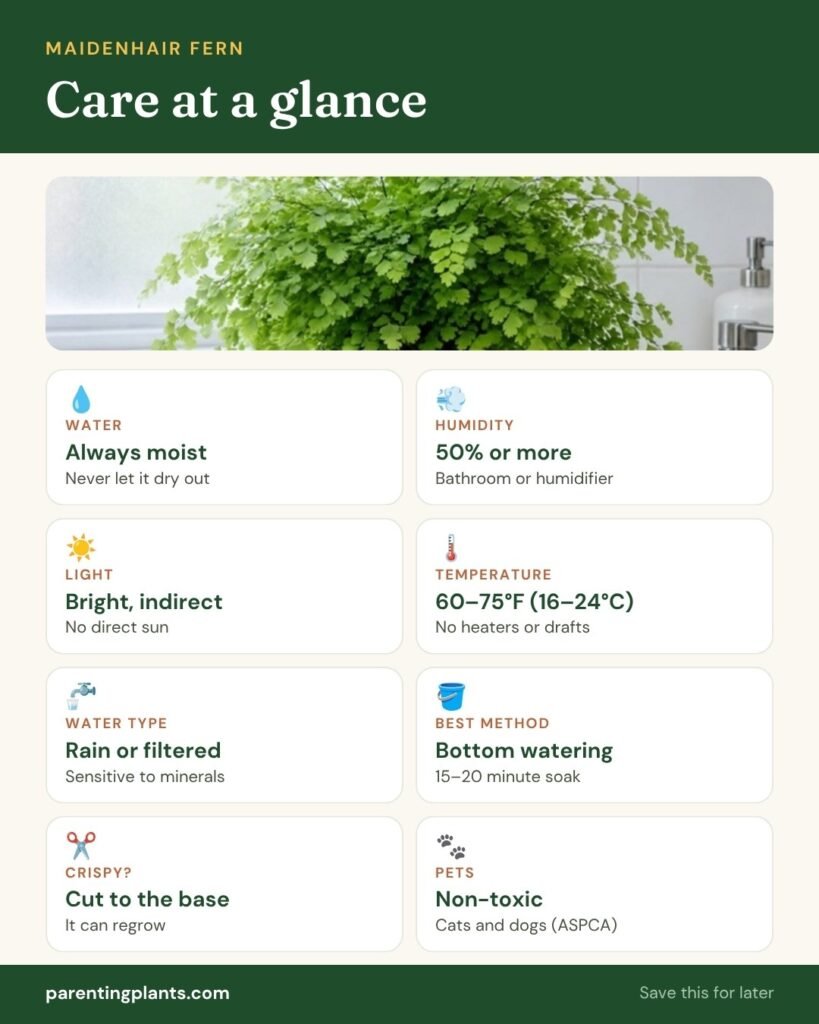
Short answer: Keep maidenhair fern soil evenly moist at all times; never let it dry out. Give it bright to medium, indirect light with no direct sun, humidity of 50% or more and steady temperatures of 60 to 75°F (16 to 24°C) away from drafts and heaters. It is non-toxic to cats and dogs.
In this guide
Maidenhair fern care at a glance
| Need | What it needs |
|---|---|
| Light | Bright to medium, indirect light; no direct sun |
| Water | Keep evenly moist; check every 2 to 3 days |
| Humidity | 50% or more; bathrooms and terrariums are ideal |
| Temperature | 60 to 75°F (16 to 24°C); no drafts or heater blasts |
| Soil | Moisture-holding mix with peat or coir and perlite |
| Fertilizer | Quarter to half strength monthly in spring and summer |
| Common type | Delta maidenhair (Adiantum raddianum) |
| Pets | Non-toxic to cats and dogs (ASPCA) |
Free Plant Care Tracker: Never forget to water your Maidenhair Fern again. Get it free →
Why maidenhair ferns go crispy
Each leaflet on a maidenhair is only a few cells thick, with very little ability to store water. When the soil dries even once, or the air is very dry, the leaflets lose water faster than the roots can replace it and they shrivel within a day or two. That is why maidenhair has a reputation for being difficult.
The upside: the plant stores energy in its underground rhizome. As long as the rhizome and roots are alive, a fern that has turned completely crispy can grow back. (See the rescue steps below.)
How to water a maidenhair fern
Aim for soil that feels like a wrung-out sponge all the time: damp, never soggy, never dry. Check it every 2 to 3 days by touching the surface. When the top just begins to feel dry, water.
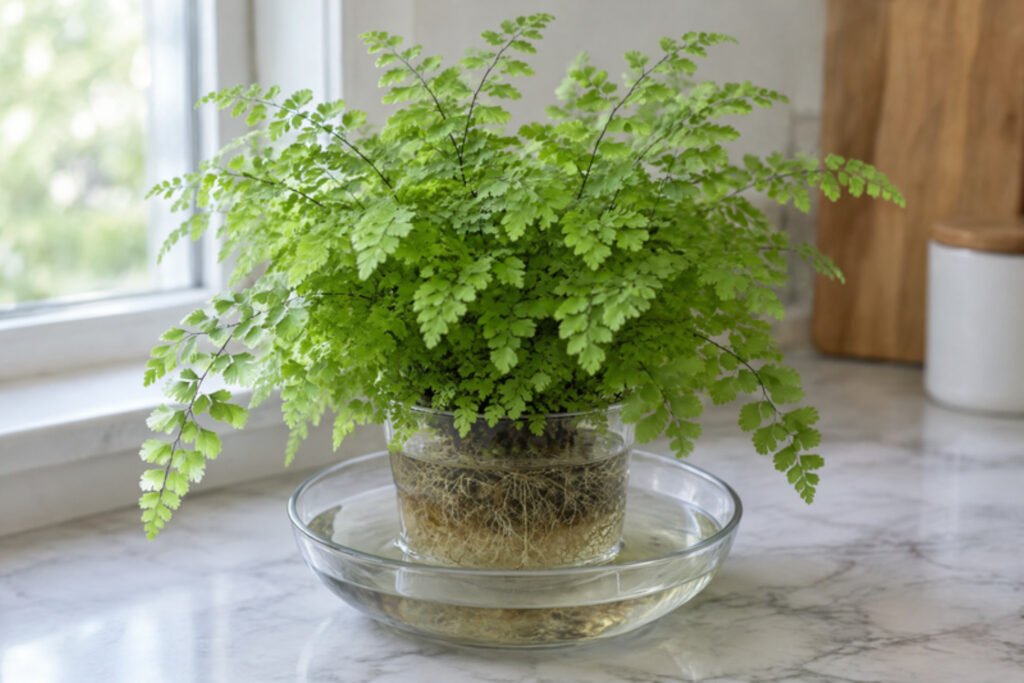
- Bottom watering works best: stand the pot in a bowl of water for 15 to 20 minutes until the surface feels damp, then let it drain fully.
- Never let it stand in water for hours; the roots will rot.
- Use rain, filtered or distilled water if your tap water is hard. Maidenhairs are sensitive to mineral build-up.
- In winter growth slows, but the soil should still never dry out completely.
Going away? Group it with other plants, move it out of bright light and stand it on a tray of wet pebbles. A self-watering pot is a good long-term solution. More in our watering guide.
Humidity: the second secret
Maidenhair ferns like 50% humidity or more. Many homes drop to 20 to 30% in winter with the heating on, which is when most maidenhairs fail.
- A small humidifier nearby is the most reliable fix.
- A bright bathroom with a window is often the perfect spot.
- Small plants thrive in a terrarium, cloche or glass cabinet.
- Grouping plants together raises humidity slightly. Misting helps only for minutes and is not a substitute.
Check your levels with a cheap hygrometer. Our humidity guide compares every method.
Light and placement
Give it bright to medium, indirect light: near a north or east window, or a few feet back from a brighter one. Direct sun scorches the fronds quickly. Too little light leads to thin, sparse growth.
Placement matters as much as light. Keep it away from radiators, heating vents, air conditioners, open windows and busy doorways, where drafts dry the fronds. Maidenhairs dislike being moved about, so once you find a spot it likes, leave it there.
Temperature
Keep it between 60 and 75°F (16 to 24°C). Maidenhair copes with cooler rooms better than heat. Warm, dry rooms are its biggest enemy. Avoid temperatures below about 55°F (13°C).
Soil, pot and repotting
Use a light, moisture-holding mix: 2 parts peat-free potting mix, 1 part coco coir and 1 part perlite works well. Plastic or glazed pots hold moisture longer than terracotta, which suits this plant. Always use a drainage hole.
Maidenhairs like slightly snug pots. Repot in spring every 1 to 2 years, only when the rhizomes fill the pot, and go up just one size. This is also the best time to divide it.
Fertilizing
Feed lightly. Use a balanced liquid fertilizer at quarter to half strength once a month in spring and summer. Maidenhairs are sensitive to fertilizer salts, which burn the leaflet edges. Flush the soil with plain water every couple of months.
How to revive a crispy maidenhair fern
If your fern has dried out and most fronds are brown and brittle, do not throw it away yet. Try this:
- Check the rhizome. Gently scrape a little soil away. If the rhizome (the creeping stem at soil level) is firm and the roots are pale, it is alive.
- Cut all crispy fronds off at soil level with clean scissors. Leave any fronds that still have green on them.
- Soak the pot in a bowl of water for 20 to 30 minutes until the soil is evenly damp, then drain.
- Raise humidity: place it in a bright bathroom, near a humidifier, or loosely cover it with a clear plastic bag with a few holes.
- Keep the soil evenly moist and wait. New curled fronds (fiddleheads) often appear in 2 to 6 weeks.
If the rhizome is soft, mushy or smells bad, it has rotted, and it is time for a new plant. For other plants that have gone downhill, see how to revive a dying houseplant.
How to propagate maidenhair fern
Division is the easy home method. In spring, slide the fern out of its pot and cut the rhizome into sections, each with several fronds and healthy roots. Pot each in fresh, moist mix and keep the humidity high for a few weeks. Growing from spores is possible but slow and fiddly. More in our propagation guide.
Common maidenhair fern problems and fixes
| What you see | Likely cause | What to do |
|---|---|---|
| Crispy, brown leaflets, dry soil | Soil dried out | Soak the pot; cut crispy fronds; never let it dry again |
| Crispy edges, soil moist | Low humidity or drafts | Raise humidity; move away from heaters and vents |
| Brown edges and white crust on soil | Mineral or fertilizer build-up | Flush with rain or filtered water; feed less |
| Yellow, limp fronds, soggy soil | Overwatering or poor drainage | Let the surface dry slightly; check drainage and roots |
| Pale, bleached fronds | Direct sun | Move to indirect light |
| Thin, sparse growth | Too little light | Move closer to a bright window, out of direct sun |
| Small brown bumps on stems | Scale insects | Scrape off gently; treat with insecticidal soap |
A few older fronds browning now and then is normal. Snip them off at the base to make room for new growth. For other ferns, see our Boston fern care guide.
Pests
Maidenhairs are rarely bothered, but mealybugs, scale and aphids can appear. Its leaflets are easily damaged by harsh sprays, so use insecticidal soap diluted to the gentlest label rate, test on one frond first, and rinse afterwards. Details in our pests guide.
Is maidenhair fern safe for cats and dogs?
Yes. The ASPCA lists maidenhair fern as non-toxic to cats, dogs and horses. Note that not every plant called a “fern” is safe: the asparagus fern is toxic to pets. Check any plant with our Plant Toxicity Checker.
Quick care checklist
- Never let the soil dry out
- Bottom water with rain or filtered water
- Keep humidity at 50% or more
- Bright to medium, indirect light; no direct sun
- Keep away from heaters, vents and drafts
- Cut crispy fronds at the base; it can regrow
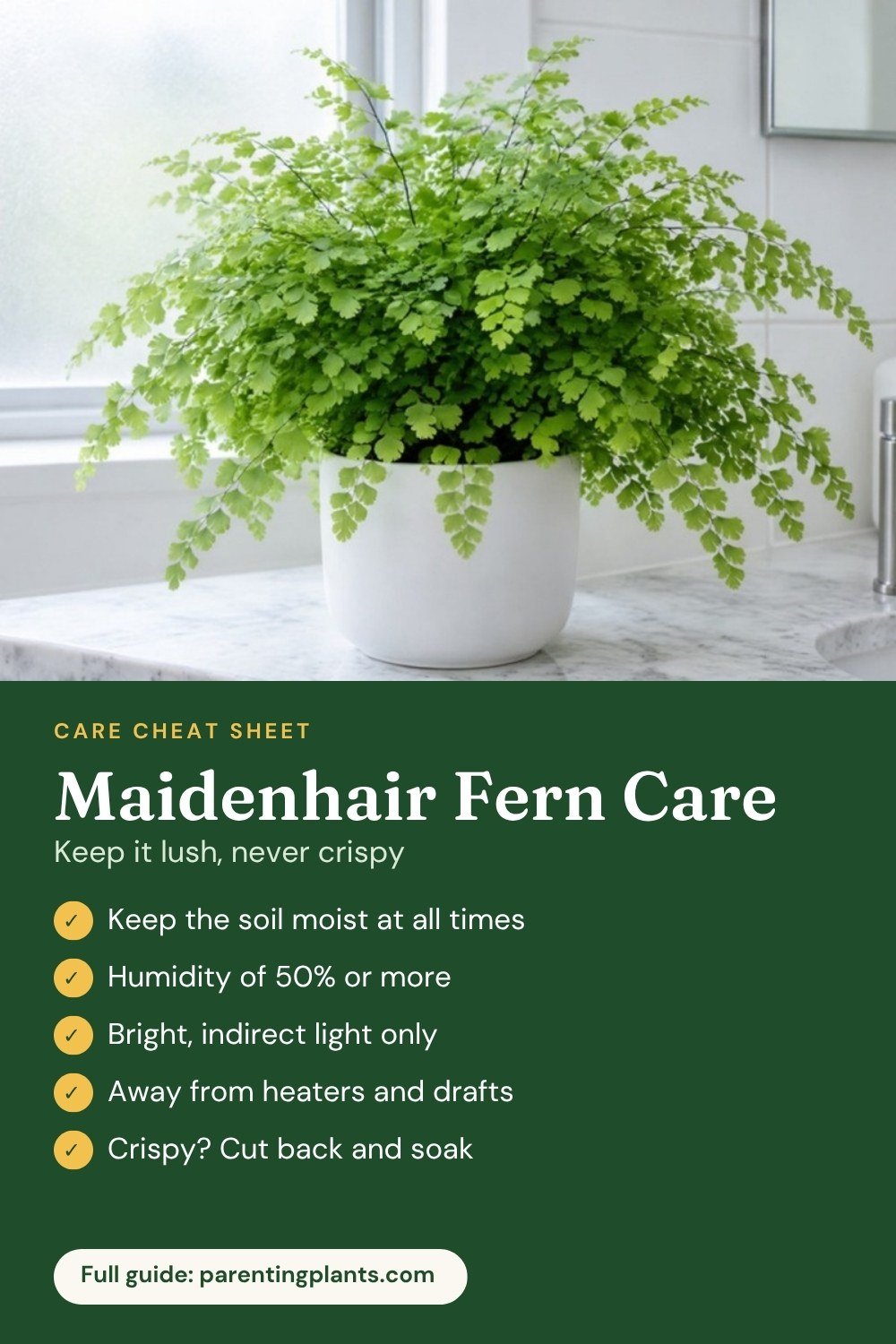
Save this for later: pin the cheat sheet below to your Pinterest plant board.
Leaves turning brown, crispy or yellow?
The Houseplant Rescue Guide matches 26 common plant problems to a clear photo, then gives you simple steps to fix each one and stop it coming back. No jargon, 50 pages, with printable checklists.
Maidenhair fern care FAQ
Why is my maidenhair fern turning crispy?
Almost always because the soil dried out or the air is too dry. Keep the soil evenly moist and humidity above 50%.
Can a crispy maidenhair fern come back?
Often, yes. If the rhizome is still firm, cut off the crispy fronds, soak the pot, raise humidity and keep the soil moist. New fronds usually appear in 2 to 6 weeks.
How often should I water a maidenhair fern?
Check the soil every 2 to 3 days and water as soon as the surface begins to dry. The soil should never dry out completely.
Should I mist my maidenhair fern?
Misting helps only for a few minutes. A humidifier, a bright bathroom or a terrarium works much better.
Does maidenhair fern need sunlight?
It needs bright to medium, indirect light. Direct sun scorches the delicate fronds.
Is maidenhair fern safe for cats?
Yes. The ASPCA lists maidenhair fern as non-toxic to cats and dogs.
Sources and further reading
This guide was written by Manik at Parenting Plants and checked against the university extension and expert resources below. Read how we research and update our guides in our editorial guidelines.
- University of Minnesota Extension: Tropical ferns as houseplants
- NC State Extension Plant Toolbox: Adiantum raddianum (delta maidenhair fern)
- UF/IFAS Extension: Ferns as houseplants and foliage plants
- ASPCA: Toxic and non-toxic plants list
Looking for another plant? Browse all our houseplant care guides A to Z.
Free tracker
Never forget to water your Maidenhair Fern again
Track your Maidenhair Fern and every other plant you own. A ready-made plant care tracker for Google Sheets and Notion that shows exactly which plants need water today, with 90 houseplants built in.
You're in!
Check your inbox, plant friend! 📩
Your free Plant Care Tracker is on its way. We've emailed you both versions, Google Sheets and Notion, plus a bonus printable 2027 plant calendar. It usually arrives within a few minutes.
Can't find it? Check your Promotions or Spam folder, and add manik@parentingplants.com to your contacts so you never miss a plant tip.