Special Offer: Use code ILOVEPLANTS for 25% off on all digital products! Shop Now →

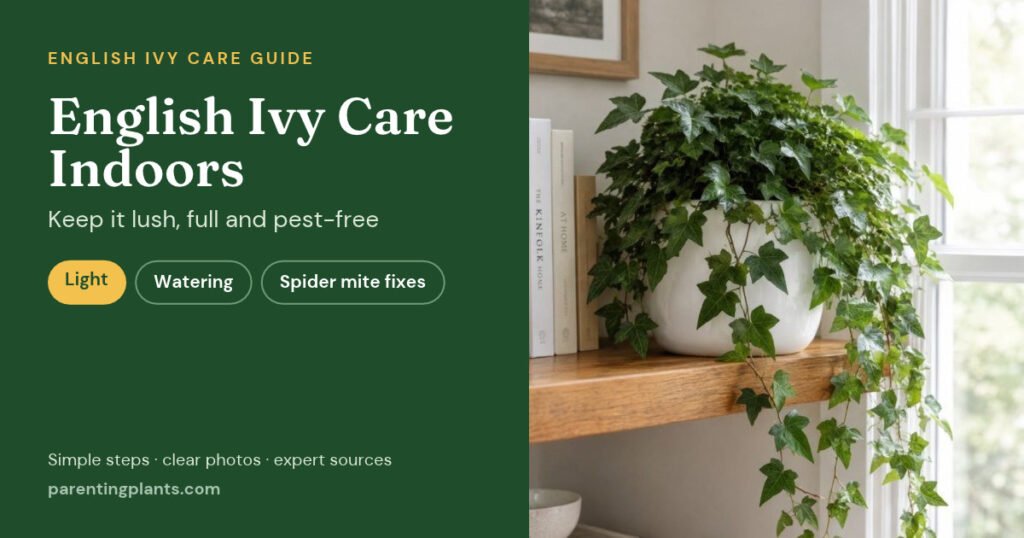
English ivy (Hedera helix) is the classic trailing houseplant: tumbling from a shelf, climbing a little trellis or shaped into a topiary. It is easy to grow once you know its one big preference, which surprises most people: ivy likes it cool. Give it bright light, a cool room and evenly moist soil, keep an eye out for spider mites, and it will grow into a full, glossy curtain of leaves.
Short answer: Grow English ivy in bright, indirect light and water when the top ½ inch of soil is dry. It prefers cool rooms of 50 to 70°F (10 to 21°C) with nights a little cooler, and average to high humidity. Shower it once a month to keep spider mites away, pinch the tips for a fuller plant, and keep it away from cats and dogs, because it is toxic to pets.
In this guide
English ivy care at a glance
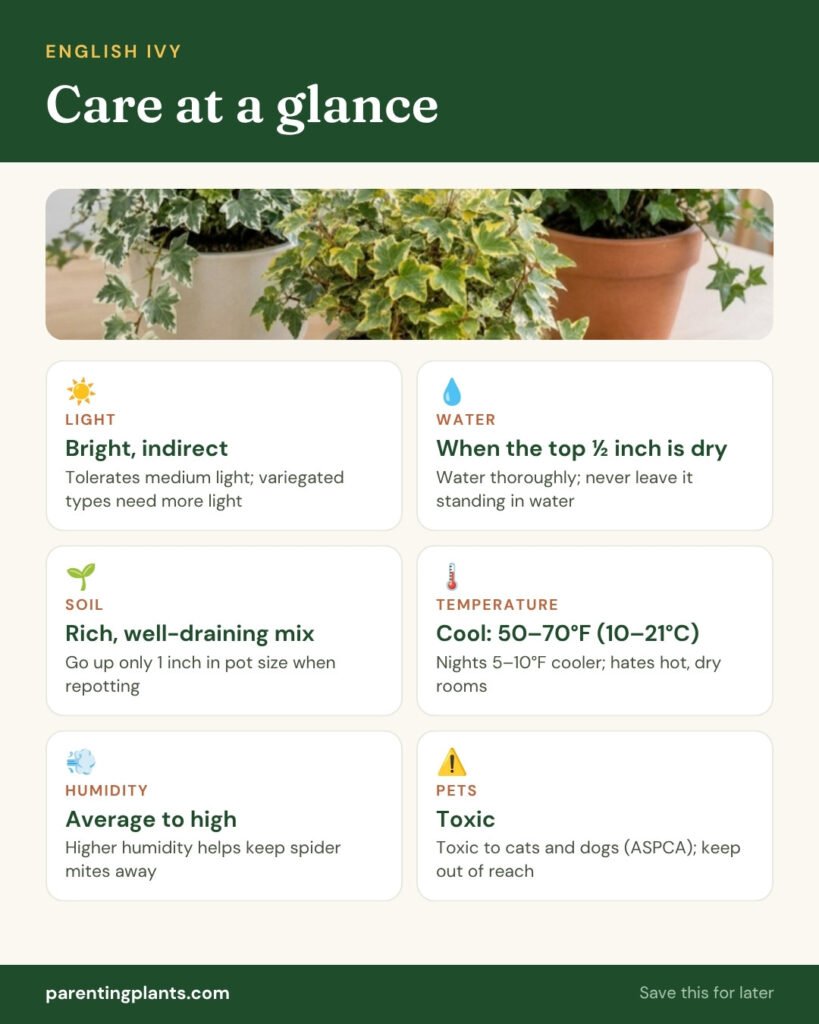
| Need | What English ivy wants |
|---|---|
| Light | Bright, indirect light; tolerates medium light |
| Water | When the top ½ inch of soil is dry; never soggy |
| Soil | Rich, well-draining houseplant mix |
| Temperature | 50 to 70°F (10 to 21°C), 5 to 10°F cooler at night |
| Humidity | Average to high; dry air invites spider mites |
| Feeding | Monthly in spring and summer |
| Repotting | Only 1 inch larger, when root-bound |
| Pets | Toxic to cats and dogs (ASPCA) |
Free Plant Care Tracker: Never forget to water your English Ivy again. Get it free →
Popular English ivy varieties
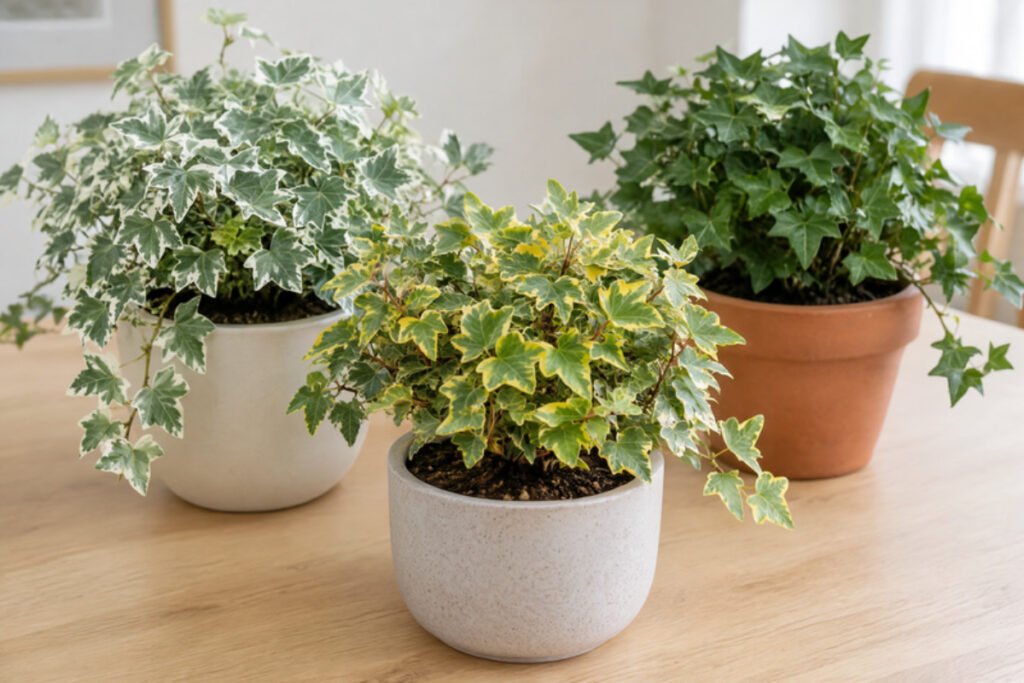
There are hundreds of ivy cultivars, with leaves from under an inch to over 3 inches long. They all need the same care, but variegated types need more light to keep their colour.
| Variety | Looks like | Good to know |
|---|---|---|
| Glacier | Grey-green leaves edged in creamy white | Popular, compact trailer; needs bright light |
| Gold Child | Green leaves with golden-yellow margins | Keeps its colour best in bright light |
| Needlepoint | Small, pointed leaves | Great for small pots and topiaries |
| Duckfoot | Tiny leaves shaped like a duck’s foot | Forms neat little mounds |
| Ivalace | Glossy, curly-edged leaves | Very decorative, slower growing |
| Triton | Fan-shaped leaves | Does not climb; good for hanging pots |
How much light does English ivy need?
English ivy grows best in bright, indirect light, close to an east or north window, or a few feet back from a west or south window. Clemson Cooperative Extension notes it tolerates low to medium light, but growth slows, vines get leggy and variegated leaves fade to plain green. Avoid hot afternoon sun through glass, which scorches the leaves. A grow light works well too. See our houseplant lighting guide.
How often to water English ivy
Water thoroughly, until it drains from the holes, then wait until the top ½ inch of soil is dry before watering again. Ivy likes evenly moist soil, but not wet: soggy soil leads to yellow leaves and root rot. Never leave the pot standing in water. In a cool room in winter it will need water much less often than in summer. Our watering guide shows the finger test.
Best soil and pot
Use a rich, well-draining houseplant potting mix in a pot with drainage holes. When repotting, go up only about 1 inch in diameter; an oversized pot stays wet and causes root rot. Repot when the plant is root-bound, top-heavy or dries out very quickly, ideally in spring. More in our repotting guide.
Temperature and humidity
This is where ivy differs from most houseplants. It prefers cool conditions of 50 to 70°F (10 to 21°C) during the day, with nights 5 to 10°F cooler. In a warm, dry, centrally heated room it struggles, and spider mites move in. A cool bedroom, hallway or bright porch that stays above freezing is ideal.
Normal home humidity is fine, but higher humidity helps a lot in winter. Stand the pot on a pebble tray, group it with other plants, or use a humidifier. Keep it away from radiators and heat vents. Our humidity guide compares the options.
Fertilizing English ivy
Feed once a month in spring and summer with a balanced liquid houseplant fertilizer, following the label. Skip feeding in winter and during very hot spells when growth stops. More in our fertilizing guide.
How to make English ivy fuller
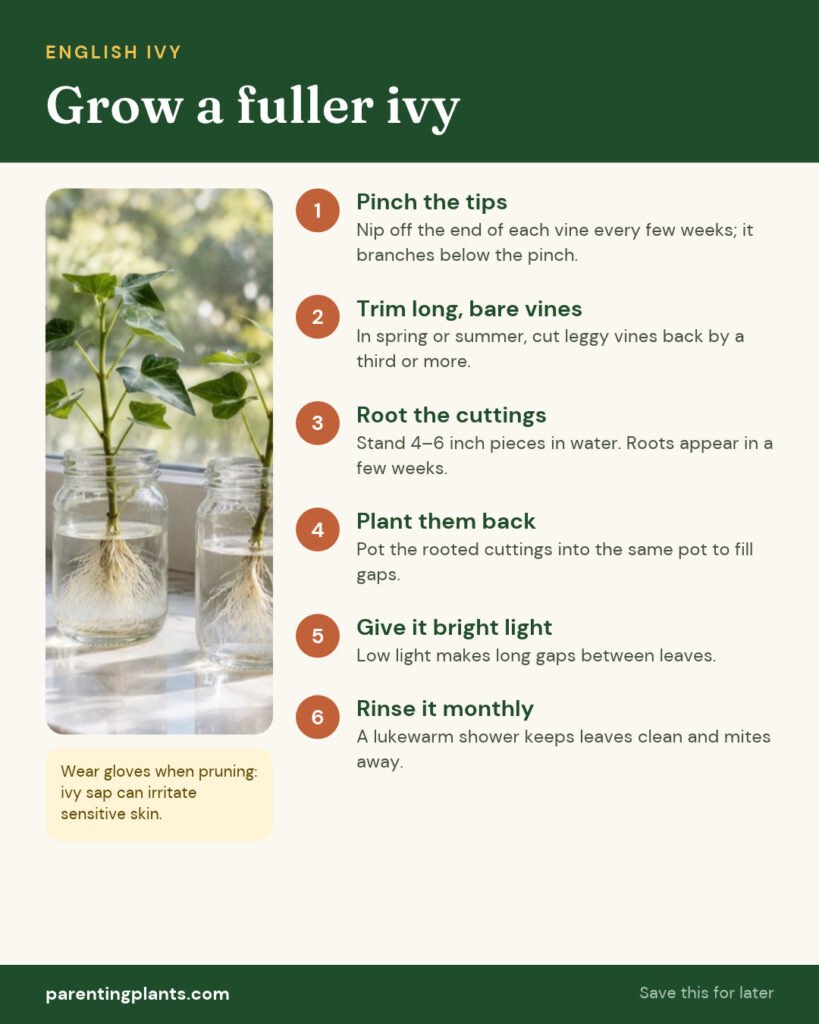
- Pinch the tips of each vine every few weeks; it branches below each pinch.
- Trim long, bare vines in spring or summer, cutting them back by a third or more.
- Root the cuttings in water (see below) and plant them back into the same pot.
- Give it more light. Low light causes long gaps between leaves.
- Start training early. If you want a topiary or trellis shape, guide young vines while they are soft.
Wear gloves when pruning: ivy sap can irritate sensitive skin. Our pruning guide shows where to cut.
How to propagate English ivy
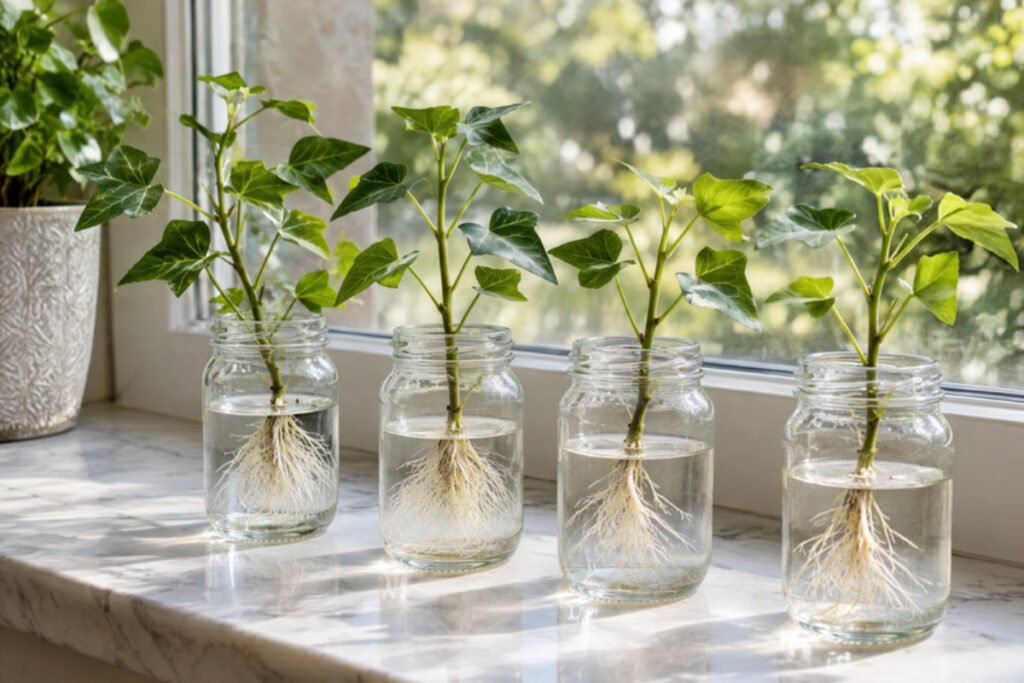
Ivy is one of the easiest plants to propagate. Most varieties root readily in water.
- Cut a 4 to 6 inch piece of vine with several leaves.
- Remove the lowest leaves so no leaves sit under water.
- Stand the cuttings in a jar of water in bright, indirect light, changing the water every week.
- Roots appear in a few weeks. Pot them up once roots are 1 to 2 inches long.
- Plant several cuttings in one pot for a full plant.
Spider mites and other pests
Spider mites are English ivy’s number one enemy, and they love warm, dry air. University of Illinois Extension advises checking ivy regularly for them. Look for dull, speckled or bronzed leaves and fine webbing under leaves and between stems. Ivy also gets mealybugs, aphids, whiteflies and scale.
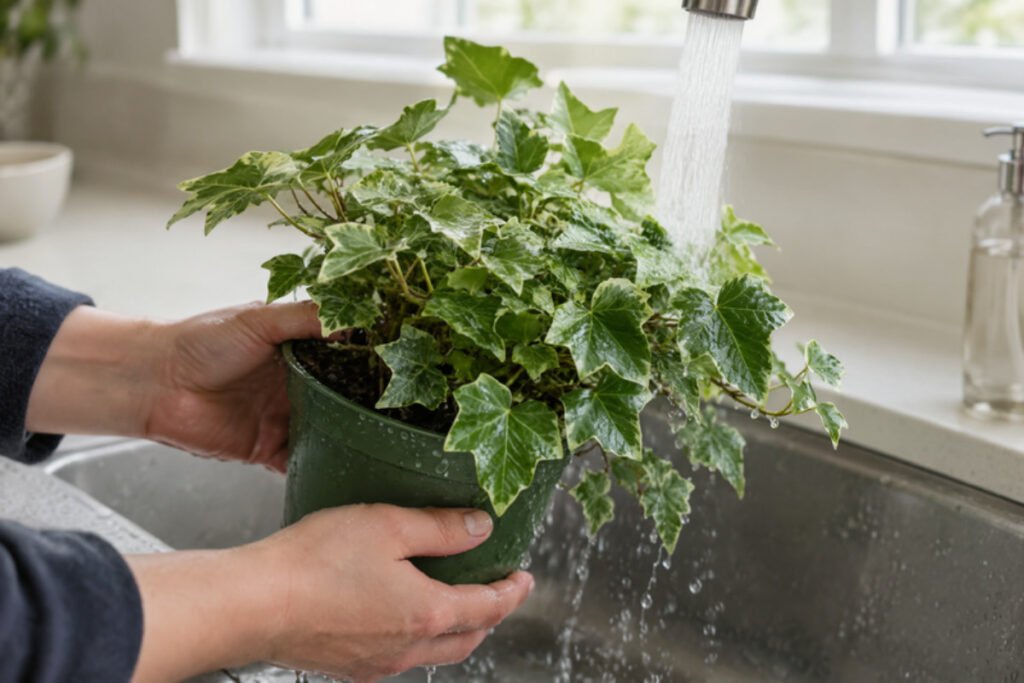
- Rinse it monthly. A lukewarm shower or a rinse in the sink washes off mites and dust.
- Raise humidity and keep it cool, which slows mites down.
- Treat an infestation by pruning the worst stems, then spraying insecticidal soap on both sides of the leaves every 5 to 7 days for a month.
- Clemson Extension suggests dunking the upside-down foliage in a bucket of water with insecticidal soap, with foil over the soil to hold it in.
More in our guide to houseplant pests.
Common English ivy problems and fixes
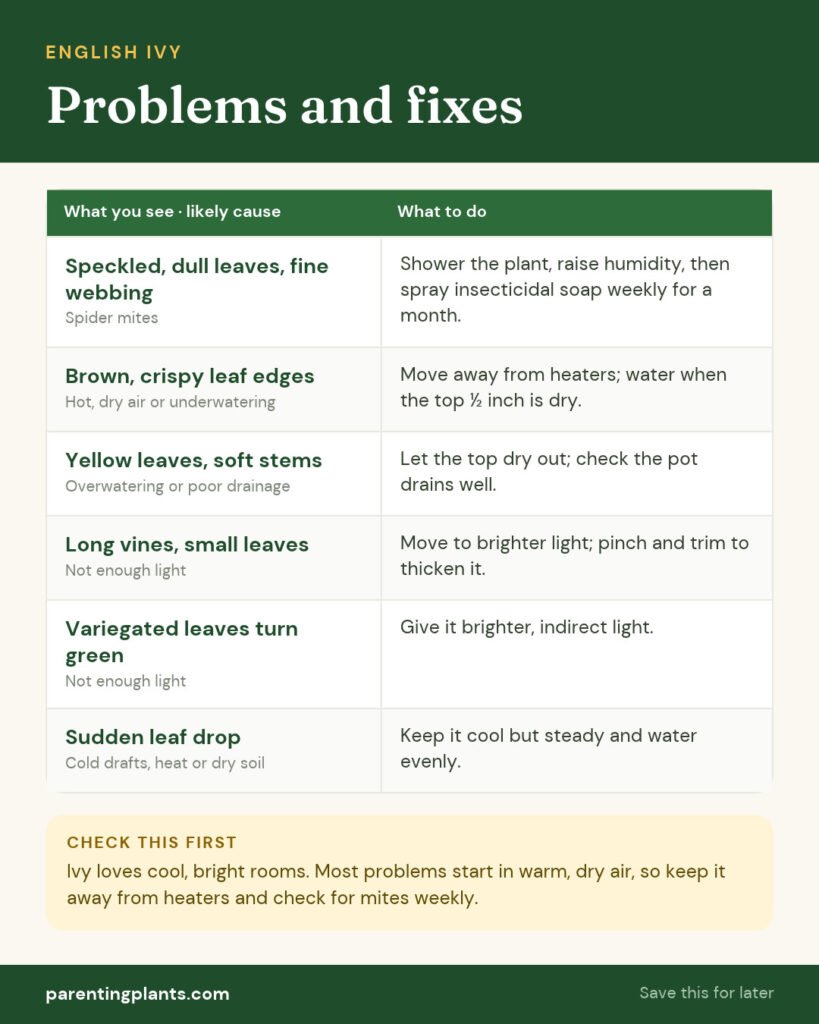
| What you see | Most likely cause | What to do |
|---|---|---|
| Dull, speckled leaves, fine webbing | Spider mites | Rinse, raise humidity, treat with insecticidal soap weekly |
| Brown, crispy leaf edges | Hot, dry air or underwatering | Move away from heaters; water when the top ½ inch is dry |
| Yellow leaves, soft stems | Overwatering or poor drainage | Let the top dry; check drainage; repot if roots are rotten |
| Long vines with small leaves | Not enough light | Move to brighter light; pinch and trim |
| Variegated leaves turning green | Not enough light | Give brighter, indirect light |
| Sudden leaf drop | Cold drafts, heat or dry soil | Keep it cool but steady; water evenly |
| Whole plant wilts, soil wet | Root rot | Take healthy cuttings to restart; repot in fresh mix |
More help in our guides to yellow leaves and root rot.
Is English ivy toxic to pets?
Yes. The ASPCA lists English ivy as toxic to cats and dogs. The leaves contain saponins that can cause vomiting, abdominal pain, drooling and diarrhea if eaten. Keep it in a hanging basket or on a high shelf if you have pets, or choose a pet-safe trailing plant such as hoya or string of turtles instead. Check any plant with our free Plant Toxicity Checker, and see our list of pet-friendly houseplants.
Keep it indoors. English ivy is invasive outdoors in many regions, including parts of North America and Australia, where it smothers native trees. Bag up clippings and put them in the trash rather than the compost or yard.
Quick action checklist
- Bright, indirect light; more light for variegated types
- Water when the top ½ inch is dry; never soggy
- Keep it cool: 50 to 70°F, away from heaters
- Rinse monthly and check for spider mites weekly
- Feed monthly in spring and summer
- Pinch tips and replant cuttings for a fuller plant
- Keep it out of reach of cats and dogs
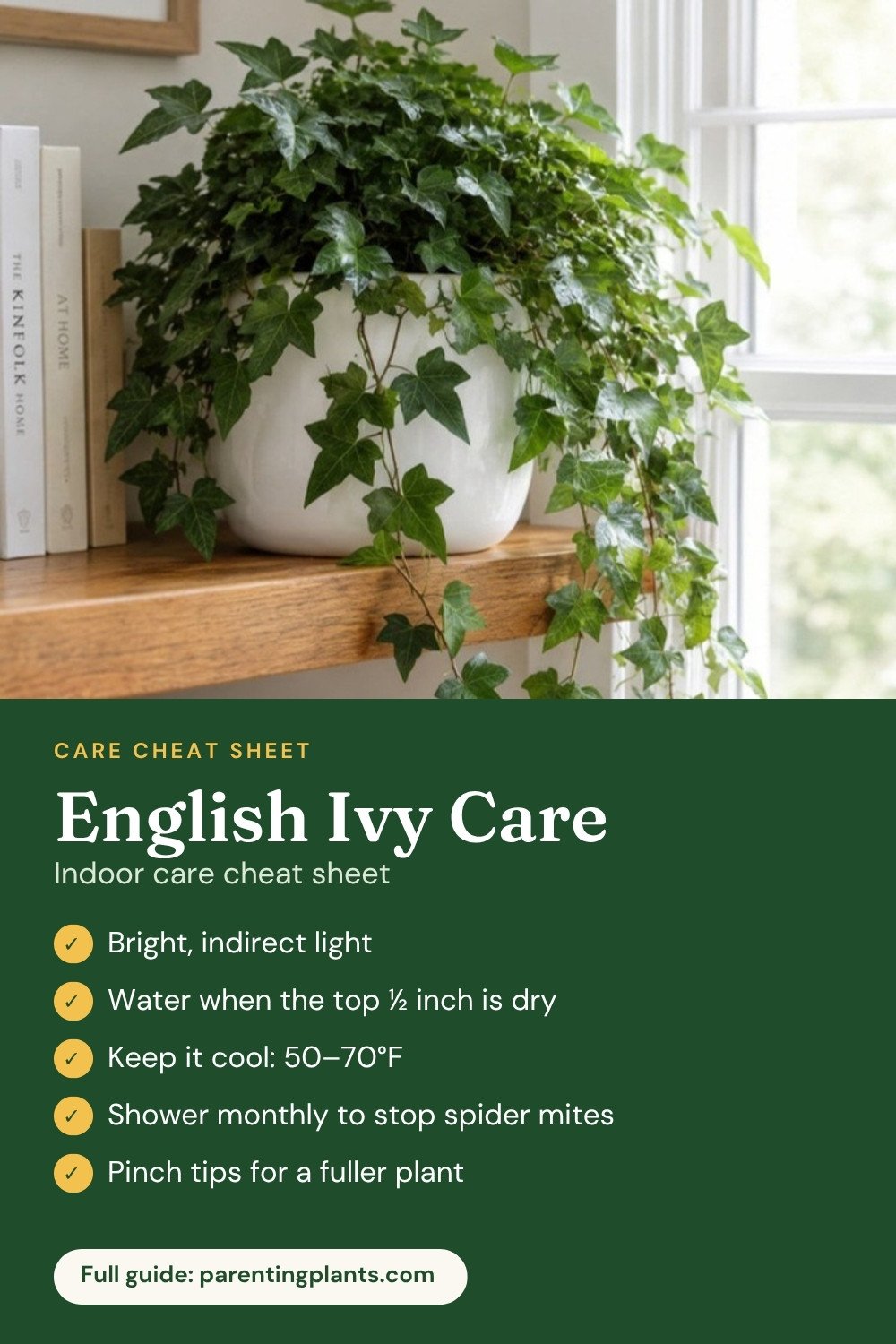
Save this for later: pin the cheat sheet below to your Pinterest plant board.
Want care for 30 popular houseplants on one page each?
Our printable Houseplant Care Cards include an English ivy card plus 29 other favourites, with light, water, pet safety and quick fixes at a glance.
English ivy FAQ
How often should I water English ivy?
When the top half inch of soil is dry. Water thoroughly, let it drain, and never leave it standing in water. In a cool room in winter it needs water less often.
Does English ivy need sunlight?
It grows best in bright, indirect light. It tolerates medium light, but grows leggy and variegated types lose their colour. Avoid hot afternoon sun.
Why is my English ivy turning brown and crispy?
Usually hot, dry air or underwatering. Move it away from heaters, raise humidity and check for spider mites.
How do I get rid of spider mites on ivy?
Rinse the plant, raise humidity, prune the worst stems and spray insecticidal soap every 5 to 7 days for about a month.
How do I make my ivy fuller?
Pinch the vine tips regularly, trim long vines in spring and plant rooted cuttings back into the pot.
Is English ivy toxic to cats and dogs?
Yes. The ASPCA lists it as toxic to cats and dogs; it can cause vomiting, drooling and diarrhea.
Can English ivy grow in water?
Cuttings root easily in water and can live there for a while, but they grow best once planted in soil.
Sources and further reading
This guide was written by Manik for Parenting Plants and checked against university extension advice. Last reviewed November 2026.
- Clemson Cooperative Extension: English ivy as a houseplant
- University of Illinois Extension: English ivy
- ASPCA: English ivy toxicity
Free tracker
Never forget to water your English Ivy again
Track your English Ivy and every other plant you own. A ready-made plant care tracker for Google Sheets and Notion that shows exactly which plants need water today, with 90 houseplants built in.
You're in!
Check your inbox, plant friend! 📩
Your free Plant Care Tracker is on its way. We've emailed you both versions, Google Sheets and Notion, plus a bonus printable 2027 plant calendar. It usually arrives within a few minutes.
Can't find it? Check your Promotions or Spam folder, and add manik@parentingplants.com to your contacts so you never miss a plant tip.