Special Offer: Use code ILOVEPLANTS for 25% off on all digital products! Shop Now →

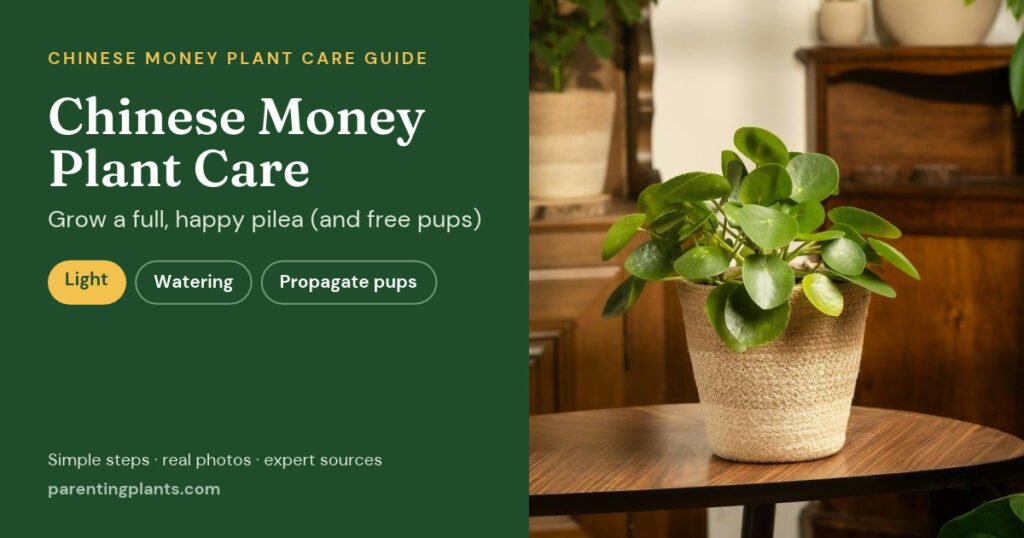
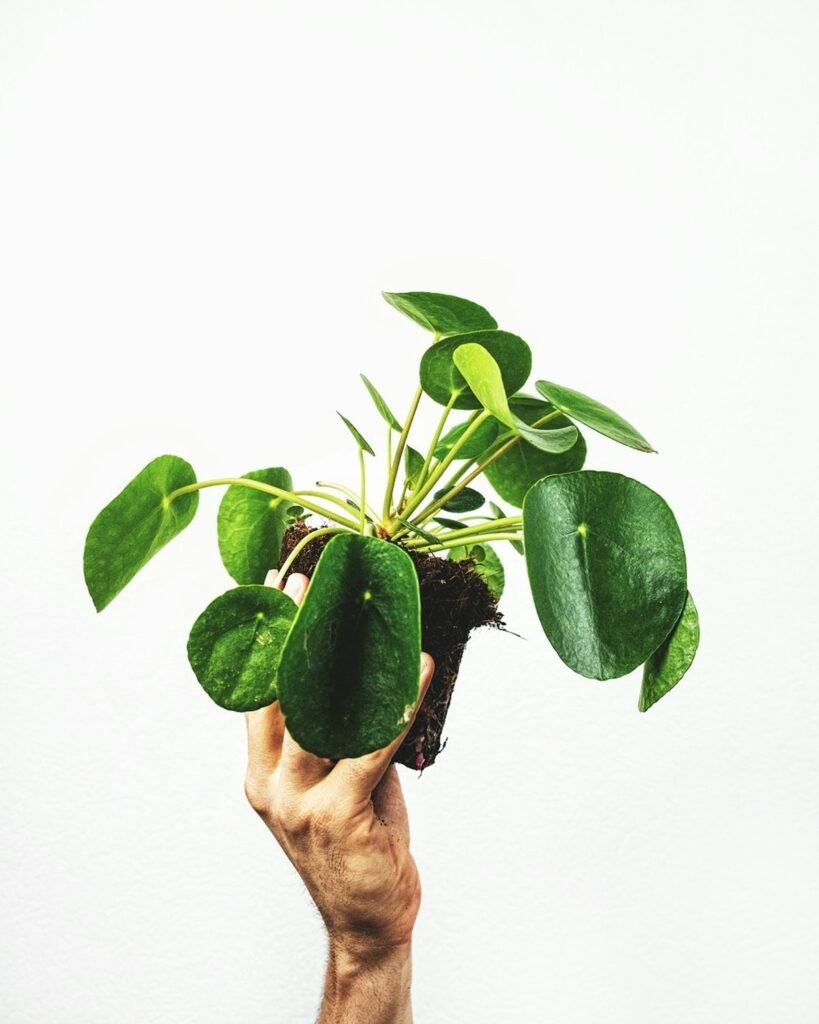
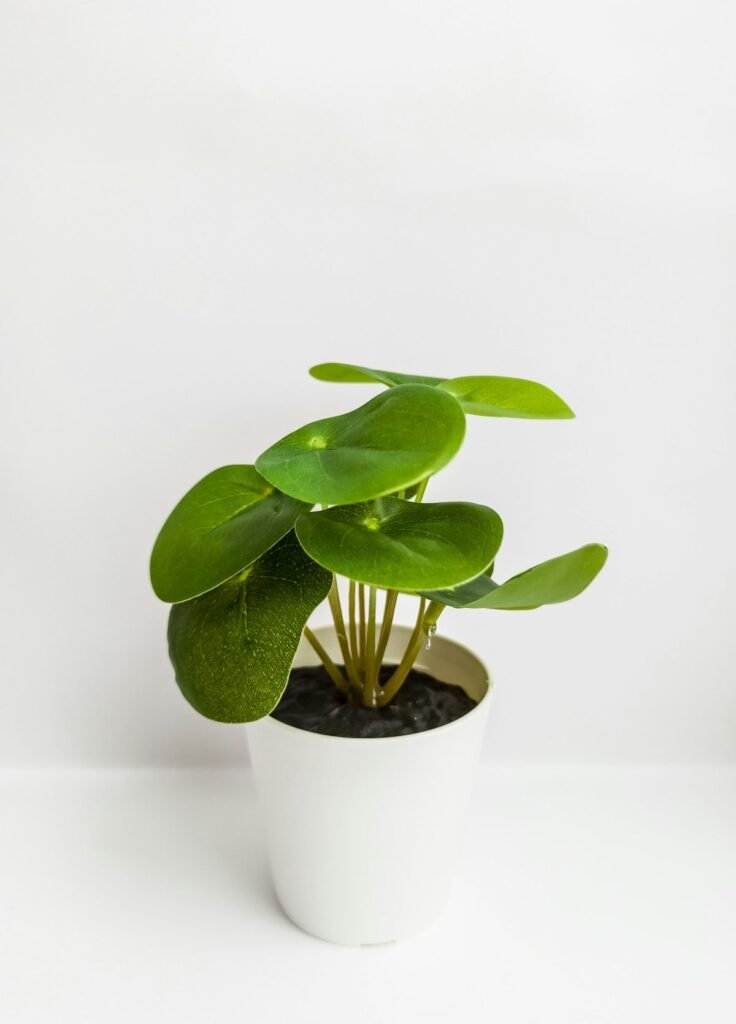
The Chinese money plant (Pilea peperomioides) is the plant people love to share. Its round, coin-shaped leaves sit on long stalks like tiny umbrellas, and a happy plant keeps producing baby plants, called pups, around its base. It comes from the cool, shady mountains of Yunnan in southern China. Plant lore says a Norwegian missionary, Agnar Espegren, carried it home in the 1940s, and for decades it spread across Europe only as gifts from friend to friend, which is why it is also called the friendship plant or missionary plant.
Short answer: Give a Chinese money plant bright, indirect light and turn it every week so it grows straight. Water when the top 1 to 2 inches of soil are dry (about the top third of the pot), and water less in winter. Keep it at 55 to 75°F (13 to 24°C), feed monthly in spring and summer, and pot up the pups once they are about 2 inches tall. It is considered safe for pets.
In this guide
Chinese money plant care at a glance
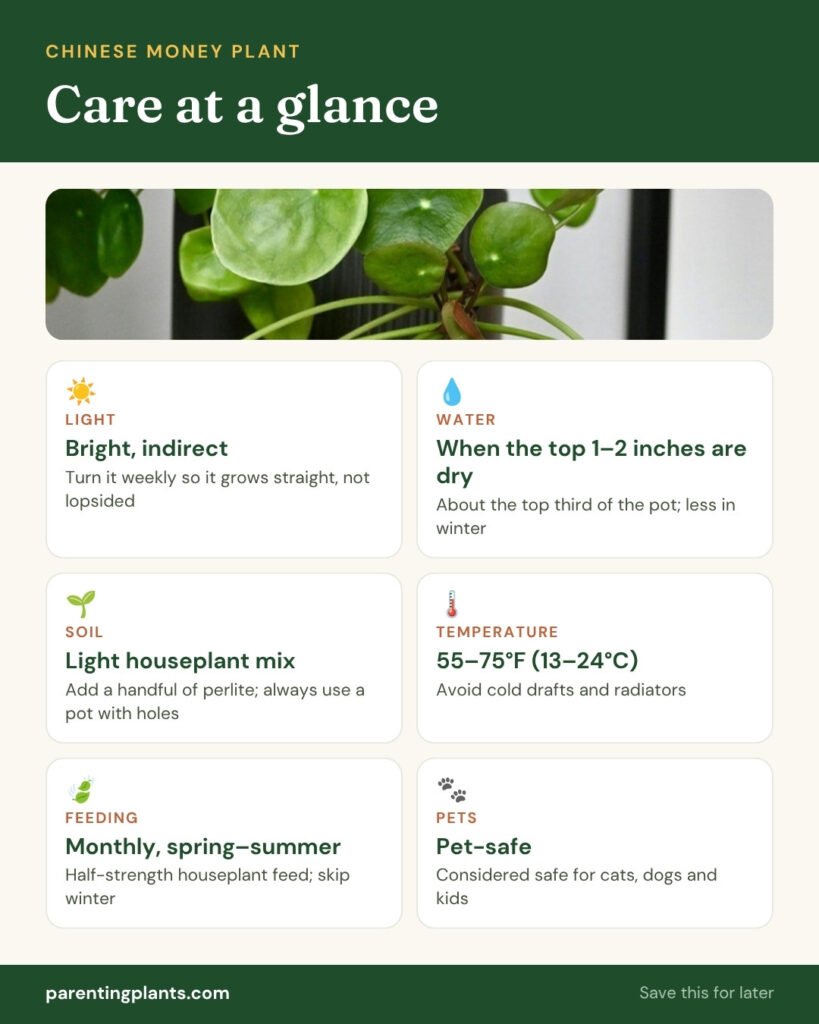
| Need | What a Chinese money plant wants |
|---|---|
| Light | Bright, indirect light; turn it weekly |
| Water | When the top 1 to 2 inches are dry; less in winter |
| Soil | Light houseplant mix with a little perlite; pot with holes |
| Temperature | 55 to 75°F (13 to 24°C); keep above 54°F (12°C) |
| Humidity | Average room humidity is fine |
| Feeding | Half-strength houseplant feed, monthly in spring and summer |
| Size | About 8 to 12 inches tall and wide; leaves around 4 inches across |
| Pets | Considered safe for cats, dogs and children |
Free Plant Care Tracker: Never forget a watering again. Get it free →
How much light does a Chinese money plant need?
Pilea grows best in bright, indirect light, near an east window or a few feet back from a south or west window. A little soft morning or winter sun is fine, but hours of strong summer sun can bleach and yellow the leaves. In low light it stretches, with long bare stalks, smaller leaves and a drooping, open shape.
Pilea leaves turn toward the light, so the whole plant quickly leans to one side. Give the pot a quarter turn every week and it stays round and upright. Not sure how bright your spot is? Check our houseplant lighting guide.
How often to water a Chinese money plant
Water when the top 1 to 2 inches of soil are dry, roughly the top third of the pot. Water slowly until it drains, then empty the saucer. In a bright room that is often once a week in summer and every 2 to 3 weeks in winter. Use room-temperature water; very cold water can shock the roots.
Pilea stores a little water in its thick stem and leaves, so it handles short dry spells better than soggy soil. Slightly droopy leaves that perk up after watering are the plant’s way of saying it is thirsty. The darker the spot, the drier you should keep it. See our watering guide for the finger test.
Best soil and pot
Use a light, well-draining houseplant mix, and add a handful of perlite for extra air. A pot with drainage holes is a must. Terracotta works well because it dries a little faster, which suits a plant that dislikes wet feet. Our potting soil guide has simple mix recipes.
Temperature and humidity
Keep it between 55 and 75°F (13 to 24°C), and do not let it drop below about 54°F (12°C). Normal household humidity is enough. Keep it away from cold, drafty windows in winter and from radiators and heat vents, which dry it out fast. A slightly cooler winter can even encourage tiny white flowers in spring.
Fertilizing
Feed with a balanced houseplant fertilizer at half strength about once a month in spring and summer, always on damp soil. Feed little or nothing in fall and winter. Pale, smaller new leaves in the growing season often mean it is hungry. More in our fertilizing guide.
How to make a pilea fuller
A single-stem pilea naturally grows into a little tree shape, losing lower leaves as it gets taller. To get a bushy plant:
- Give it more light and turn it weekly. This alone keeps stalks short and leaves big.
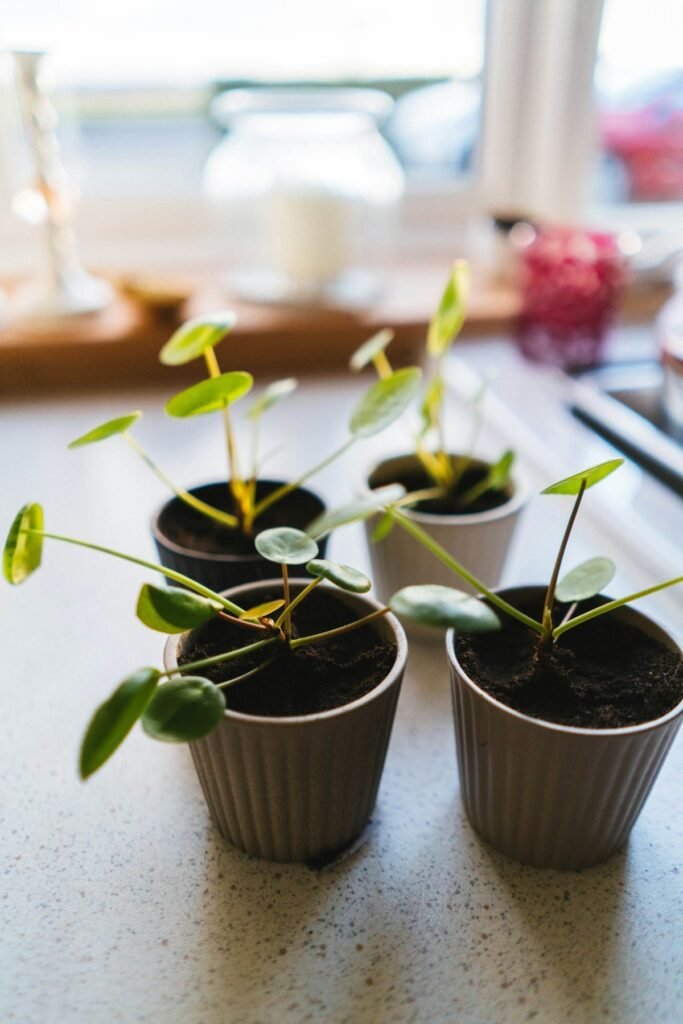
- Leave some pups in the pot. Pups growing around the base fill out the plant.
- Restart a tall, bare plant. Cut off the top with about 3 inches of stem, root it in water, then plant it back. The old stem often sprouts new pups.
How to propagate a Chinese money plant
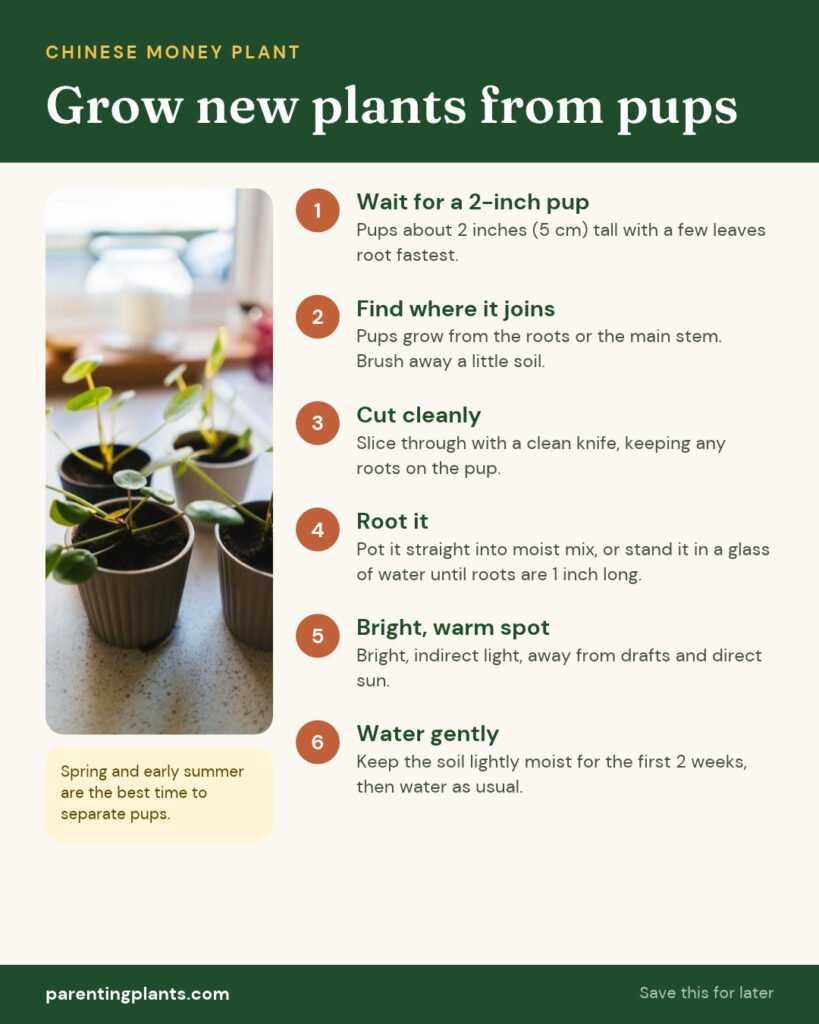
Propagating pilea is so easy that you will soon have plants to share. Spring and early summer are best.
From pups (easiest)
- Wait until a pup is about 2 inches (5 cm) tall with a few leaves.
- Brush away a little soil to see where it joins the roots or main stem.
- Cut through the connection with a clean knife, keeping any roots on the pup.
- Pot it straight into moist mix, or stand it in water until roots are about 1 inch long.
- Keep it in bright, indirect light, away from drafts and direct sun.
- Keep the soil lightly moist for the first 2 weeks, then water as usual.
From stem cuttings
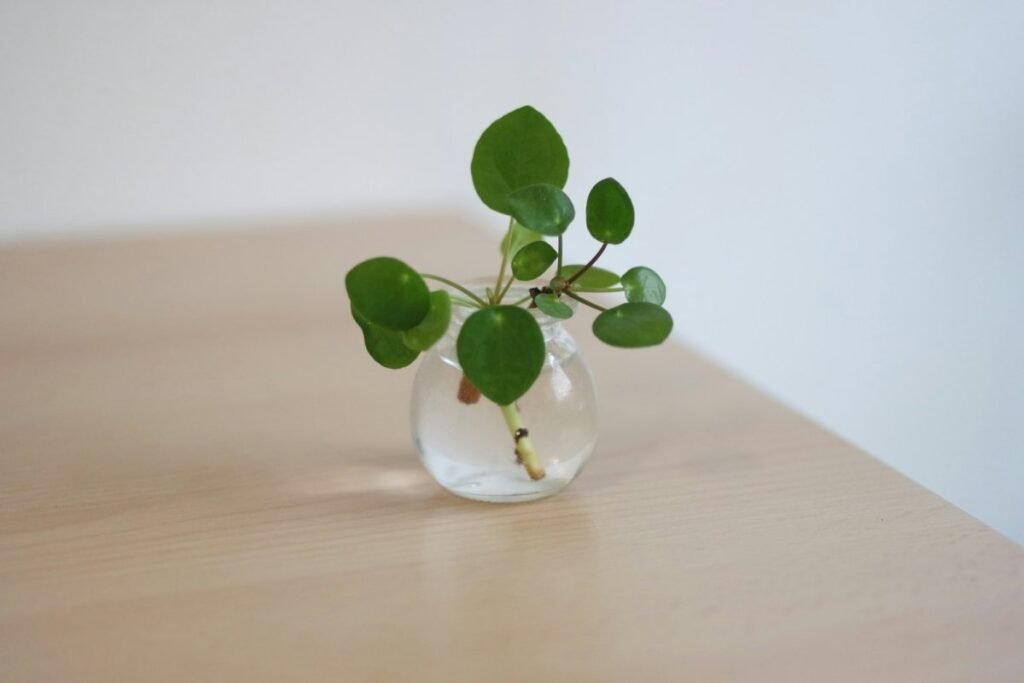
Pups growing from the main stem, or the top of a leggy plant, can be cut off and rooted in a glass of water. Keep the bottom of the stem under water, change the water weekly and pot it up once roots are about 1 inch long. Single leaves with a short stalk sometimes root too, but they rarely grow a new plant. More methods in our propagation guide.
When to repot
Repot every 1 to 2 years in spring, or when roots poke out of the drainage holes. Water the day before, move up just one pot size, and use fresh mix. This is also the perfect time to separate pups. Our repotting guide shows each step.
Common Chinese money plant problems and fixes
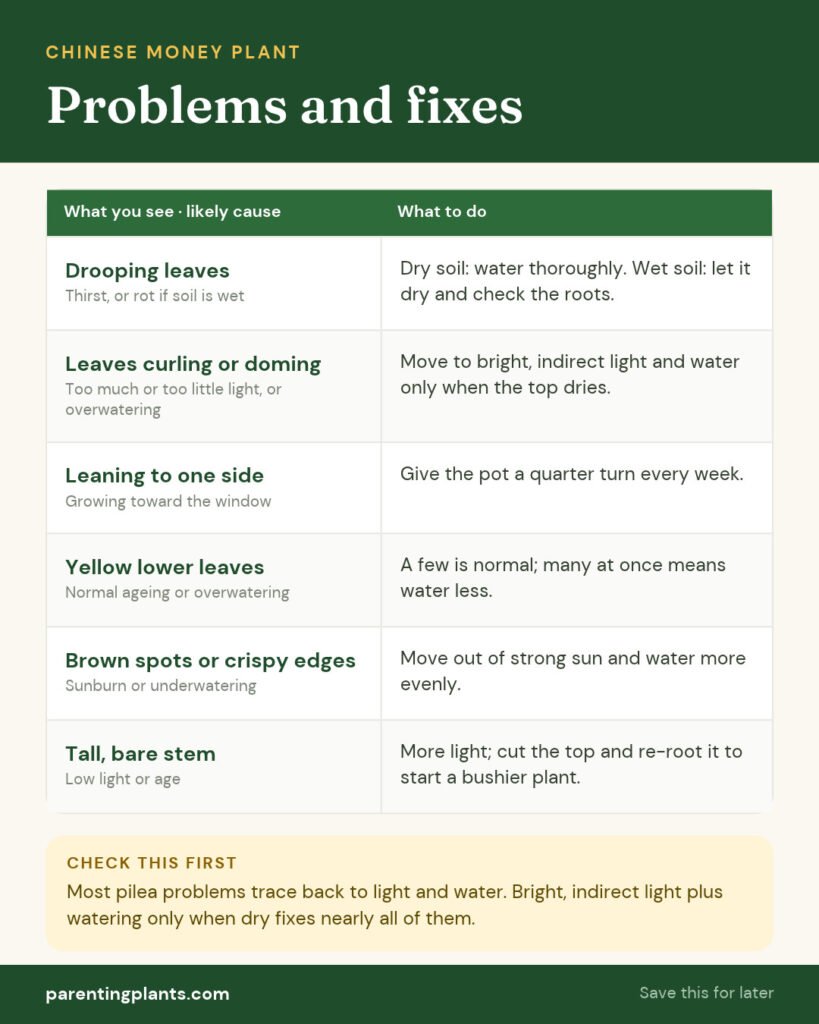
| What you see | Most likely cause | What to do |
|---|---|---|
| Drooping leaves, soil dry | Thirsty | Water thoroughly; it should perk up within hours |
| Drooping leaves, soil wet | Overwatering or root rot | Let it dry out; if stems are soft at the base, check the roots |
| Leaves curling or doming | Light or water imbalance, often overwatering in a dark spot | Move to bright, indirect light; water only when the top dries |
| Yellow leaves with clear veins | Too much direct sun | Move back from the window or add a sheer curtain |
| Lower leaves yellowing and dropping | Normal ageing, low light or overwatering | A few is normal; many at once means more light, less water |
| Plant leaning to one side | Growing toward the window | Turn the pot a quarter turn every week |
| Tall, bare stem | Low light or age | More light; cut the top and re-root it for a bushier plant |
| White dots under the leaves | Oedema (excess water) or mineral salts | Harmless; water a little less |
| Brown spots or crispy edges | Sunburn or underwatering | Move out of strong sun; water more evenly |
More help in our guides to yellow leaves, root rot and houseplant pests (watch for spider mites, mealybugs and fungus gnats).
Is a Chinese money plant safe for pets?
Yes. NC State Extension describes Pilea peperomioides as safe for pets and children, and the ASPCA lists its close relative, the aluminum plant (Pilea cadierei), as non-toxic to cats and dogs. It is a great choice for a pet-friendly home, though any plant can upset a stomach if eaten in quantity. See more pet-friendly houseplants or check a plant with our free Plant Toxicity Checker.
Not the same as the money tree. The Chinese money plant (Pilea) is a small, round-leaved plant. The money tree (Pachira) is a braided indoor tree with hand-shaped leaves. Their care is different; read our money tree care guide if that is the plant you have.
Quick action checklist
- Bright, indirect light; turn the pot every week
- Water when the top 1 to 2 inches are dry; less in winter
- Light, airy mix in a pot with holes
- Keep it at 55 to 75°F, away from drafts and radiators
- Feed monthly at half strength in spring and summer
- Pot up pups at about 2 inches tall, or leave some for a fuller plant
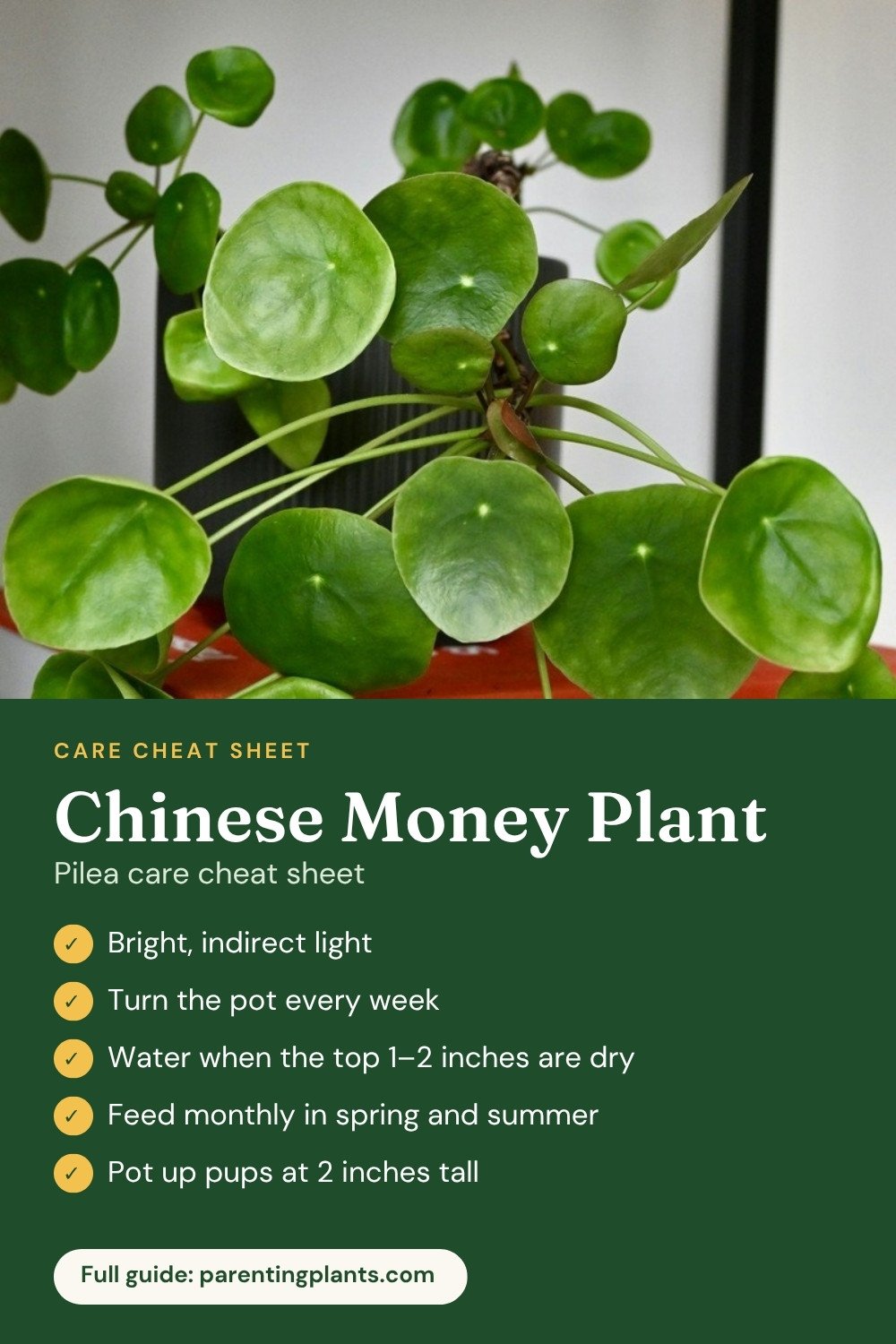
Save this for later: pin the cheat sheet below to your Pinterest plant board.
Want care for 30 popular houseplants on one page each?
Our printable Houseplant Care Cards include a Chinese money plant card plus 29 other favourites, with light, water, pet safety and quick fixes at a glance.
Chinese money plant FAQ
How often should I water a Chinese money plant?
When the top 1 to 2 inches of soil are dry, usually about once a week in summer and every 2 to 3 weeks in winter.
Why is my Chinese money plant drooping?
Usually it is thirsty and will perk up within hours of watering. If the soil is wet, it may be overwatered, so let it dry and check the roots.
Why are my pilea leaves curling?
Most often a light or water problem, especially overwatering in a dim spot. Move it to bright, indirect light and water only when the top dries.
How do I make my Chinese money plant grow straight?
Turn the pot a quarter turn every week so every side gets the same light.
When should I separate pilea pups?
When they are about 2 inches tall with a few leaves, ideally in spring or early summer.
Is a Chinese money plant safe for cats?
Yes. It is considered safe for cats, dogs and children.
Is a Chinese money plant the same as a money tree?
No. The Chinese money plant is Pilea peperomioides, a small plant with round leaves. The money tree is Pachira aquatica, an indoor tree.
Sources and further reading
This guide was written by Manik for Parenting Plants and checked against university extension and specialist houseplant advice. Last reviewed November 2026.
- NC State Extension Plant Toolbox: Pilea peperomioides (Chinese money plant)
- House Plants Expert (UK): Chinese missionary plant care
- ASPCA: Aluminum plant (Pilea) toxicity
Free tracker
Get the free Plant Care Tracker
A ready-made plant care tracker for Google Sheets and Notion that shows exactly which plants need water today, with 90 houseplants built in.
You're in!
Check your inbox, plant friend! 📩
Your free Plant Care Tracker is on its way. We've emailed you both versions, Google Sheets and Notion, plus a bonus printable 2027 plant calendar. It usually arrives within a few minutes.
Can't find it? Check your Promotions or Spam folder, and add manik@parentingplants.com to your contacts so you never miss a plant tip.


