Special Offer: Use code ILOVEPLANTS for 25% off on all digital products! Shop Now →

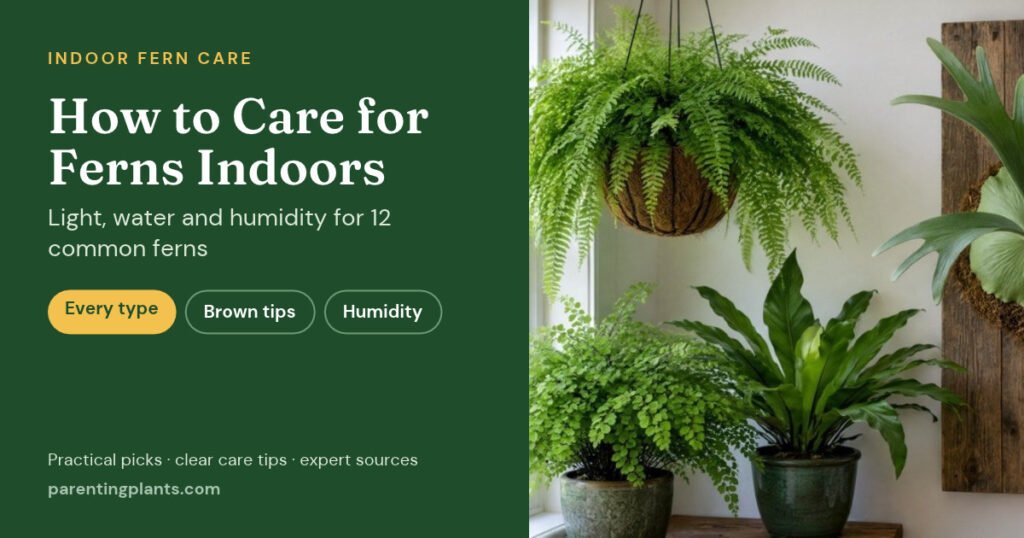
Ferns have a reputation for being fussy, and some of them are. But most failures come from treating every fern the same way. A staghorn fern wants to be soaked and dried like an orchid; a maidenhair fern will crisp up in a day if its soil dries out; a bird’s nest fern is nearly as easy as a pothos. Once you know which fern you have, caring for it is straightforward.
This guide starts with the basics that apply to almost every indoor fern, then gives specific care for the 12 most common types, a comparison table, and fixes for the problems ferns are known for: brown tips, shedding and yellow fronds.
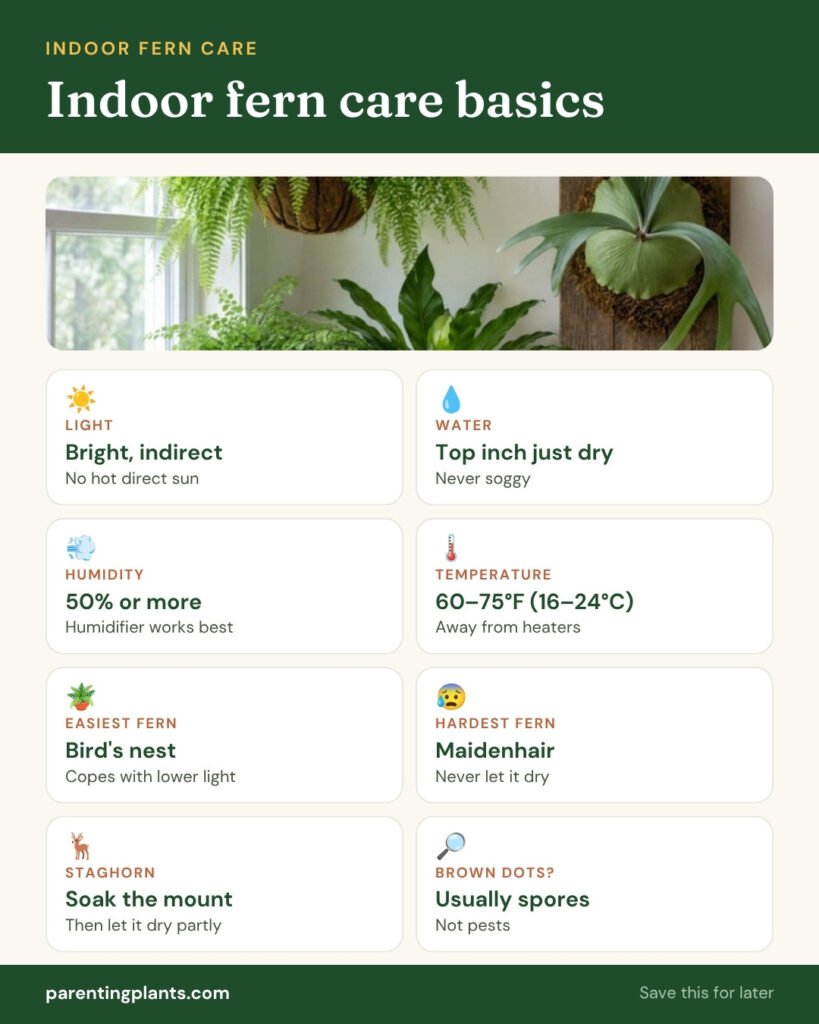
Short answer: Most indoor ferns need bright, indirect light (no direct midday sun), evenly moist but never soggy soil, humidity of 50% or more and temperatures of 60 to 75°F (16 to 24°C), away from heaters and draughts. Water when the top inch of soil is just dry for most ferns, but keep maidenhair constantly moist and let staghorn, button and rabbit’s foot ferns dry more between waterings. The easiest ferns for beginners are bird’s nest, Kimberly queen and blue star.
In this guide
Indoor ferns compared
Use this table to find your fern and see how its needs differ from the rest. Difficulty is for an average heated home.
| Fern | Light | Watering | Humidity | Difficulty | Pets |
|---|---|---|---|---|---|
| Boston | Bright, indirect | Keep evenly moist | High | Moderate | Safe |
| Kimberly queen | Medium to bright | Top inch dry | Medium | Easy | Generally safe |
| Lemon button | Medium to bright | Keep evenly moist | Medium to high | Easy to moderate | Generally safe |
| Maidenhair | Medium, indirect | Never let it dry | High | Hard | Safe |
| Bird’s nest | Low to medium | Top inch dry; not in centre | Medium | Easy | Safe |
| Staghorn | Bright, indirect | Soak, then dry partly | Medium to high | Moderate | Safe |
| Rabbit’s foot | Bright, indirect | Top inch dry | Medium | Moderate | Safe |
| Blue star | Low to bright | Top inch dry | Medium | Easy | Generally safe |
| Button | Medium to bright | Top half dry | Low to medium | Moderate | Safe |
| Holly | Low to medium | Top inch dry | Medium | Easy | Generally safe |
| Crocodile | Medium, indirect | Keep evenly moist | High | Moderate | Unknown; keep away |
| Asparagus “fern” | Bright, indirect | Top inch dry | Medium | Easy | Toxic |
Free Plant Care Tracker: Never forget to water your How to again. Get it free →
Light: brighter than you think
Ferns grow in shade in the wild, but forest shade is still much brighter than the middle of a living room. Most indoor ferns do best in bright, indirect light: close to an east-facing window, or a few feet back from a south or west window with a sheer curtain. Direct midday or afternoon sun scorches the fronds.
Only a few ferns cope with true low light: bird’s nest, blue star and holly ferns are the most tolerant. If your fern is pale, sparse and growing slowly, it probably needs more light. Our houseplant lighting guide explains how to judge a spot.
Watering: evenly moist, never soggy
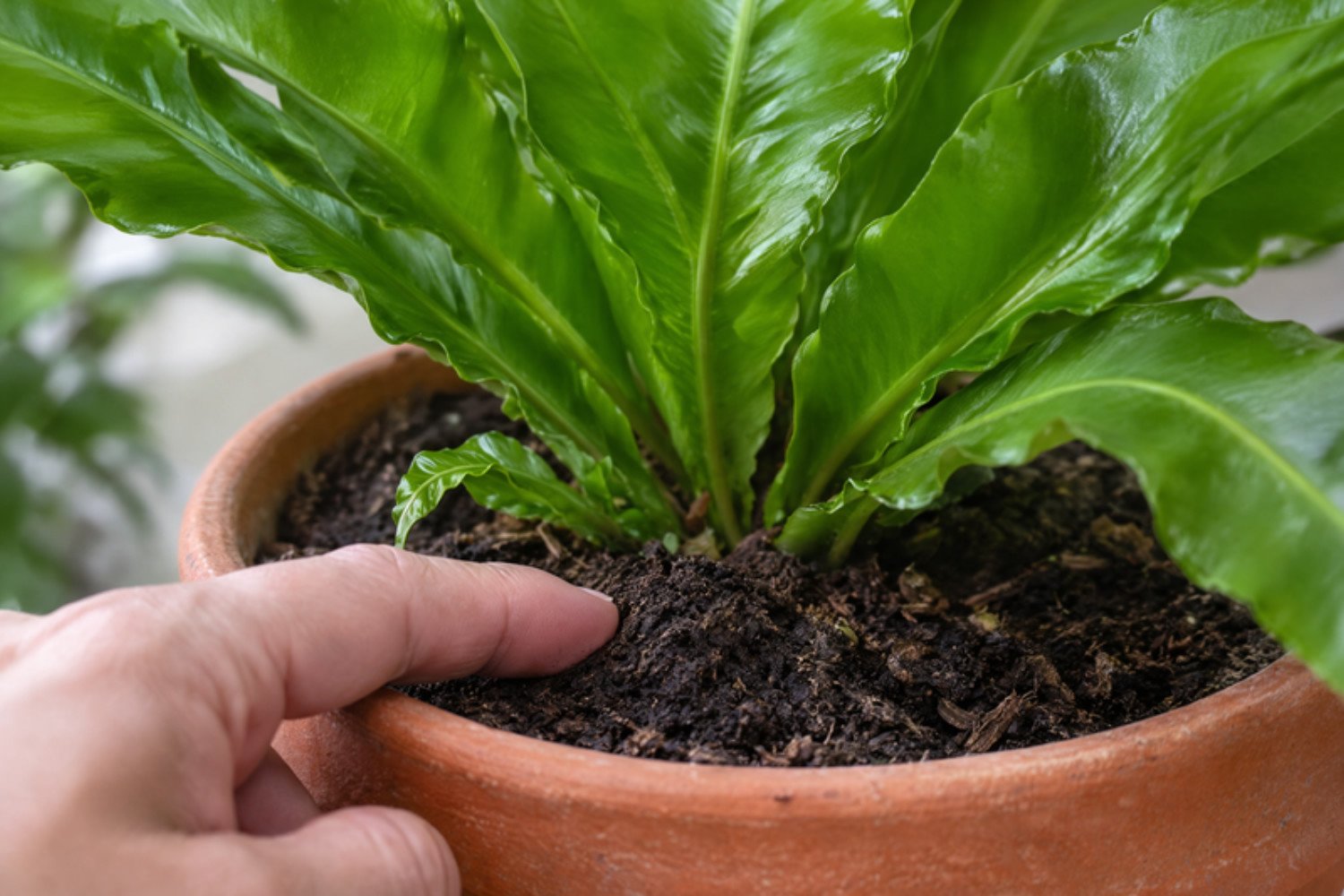
Ferns have fine, shallow roots that dislike both extremes: they shrivel quickly when dry and rot in waterlogged soil. For most ferns, water thoroughly when the top inch of soil feels just dry, then let the excess drain away. In spring and summer that is often every 3 to 5 days; in winter, every 7 to 10 days.
- Check, do not schedule. Push a finger into the soil; water when it feels barely dry at the top but still cool and slightly damp below.
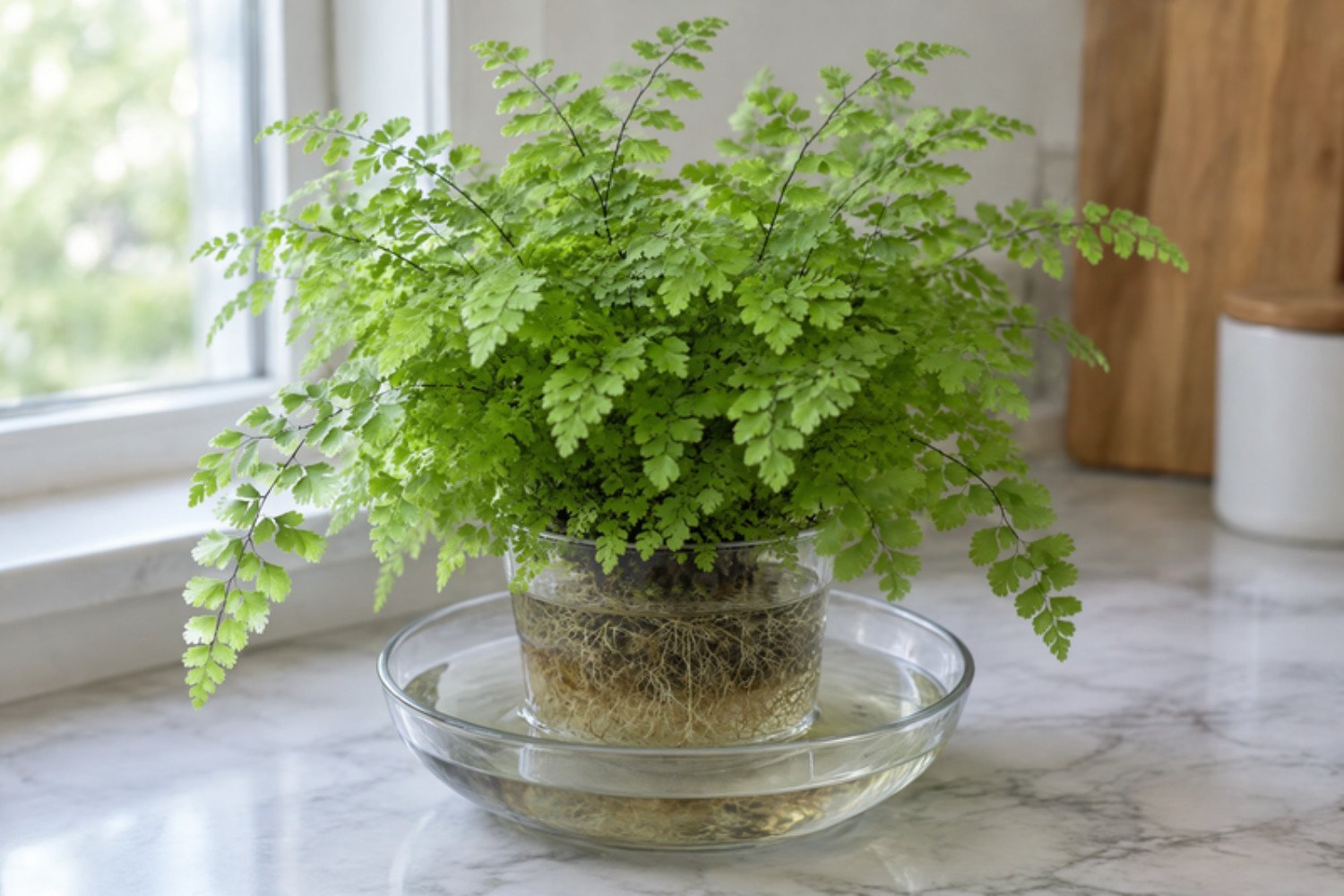
- Bottom watering works well for small ferns: stand the pot in a bowl of water for 15 to 20 minutes, then drain.
- Use room-temperature water. Cold water can shock the roots. Rain or filtered water helps if your tap water is hard.
- Exceptions: keep maidenhair constantly moist; let staghorn, button and rabbit’s foot ferns dry more between waterings.
Humidity: the real reason ferns struggle
Most homes, especially with central heating in winter, have humidity of 20 to 40%. Many ferns prefer 50% or more, and low humidity is the main cause of crispy brown frond tips. Ways to help:
- Use a humidifier near your ferns. It is the only method that raises humidity reliably.
- Group plants together so they create a slightly moister pocket of air.
- Grow them in a bright bathroom or kitchen, which are naturally more humid.
- Pebble trays help a little around the plant. Misting only raises humidity for a few minutes, so do not rely on it.
More detail in our houseplant humidity guide.
Soil, temperature and feeding
- Soil: a light, moisture-holding but free-draining mix. A peat-free or coir-based houseplant compost with about one-quarter fine bark and perlite suits most ground-growing ferns. Epiphytic ferns (staghorn, rabbit’s foot) need a chunky orchid-bark mix or a mount. See our potting soil guide.
- Temperature: 60 to 75°F (16 to 24°C) suits most ferns. Keep them away from radiators, heat vents, air conditioning and cold winter windows.
- Feeding: ferns are light feeders. Use a balanced liquid fertilizer at half strength (quarter strength for maidenhair) once a month in spring and summer only. Too much fertilizer burns the roots and browns the tips.
- Repotting: in spring, only when roots fill the pot, and into a pot just 1 to 2 inches wider. Boston, Kimberly queen and maidenhair ferns can be divided when repotting. See our repotting guide.
How to care for every common type of indoor fern
1. Boston fern (Nephrolepis exaltata)
Light: Bright, indirect · Water: Keep evenly moist · Size: 1 to 3 ft wide · Pets: Non-toxic to cats and dogs (ASPCA)
The classic hanging fern, with long, arching fronds. It needs bright light, steady moisture and good humidity, and it sheds small leaflets when any of those are lacking. Hang it in a bright bathroom or by an east window, and check the soil every few days in summer.
➜ Full care: Boston fern care guide
2. Kimberly queen fern (Nephrolepis obliterata)
Light: Medium to bright, indirect · Water: When the top inch is dry · Size: 2 to 3 ft · Pets: Generally considered non-toxic (close relative of the Boston fern)
Looks like an upright Boston fern but is much more forgiving. It handles lower humidity and the odd missed watering, and sheds far less. If Boston ferns keep failing for you, try this one.
3. Lemon button fern (Nephrolepis cordifolia ‘Duffii’)
Light: Medium to bright, indirect · Water: Keep evenly moist · Size: 8 to 12 in · Pets: Generally considered non-toxic
A compact fern with tiny round leaflets and a faint lemon scent when brushed. It is ideal for shelves, desks and terrariums. Keep it moist and out of direct sun.
4. Maidenhair fern (Adiantum raddianum)
Light: Medium, indirect · Water: Never let it dry out · Size: 1 to 2 ft · Pets: Non-toxic to cats and dogs (ASPCA)
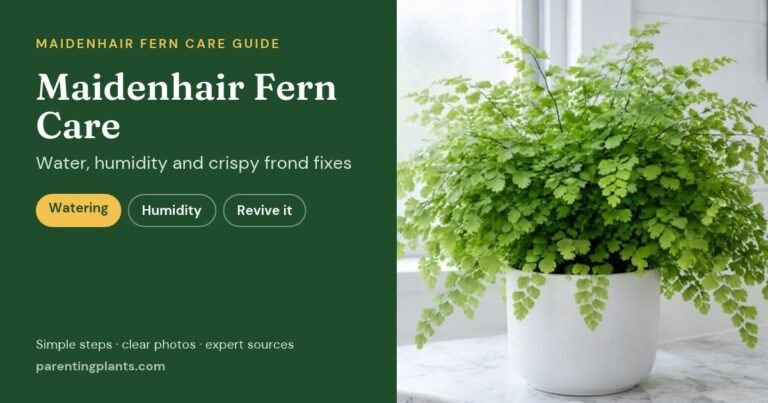
The most delicate and beautiful indoor fern, and the hardest. Its fine fronds shrivel within a day if the soil dries, and dry air browns them. Keep the soil constantly moist, give it high humidity, and avoid draughts. Crispy fronds can be cut back to the soil; the plant often regrows from the roots.
➜ Full care: Maidenhair fern care guide
5. Bird’s nest fern (Asplenium nidus)
Light: Low to medium, indirect · Water: When the top inch is dry; water the soil, not the centre · Size: 1 to 2 ft · Pets: Non-toxic to cats and dogs (ASPCA)
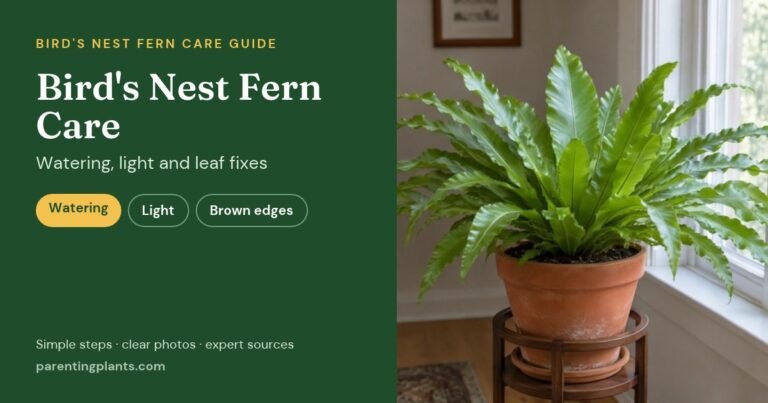
The easiest fern to grow indoors. Its broad, glossy, undivided fronds form a rosette like a nest, and it copes with average humidity and lower light. Never pour water into the central crown, which causes rot.
➜ Full care: Bird’s nest fern care guide
6. Staghorn fern (Platycerium bifurcatum)
Light: Bright, indirect · Water: Soak the mount weekly in summer, every 2 to 3 weeks in winter · Size: 1 to 3 ft wide · Pets: Non-toxic to cats and dogs (ASPCA)
An epiphyte that grows on trees in the wild, so it is usually mounted on a board with moss. It has two types of frond: flat, round “shield” fronds that hug the mount (they turn brown naturally; do not remove them) and antler-like fertile fronds. Water by soaking the whole mount in a sink for 10 to 20 minutes, then let it drain and dry partly before the next soak. Signs of thirst: fronds slightly wilted and the mount feels light.
7. Rabbit’s foot fern (Davallia fejeensis)
Light: Bright, indirect · Water: When the top inch is dry · Size: 1 to 2 ft · Pets: Non-toxic to cats and dogs (ASPCA)
Grown for its furry, creeping rhizomes that spill over the edge of the pot. Do not bury the rhizomes; they need to stay on the surface. Use a shallow pot with an airy mix and mist the rhizomes occasionally.
8. Blue star fern (Phlebodium aureum)
Light: Low to bright, indirect · Water: When the top inch is dry · Size: 1 to 2 ft · Pets: Generally considered non-toxic
Wavy, blue-green fronds and a relaxed nature. Blue star copes with lower light and average humidity better than most ferns, which makes it one of the best choices for beginners. Like rabbit’s foot fern, it has surface rhizomes that should not be buried.
9. Button fern (Pellaea rotundifolia)
Light: Medium to bright, indirect · Water: When the top half of the soil is dry · Size: 6 to 12 in · Pets: Non-toxic to cats and dogs (ASPCA)
A small fern with round, leathery leaflets. Unusually for a fern, it prefers to dry out more between waterings and dislikes soggy soil, so treat it more like a peperomia than a Boston fern. Average humidity is fine.
10. Holly fern (Cyrtomium falcatum)
Light: Low to medium, indirect · Water: When the top inch is dry · Size: 1 to 2 ft · Pets: Generally considered non-toxic
Glossy, holly-like leaflets on a tough, compact plant. It tolerates lower light, lower humidity and cooler rooms (down to about 50°F) better than tropical ferns, making it good for cool porches and hallways.
11. Crocodile fern (Microsorum musifolium)
Light: Medium, indirect · Water: Keep evenly moist · Size: 1 to 2 ft · Pets: Toxicity not well documented; keep away from pets
Bright green fronds with a crinkled, crocodile-skin texture. It needs warmth, steady moisture and high humidity, so it suits a bright bathroom. Brown edges mean the air is too dry.
12. Asparagus fern (not a true fern) (Asparagus setaceus and A. densiflorus)
Light: Bright, indirect · Water: When the top inch is dry · Size: 1 to 3 ft · Pets: Toxic to cats and dogs (ASPCA)
Sold alongside ferns but actually related to edible asparagus. It reproduces by seed, not spores, has small thorns on the stems and stores water in tuberous roots, so it handles drying out better than true ferns. Its berries and leaves are toxic to pets, and the sap can irritate skin.
Common fern problems and how to fix them
| What you see | Likely cause | What to do |
|---|---|---|
| Brown, crispy frond tips | Low humidity or soil drying out | Raise humidity; water more consistently |
| Leaflets shedding everywhere | Dry soil, dry air or a recent move | Water evenly; raise humidity; give it time to settle |
| Yellow fronds, soggy soil | Overwatering or poor drainage | Let the top inch dry; check roots for rot |
| Pale, washed-out fronds | Too much direct sun | Move to bright, indirect light |
| Sparse, slow growth | Too little light | Move closer to a window |
| Brown, mushy crown | Crown rot (often bird’s nest) | Water the soil, not the centre; remove soft tissue |
| Brown tips plus white crust on soil | Fertilizer or salt build-up | Flush the soil with water; feed less |
| Fine webbing, speckled fronds | Spider mites (dry air) | Shower the plant; raise humidity; treat with insecticidal soap |
For other symptoms, try our free Plant Doctor or read our guide to yellowing leaves.
Spores or pests? How to tell
Mature fern fronds often develop brown or orange dots, lines or patches on their undersides. These are sori, clusters of spores, and they are a sign of a healthy, mature fern. They are often mistaken for scale insects.
| Spores (normal) | Scale insects (pest) | |
|---|---|---|
| Where | Only on the underside of fronds | Undersides, tops and stems |
| Pattern | Neat, even rows or along the edges | Random, scattered bumps |
| Texture | Slightly fuzzy or powdery | Smooth, shell-like bumps that flick off with a fingernail |
| Other signs | None; plant looks healthy | Sticky residue, yellowing, ants |
If you do find scale, see our houseplant pests guide for safe treatments.
Which fern should you start with?
- Easiest overall: bird’s nest fern, then blue star and Kimberly queen.
- For low light: bird’s nest, blue star or holly fern.
- For a bright bathroom: Boston, maidenhair or crocodile fern.
- For a small shelf: lemon button or button fern.
- For a statement piece: a mounted staghorn fern.
- With pets: any true fern above with a safe rating; avoid asparagus fern. See our guides to cat-safe and dog-safe houseplants.
Caring for ferns in winter
Winter is the hardest season for indoor ferns: days are short, heating dries the air, and windows are cold. Move ferns closer to the light, keep them away from radiators and heat vents, run a humidifier, water a little less often (but never let most ferns dry out completely), and stop feeding until spring. Some leaflet drop in winter is normal.
Quick checklist
- Give most ferns bright, indirect light, never hot direct sun
- Water when the top inch is just dry; keep maidenhair always moist
- Aim for 50% humidity; a humidifier works best
- Keep at 60 to 75°F, away from heaters and draughts
- Feed at half strength monthly in spring and summer only
- Brown dots under fronds are usually spores, not pests
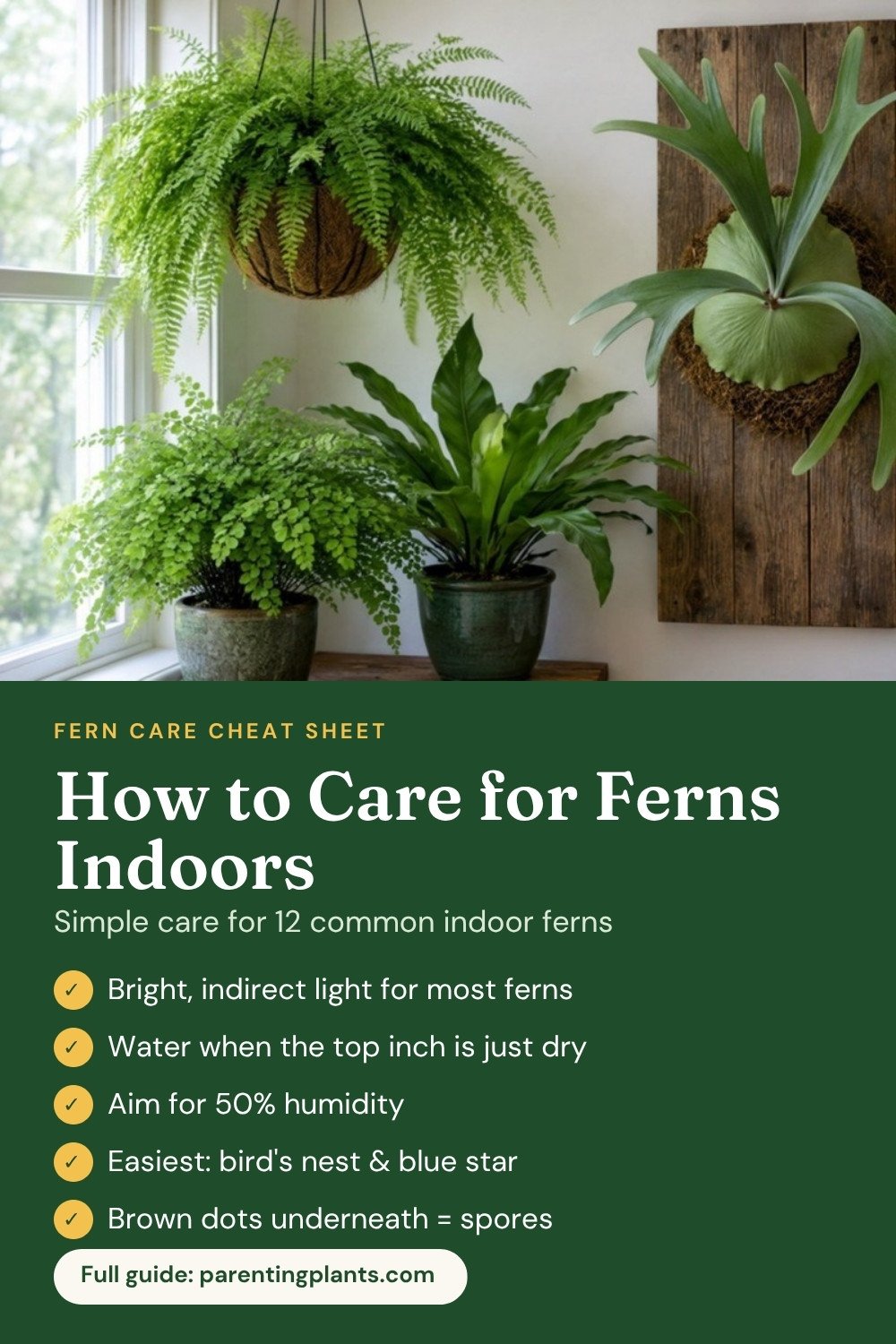
Save this for later: pin the cheat sheet below to your Pinterest plant board.
Leaves turning brown, crispy or yellow?
The Houseplant Rescue Guide matches 26 common plant problems to a clear photo, then gives you simple steps to fix each one and stop it coming back. No jargon, 50 pages, with printable checklists.
Indoor fern care FAQ
How do you take care of a fern indoors?
Give it bright, indirect light, keep the soil evenly moist but not soggy, raise humidity to around 50%, keep it at 60 to 75°F away from heaters, and feed lightly in spring and summer.
How often should I water an indoor fern?
Usually when the top inch of soil feels just dry, often every 3 to 5 days in summer and every 7 to 10 days in winter. Maidenhair ferns need watering more often; staghorn and button ferns less often.
What is the easiest fern to grow indoors?
Bird’s nest fern is the easiest, followed by blue star fern and Kimberly queen fern. All three cope with average humidity better than Boston or maidenhair ferns.
Why are my fern’s tips turning brown?
Usually low humidity or soil that dries out between waterings. Fertilizer build-up and hot, dry air from heaters are other common causes.
Do ferns like to be misted?
Misting only raises humidity for a few minutes. A humidifier, grouping plants or growing ferns in a bright bathroom works much better.
Can ferns grow in low light?
A few can. Bird’s nest, blue star and holly ferns tolerate lower light, but most ferns, including Boston and maidenhair, grow best in bright, indirect light.
Are ferns safe for cats and dogs?
Most true ferns, including Boston, maidenhair, bird’s nest, staghorn and rabbit’s foot ferns, are listed as non-toxic by the ASPCA. Asparagus fern is not a true fern and is toxic to pets.
Sources and further reading
This guide was written by Manik at Parenting Plants and checked against the expert and university resources below. Read how we research and update our guides in our editorial guidelines.
- University of Minnesota Extension: Tropical ferns as houseplants
- UConn Home and Garden Education Center: Ferns: indoor growing
- UNH Extension: Do ferns make good houseplants?
- Wisconsin Horticulture, UW–Madison Extension: Boston fern
- Clemson Cooperative Extension (HGIC): How to grow and care for bird’s nest fern
- ASPCA: Toxic and non-toxic plants list
Looking for a specific plant? Browse all our houseplant care guides A to Z.
Free tracker
Never forget to water your How to again
Track your How to and every other plant you own. A ready-made plant care tracker for Google Sheets and Notion that shows exactly which plants need water today, with 90 houseplants built in.
You're in!
Check your inbox, plant friend! 📩
Your free Plant Care Tracker is on its way. We've emailed you both versions, Google Sheets and Notion, plus a bonus printable 2027 plant calendar. It usually arrives within a few minutes.
Can't find it? Check your Promotions or Spam folder, and add manik@parentingplants.com to your contacts so you never miss a plant tip.