Special Offer: Use code ILOVEPLANTS for 25% off on all digital products! Shop Now →


A Christmas cactus can flower for you every winter for decades. University of Minnesota Extension notes that holiday cacti can live for more than 100 years, and many families pass them down. The secret is that it is not a desert cactus. It comes from the cool, misty mountain forests of Brazil, where it grows on tree branches. Give it what it has there, and it rewards you with a wave of pink, red, white or yellow flowers right when the days are darkest.
Short answer: Grow Christmas cactus in bright, indirect light and water when the top inch of soil is dry. Keep it at 65 to 70°F (18 to 21°C) by day. To make it bloom, give it about 6 weeks of 12 to 14 hour dark nights or cool nights of 50 to 55°F (10 to 13°C) in fall. Once buds appear, do not move it and keep the soil evenly moist. It is safe for cats and dogs.
In this guide
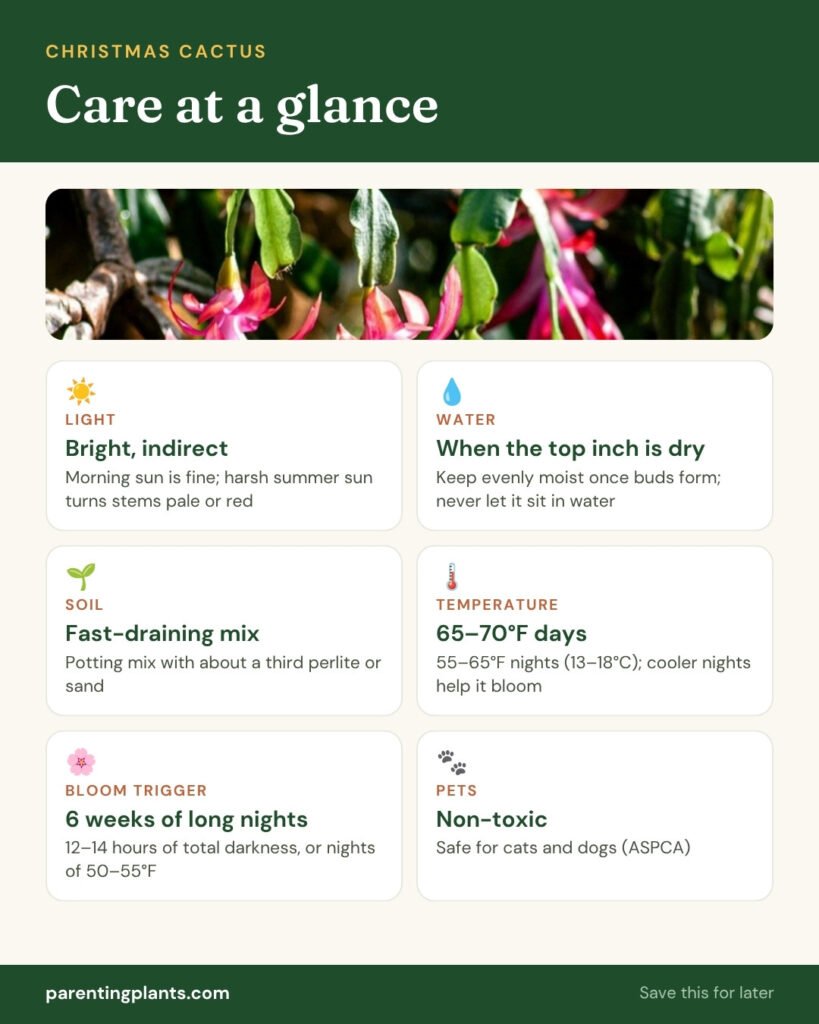
Christmas cactus care at a glance
| Need | What Christmas cactus wants |
|---|---|
| Light | Bright, indirect light; gentle morning sun is fine |
| Water | When the top inch of soil is dry; evenly moist while in bud |
| Soil | Fast-draining mix: potting soil with about a third perlite |
| Temperature | 65 to 70°F (18 to 21°C) days, 55 to 65°F (13 to 18°C) nights |
| Bloom trigger | 6 weeks of long nights (12 to 14 hours dark) or 50 to 55°F nights |
| Feeding | Half-strength, monthly from spring to late summer |
| Repotting | Every 3 years in spring; blooms best slightly pot-bound |
| Pets | Non-toxic to cats and dogs (ASPCA) |
Free Plant Care Tracker: Never forget to water your Christmas Cactus again. Get it free →
Christmas, Thanksgiving or Easter cactus?
Three similar plants are all sold as “holiday cactus”, and many plants labelled Christmas cactus in stores are really Thanksgiving cacti, which bloom about a month earlier. Care is almost the same, but knowing which one you have tells you when to start the bloom routine. Look at the edges of the flat stem segments:
| Type | Stem segments | Flowers | Blooms |
|---|---|---|---|
| Thanksgiving cactus (Schlumbergera truncata) | 2 to 4 sharp, claw-like teeth on each side | Held flat; yellow pollen | Mid-November to December |
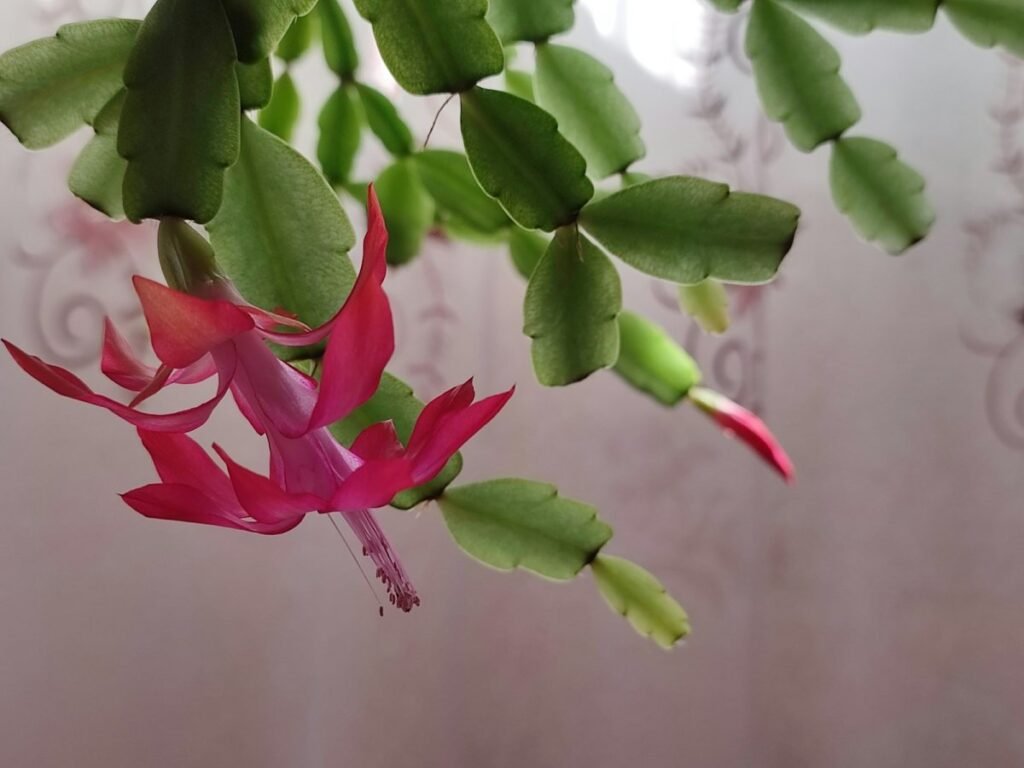
| Christmas cactus (Schlumbergera × buckleyi) | Rounded, scalloped edges | Hang down; purplish-brown pollen | December to January |
| Easter cactus (Schlumbergera gaertneri) | Rounded segments with tiny bristles | Star-shaped, open flat | Late winter to spring |
How much light does a Christmas cactus need?
Christmas cactus likes bright, filtered light, like the dappled light under a tree canopy. An east window, or a spot a few feet back from a south or west window, is ideal. In fall and winter it can take more direct sun, which helps it set buds.
- Too much summer sun: stems turn pale, yellowish or reddish and can scorch.
- Too little light: it survives but grows slowly and makes few flowers.
- Summer outdoors: fine in part shade with 3 to 6 hours of gentle sun. Bring it in before nights drop below 50°F (10°C).
Not sure what your window gives? Our houseplant lighting guide explains how to read your light in 10 seconds.
How often to water a Christmas cactus
Water thoroughly when the top inch of soil feels dry, then let the pot drain completely. In a warm, bright room that is usually every 1 to 2 weeks. Never leave it standing in a saucer of water: root rot is one of the most common reasons these plants die.
| Season | How to water |
|---|---|
| Spring and summer (growing) | Water when the top inch is dry; it tolerates slightly drier soil |
| Fall (setting buds) | Water a little less, but never let the pot dry out completely |
| In bud and in bloom | Keep the soil evenly moist; dry soil makes buds drop |
| After flowering (rest) | Water less for about 6 weeks, then increase as new growth starts |
Because it is a rainforest cactus, it needs more water than a desert cactus. If the stems look limp and wrinkled, check the soil: dry means thirsty, wet means the roots may be rotting. Our watering guide shows the finger test step by step.
Best soil and pot
In nature, Christmas cactus grows in leaf litter in the forks of trees, so it needs light, fast-draining soil. Mix about two thirds regular potting mix with one third perlite, or use a succulent mix with some extra potting mix added. Always use a pot with a drainage hole.
It actually blooms best when slightly pot-bound, so repot only every 3 years or so, in spring after flowering, into a pot just one size bigger. See our potting soil guide and repotting guide for the details.
Temperature and humidity
Keep it at 65 to 70°F (18 to 21°C) during the day and 55 to 65°F (13 to 18°C) at night. Cooler nights are not just tolerated, they are what tells the plant to flower. Average home humidity is fine; in a very dry, heated room, group it with other plants or use a pebble tray. Keep it away from heaters, fireplaces and cold, drafty doors.
How to make a Christmas cactus bloom
Holiday cacti form flower buds in response to long nights, cool temperatures, or both. Clemson Cooperative Extension notes that even a short burst of light in the night can stop buds forming, and street lights, car headlights and lamps are common culprits. Here is the simple plan:
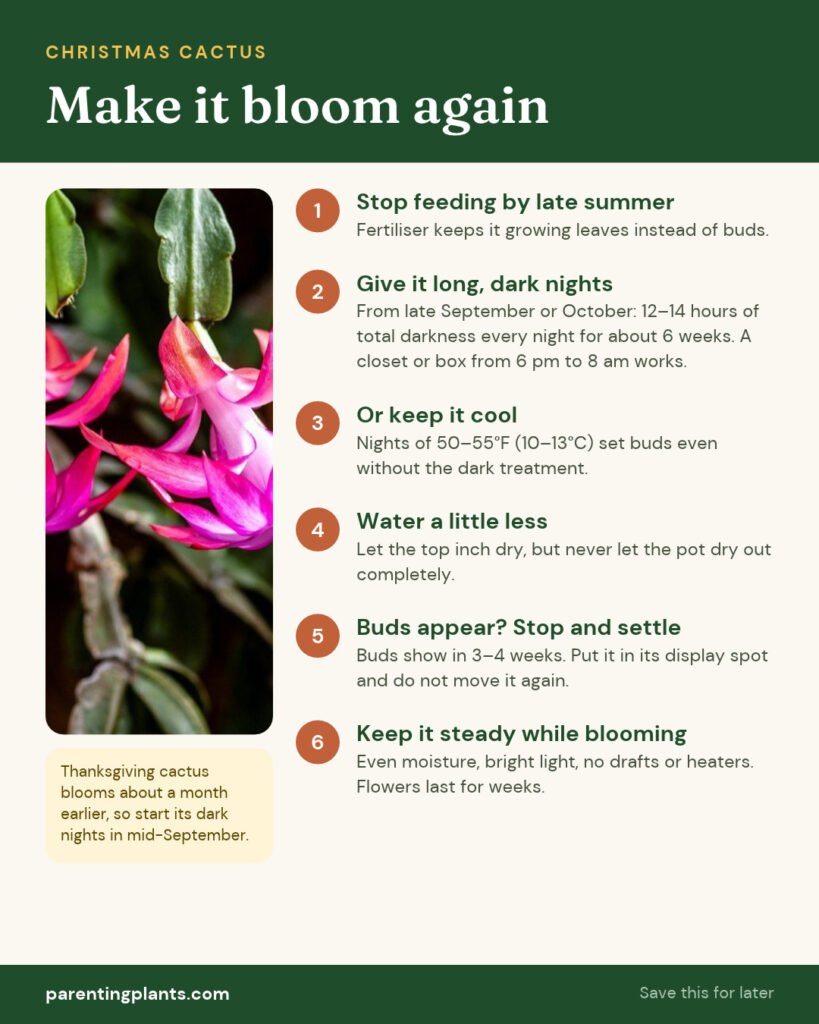
- Stop feeding by late summer. Fertilizer keeps it growing stems instead of buds.
- Give it long, dark nights. Starting in late September or October, give it 12 to 14 hours of total darkness every night for about 6 weeks. A spare room you do not use at night, a closet, or a box placed over it from about 6 pm to 8 am all work. Give it bright light during the day.
- Or keep it cool. Nights of 50 to 55°F (10 to 13°C) set buds even without the dark treatment. A cool porch, garage or unheated room works, as long as it stays above freezing.
- Water a little less during the treatment, but do not let it dry out completely.
- Stop when buds appear. Buds usually show in 3 to 4 weeks. Move it to its display spot now and leave it there.
- Keep it steady while it blooms. Flowers can last several weeks in a cool, bright spot.
| Your plant | Start long nights or cool nights | Expect flowers |
|---|---|---|
| Thanksgiving cactus | Mid-September | Mid-November to December |
| Christmas cactus | Early to mid-October | December to January |
| Easter cactus | Late fall (needs 8 to 12 weeks of short days and cool nights) | Late winter to spring |
Reality check: if your plant sits in a room where lights are on every evening, it may never bloom no matter how well you care for it. Moving it to a room that is dark at night is often all it takes.
Keeping buds and flowers on the plant
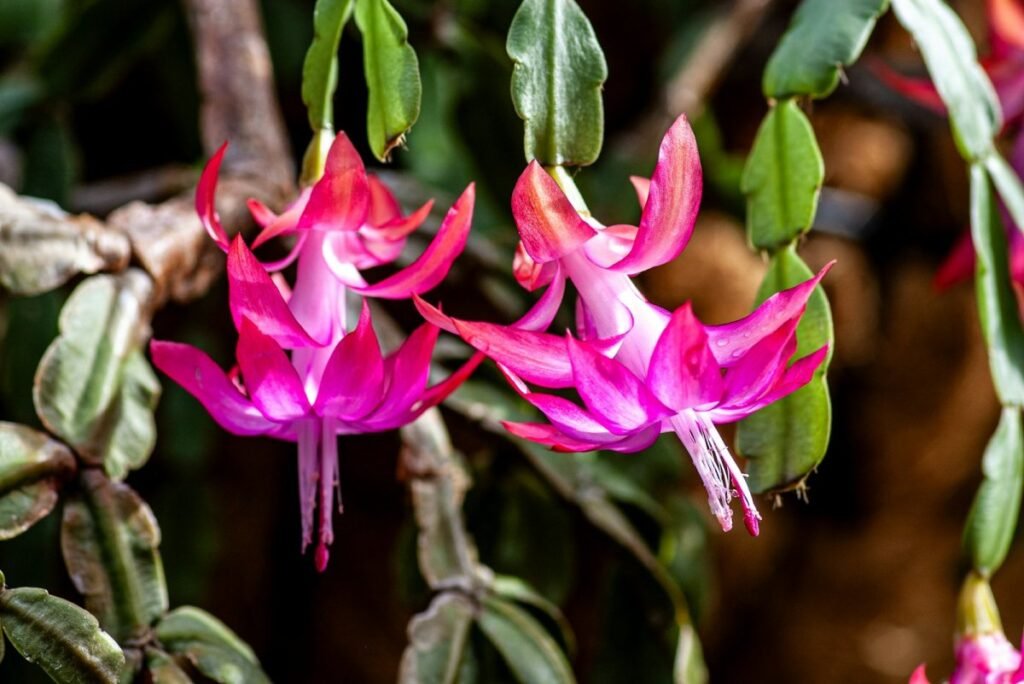
Bud drop is the most common Christmas cactus complaint. Once buds appear, the plant hates change. To keep every bud:
- Pick its spot when the buds are tiny and do not move it again until it finishes blooming.
- Keep it away from heat vents, radiators, fireplaces and cold, drafty doors.
- Keep the soil evenly moist; a bone-dry pot is a common trigger.
- Avoid big temperature swings. A plant carried home from the store in the cold may drop a few buds; that is normal shock.
- A plant with very many buds may drop some on its own. That is the plant thinning its load, not a sign of failure.
Care after flowering
After the last flower fades, give it a rest of about 6 weeks: water less and do not feed. When new growth starts in spring, go back to normal watering and start feeding.
Prune in late spring to make it bushier. Twist or cut off one or two segments from the end of each stem, right at the joint. Each cut usually branches into one or two new tips, and more tips mean more flowers next winter. The pieces you remove are perfect for propagating.
Fertilizing a Christmas cactus
From spring until late summer, feed once a month with a balanced houseplant fertilizer at half strength. Clemson Extension also suggests a monthly dose of Epsom salts (1 teaspoon per gallon of water) during the growing season, given in a different week from the fertilizer, because these plants need a little more magnesium. Stop feeding in late summer so the plant can set buds, and do not feed while it is blooming. Learn more in our guide to fertilizing houseplants.
How to propagate a Christmas cactus
Christmas cactus is one of the easiest plants to share. The best time is late spring or early summer, after it has bloomed.
- Twist off a piece with 2 to 5 segments.
- Leave it in a shady spot for a day or two so the end dries and seals.
- Push the bottom segment about 1 inch deep into moist, fast-draining mix. Put 3 cuttings in a 4-inch pot for a fuller plant.
- Keep it in bright, indirect light at 70 to 80°F. A clear plastic bag over the pot keeps humidity high.
- Roots form in 3 to 8 weeks. When you see new growth, remove the bag and care for it as normal.
More methods in our houseplant propagation guide.
Common Christmas cactus problems and fixes
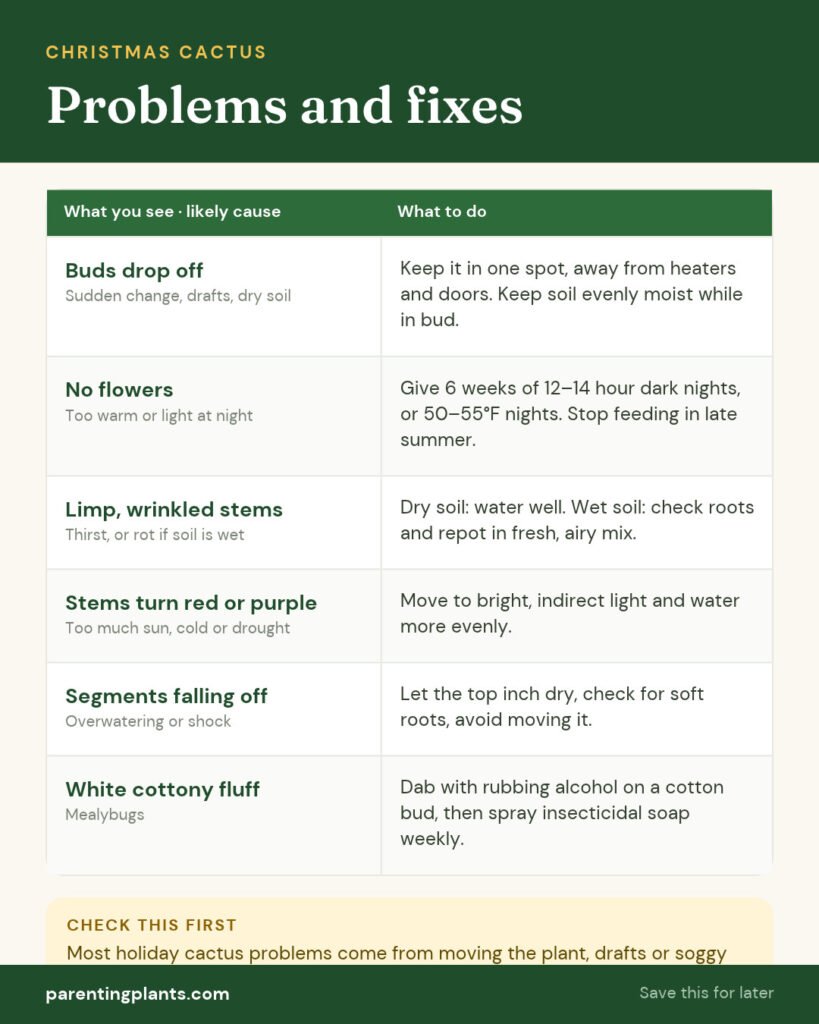
| What you see | Most likely cause | What to do |
|---|---|---|
| Buds drop before opening | Moving the plant, drafts, heat, dry soil | Keep it in one spot, away from heaters and doors; keep soil evenly moist |
| No flowers at all | Light at night, too warm, fed too late | Give 6 weeks of dark or cool nights; stop feeding in late summer |
| Limp, wrinkled segments, soil dry | Underwatering | Water thoroughly and check more often |
| Limp segments, soil wet | Root rot | Unpot, cut away soft brown roots, repot in fresh mix; root healthy cuttings as backup |
| Red or purple segments | Too much sun, cold or drought stress | Move to bright, indirect light; water evenly |
| Segments falling off | Overwatering or sudden change | Let the top inch dry; avoid moving it |
| White cottony fluff in joints | Mealybugs | Dab with rubbing alcohol on a cotton swab; spray insecticidal soap weekly |
| Brown, corky stem base | Normal ageing on old plants | Nothing, unless it is soft or has scale insects |

More help in our guides to root rot, houseplant pests and reviving a dying houseplant.
Is Christmas cactus safe for pets?
Yes. The ASPCA lists Christmas cactus as non-toxic to cats and dogs, which makes it one of the best flowering plants for a pet home. As with any plant, a pet that eats a lot of it may get a mild upset stomach, so keep it out of reach of determined chewers. Browse more ideas in our list of pet-friendly houseplants, or check any plant with our free Plant Toxicity Checker.
Quick action checklist
- Bright, indirect light; more sun in fall and winter
- Water when the top inch is dry; never leave it in water
- Feed at half strength monthly from spring to late summer, then stop
- Start 6 weeks of dark nights (or 50 to 55°F nights) in fall
- Once buds form: same spot, even moisture, no drafts
- Rest after flowering, prune in late spring, repot every 3 years
Save this for later: pin the cheat sheet below to your Pinterest plant board.

Want care for 30 popular houseplants on one page each?
Our printable Houseplant Care Cards include a Christmas cactus card plus 29 other favourites, with light, water, pet safety and quick fixes at a glance.
Christmas cactus FAQ
How do I get my Christmas cactus to bloom?
Give it about 6 weeks of long, dark nights (12 to 14 hours of total darkness) or cool nights of 50 to 55°F starting in October, stop feeding in late summer and water a little less. Buds usually appear in 3 to 4 weeks.
How often should I water a Christmas cactus?
When the top inch of soil is dry, usually every 1 to 2 weeks. Keep the soil evenly moist while it has buds and flowers, and water less for a few weeks after it blooms.
Why are the buds falling off my Christmas cactus?
Usually because it was moved, sat in a draft or near a heater, or the soil dried out. Pick its spot when buds are small and leave it there.
Is my plant a Christmas or Thanksgiving cactus?
Look at the stem segments. Pointed, claw-like teeth mean Thanksgiving cactus. Rounded, scalloped edges mean Christmas cactus.
Should I mist my Christmas cactus?
There is no need. Normal room humidity is fine. Grouping it with other plants helps in very dry, heated rooms.
Is Christmas cactus safe for cats?
Yes. The ASPCA lists it as non-toxic to cats and dogs.
How long do Christmas cactus flowers last?
Each flower lasts several days, and a well-budded plant can stay in bloom for several weeks in a cool, bright spot.
Sources and further reading
This guide was written by Manik for Parenting Plants and checked against university extension advice. Last reviewed November 2026.
- Clemson Cooperative Extension: Thanksgiving and Christmas cacti
- University of Minnesota Extension: Growing holiday cacti
- Purdue Consumer Horticulture: Holiday cactus FAQs
- NC State Extension: Christmas or Thanksgiving cactus?
- ASPCA: Christmas cactus toxicity
Free tracker
Never forget to water your Christmas Cactus again
Track your Christmas Cactus and every other plant you own. A ready-made plant care tracker for Google Sheets and Notion that shows exactly which plants need water today, with 90 houseplants built in.
You're in!
Check your inbox, plant friend! 📩
Your free Plant Care Tracker is on its way. We've emailed you both versions, Google Sheets and Notion, plus a bonus printable 2027 plant calendar. It usually arrives within a few minutes.
Can't find it? Check your Promotions or Spam folder, and add manik@parentingplants.com to your contacts so you never miss a plant tip.


