Special Offer: Use code ILOVEPLANTS for 25% off on all digital products! Shop Now →


Healthy houseplants don’t need hours of attention. They need a few minutes of regular attention. A simple weekly check lets you catch thirst, pests and problems early, when they’re easy to fix, instead of discovering a crispy or rotting plant weeks later. Here’s a routine that takes about 10 minutes for a small collection and works for almost every houseplant.
Short answer: Once a week: check the soil of every plant with your finger, water only those that are dry enough for their type, look under leaves and on stems for pests, rotate pots a quarter turn toward the light, and remove dead leaves and dust. Once a month, wipe leaves clean and feed during spring and summer.
In this guide
Why a routine beats a watering schedule
“Water every Sunday” is one of the most common beginner mistakes. Plants use water at different speeds depending on their type, pot size, light, temperature and season. A plant that needs water weekly in summer might need it only every three weeks in winter. Watering on a fixed schedule is how most houseplants end up with root rot.
A checking routine works better: you visit every plant on the same day each week, but you only act on what each plant actually needs.
The 10-minute weekly routine
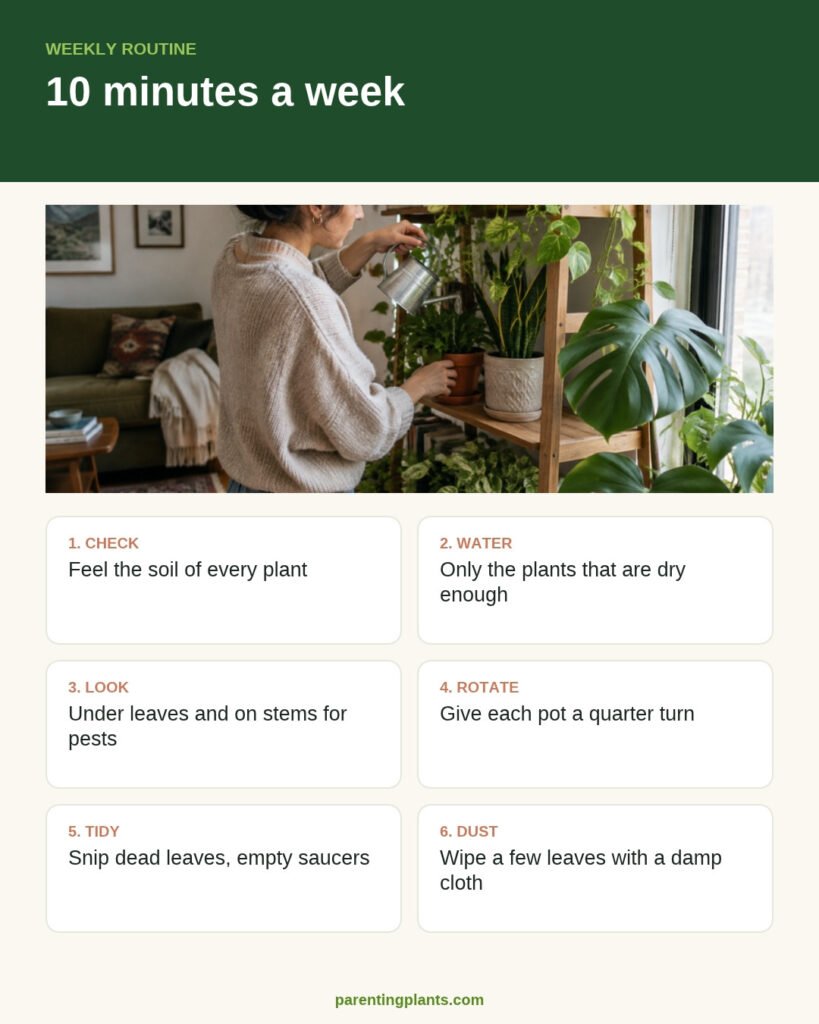
| Step | What to do | Time |
|---|---|---|
| 1. Check | Feel the soil of every plant | 2 min |
| 2. Water | Water only the plants that are dry enough | 3 min |
| 3. Look | Scan leaves, undersides and stems for problems | 2 min |
| 4. Rotate | Give each pot a quarter turn | 1 min |
| 5. Tidy | Snip dead leaves, empty saucers, dust a few leaves | 2 min |
Step 1: Check the soil
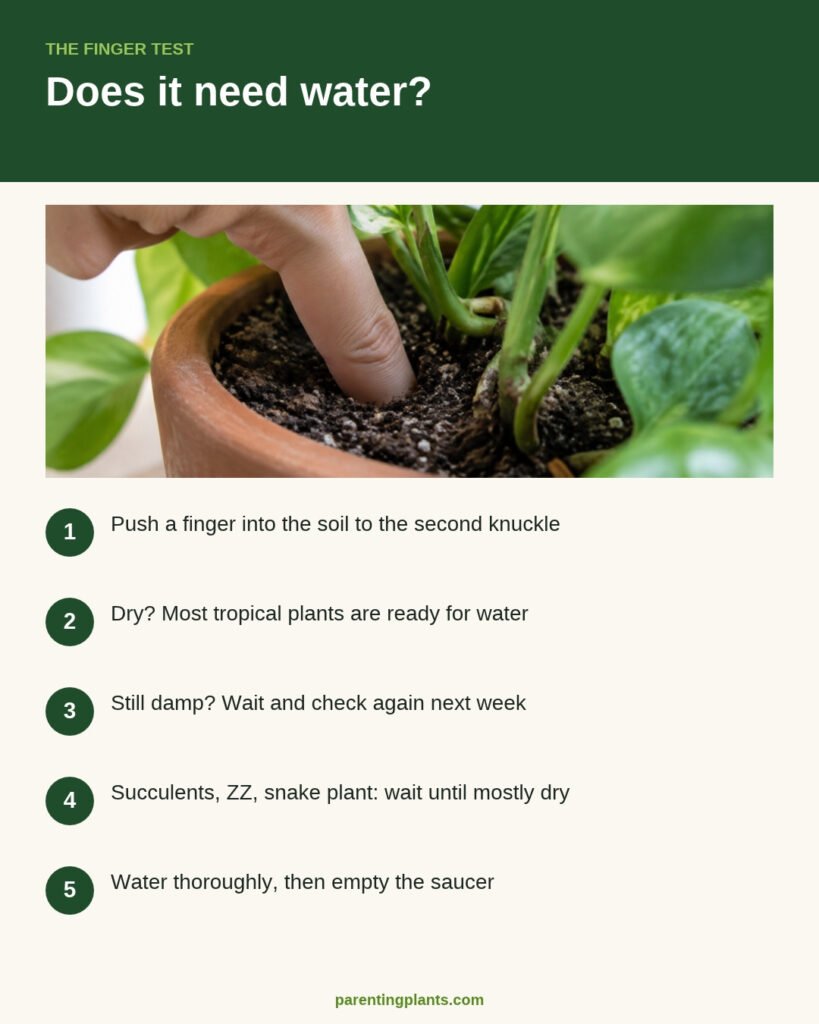
Your finger is the best moisture meter you own. Push it into the soil up to the second knuckle, about 1 to 2 inches.
- Dry at that depth: most tropical houseplants (pothos, philodendron, monstera, peace lily) are ready for water.
- Still damp: leave it and check again next week, or in a few days if it’s warm.
- Succulents, cacti, snake plants and ZZ plants: wait until the soil is dry most of the way down.
- Ferns, calatheas and other moisture lovers: water as soon as the surface starts to dry.
Try the lift test. Pick up the pot after watering to feel its weight. A light pot is a dry pot. After a few weeks you’ll be able to tell at a glance.
Step 2: Water only the plants that need it
When a plant is ready, water it thoroughly: pour slowly over the whole soil surface until water runs out of the drainage holes. This wets all the roots and flushes out salt buildup.
- Use room-temperature water.
- Water the soil, not the leaves.
- Let it drain for 10 to 15 minutes.
- Empty the saucer or decorative pot. Roots sitting in water rot.
More detail in our complete watering guide.
Step 3: Look closely for problems
While you water, take a few seconds to look at each plant. Most problems are easy to fix if you catch them in the first week.
| Look for | Could mean | Read more |
|---|---|---|
| Webbing, white fluff, brown bumps, sticky leaves | Pests | Houseplant pests |
| Tiny black flies around the soil | Fungus gnats from damp soil | Fungus gnats |
| Yellow lower leaves | Overwatering, low light or old leaves | Yellow leaves |
| Brown, crispy tips or edges | Dry air or uneven watering | Humidity guide |
| Long, stretched stems and small leaves | Not enough light | Light guide |
| Roots poking out of the drainage holes | Time to repot (in spring) | Repotting |
Step 4: Rotate for even growth
Plants grow toward the light. If a pot never moves, the plant leans and grows lopsided, with bare stems on the side facing the room. Give every pot a quarter turn each week, always in the same direction, and it will grow evenly on all sides.
Step 5: Tidy and dust
- Snip off yellow, brown or dead leaves at the base with clean scissors.
- Pick up fallen leaves from the soil surface; they can harbor pests and mold.
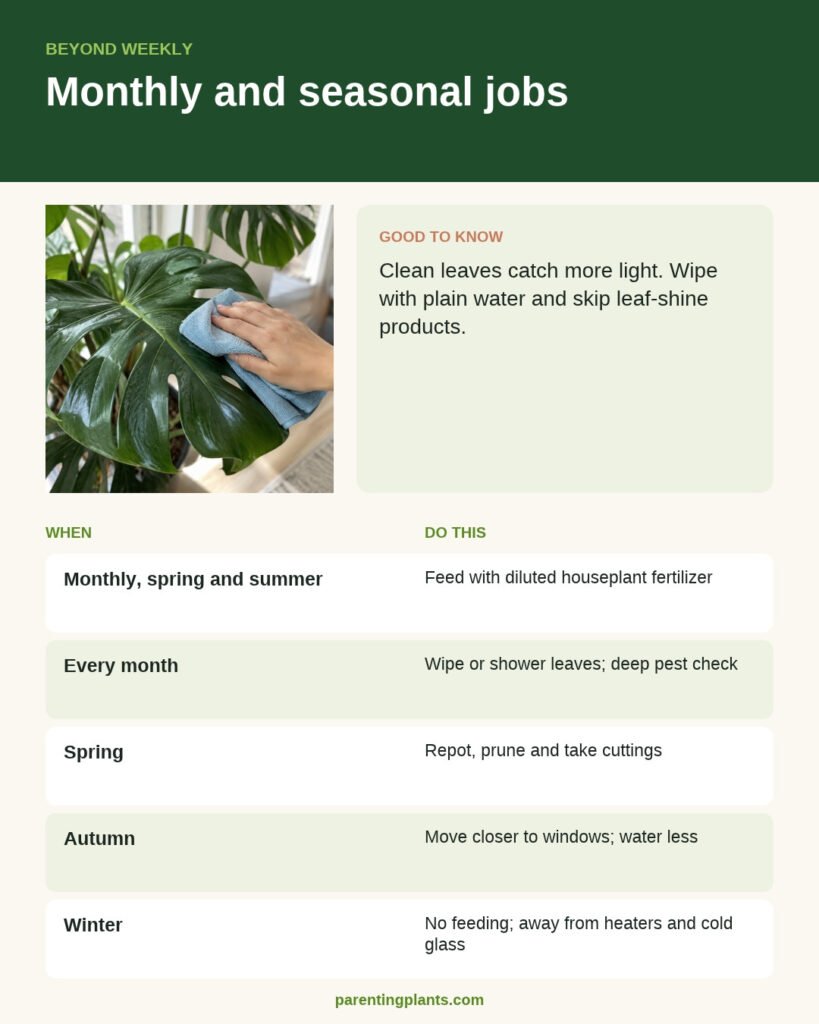
- Dust a few leaves each week. Dust blocks light. Wipe large leaves gently with a soft, damp cloth, supporting the leaf from underneath.
- Skip leaf-shine products. Extension experts warn they can clog leaf pores. Plain water is all you need.
- Rinse small-leaved plants in the shower with lukewarm water every month or two.
Monthly and seasonal jobs
| When | Job |
|---|---|
| Every month (spring and summer) | Feed with diluted houseplant fertilizer. See our fertilizing guide |
| Every month | Wipe or shower all leaves; check under every leaf more carefully for pests |
| Every 3 months | Flush pots with plenty of water to rinse out fertilizer salts |
| Spring | Repot root-bound plants, prune and shape, take cuttings to propagate |
| Summer | Check more often; plants dry out faster in heat and long days |
| Autumn | Move plants closer to windows as light fades; reduce watering |
| Winter | Water less, stop feeding, keep plants away from heaters and cold glass. See our winter care guide |
For a full season-by-season plan, see our seasonal houseplant care guide.
Make it a habit: tips that help
- Pick a fixed day and time, like Sunday morning coffee. Set a phone reminder until it’s automatic.
- Group plants by thirst. Keeping succulents together and moisture lovers together makes watering faster.
- Keep your kit together in one basket: watering can, small scissors, soft cloth and a spray bottle. See our essential plant supplies.
- Keep a simple log of when each plant was watered and fed. Our printable Houseplant Journal makes this easy.
- Fill your watering can the night before so the water is at room temperature.
- Start small. Five healthy plants are better than twenty struggling ones. Add plants as your routine settles.
New plant? Keep it on its own for two weeks before adding it to your routine. Our guide to a new plant’s first two weeks explains why.
Printable weekly checklist
- Check the soil of every plant with your finger
- Water only the plants that are dry enough for their type
- Water thoroughly, then empty saucers
- Look under leaves and on stems for pests
- Give every pot a quarter turn
- Snip off dead or yellow leaves
- Wipe dust from a few leaves
- Monthly: feed in spring and summer, clean all leaves
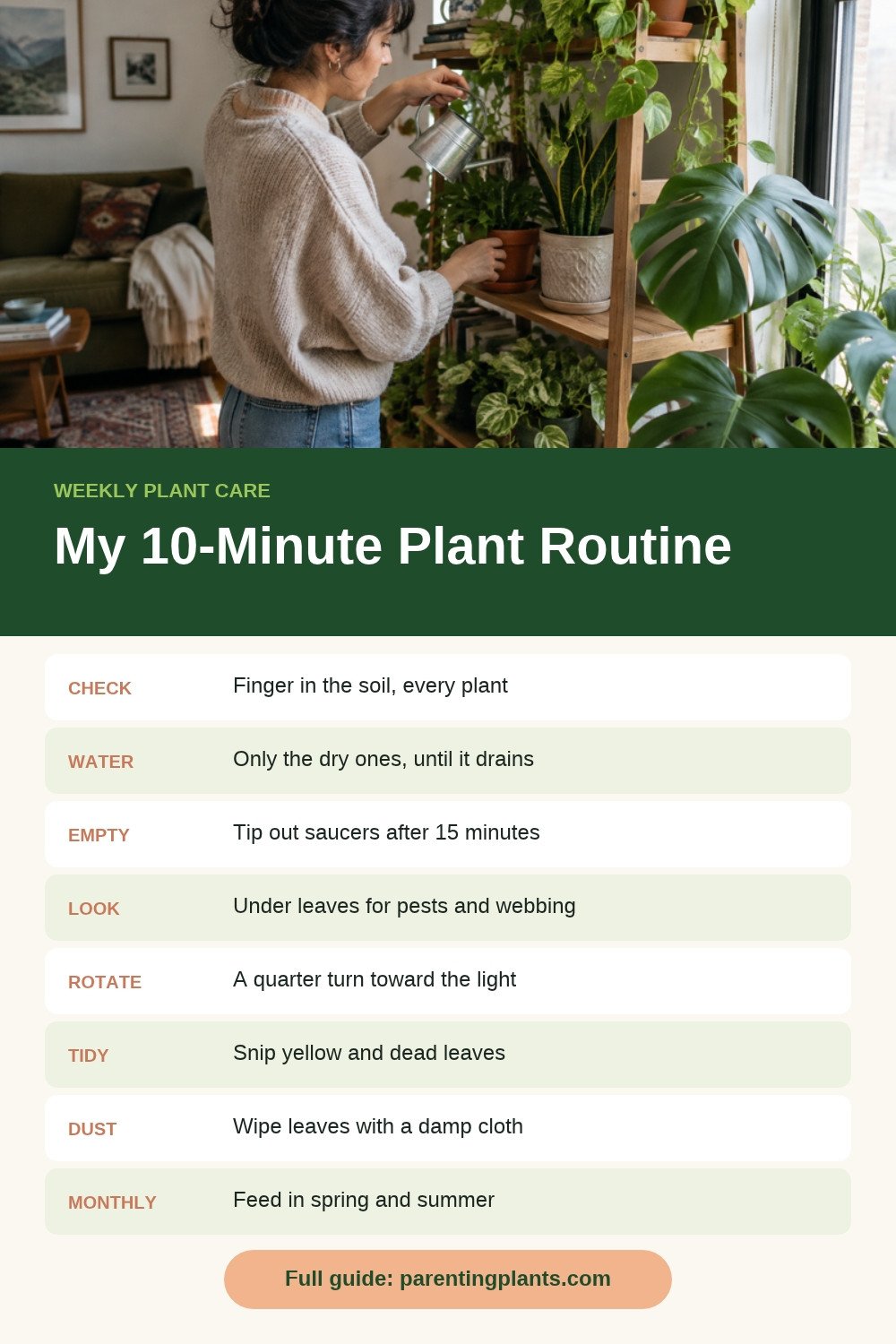
Save this for later: pin the routine below, or print it and stick it near your plants.
Found a problem during your weekly check?
The Houseplant Rescue Guide matches 26 common plant problems to a clear photo, then gives you simple steps to fix each one and stop it coming back. No jargon, 50 pages, with printable checklists.
Plant care routine FAQ
How often should I check my houseplants?
Once a week suits most collections. Check more often in hot summer weather and for small pots or moisture-loving plants like ferns.
Should I water all my plants on the same day?
Check them all on the same day, but only water those that are dry enough. Different plants use water at different speeds.
How often should I rotate houseplants?
Give each pot a quarter turn once a week, in the same direction, so all sides get light and the plant grows evenly.
How do I clean houseplant leaves?
Wipe large leaves with a soft, damp cloth, supporting each leaf from underneath. Rinse small-leaved plants under lukewarm water. Avoid leaf-shine products.
How often should I fertilize houseplants?
About once a month in spring and summer, using a diluted liquid houseplant fertilizer. Most plants don’t need feeding in winter.
How long does a plant care routine take?
For 5 to 15 plants, about 10 minutes a week, plus a few extra minutes once a month for feeding and cleaning.
Sources and further reading
Want to go deeper? These university extension and expert resources cover the same topic:
- Washington State University Extension: Houseplants (PNW Gardener’s Handbook)
- Penn State Extension: Preventing, diagnosing and correcting common houseplant problems
- Garden Professors: House plant basics
- Costa Farms: Preventing houseplant pests
Free printable
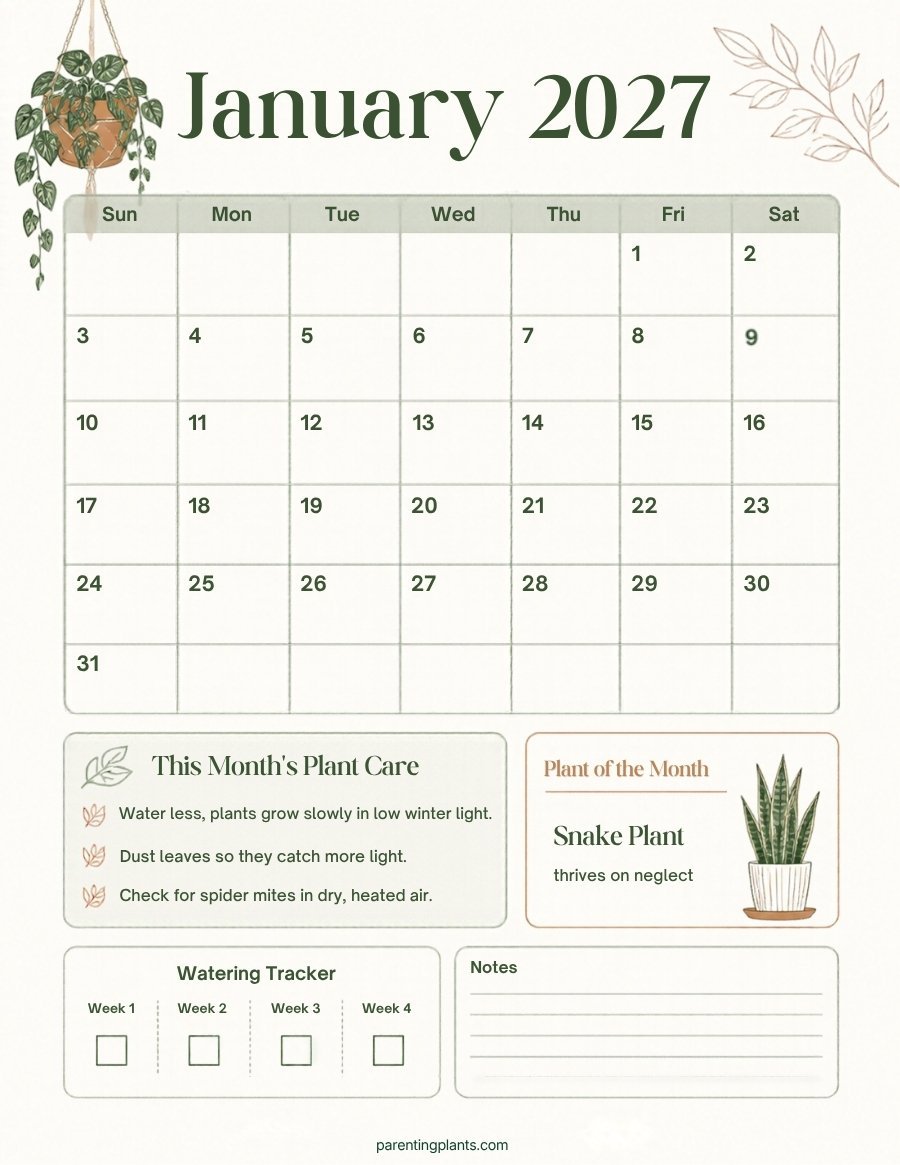
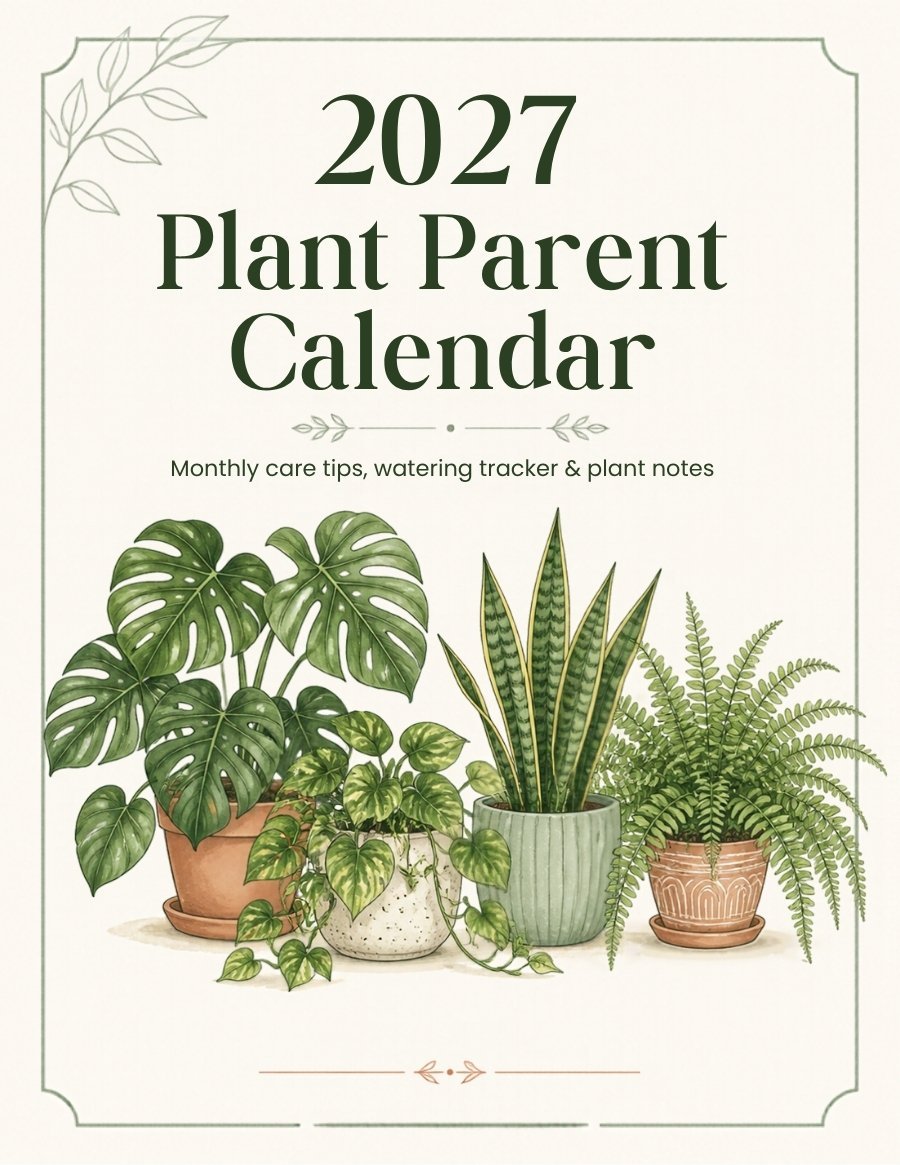
Get your free 2027 Plant Parent Calendar
14 beautiful printable pages to keep your houseplants happy all year. Enter your name and email and we'll send it straight to your inbox.
You're in!
Thank you, plant friend! 🪴
Your calendar is on its way to your inbox (check Promotions or Spam if you don't see it in a few minutes). You can also download it right now:
⬇ Download the 2027 calendar (PDF)