Special Offer: Use code ILOVEPLANTS for 25% off on all digital products! Shop Now →

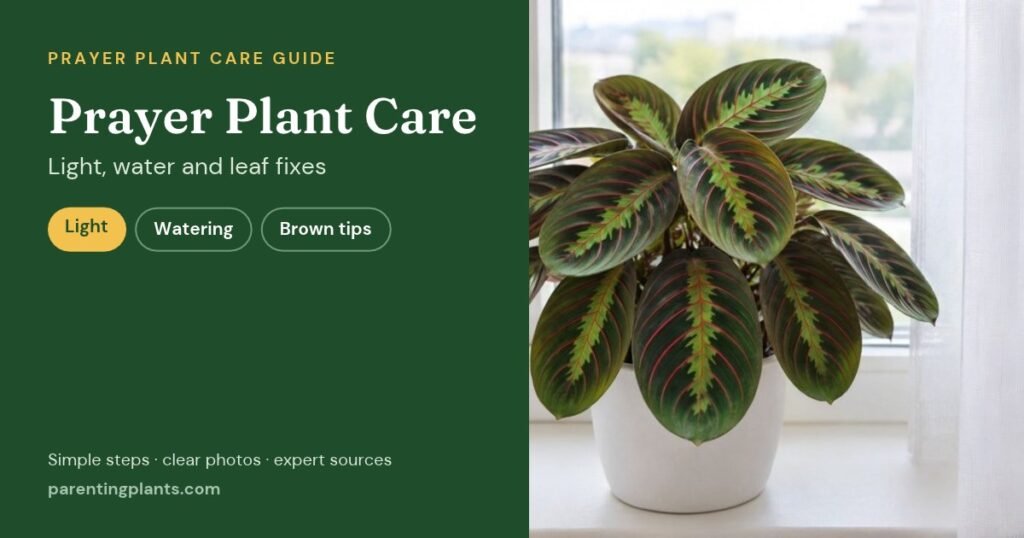
The prayer plant (Maranta leuconeura) gets its name from a little daily show: its leaves lie flat during the day and fold upward in the evening, like hands in prayer. It is a low-growing, spreading plant with some of the most striking leaves you can grow indoors. It is also pet-safe. The catch is that it is fussier than a pothos about water and humidity. Get those right and it grows quickly and easily.
Short answer: Give prayer plant medium to bright, indirect light with no direct sun. Keep the soil lightly moist: water when the top inch (2.5 cm) is dry, using filtered or rain water if your tap water is hard. Aim for 50% humidity or more and 65 to 80°F (18 to 27°C). It is non-toxic to cats and dogs.
In this guide
Prayer plant care at a glance
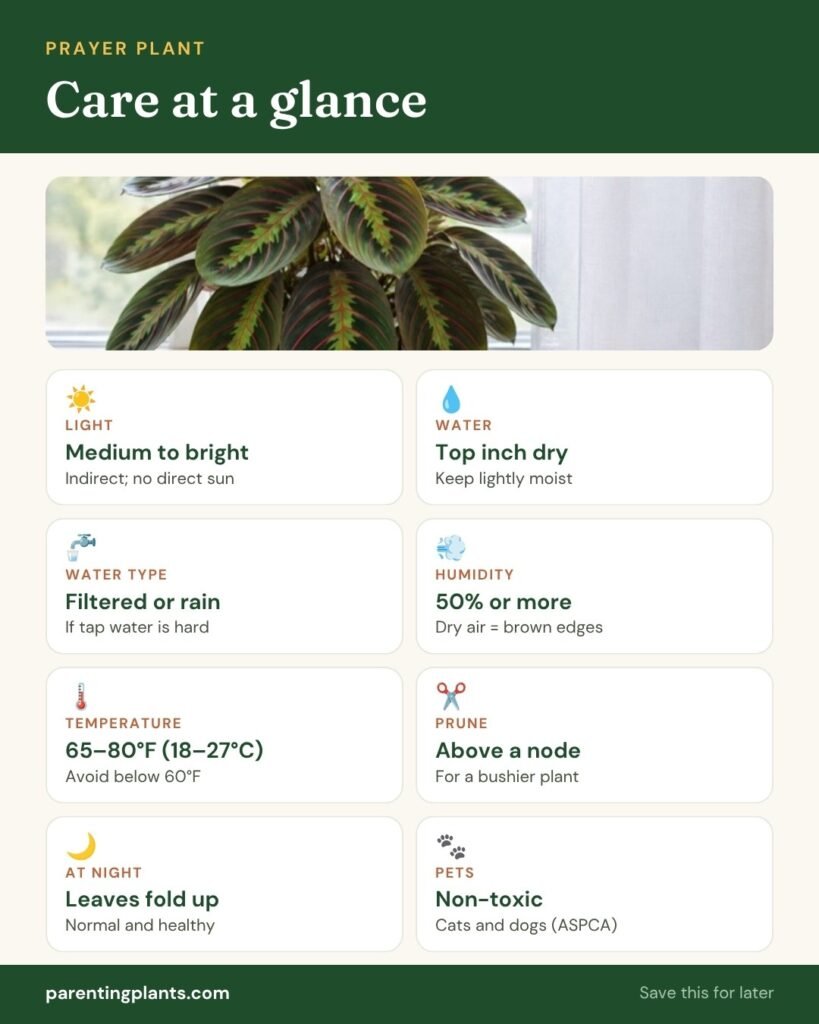
| Need | What it needs |
|---|---|
| Light | Medium to bright, indirect light; no direct sun |
| Water | Keep lightly moist; water when the top inch is dry |
| Water type | Filtered, rain or distilled water if tap water is hard |
| Humidity | 50% or more |
| Temperature | 65 to 80°F (18 to 27°C); avoid below 60°F (16°C) |
| Soil | Moisture-holding but airy mix with a drainage hole |
| Fertilizer | Half-strength feed monthly in spring and summer |
| Pets | Non-toxic to cats and dogs (ASPCA) |
Free Plant Care Tracker: Never forget to water your Prayer Plant again. Get it free →
Why prayer plant leaves move at night
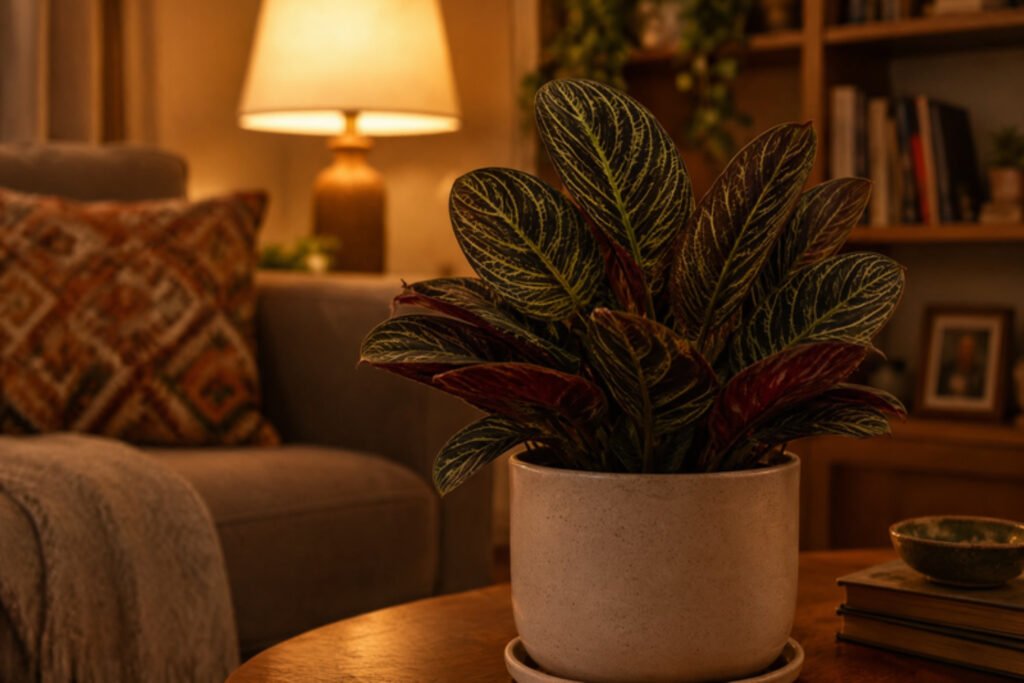
Each leaf has a small joint where it meets the stalk, called a pulvinus. Cells in this joint take in and release water, which raises the leaves at night and lowers them in the morning. Scientists call this daily rhythm nyctinasty. You can sometimes hear a faint rustle as the leaves move.
If the leaves stop moving, the plant is usually stressed: too little light, too dry, too cold, or recently moved. Fix the conditions and the movement usually returns within a week or two.
Popular prayer plant varieties
| Variety | Looks like | Notes |
|---|---|---|
| Red prayer plant (‘Erythroneura’) | Dark green leaves with bright red herringbone veins and a lime-green centre | The most common; sometimes sold as ‘Fascinator’ |
| ‘Lemon Lime’ | Bright green with yellow-green veins | Same care as the red form |
| ‘Kerchoveana’ (rabbit’s tracks) | Pale green leaves with dark green-brown blotches | Very forgiving; the classic old form |
| ‘Massangeana’ (black prayer plant) | Very dark leaves with silver-pink veins | Likes slightly more warmth and humidity |
Prayer plant or calathea? They are cousins in the same family and both move their leaves. Prayer plants are smaller, lower and spreading, with herringbone veins. Calatheas grow more upright with larger, painted leaves. Care is similar; see our calathea care guide for the comparison.
How much light does a prayer plant need?
Prayer plants grow on the shaded floor of Brazilian rainforests. Indoors they do best in medium to bright, indirect light: near an east window, a few feet from a south or west window, or behind a sheer curtain.
- Too much sun: leaves fade, lose their red veins and develop brown, scorched patches.
- Too little light: stems stretch, gaps grow between leaves and the patterns look dull.
- A north window works in summer but can be too dark in winter.
Not sure about your light? Use the shadow test in our lighting guide.
How to water a prayer plant (and which water to use)
Prayer plants like evenly moist soil, but never soggy. Water when the top inch (2.5 cm) is dry, slowly, until it drains. Do not let it dry out completely; that causes curling leaves and crispy edges. In winter, let it dry a little more between waterings.
| Situation | Typical interval |
|---|---|
| Spring and summer | Every 5 to 7 days |
| Autumn and winter | Every 10 to 14 days |
| Small pot in a warm, bright spot | Check every 3 to 4 days |
Like calatheas, prayer plants can react to minerals, chlorine and fluoride in some tap water with brown leaf edges. If that happens, switch to filtered, rain or distilled water, or let tap water stand overnight. Water the soil, not the centre of the plant, because water sitting on the crowns can cause stem rot. More in our watering guide.
Humidity and temperature
Humidity is the secret to crisp, unblemished leaves. Aim for 50% or more. A small humidifier is the most reliable fix in winter; a bathroom with a window, or grouping plants together, also helps. Misting has little lasting effect. See our humidity guide.
Keep temperatures between 65 and 80°F (18 to 27°C) and avoid drops below 60°F (16°C). Keep it away from cold windows, drafts and heater vents.
Soil and pot
Use a mix that holds moisture but drains freely: 2 parts potting mix, 1 part perlite and 1 part orchid bark or coco coir works well. Prayer plants have shallow roots, so a wide, shallow pot suits them better than a deep one. Always use a drainage hole. Repot every 1 to 2 years in spring, going up one size.
Fertilizing
Feed with a balanced liquid fertilizer at half strength once a month in spring and summer. Prayer plants are sensitive to fertilizer salts, which cause brown tips, so err on the side of less. Flush the soil with plain water every few months.
Pruning for a fuller plant
Prayer plants naturally spread and can become long and straggly. To keep them bushy, cut long stems just above a leaf node in spring or summer. New shoots grow from below the cut. Remove yellow or crispy leaves at the base. The trimmings make perfect cuttings.
How to propagate a prayer plant
Stem cuttings root easily in water, and you can also divide large plants when repotting.
- Find a healthy stem with 2 to 3 leaves and cut just below a node (the small swelling where a leaf joins the stem).
- Place the cutting in a jar of room-temperature water with the node underwater.
- Keep it in bright, indirect light and change the water weekly.
- When roots are about 1 inch (2.5 cm) long, usually after 2 to 4 weeks, pot it in moist mix.
- Keep the soil slightly damp and humidity high for the first few weeks.
To divide, split the root ball into sections with their own roots and stems in spring. More in our propagation guide.
Common prayer plant problems and fixes
| What you see | Likely cause | What to do |
|---|---|---|
| Brown, crispy edges or tips | Dry air or minerals in tap water | Raise humidity to 50%+; use filtered or rain water |
| Leaves curling inward | Thirst or very dry air | Check soil, water if dry, raise humidity |
| Yellow leaves, wet soil | Overwatering or poor drainage | Let the top inch dry; check roots and drainage |
| Faded leaves, red veins disappearing | Too much direct sun | Move to bright, indirect light |
| Long, leggy stems with gaps | Not enough light or needs pruning | Brighter spot; trim above a node |
| Leaves no longer fold at night | Stress: low light, cold or a recent move | Improve light and warmth; give it time |
| Fine webbing, tiny pale dots | Spider mites | Shower leaves, treat weekly, raise humidity |
| Mushy stems at the soil line | Stem or root rot | Cut healthy stems to root; discard rotten parts |
Brown tips are the number one complaint. If raising humidity and changing water does not help, check our Plant Doctor.
Pests
Spider mites love dry air and are the most common pest on prayer plants. Mealybugs and aphids also appear. Check leaf undersides weekly, rinse the plant in a lukewarm shower to knock pests off, and treat with insecticidal soap every 5 to 7 days until clear. See our houseplant pests guide.
Is prayer plant safe for cats and dogs?
Yes. The ASPCA lists the prayer plant (Maranta leuconeura) as non-toxic to cats, dogs and horses. Its low, leafy habit does tempt some cats to nibble, so place it on a shelf if yours is a chewer. More ideas: pet-friendly houseplants.
Quick care checklist
- Medium to bright, indirect light; no direct sun
- Keep soil lightly moist; never soggy or bone dry
- Use filtered or rain water if you see brown edges
- Keep humidity at 50% or more
- Feed at half strength monthly in spring and summer
- Trim leggy stems above a node to keep it bushy
Save this for later: pin the cheat sheet below to your Pinterest plant board.

Leaves turning brown, crispy or yellow?
The Houseplant Rescue Guide matches 26 common plant problems to a clear photo, then gives you simple steps to fix each one and stop it coming back. No jargon, 50 pages, with printable checklists.
Prayer plant care FAQ
Why does my prayer plant close at night?
Its leaves follow a daily rhythm called nyctinasty. A small joint at the base of each leaf takes in water at night and lifts the leaf. It is normal and a sign of a healthy plant.
Why are my prayer plant leaves turning brown and crispy?
Usually dry air or minerals and chlorine in tap water. Raise humidity to 50% or more and water with filtered, rain or distilled water.
How often should I water a prayer plant?
When the top inch of soil is dry, usually every 5 to 7 days in spring and summer and every 10 to 14 days in winter.
Why are my prayer plant leaves curling?
Curling usually means the plant is thirsty or the air is too dry. Check the soil and raise humidity.
Is a prayer plant the same as a calathea?
No. They are related and both move their leaves, but prayer plants (Maranta) are smaller, lower and spreading, while calatheas grow more upright.
Is prayer plant safe for cats?
Yes. The ASPCA lists prayer plant as non-toxic to cats and dogs.
Can prayer plants grow in low light?
They tolerate medium light but not deep shade. In low light they grow leggy and lose colour. Medium to bright, indirect light is best.
Sources and further reading
This guide was written by Manik at Parenting Plants and checked against the university extension and expert resources below. Read how we research and update our guides in our editorial guidelines.
- University of Illinois Extension: Prayer plant
- NC State Extension Plant Toolbox: Maranta leuconeura var. kerchoveana
- ASPCA: Toxic and non-toxic plants list
Looking for another plant? Browse all our houseplant care guides A to Z.
Free tracker
Never forget to water your Prayer Plant again
Track your Prayer Plant and every other plant you own. A ready-made plant care tracker for Google Sheets and Notion that shows exactly which plants need water today, with 90 houseplants built in.
You're in!
Check your inbox, plant friend! 📩
Your free Plant Care Tracker is on its way. We've emailed you both versions, Google Sheets and Notion, plus a bonus printable 2027 plant calendar. It usually arrives within a few minutes.
Can't find it? Check your Promotions or Spam folder, and add manik@parentingplants.com to your contacts so you never miss a plant tip.