Special Offer: Use code ILOVEPLANTS for 25% off on all digital products! Shop Now →

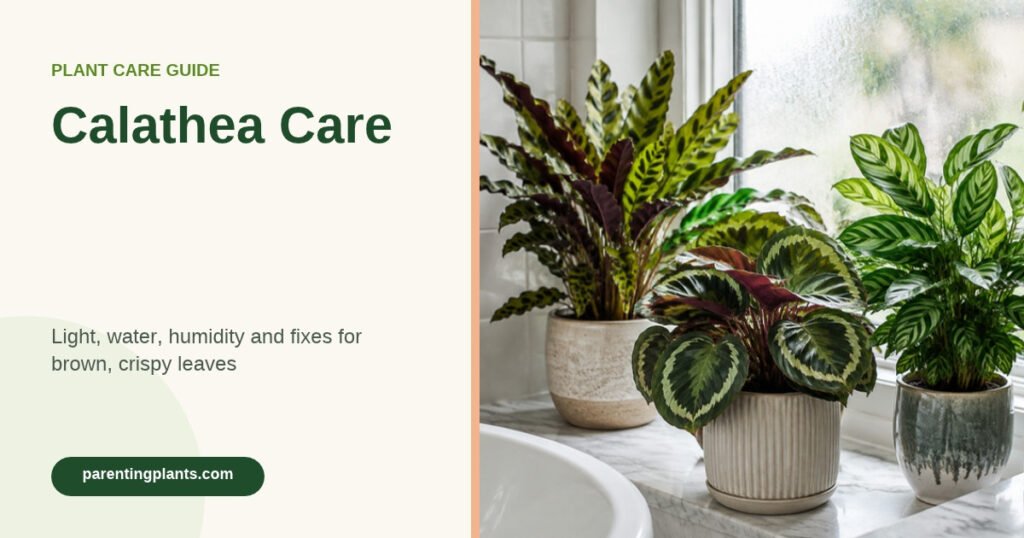
Calatheas have some of the most beautiful leaves of any houseplant: painted stripes, feathered patterns and purple undersides that fold up at night. They also have a reputation for being dramatic. The good news is that almost every calathea problem comes from the same three things: dry air, the wrong water and uneven watering. Get those right and they’re far less fussy than their reputation suggests.
Short answer: Give calathea medium to bright, indirect light with no direct sun. Keep the soil evenly moist but never soggy, watering when the top inch is dry, and use filtered, distilled or rain water if your tap water is hard or chlorinated. Aim for 50% humidity or more and steady temperatures of 65 to 80°F (18 to 27°C).
In this guide
Calathea care at a glance
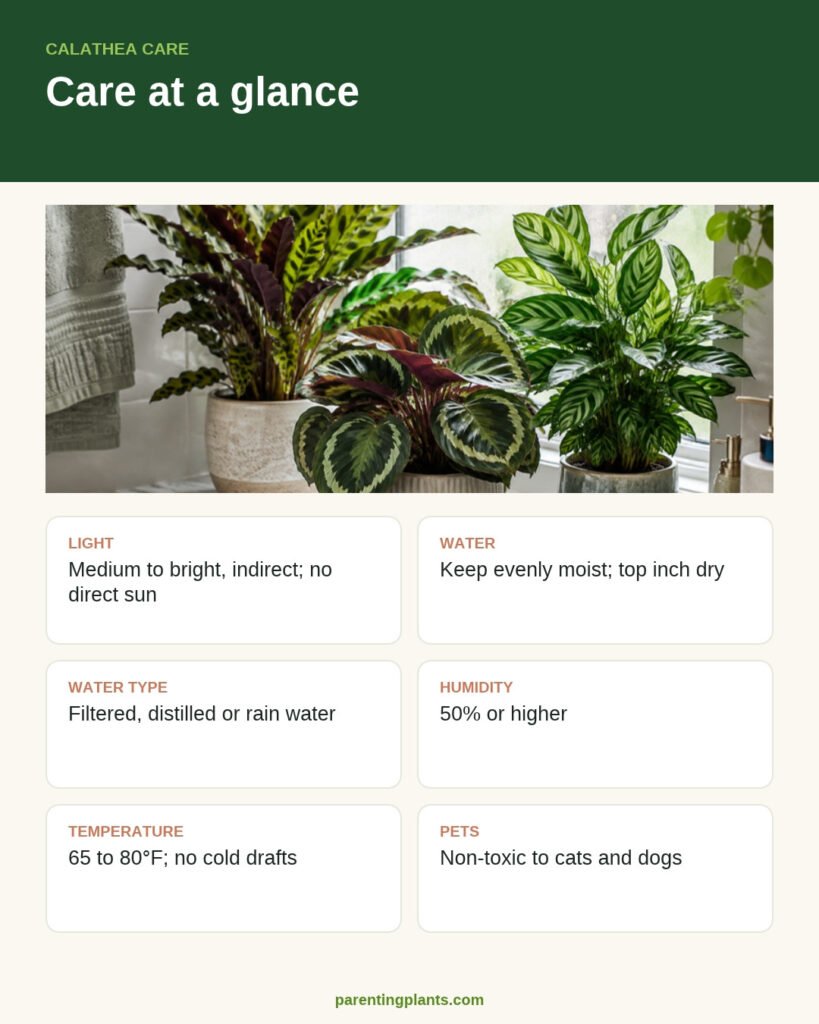
| Need | What calathea wants |
|---|---|
| Light | Medium to bright, indirect light; no direct sun |
| Water | Keep evenly moist; water when the top inch is dry |
| Water type | Filtered, distilled or rain water, or tap water left out overnight |
| Humidity | 50% or higher |
| Temperature | 65 to 80°F (18 to 27°C); no drafts or sudden changes |
| Soil | Moisture-holding but airy mix with a drainage hole |
| Fertilizer | Half-strength houseplant food monthly in spring and summer |
| Pets | Non-toxic to cats and dogs (ASPCA) |
Popular calathea varieties
Botanists have moved most calatheas to the genus Goeppertia, but shops still sell them as calathea. Some are much easier than others:
| Variety | Looks like | Difficulty |
|---|---|---|
| Rattlesnake plant (C. lancifolia) | Long, wavy leaves with dark spots and purple undersides | One of the easiest |
| Calathea ‘Freddie’ | Light green leaves with dark green stripes | Easy |
| Medallion (C. roseopicta) | Round leaves with silver-pink ‘painted’ pattern | Medium |
| Peacock plant (C. makoyana) | Feather-like pattern on pale leaves | Medium |
| Zebra plant (C. zebrina) | Velvety leaves with bold dark stripes | Medium |
| Calathea orbifolia | Large, round leaves with silver bands | Needs more care |
| Calathea ‘White Fusion’ | Green, white and lilac variegation | Needs more care |
New to calatheas? Start with a rattlesnake plant or ‘Freddie’. They tolerate drier air and a little neglect better than orbifolia or ‘White Fusion’.
How much light does calathea need?
Calatheas grow on shady rainforest floors, so they like medium to bright, indirect light: a few feet from an east or north window, or well back from a sunny one. Direct sun fades and scorches the leaves, washing out their patterns. In low light they survive but grow slowly with smaller, less vivid leaves. See our lighting guide.
How to water calathea (and which water to use)
Calatheas like soil that’s evenly moist, like a wrung-out sponge. Water when the top inch is dry, usually every 5 to 7 days in spring and summer and a little less in winter. Never let the pot sit in water, and never let it dry out completely.
- Check the top inch of soil with your finger.
- When it feels dry, water slowly until it drains from the bottom.
- Empty the saucer after 10 to 15 minutes.
- Use room-temperature water; cold water can shock the roots.
The water matters. Calatheas are sensitive to the chlorine, fluoride and minerals in some tap water, which cause brown, crispy leaf edges. Use rain water, distilled or filtered water, or at least let tap water stand overnight before using it.
Leaves curling inward are usually the first sign of thirst. More in our watering guide.
Humidity: the secret to calathea care
Dry air is the number one reason calathea leaves go brown and crispy. Aim for 50% humidity or more; a cheap hygrometer will tell you what you have. In winter, with the heating on, indoor air often drops to 30% or less.
- Run a humidifier nearby. This is the most effective fix by far.
- Group plants together so they share the moisture they release.
- Use a pebble tray: a tray of pebbles and water under the pot, with the pot sitting above the water line.
- Try a bright bathroom or kitchen, which are naturally more humid.
- Keep it away from radiators, heating vents and air-conditioning drafts.
Misting gives only a few minutes of extra humidity, so don’t rely on it. See our humidity guide.
Temperature
Keep calatheas between 65 and 80°F (18 to 27°C). They dislike cold, drafts and sudden changes, so keep them away from doors, cold windows and vents. Leaves often curl or spot after a cold night by the glass.
Best soil and pot
Use a potting mix that holds moisture but drains well: a good houseplant mix with some perlite and orchid bark added works well. Plastic or glazed pots keep the soil evenly moist longer than terracotta. Always use a drainage hole. See our potting soil guide.
Fertilizing calathea
Feed with a balanced liquid houseplant fertilizer at half strength once a month in spring and summer. Don’t feed in autumn and winter. Too much fertilizer builds up salts that burn leaf edges, so less is better. Flush the pot with plenty of water every few months. See our fertilizing guide.
Why calathea leaves move at night
Calatheas belong to the prayer plant family. Their leaves rise and fold up in the evening and lower again in the morning, a natural daily rhythm called nyctinasty. A small joint at the base of each leaf (the pulvinus) controls the movement. It’s a sign of a healthy plant, and you may even hear a faint rustle. If the leaves stay curled during the day, though, check the soil: it’s usually thirst or dry air.
How to propagate calathea by division
Calatheas don’t grow from stem or leaf cuttings. The way to make more plants is to divide the clump in spring, ideally when you repot.
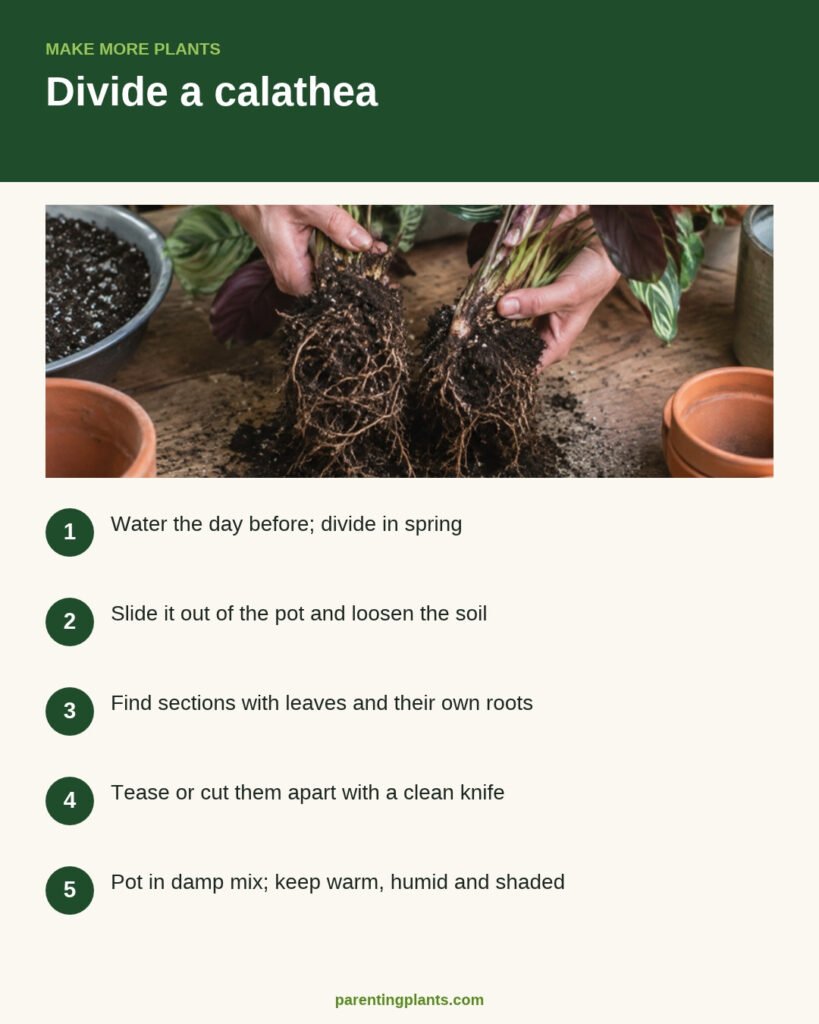
- Water the plant the day before so the roots are hydrated.
- Slide the plant out of its pot and gently loosen the soil.
- Find natural sections, each with several leaves and its own roots.
- Tease or cut them apart with a clean knife.
- Pot each section in fresh, damp mix in a pot just big enough for the roots.
- Keep them warm, humid and lightly moist, out of direct sun. Some droop for a week or two before new growth appears.
See our propagation guide and repotting guide for more detail.
Common calathea problems and fixes
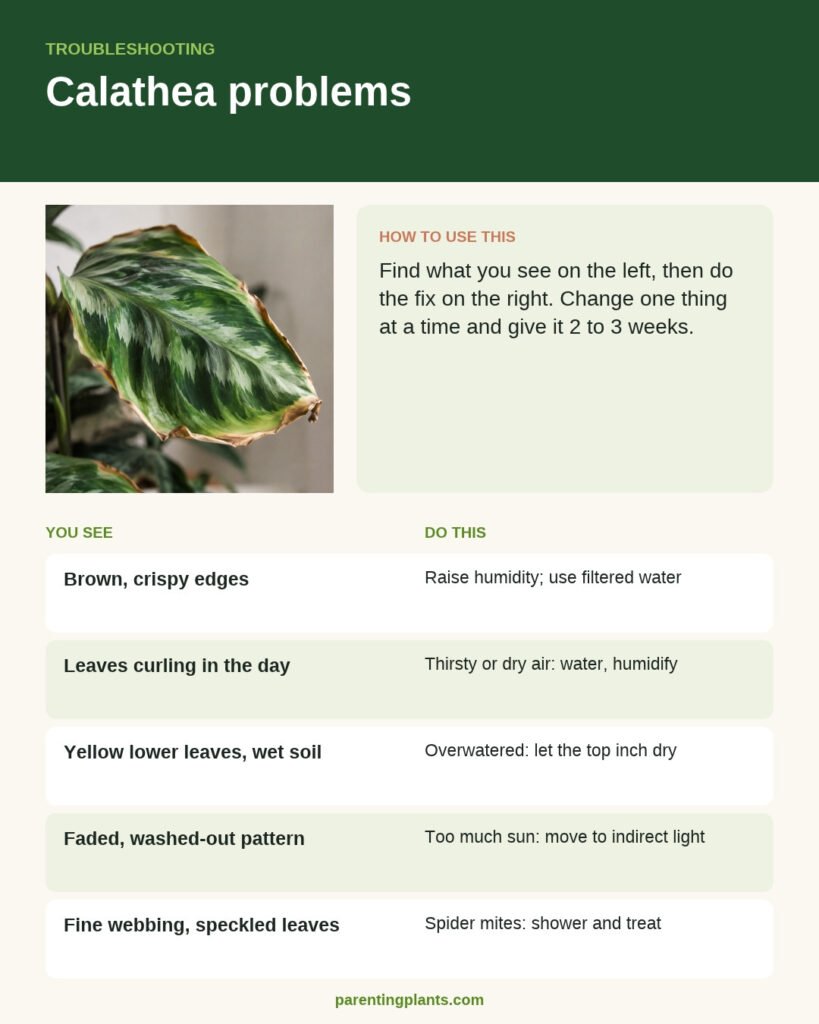
| What you see | Most likely cause | What to do |
|---|---|---|
| Brown, crispy edges or tips | Dry air or tap water minerals | Raise humidity; switch to filtered or rain water |
| Leaves curling inward | Thirst or dry air | Water when the top inch is dry; add humidity |
| Yellow lower leaves, soil wet | Overwatering | Let the top inch dry; check drainage |
| Faded, washed-out pattern | Too much direct sun | Move to bright, indirect light |
| Drooping, limp stems | Thirst, cold or root rot | Check soil and roots; keep warm |
| Brown spots with yellow halo | Leaf spot from wet foliage | Water the soil, not the leaves; improve airflow |
| Fine webbing, speckled leaves | Spider mites | Shower the leaves; treat with insecticidal soap; raise humidity |
Trim fully brown leaves at the base, and trim crispy edges with clean scissors following the leaf’s natural shape. More help in our guides to houseplant pests and yellow leaves.
Is calathea safe for pets?
Yes. The ASPCA lists calatheas as non-toxic to cats and dogs, which makes them one of the best patterned-leaf plants for pet owners. Large amounts of any plant can still upset a pet’s stomach, so discourage chewing. See our full list of pet-friendly houseplants.
Quick action checklist
- Medium to bright, indirect light; no direct sun
- Keep the soil evenly moist, never soggy
- Use filtered, distilled or rain water
- Keep humidity at 50% or higher
- Avoid cold drafts and sudden temperature changes
- Feed at half strength monthly in spring and summer
- Divide large clumps in spring to make new plants
Save this for later: pin the cheat sheet below to your Pinterest plant board.

Calathea leaves turning brown, crispy or curling?
The Houseplant Rescue Guide matches 26 common plant problems to a clear photo, then gives you simple steps to fix each one and stop it coming back. No jargon, 50 pages, with printable checklists.
Calathea care FAQ
Why are my calathea leaves turning brown and crispy?
Usually dry air or minerals and chlorine in tap water. Raise humidity to 50% or more and switch to filtered, distilled or rain water.
How often should I water calathea?
When the top inch of soil is dry, usually every 5 to 7 days in spring and summer. Keep the soil evenly moist but never soggy.
Why do calathea leaves curl?
Curling is usually a sign of thirst or dry air. Check the soil and humidity. Leaves that fold up only at night are normal.
Can I use tap water for calathea?
Some tap water is fine, but if you see brown edges, switch to filtered, distilled or rain water, or let tap water stand overnight first.
Do calatheas need direct sunlight?
No. Direct sun fades and burns the leaves. Give them medium to bright, indirect light.
Which calathea is easiest for beginners?
The rattlesnake plant (Calathea lancifolia) and Calathea ‘Freddie’ are the most forgiving.
Is calathea safe for cats?
Yes. The ASPCA lists calathea as non-toxic to cats and dogs.
Sources and further reading
Want to go deeper? These university extension and expert resources cover the same topic:
- Royal Horticultural Society: How to grow calatheas
- NC State Extension Plant Toolbox: Goeppertia roseopicta (medallion calathea)
- UF/IFAS Extension: Calathea foliage plants
- ASPCA: Toxic and non-toxic plants list