Special Offer: Use code ILOVEPLANTS for 25% off on all digital products! Shop Now →

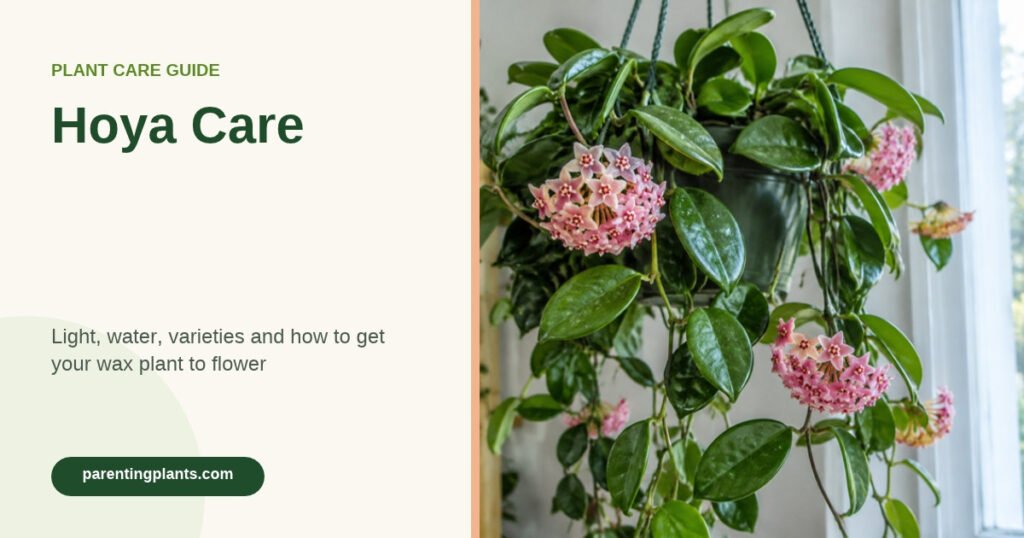
Hoyas, also called wax plants, are slow-growing vines with thick, waxy leaves and clusters of star-shaped flowers that often smell sweet in the evening. They’re tough, long-lived and happy to be ignored for a week or two. Treat them a little like a succulent, give them plenty of light and some patience, and a mature hoya will flower year after year.
Short answer: Give a hoya bright, indirect light, with a little gentle morning sun if possible. Water thoroughly, then let the soil dry almost completely before watering again, usually every 1 to 3 weeks. Use a chunky, fast-draining mix in a snug pot, keep it at 65 to 80°F (18 to 27°C) and never cut off the old flower stalks, because new flowers grow from them.
In this guide
Hoya care at a glance
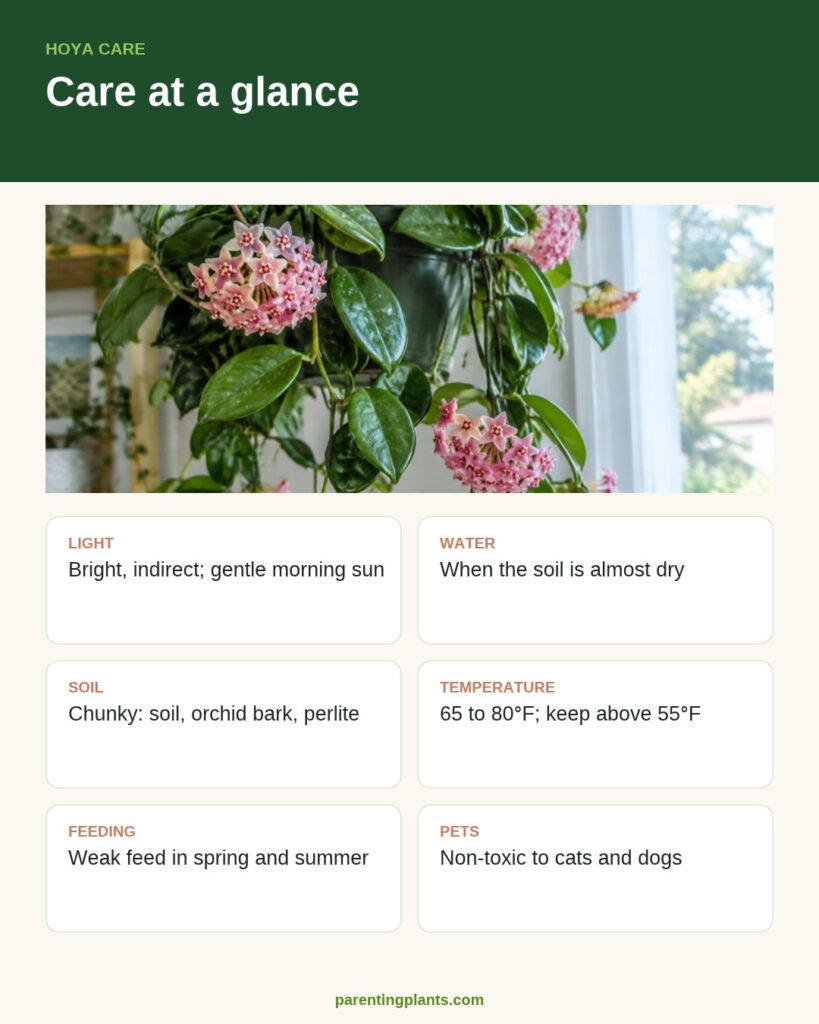
| Need | What a hoya wants |
|---|---|
| Light | Bright, indirect light; a little gentle morning sun is fine |
| Water | When the soil is almost completely dry |
| Soil | Chunky mix: potting soil, orchid bark and perlite or pumice |
| Pot | Snug pot with a drainage hole; hoyas flower best slightly root-bound |
| Temperature | 65 to 80°F (18 to 27°C); keep above 55°F (13°C) |
| Humidity | Average home humidity is fine; thin-leaved types like more |
| Fertilizer | Half- to quarter-strength every second or third watering in spring and summer |
| Pets | Non-toxic to cats and dogs (ASPCA) |
Popular hoya varieties
| Variety | Looks like | Good to know |
|---|---|---|
| Hoya carnosa | Oval, waxy green leaves; pink star flowers | The classic; tough and easy |
| Hoya carnosa ‘Krimson Queen’ / ‘Krimson Princess’ | Variegated cream, green and pink leaves | Needs bright light for color |
| Hoya carnosa ‘Compacta’ (Hindu rope) | Twisted, curled leaves on rope-like stems | Slow; let it dry well between waterings |
| Hoya kerrii (sweetheart hoya) | Thick, heart-shaped leaves | Single-leaf ‘hearts’ without a node never grow into vines |
| Hoya pubicalyx | Long leaves speckled with silver | Fast-growing and free-flowering |
| Hoya australis | Rounder, glossy leaves | Very forgiving; fragrant white flowers |
| Hoya obovata | Large round leaves with silver flecks | Grows quickly in bright light |
| Hoya linearis | Soft, thin, hanging leaves | Likes more water and humidity than most |
How much light does a hoya need?
Light is the biggest factor in how well a hoya grows and whether it flowers. Give it bright, indirect light: near an east or west window, or a few feet from a south window. A couple of hours of gentle morning sun is welcome, but hot afternoon sun can scorch the leaves.
- Too little light: thin, stretched stems with long gaps between leaves, and no flowers.
- Too much sun: yellow, bleached or reddish leaves with crispy brown patches.
- Just right: steady new growth and, on mature plants, flower stalks (peduncles).
A grow light works well for hoyas in darker homes. See our lighting guide.
How often to water a hoya
Hoyas store water in their thick leaves, so they cope with drought far better than soggy soil. Water thoroughly, then let the mix dry almost completely before watering again: usually every 1 to 2 weeks in spring and summer and every 2 to 3 weeks in winter.
- Check the soil with a finger or wooden skewer. Water when it’s dry most of the way down.
- Water slowly until it drains from the bottom.
- Empty the saucer; never leave a hoya sitting in water.
- Water less in winter and in lower light.
Squeeze test. A thirsty hoya’s leaves feel slightly soft and bendy, and may wrinkle. Firm, rigid leaves mean it has plenty of water.
Best soil and pot
Hoyas grow on trees in the wild, with roots that need air. Use a chunky, fast-draining mix, such as one part potting soil, one part orchid bark and one part perlite or pumice. Keep the pot snug: hoyas flower best slightly root-bound, so repot only when roots fill the pot, moving up just one size. Always use a drainage hole. See our potting soil guide and repotting guide.
Temperature and humidity
Keep hoyas at 65 to 80°F (18 to 27°C) and never below 55°F (13°C); keep them off cold windowsills in winter. A slight drop at night can help flower buds form. Most hoyas with thick leaves cope well with normal home humidity. Thin-leaved types like Hoya linearis appreciate a humidifier or a spot in a bright bathroom.
Fertilizing a hoya
Feed lightly in spring and summer, using a balanced houseplant fertilizer at half or quarter strength every second or third watering. Stop in autumn and winter. Too much fertilizer encourages soft, leafy growth instead of flowers. See our fertilizing guide.
How to get a hoya to flower
Hoya flowers grow in round clusters of waxy, star-shaped blooms, and many varieties are fragrant, especially in the evening. Young plants can take a few years to flower, but these steps make it much more likely:
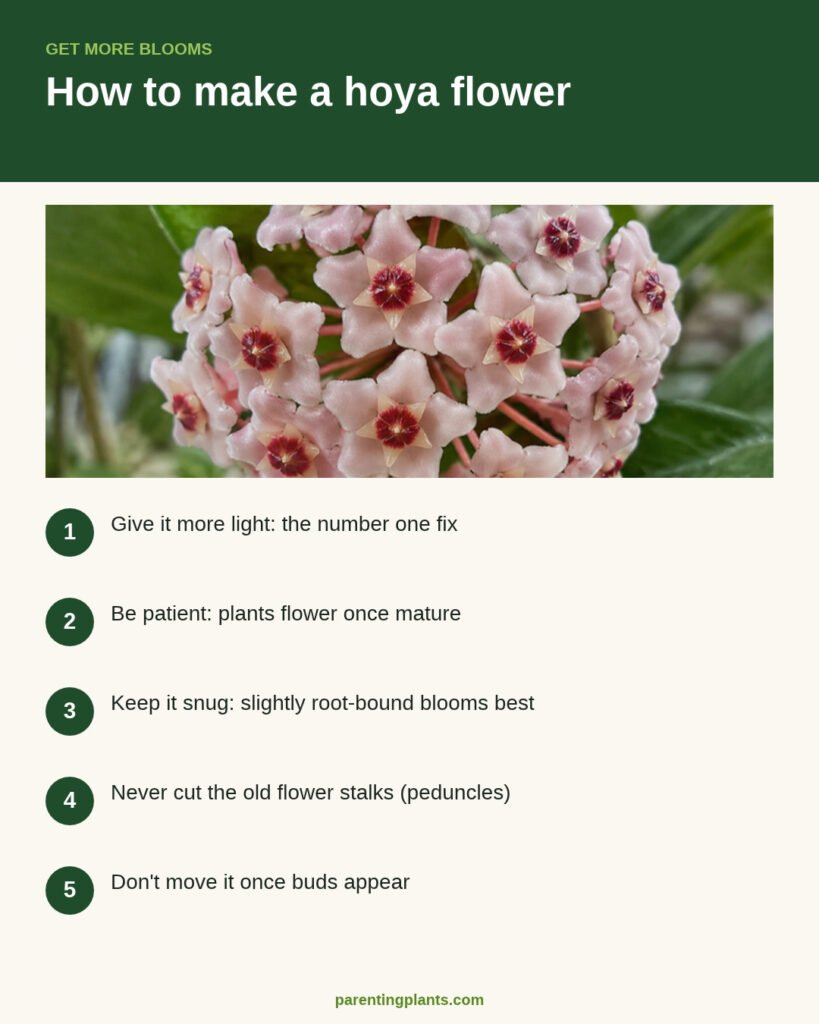
- Give it more light. This is the number one reason hoyas don’t bloom.
- Be patient. Plants usually need to be mature, often 2 to 3 years old or more.
- Keep it snug. A slightly root-bound hoya flowers more freely.
- Never cut the flower stalks (peduncles). Hoyas rebloom from the same short spurs year after year.
- Don’t move it once buds appear. Changes in light or temperature, or letting it dry out badly, can make buds drop (bud blast).
- Feed lightly in summer and let it rest a little drier and cooler in winter.
Sticky drops on the flowers? That’s nectar, which is normal. Wipe it off furniture underneath, or put a mat below while the plant is blooming.
Trellis, hoops and trailing
Hoyas are twining vines. You can let them trail from a hanging basket or shelf, or train them around a hoop, trellis or small frame. Wind new stems gently around the support; they’ll twine on their own as they grow. Long, leafless new stems are normal: leaves appear along them later, so don’t cut them off.
How to propagate a hoya
- Cut a healthy stem with at least one or two nodes and a few leaves.
- Remove the lowest leaf so the node is bare.
- Root the node in water, damp sphagnum moss or a light, airy mix.
- Keep it warm and in bright, indirect light. Roots form in 2 to 6 weeks.
- Pot it up into a small pot of chunky hoya mix.
A single hoya leaf will root, but it only grows into a vine if it has a piece of stem with a node. That’s why sweetheart hoya ‘hearts’ sold as single leaves often stay single leaves for years. See our propagation guide.
Common hoya problems and fixes
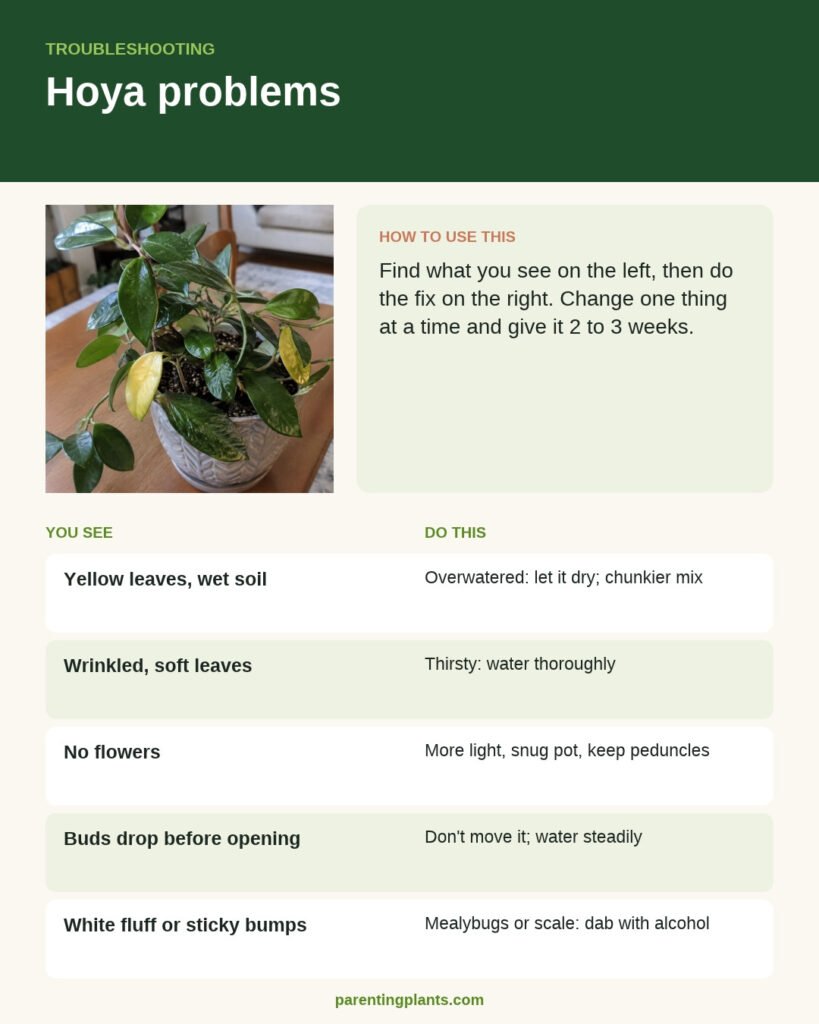
| What you see | Most likely cause | What to do |
|---|---|---|
| Yellow leaves, soil wet | Overwatering | Let it dry out; repot in chunkier mix if needed |
| Wrinkled, soft leaves | Thirst (or rot if soil is wet) | Water thoroughly; check roots if soil is wet |
| No flowers | Not enough light, too young or too big a pot | More light, patience, snug pot; keep the peduncles |
| Buds drop before opening | Bud blast from changes in care | Don’t move the plant; keep watering steady |
| Long bare stems | Normal new growth, or low light | Leave them; leaves follow. Add light if growth is thin |
| Reddish or bleached leaves | Too much direct sun | Move to bright, indirect light |
| White fluff or sticky bumps | Mealybugs or scale | Dab with rubbing alcohol; repeat weekly |
More help in our guides to houseplant pests and root rot.
Is hoya safe for pets?
Yes. The ASPCA lists hoya (wax plant) as non-toxic to cats and dogs, making it a great trailing plant for pet owners. Large amounts of any plant can still upset a pet’s stomach. See our full list of pet-friendly houseplants.
Quick action checklist
- Bright, indirect light, with some gentle morning sun if possible
- Water thoroughly, then let the soil dry almost completely
- Use a chunky, fast-draining mix in a snug pot
- Keep it above 55°F and off cold windowsills
- Feed lightly in spring and summer only
- Never cut off the old flower stalks
- Don’t move it once flower buds appear
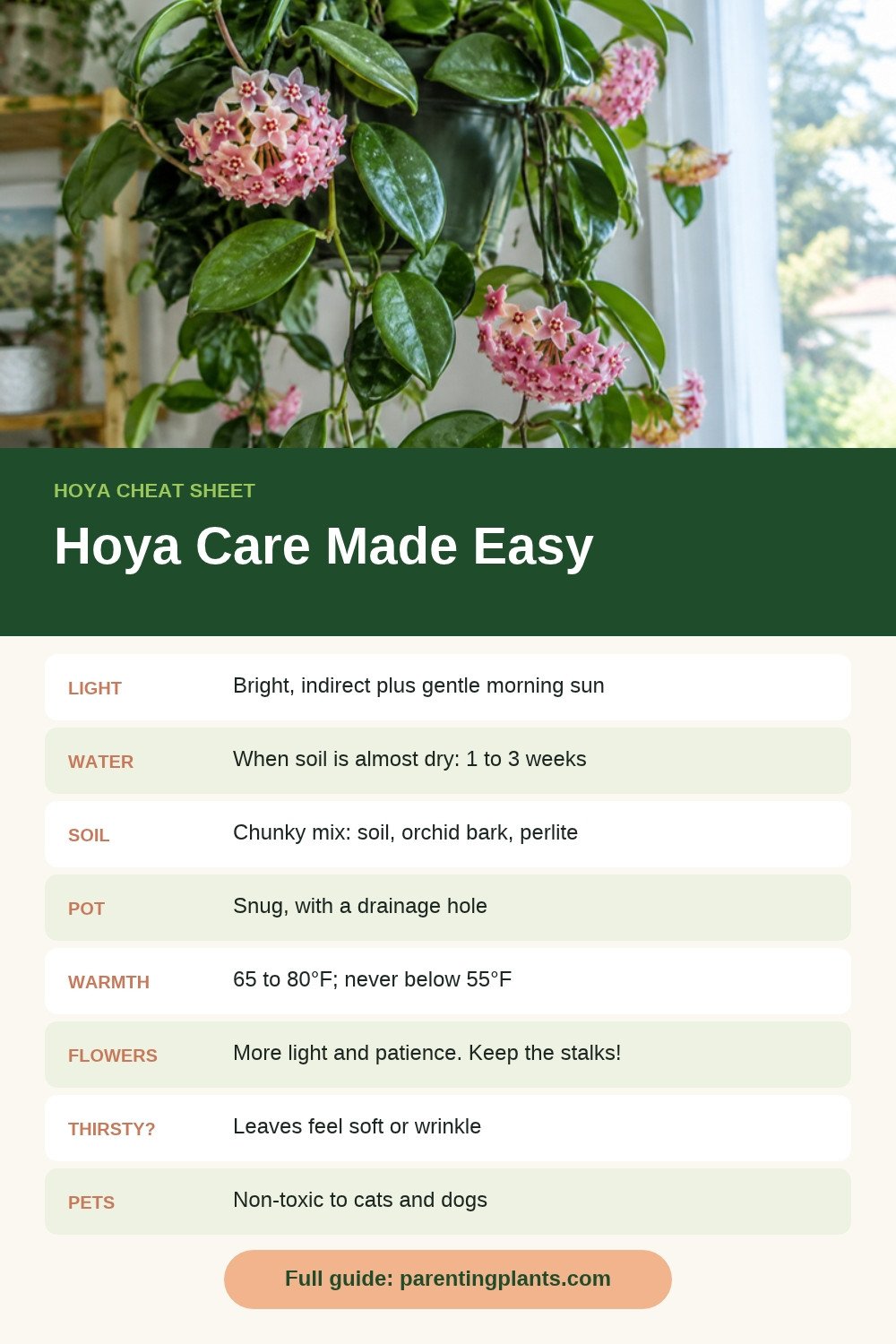
Save this for later: pin the cheat sheet below to your Pinterest plant board.
Hoya leaves yellowing, wrinkling or not flowering?
The Houseplant Rescue Guide matches 26 common plant problems to a clear photo, then gives you simple steps to fix each one and stop it coming back. No jargon, 50 pages, with printable checklists.
Hoya care FAQ
How often should I water a hoya?
When the soil is almost completely dry, usually every 1 to 2 weeks in spring and summer and every 2 to 3 weeks in winter.
Why isn’t my hoya flowering?
The most common reason is not enough light. Young age, a pot that’s too big and cutting off the old flower stalks also prevent blooms.
Should I cut off hoya flower stalks?
No. Hoyas rebloom from the same stalks (peduncles) every year, so leave them on the plant.
Why are my hoya leaves turning yellow?
Usually overwatering or soil that stays wet too long. Let it dry out and use a chunkier, faster-draining mix.
Can hoya grow in low light?
It survives, but grows slowly and rarely flowers. Give it bright, indirect light or a grow light for the best results.
Will a single sweetheart hoya leaf grow into a plant?
Only if it has a piece of stem with a node. A leaf on its own can root and live for years but won’t vine.
Is hoya safe for cats?
Yes. The ASPCA lists hoya as non-toxic to cats and dogs.
Sources and further reading
Want to go deeper? These university extension and expert resources cover the same topic:
- Iowa State University Extension: All about hoyas
- UF/IFAS Gardening Solutions: Hoya
- Penn State Extension: Hoyas as houseplants
- NC State Extension Plant Toolbox: Hoya carnosa
- Clemson Cooperative Extension: Pet-safe indoor houseplants