Special Offer: Use code ILOVEPLANTS for 25% off on all digital products! Shop Now →


With its braided trunk and umbrella of glossy leaves, the money tree is one of the most popular gift plants around, and a surprisingly easy one to keep. In the wild, Pachira aquatica grows along rivers and in freshwater swamps from southern Mexico to northern Brazil, so it likes bright light, regular drinks and warm, humid air. Indoors it usually reaches 6 to 8 feet. The one thing it really dislikes is change, so most problems come from moving it around or watering on a schedule.
Short answer: Give a money tree bright, indirect light and water when the top 2 inches of soil are dry, until water drains out, then empty the saucer. Keep it at 65 to 75°F (18 to 24°C), away from drafts, with average to high humidity. Feed at half strength every 2 to 4 weeks in spring and summer. Pick one good spot and leave it there. It is listed as non-toxic to cats and dogs.
In this guide
Money tree care at a glance

| Need | What a money tree wants |
|---|---|
| Light | Bright, indirect light; gentle morning sun is fine |
| Water | When the top 2 inches are dry; drain well, never leave it in water |
| Soil | Airy, fast-draining peat- or coir-based mix with perlite |
| Temperature | 65 to 75°F (18 to 24°C); keep above 50°F (10°C) |
| Humidity | Average to high; 50% or more is ideal |
| Feeding | Half strength every 2 to 4 weeks in spring and summer |
| Size indoors | Usually 6 to 8 feet, easily kept smaller by pruning |
| Pets | Listed as non-toxic to cats and dogs (ASPCA) |
Free Plant Care Tracker: Never forget to water your Money Tree again. Get it free →
About braided money trees
Most money trees are sold as several young trunks braided together. NC State Extension notes the practice started in Taiwan, where the braid is believed to “lock in” good fortune. The braid is just for looks: each trunk is a separate plant, and they need the same care as a single tree.
- Check the ties. Growers often hold the braid with a plastic tie or wire. Loosen or remove it once the trunks have set, or it can cut into the bark as they thicken.
- Keep braiding gently. If you want a longer braid, loosely weave the young, green upper stems in spring and secure them with soft string.
- One dead trunk? It happens. Cut it off at the soil line; the others carry on.
- Braided trees grown indoors rarely flower, so do not expect blooms.
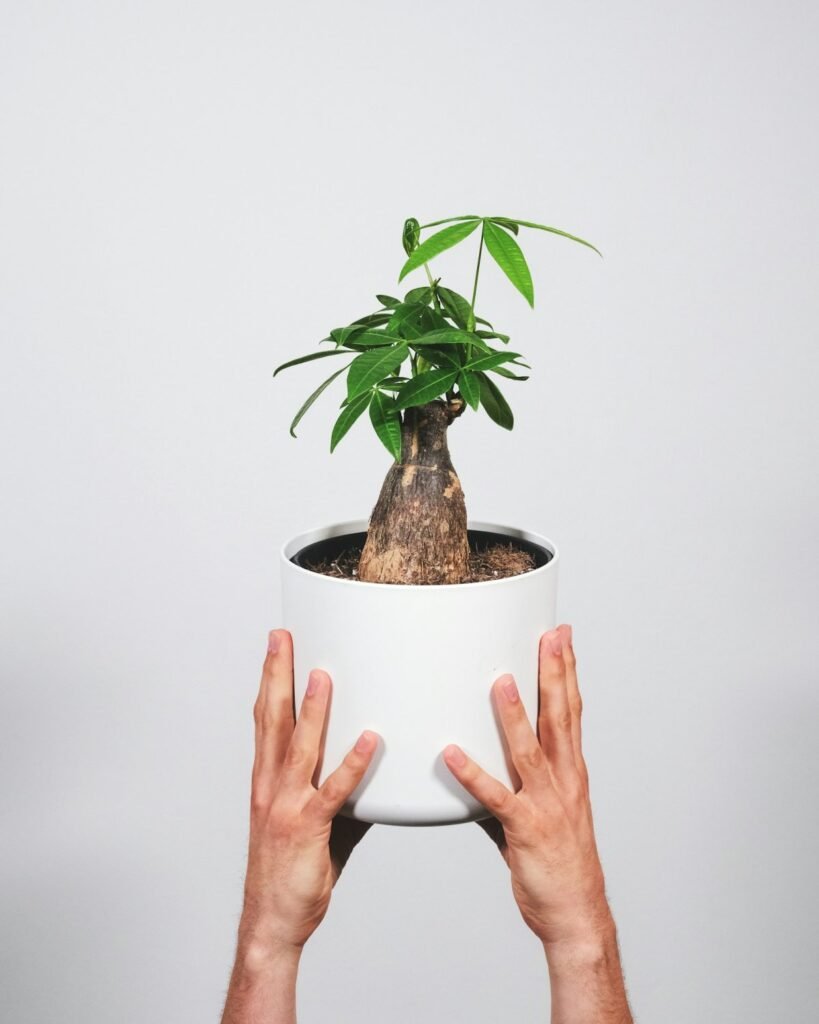
How much light does a money tree need?
A money tree is happiest in bright, indirect light, close to an east window or a few feet back from a south or west window. A little gentle morning sun is fine, but strong afternoon sun through glass can scorch the leaves. It tolerates medium light, but grows slower and leggier with smaller leaves.
Turn the pot a quarter turn every time you water so it grows evenly instead of leaning toward the window. In a dim home, a full-spectrum grow light works well. See our houseplant lighting guide to check your spot.
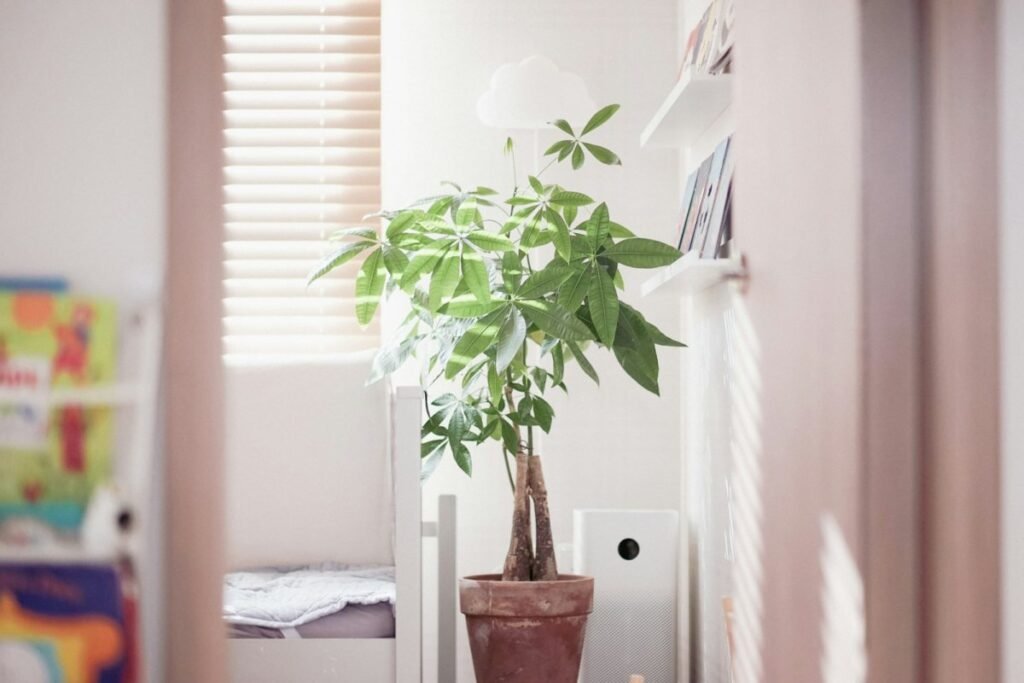
How often to water a money tree
Water thoroughly when the top 2 inches of soil are dry, until water runs out of the drainage holes. Wait 15 minutes, then tip away the water in the saucer or cover pot. In a bright, warm room that is often about once a week in summer and every 2 to 3 weeks in winter, but always check the soil first.
Money trees come from wet places, yet NC State Extension warns that standing water is not tolerated and quickly leads to root rot. On the other hand, letting the soil dry out completely makes it drop leaves. The finger test in our watering guide keeps you between the two.
Best soil and pot
Use a light, well-draining houseplant mix. A peat- or coir-based potting mix with a few handfuls of perlite works well. The pot must have drainage holes. Choose a pot only a little bigger than the root ball, because extra soil stays wet. Many money trees are sold in a plastic nursery pot sitting inside a decorative pot without holes, so lift it out to water and let it drain.
Temperature and humidity
Keep it at 65 to 75°F (18 to 24°C). It does not like cold: keep it above 50°F (10°C), and if it spends summer outdoors, bring it in before nights cool down. Keep it out of the path of heaters, air conditioners and drafty doors, which cause leaf drop.
It enjoys humidity. Normal room air is usually fine, but in winter, when heating dries the air, group it with other plants, stand it on a pebble tray, or use a humidifier. Crispy brown leaf edges are the classic sign the air is too dry. Our humidity guide compares the options.
Fertilizing a money tree
Feed with a balanced liquid houseplant fertilizer at half strength every 2 to 4 weeks from spring to late summer. Water first so you never feed dry roots. Stop feeding in fall and winter, when growth slows. Pale new leaves in the growing season can mean it is hungry. More in our fertilizing guide.
How to prune a money tree
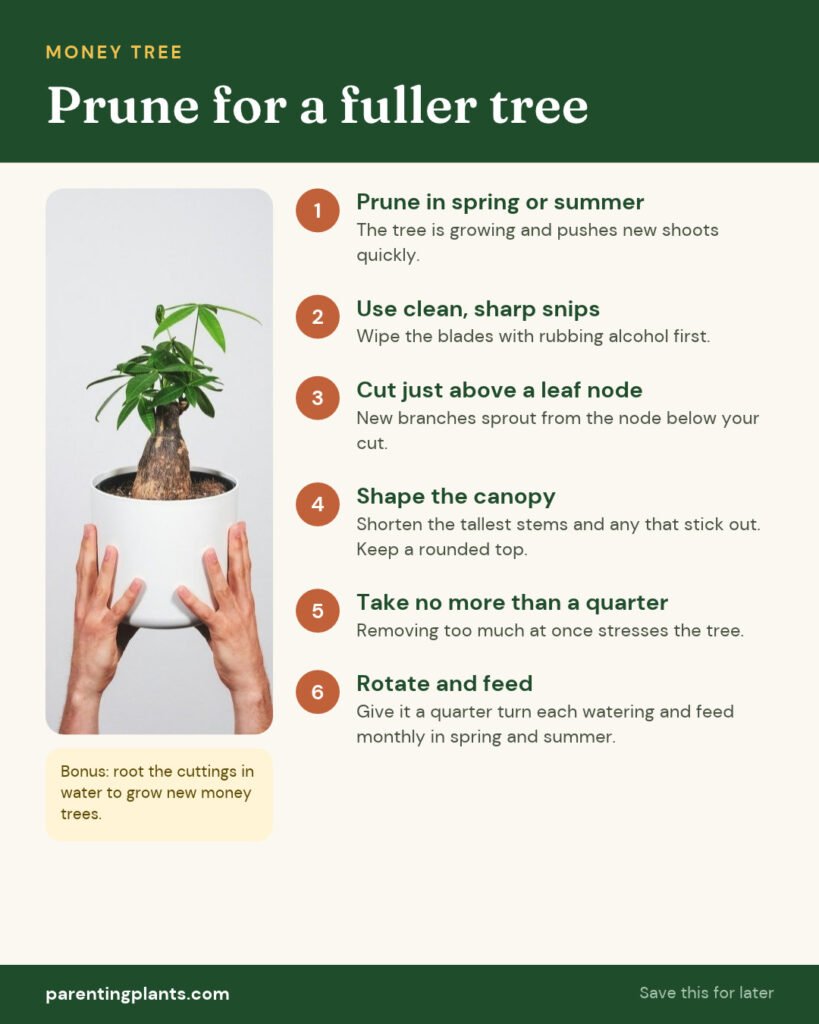
Pruning keeps a money tree compact and full. Do it in spring or summer, when it regrows quickly.
- Wipe clean, sharp pruners with rubbing alcohol.
- Cut just above a leaf node (where a leaf joins the stem). New branches sprout from the node below the cut.
- Shorten the tallest stems and any that stick out, keeping a rounded canopy.
- Remove yellow or damaged leaves at the base of their stalk.
- Take no more than a quarter of the leaves at once.
- Keep the healthy cuttings to grow new plants.
Our pruning guide shows where to cut on any houseplant.
How to propagate a money tree
Money trees grow easily from stem cuttings in spring or summer:
- Cut a 6-inch piece of stem with a few leaves and at least one node.
- Remove the lowest leaves so no leaves sit below the water or soil.
- Stand it in a glass of water, or push it into moist potting mix.
- Keep it warm and in bright, indirect light. Change the water weekly.
- Roots usually appear within a few weeks. Pot water-rooted cuttings once roots are about 1 to 2 inches long.
Note that a cutting grows into a normal single-stem tree, without the thick base or braid you see on nursery plants. More methods are in our propagation guide.
When to repot
Money trees grow slowly in pots and only need repotting every 2 to 3 years, in spring. Repot sooner if roots grow out of the drainage holes or water runs straight through. Move up only one pot size and use fresh mix. Our repotting guide walks you through it.
Common money tree problems and fixes
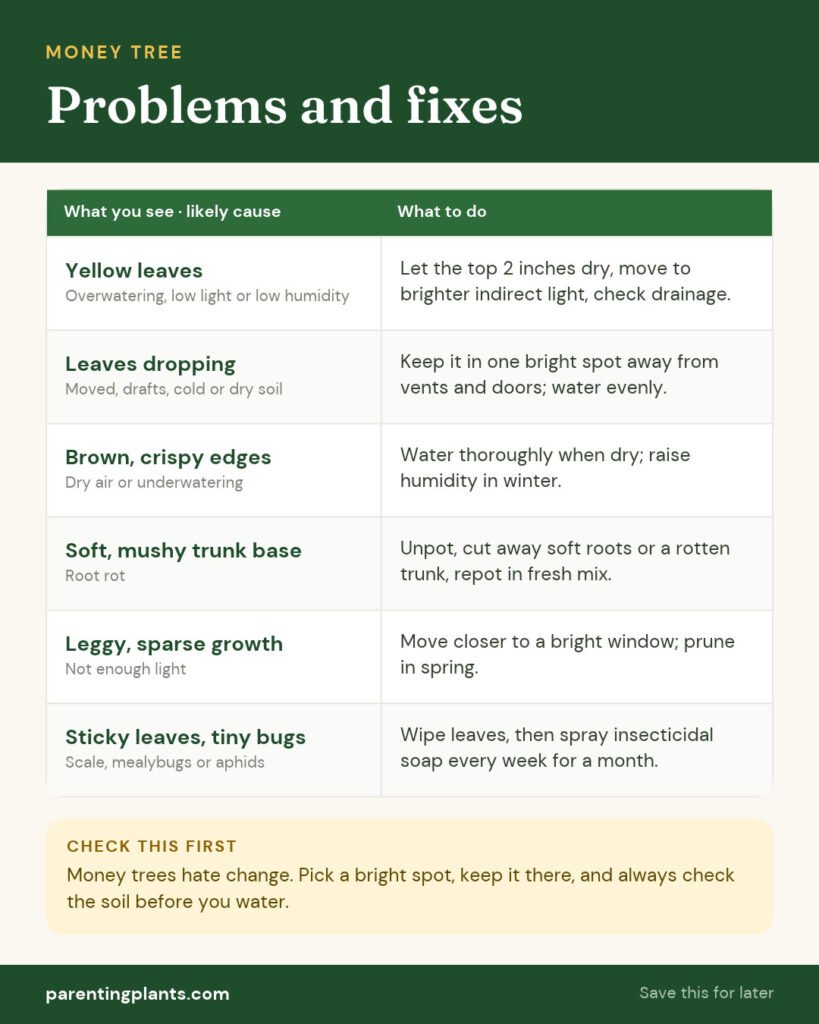
| What you see | Most likely cause | What to do |
|---|---|---|
| Yellow leaves, soil wet | Overwatering or poor drainage | Let the top 2 inches dry; check the pot drains; empty the saucer |
| Yellow leaves, soil dry | Underwatering or hunger | Water thoroughly; feed in spring and summer |
| Leaves dropping suddenly | Moved, drafts, cold, or the soil dried out | Keep it in one bright spot away from vents and doors; water evenly |
| Brown, crispy leaf edges | Dry air or underwatering | Raise humidity in winter; water when the top 2 inches are dry |
| Soft, mushy or wrinkled trunk | Root rot | Unpot, cut away soft roots or a rotten trunk; repot in fresh mix |
| Leggy stems, small leaves | Not enough light | Move to brighter, indirect light; prune in spring |
| Scorched, pale patches | Too much direct sun | Move back from the window or add a sheer curtain |
| Sticky leaves, tiny bugs | Scale, mealybugs or aphids | Wipe leaves, then spray insecticidal soap weekly for a month |
Some leaf drop is normal after bringing a new money tree home, as NYBG plant experts point out: it is adjusting to lower indoor light. Keep care steady and new leaves will follow. More help in our guides to yellow leaves, root rot and houseplant pests.

Is a money tree safe for pets?
The ASPCA lists the money tree (Pachira aquatica) as non-toxic to cats and dogs. NC State Extension notes that a cat chewing on it may still get a mild upset stomach, with vomiting or drooling, so keep it out of reach of plant-chewing pets. Do not confuse it with the “money plant” (pothos) or the jade plant, which are both toxic to pets. Check any plant with our free Plant Toxicity Checker.
Quick action checklist
- Bright, indirect light; turn the pot each watering
- Water when the top 2 inches are dry; empty the saucer
- Use a pot with holes and an airy mix
- Keep it at 65 to 75°F, away from vents and drafts
- Feed at half strength every 2 to 4 weeks in spring and summer
- Pick one spot and leave it there
- Loosen any ties around the braid as the trunks thicken
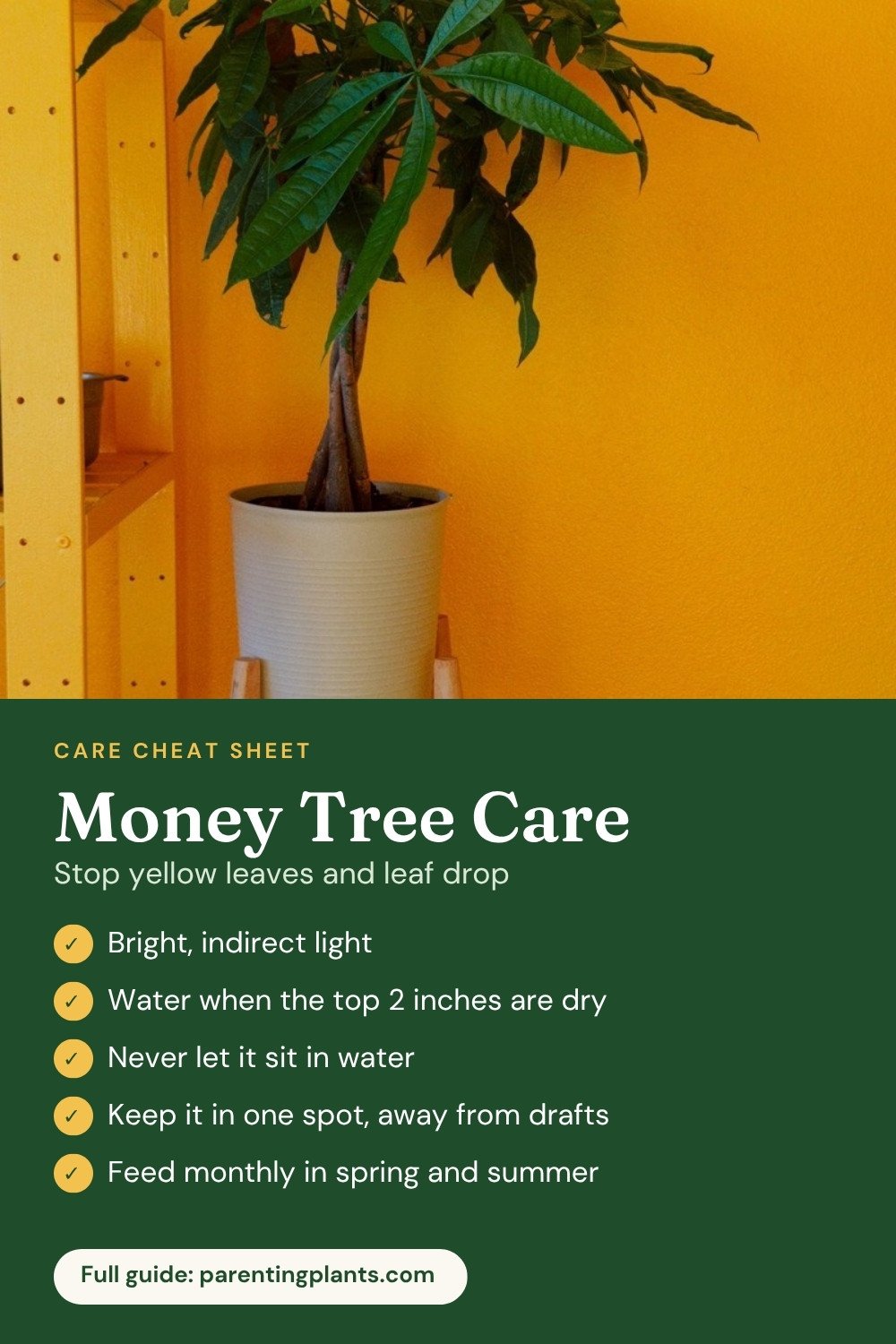
Save this for later: pin the cheat sheet below to your Pinterest plant board.
Money tree dropping leaves or turning yellow?
The Houseplant Rescue Guide matches 26 common plant problems to a clear photo, then gives you simple steps to fix each one and stop it coming back.
Money tree FAQ
How often should I water a money tree?
When the top 2 inches of soil are dry, usually about once a week in summer and every 2 to 3 weeks in winter. Water until it drains, then empty the saucer.
Why are my money tree leaves turning yellow?
Most often overwatering or a pot that does not drain. Low light, dry air and lack of feeding can also cause it. Check the soil before you water.
Why is my money tree dropping leaves?
Money trees drop leaves when they are moved, sit in a draft, get cold, or the soil dries out. Keep it in one bright spot and water evenly.
Does a money tree need sunlight?
It needs bright, indirect light. Gentle morning sun is fine, but strong afternoon sun can scorch the leaves.
Is a money tree safe for cats and dogs?
The ASPCA lists it as non-toxic to cats and dogs, though chewing may cause a mild upset stomach.
Can I braid my money tree?
Yes, but only young, flexible stems. Weave them loosely in spring and tie them with soft string, removing ties before they cut into the bark.
How big does a money tree get indoors?
Usually 6 to 8 feet tall, but pruning keeps it as small as you like.
Sources and further reading
This guide was written by Manik for Parenting Plants and checked against university extension and botanical garden advice. Last reviewed November 2026.
- NC State Extension Plant Toolbox: Pachira aquatica (money tree)
- New York Botanical Garden: How do I care for my money tree houseplant?
- ASPCA: Money tree toxicity
Free tracker
Never forget to water your Money Tree again
Track your Money Tree and every other plant you own. A ready-made plant care tracker for Google Sheets and Notion that shows exactly which plants need water today, with 90 houseplants built in.
You're in!
Check your inbox, plant friend! 📩
Your free Plant Care Tracker is on its way. We've emailed you both versions, Google Sheets and Notion, plus a bonus printable 2027 plant calendar. It usually arrives within a few minutes.
Can't find it? Check your Promotions or Spam folder, and add manik@parentingplants.com to your contacts so you never miss a plant tip.


