Special Offer: Use code ILOVEPLANTS for 25% off on all digital products! Shop Now →

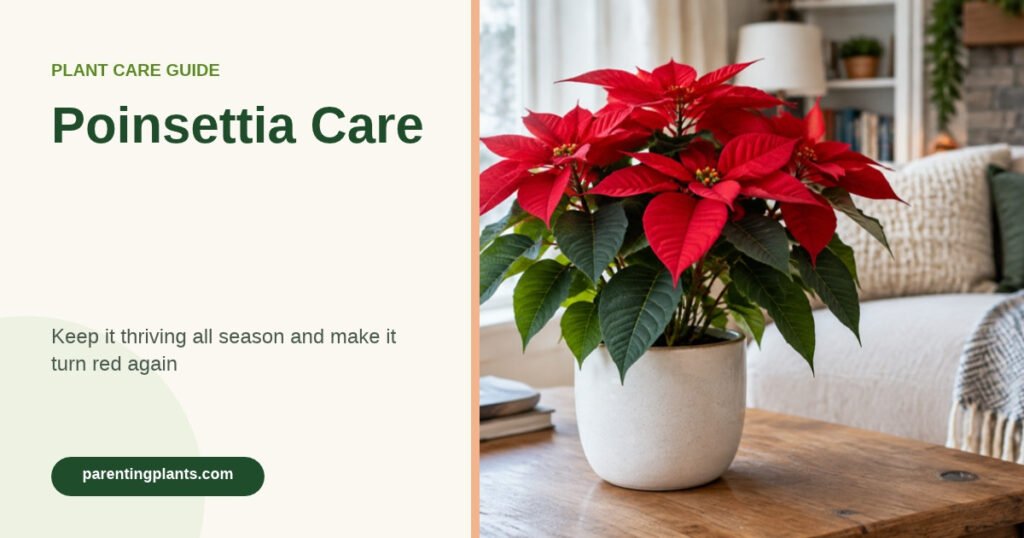
Poinsettias are the classic holiday plant, but most of them end up in the bin by January, usually because of cold drafts, soggy soil or the foil wrapper they came in. The good news is that a poinsettia is easy to keep looking great right through the holidays, and with a little patience you can keep it all year and even get it to turn red again next Christmas.
Short answer: Give a poinsettia bright, indirect light, keep it at 65 to 72°F (18 to 22°C) by day and no colder than 60°F (16°C) at night, and away from drafts and heaters. Water thoroughly when the top inch of soil feels dry, then empty the saucer or foil wrap so the roots never sit in water. Don’t feed it while it’s in color.
In this guide
Poinsettia care at a glance
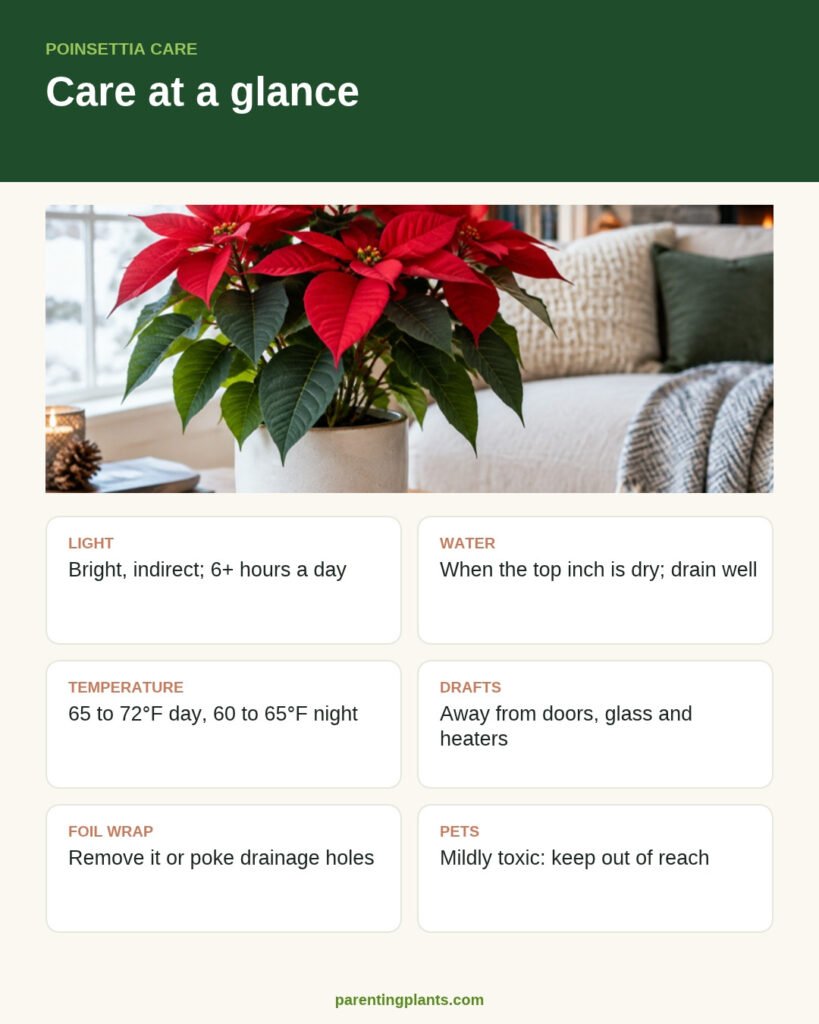
| Need | What a poinsettia wants |
|---|---|
| Light | Bright, indirect light; at least 6 hours of good light a day |
| Water | When the top inch is dry; water thoroughly and drain |
| Temperature | 65 to 72°F by day, 60 to 65°F at night; never below 50°F |
| Drafts | Keep away from doors, cold glass, heaters and vents |
| Pot | Drainage hole; remove or puncture the foil wrap |
| Fertilizer | None while in color; balanced feed every 3 to 4 weeks from late winter |
| Lifespan | Colorful for 6 to 8 weeks or more; a perennial shrub if kept |
| Pets | Mildly toxic: sap irritates mouth and stomach (ASPCA) |
The red parts aren’t flowers. They’re colored leaves called bracts. The true flowers are the tiny yellow buttons (cyathia) in the middle. When those drop, the bracts soon start to fade.
How to choose a healthy poinsettia
A poinsettia that starts healthy lasts far longer. When you buy one, look for:
- Tight yellow centers. The little yellow flowers in the middle should be closed or just opening, not dropped. That means the plant is fresh.
- Green leaves right down to the soil. Missing lower leaves usually means it has been overwatered, underwatered or chilled.
- Firm, upright stems with no drooping or wilting.
- No pests. Check under the leaves for whiteflies, which flutter up when you touch the plant.
- Not left in a plastic sleeve. Plants kept sleeved for days start dropping leaves and bracts.
Getting it home safely
Poinsettias are tropical and easily damaged by cold. Even a few minutes below 50°F (10°C) can cause leaf drop a few days later. Have the plant wrapped or sleeved for the trip, make the store your last stop, and never leave it in a cold car. Remove the sleeve as soon as you’re home.
How much light does a poinsettia need?
Place your poinsettia in bright, indirect light: near a sunny window but not touching the glass, or a few feet back from a south or west window. Aim for at least six hours of good light a day. In a dim corner the leaves yellow and drop and the color fades sooner. Don’t let leaves touch cold window glass in winter. See our lighting guide.
How to water a poinsettia
Poinsettias like soil that’s evenly moist but never soggy. Overwatering is the most common way they die.
- Check the soil every couple of days by pressing a finger into the top inch.
- When it feels dry, take the plant to the sink, remove the foil and water thoroughly until water runs out of the drainage holes.
- Let it drain for 10 minutes, then put it back in its foil or cover pot.
- Never let it sit in water collected in the foil or saucer.
Lose the foil, or poke holes in it. Decorative foil wraps trap water around the roots and cause root rot. Remove the foil when watering, or make a few holes in the bottom and stand it on a saucer.
Small pots dry out much faster than big ones, especially in warm, heated rooms, so check them more often. More in our watering guide.
Temperature and drafts
Poinsettias are happiest at normal room temperature: 65 to 72°F (18 to 22°C) during the day and slightly cooler, around 60 to 65°F (16 to 18°C), at night. Cooler nights help the color last longer. Keep them out of cold drafts from doors and windows and away from hot air from radiators, fireplaces and heating vents. Both cause sudden leaf drop.
Fertilizing a poinsettia
Don’t fertilize while the plant is in color. It doesn’t need it, and feeding won’t make the bracts last longer. If you’re keeping the plant, start feeding with a balanced houseplant fertilizer every 3 to 4 weeks once new green growth appears in late winter or spring. See our fertilizing guide.
After the holidays: keeping it alive
Once the holidays are over you have two choices: enjoy it until it fades and compost it, or keep it as a houseplant. Kept poinsettias grow into attractive leafy plants, and they can be made to color again (see below).
- January to March: keep it in bright light and water when the top inch is dry. The bracts slowly fade or turn green; that’s normal.
- Late winter: reduce watering a little and let the plant rest, but don’t let the stems shrivel.
- Spring: cut the stems back to 6 to 8 inches (15 to 20 cm), repot into a slightly bigger pot with fresh potting mix and start feeding as new growth appears.
See our pruning guide and repotting guide for help.
How to make a poinsettia rebloom
Poinsettias are short-day plants: they only color up when nights are long. To make the bracts turn red again for the holidays, you have to give the plant long, completely dark nights in autumn.
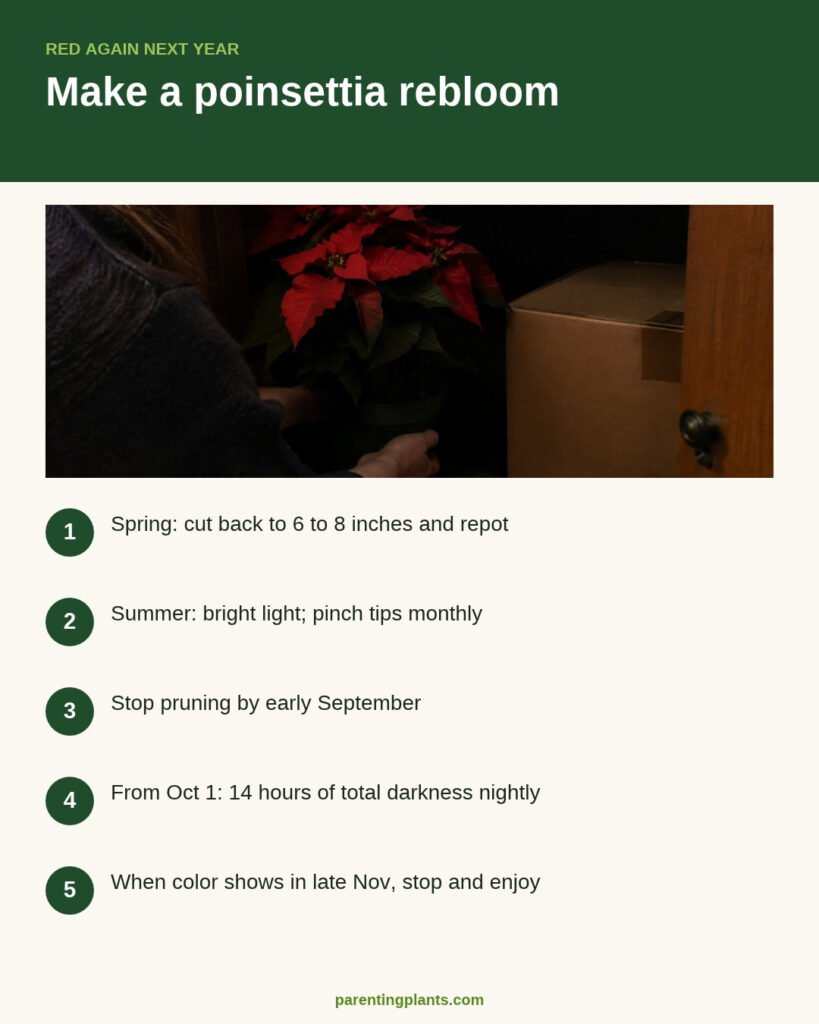
- Summer: keep the plant growing in bright light (or outdoors in a sheltered, partly shaded spot once nights stay above 55°F). Pinch or trim the tips every month or so, leaving about four leaves on each shoot, to make it bushy.
- Stop pruning by early September, or you’ll delay the color.
- From about October 1: give the plant 14 hours of complete darkness every night, for example from 5 pm to 7 am. Put it in a closet or cover it with a large box.
- Daytime: bring it back into bright light for the other 10 hours and keep watering and feeding as usual.
- Be strict for 7 to 10 weeks. Even a lamp or a streetlight during the dark period can stop it coloring.
- Late November: once the bracts start to show color, stop the dark treatment and care for it like a new poinsettia.
Single-stemmed plants rarely rebloom well. Poinsettias with several stems (most store-bought ones) give the best results. Expect the second year’s color to be a little smaller than a greenhouse-grown plant, but every bit as satisfying.
Year-round poinsettia calendar
| When | What to do |
|---|---|
| December to January | Enjoy the color; bright light, water when the top inch is dry, no feeding |
| February to March | Bracts fade; water a little less and let the plant rest |
| April to May | Cut back to 6 to 8 inches, repot and start feeding every 3 to 4 weeks |
| June to August | Grow in bright light or outdoors in partial shade; pinch tips monthly |
| Early September | Last pinch; bring it indoors before nights drop below 55°F |
| October 1 to late November | 14 hours of total darkness every night, bright light by day |
| Late November to December | Color shows; stop the dark treatment and enjoy |
Common poinsettia problems and fixes
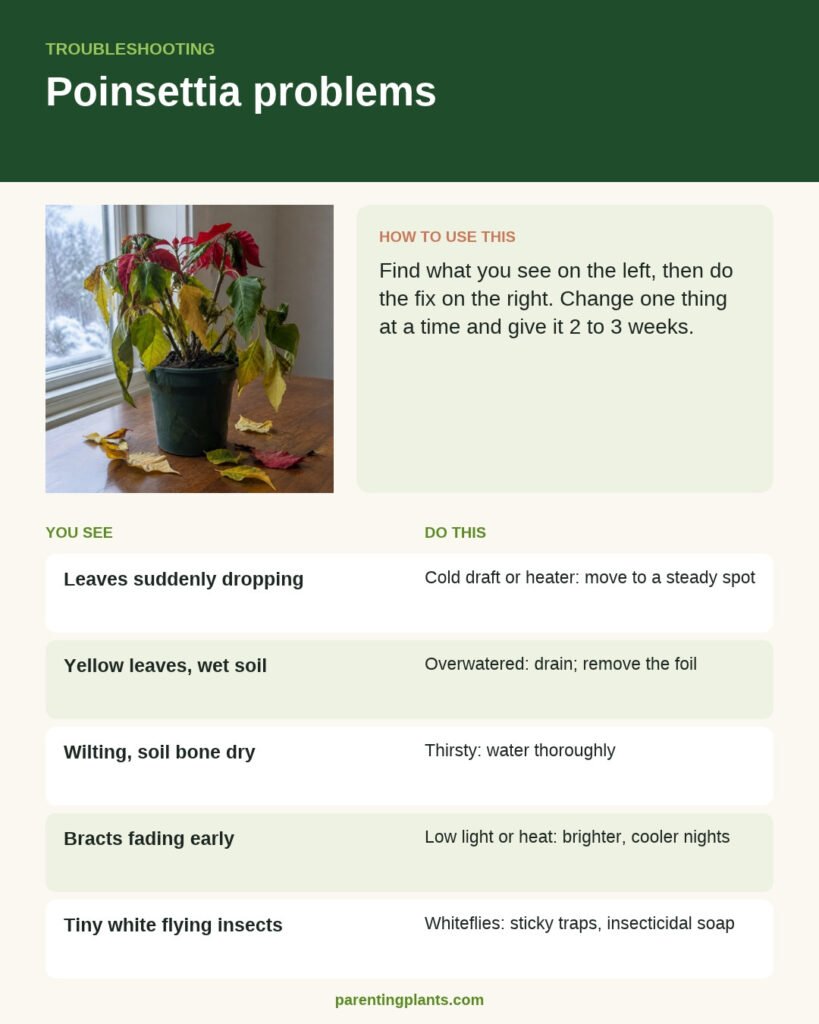
| What you see | Most likely cause | What to do |
|---|---|---|
| Leaves suddenly dropping | Cold draft, cold car trip or hot vent | Move to a steady 65 to 72°F spot away from drafts |
| Yellow lower leaves, wet soil | Overwatering or water trapped in foil | Let the top inch dry; remove or puncture the foil |
| Wilting, soil bone dry | Underwatering | Water thoroughly; check small pots more often |
| Bracts fading or dropping early | Low light, heat or old plant | Move to brighter light; keep nights cooler |
| Tiny white insects flying up | Whiteflies | Use yellow sticky traps; spray with insecticidal soap |
| Bracts stay green in autumn | Light during the dark period | Give 14 hours of total darkness from October 1 |
More help in our guides to yellow leaves, root rot and houseplant pests.
Are poinsettias poisonous to pets?
Poinsettias are far less dangerous than their reputation. The ASPCA lists them as toxic to cats and dogs, but only mildly: the milky sap irritates the mouth and stomach, which can cause drooling, licking and sometimes vomiting. Serious poisoning is very unlikely. It’s still best to keep the plant out of reach of curious pets and young children, and to wash your hands after pruning, because the sap can irritate skin and eyes. If your pet eats a lot of it or seems unwell, call your vet. Looking for alternatives? See our list of pet-friendly houseplants.
Quick action checklist
- Choose a plant with tight yellow centers and leaves down to the soil
- Protect it from cold on the way home
- Bright, indirect light, not touching cold glass
- Water when the top inch is dry; never let it sit in water
- Remove the foil or poke drainage holes in it
- Keep it at 65 to 72°F, away from drafts and heaters
- For rebloom: 14 hours of total darkness nightly from October 1
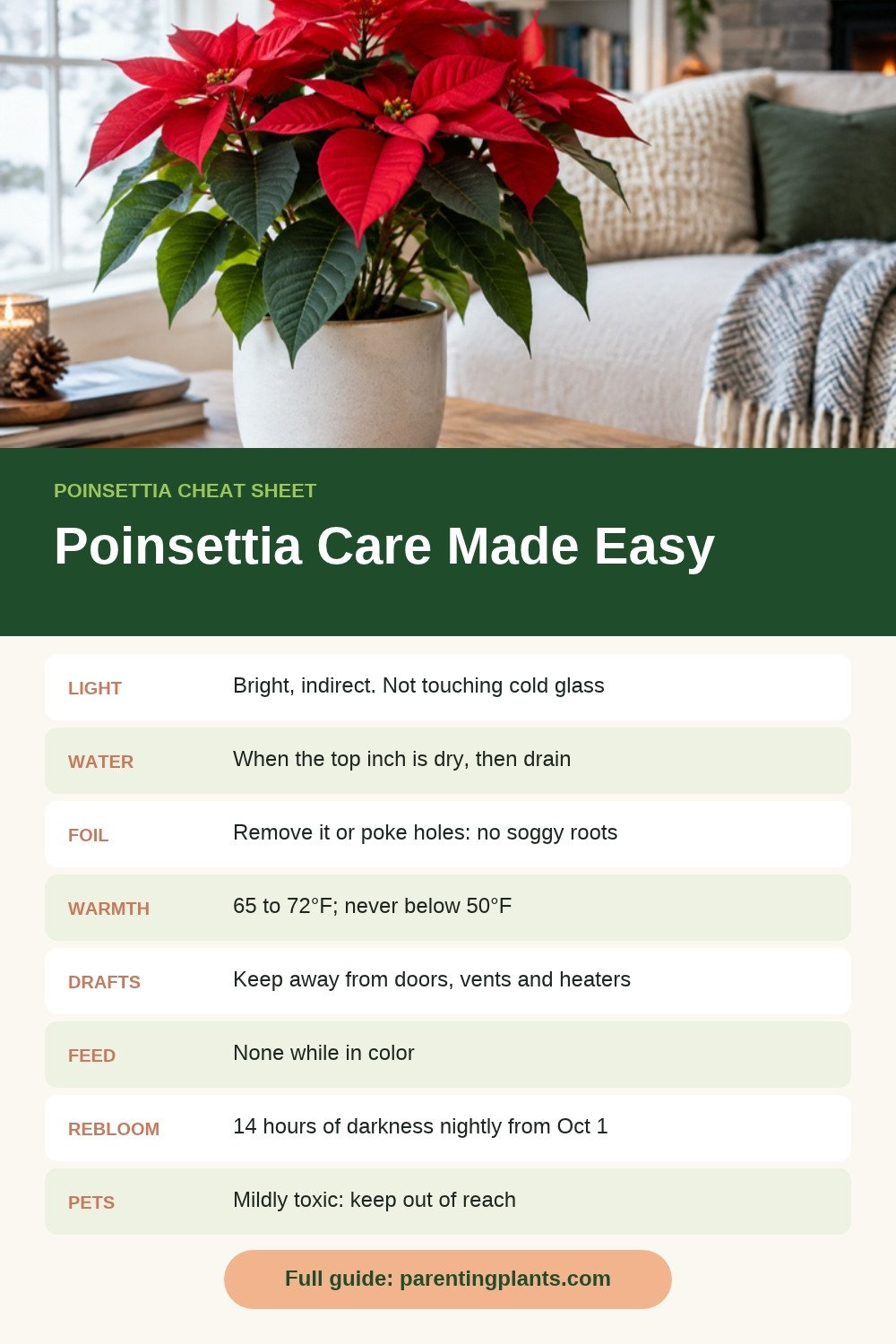
Save this for later: pin the cheat sheet below to your Pinterest plant board.
Poinsettia dropping leaves or turning yellow?
The Houseplant Rescue Guide matches 26 common plant problems to a clear photo, then gives you simple steps to fix each one and stop it coming back. No jargon, 50 pages, with printable checklists.
Poinsettia care FAQ
How often should I water a poinsettia?
When the top inch of soil feels dry, usually every few days in a warm room. Water thoroughly, then let it drain so it never sits in water.
Why is my poinsettia dropping its leaves?
Usually a cold draft, a chilly trip home, hot air from a heater, or overwatering. Move it to a steady, draft-free spot and check the soil.
Should I remove the foil from my poinsettia?
Yes, or poke holes in it. Foil traps water around the roots and causes root rot.
How long do poinsettias last?
With good care the bracts stay colorful for 6 to 8 weeks or more, and the plant itself can live for years.
How do I make my poinsettia turn red again?
From about October 1, give it 14 hours of complete darkness every night for 7 to 10 weeks, with bright light during the day.
Are poinsettias poisonous to cats and dogs?
They’re mildly toxic. The sap can cause mouth irritation, drooling and vomiting, but serious poisoning is very unlikely. Keep it out of reach.
Can I keep my poinsettia outside?
Only in warm weather. Move it outside once nights stay above 55°F and bring it back in before they cool in early autumn.
Sources and further reading
Want to go deeper? These university extension and expert resources cover the same topic:
- Mississippi State University Extension: Selecting and maintaining poinsettias
- NC State Extension: How to make a poinsettia rebloom
- South Dakota State University Extension: Keeping your poinsettia alive and getting it to rebloom
- ASPCA: Toxic and non-toxic plants list
Free printable
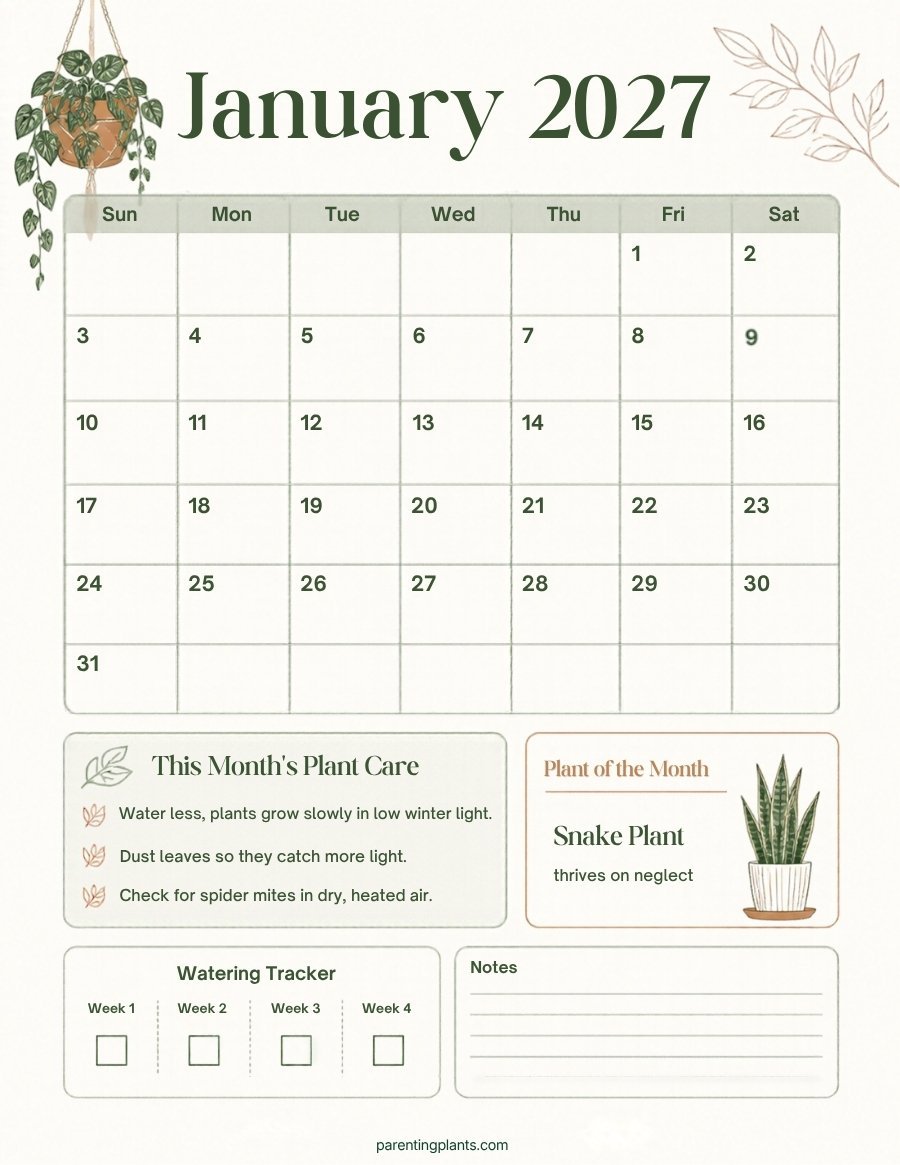
Get your free 2027 Plant Parent Calendar
14 beautiful printable pages to keep your houseplants happy all year. Enter your name and email and we'll send it straight to your inbox.
You're in!
Thank you, plant friend! 🪴
Your calendar is on its way to your inbox (check Promotions or Spam if you don't see it in a few minutes). You can also download it right now:
⬇ Download the 2027 calendar (PDF)