Special Offer: Use code ILOVEPLANTS for 25% off on all digital products! Shop Now →

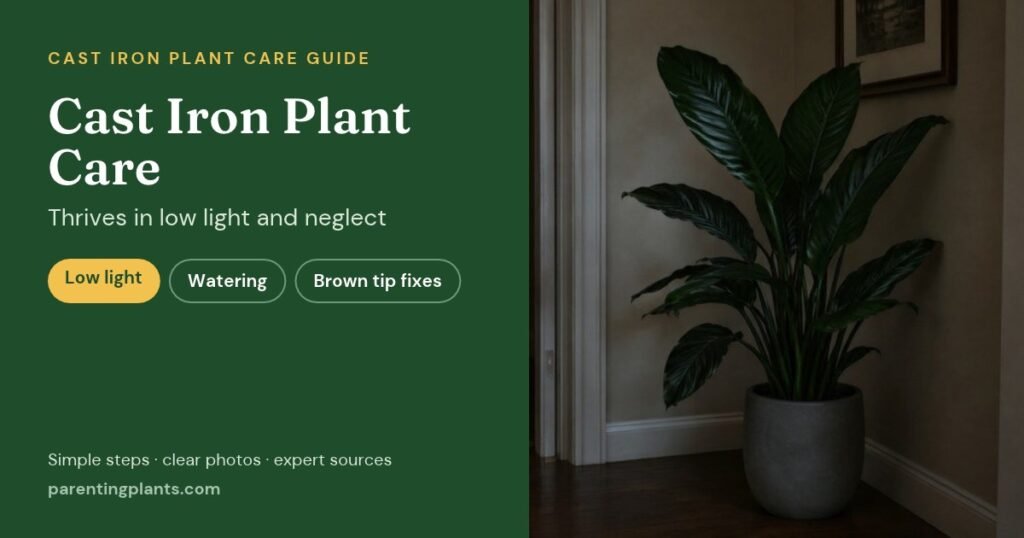
The cast iron plant (Aspidistra elatior) earned its name by surviving gloomy Victorian parlours full of gas-lamp fumes. It is one of the very few houseplants that genuinely copes with low light, cool rooms, dry air and neglect. The trade-off is patience: it grows slowly, often just a few new leaves a year. Here is how to keep one looking glossy and full for decades.
Short answer: Cast iron plant grows in low to medium, indirect light and must be kept out of direct sun. Water when the top half of the soil is dry, about every 2 to 3 weeks, and less in winter. It tolerates 45 to 85°F (7 to 29°C), needs little feeding, and is non-toxic to cats and dogs.
In this guide
Cast iron plant care at a glance
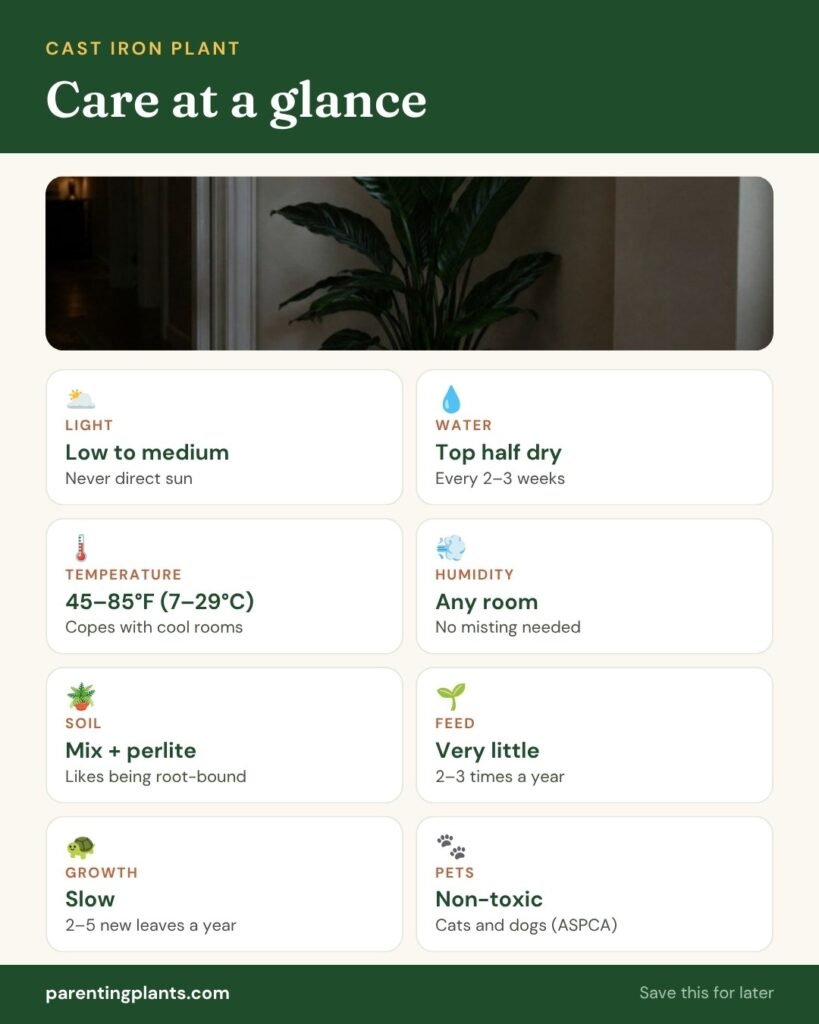
| Need | What it needs |
|---|---|
| Light | Low to medium, indirect light; no direct sun |
| Water | When the top half of the soil is dry; every 2 to 3 weeks |
| Humidity | Any normal room humidity |
| Temperature | 45 to 85°F (7 to 29°C); avoid frost |
| Soil | Standard indoor potting mix with extra perlite |
| Fertilizer | Half-strength feed 2 to 3 times in spring and summer |
| Growth | Very slow: often 2 to 5 new leaves a year; 2 to 3 ft (60 to 90 cm) tall |
| Pets | Non-toxic to cats and dogs (ASPCA) |
Free Plant Care Tracker: Never forget to water your Cast Iron Plant again. Get it free →
What to expect from a cast iron plant
Before you buy, know what you are getting. Cast iron plant is an evergreen clump of long, dark green, strap-like leaves, each on its own stalk rising straight from the soil. It does not trail, branch or flower in any showy way. It grows from underground stems (rhizomes), so the clump slowly widens over the years.
- Growth: slow. A healthy plant may add only 2 to 5 leaves a year, mostly in spring and summer. This is normal, not a problem.
- Size: leaves 12 to 24 inches (30 to 60 cm) long; plants reach about 2 to 3 ft (60 to 90 cm).
- Price: because it grows slowly, larger plants cost more than you might expect.
- Lifespan: many decades with basic care.
Cast iron plant varieties
| Variety | Looks like | Notes |
|---|---|---|
| Classic green (A. elatior) | Plain, glossy dark green leaves | Toughest and fastest-growing |
| ‘Variegata’ | Green leaves with cream stripes | Needs a little more light to keep stripes |
| ‘Milky Way’ | Dark leaves dotted with cream speckles | Slower; striking in a shady spot |
| ‘Asahi’ | Leaves with white tips | Tips are whitest in brighter, indirect light |
| ‘Okame’ | Bold white and green stripes | Slower and a little fussier |
Variegated types grow more slowly than plain green ones and may lose some patterning in very low light.
How much light does a cast iron plant need?
Cast iron plant is one of the best choices for low-light rooms, hallways and north-facing windows. It is happiest in low to medium, indirect light, such as several feet from a window or beside a north window. It will even get by in rooms lit mainly by artificial light, though it grows very slowly there.
Direct sun is the one thing it really dislikes. Even a few hours of hot sun can bleach the leaves and burn brown, papery patches into them. If your plant is pale or yellow-white, move it further from the window. For more options for dim rooms, see our best low-light houseplants.
How often to water a cast iron plant
Water thoroughly when the top half of the soil is dry, then let excess water drain away. In most homes that means every 2 to 3 weeks in spring and summer and every 3 to 4 weeks in winter. Low light means slow drying, so always check the soil rather than watering on a fixed schedule.
| Situation | Typical interval |
|---|---|
| Spring and summer, medium light | Every 2 weeks |
| Spring and summer, low light | Every 2 to 3 weeks |
| Autumn and winter | Every 3 to 4 weeks |
| Large plant in a big pot | Check deeper; may go 4 weeks or more |
The plant tolerates drought far better than soggy soil. Constantly wet soil is the main way people kill it, through root and rhizome rot. Our watering guide explains how to check moisture deeper in the pot.
Temperature and humidity
This is one of the toughest houseplants for temperature. It is comfortable from about 45 to 85°F (7 to 29°C), so it suits cool hallways, porches and spare rooms that other tropical plants hate. Protect it from frost and from blasts of hot air from radiators. Normal room humidity is fine; it does not need misting or a humidifier.
Soil, pot and repotting
Use a standard indoor potting mix with about one-third extra perlite or bark for drainage. A pot with a drainage hole is essential. Cast iron plant likes being slightly root-bound, so repot only every 3 to 5 years in spring, when the clump fills the pot. Move up just one size. More in our repotting guide.
Fertilizing
Feed lightly. A balanced liquid houseplant fertilizer at half strength 2 or 3 times between spring and late summer is plenty. Too much fertilizer causes brown leaf tips, and in variegated types it can make the stripes fade. Do not feed in autumn or winter.
Cleaning leaves and pruning
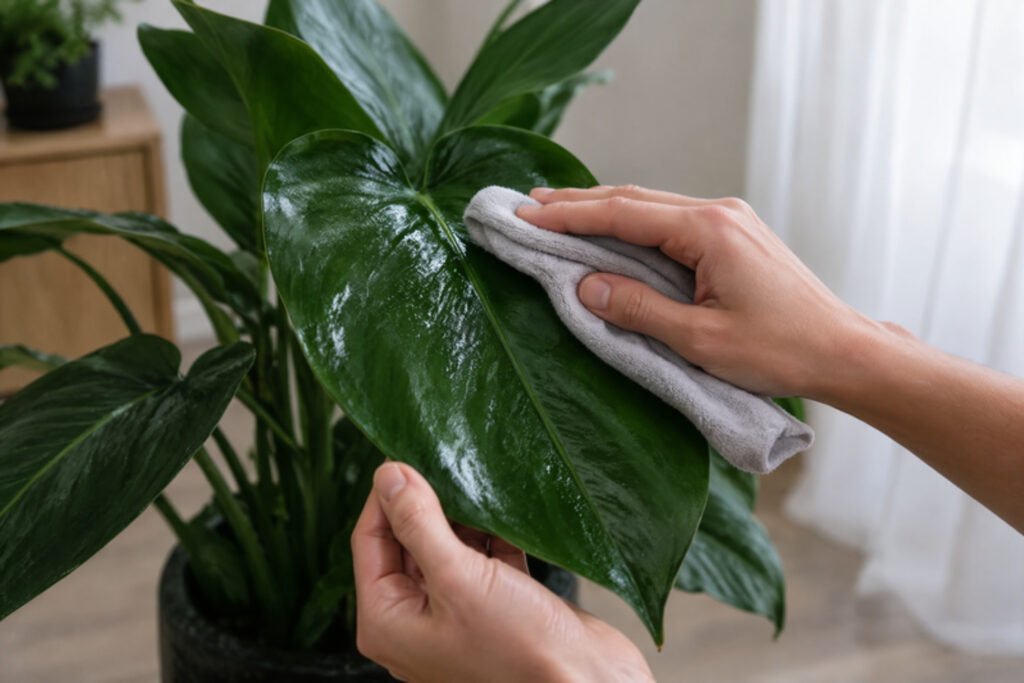
Those broad leaves collect dust, which blocks light and makes the plant look dull. Every month or two, wipe both sides of each leaf with a soft, damp cloth, supporting the leaf with your other hand. Skip leaf-shine products; they can clog the leaf surface.
Cut damaged, split or yellow leaves off at soil level with clean scissors. If only the tip is brown, trim just the brown part, following the leaf’s natural shape. Removing the oldest, tattiest leaves every year keeps the clump looking fresh. See our pruning guide.
How to propagate cast iron plant by division
Division is the only practical way to propagate it at home. Do it in spring when you repot.
- Slide the plant out of its pot and shake off loose soil.
- Find the thick, horizontal rhizomes connecting the leaves.
- Cut the rhizome with a clean knife so each piece has at least 2 to 3 leaves and some roots. Bigger pieces recover faster.
- Pot each piece in fresh mix at the same depth, rhizome just below the surface.
- Water once, then keep it on the dry side and out of direct sun. New leaves may take several months.
Common cast iron plant problems
| What you see | Likely cause | What to do |
|---|---|---|
| Brown leaf tips | Dry soil for too long, salt or fertilizer build-up, or very dry air | Water more evenly, flush the soil, feed less |
| Bleached, pale or brown papery patches | Direct sun | Move away from the window |
| Yellow leaves, soil wet, smell | Overwatering, rhizome rot | Let soil dry, cut away mushy rhizomes, repot in fresh mix |
| Leaves split or torn | Physical damage or knocks | Cosmetic; trim or remove the leaf |
| No new leaves for months | Normal slow growth, winter, or very low light | Be patient; give a little more light in spring |
| Stripes fading on variegated type | Too little light or too much fertilizer | More indirect light; feed less |
Brown, crispy patches can also be leaf spot disease after leaves stay wet. Water the soil, not the leaves. For a full symptom check, use our free Plant Doctor.
Pests
Cast iron plant is rarely troubled, but watch for spider mites (fine webbing and speckled leaves, worse in warm, dry rooms) and scale (brown bumps along the leaf stalks and undersides). Regular leaf wiping removes most pests before they build up. Treat any outbreak with insecticidal soap. See the houseplant pests guide.
Is cast iron plant safe for pets?
Yes. The ASPCA lists the cast iron plant (also called bar room plant) as non-toxic to cats, dogs and horses. That makes it one of the best low-light choices for homes with pets. Chewing any plant can still cause a mild upset stomach, so discourage nibbling. More pet-safe options: pet-friendly houseplants.
Quick care checklist
- Low to medium, indirect light; never direct sun
- Water when the top half of the soil is dry
- Fine from 45 to 85°F; protect from frost
- Feed lightly 2 to 3 times in spring and summer
- Wipe dusty leaves every month or two
- Repot only every 3 to 5 years
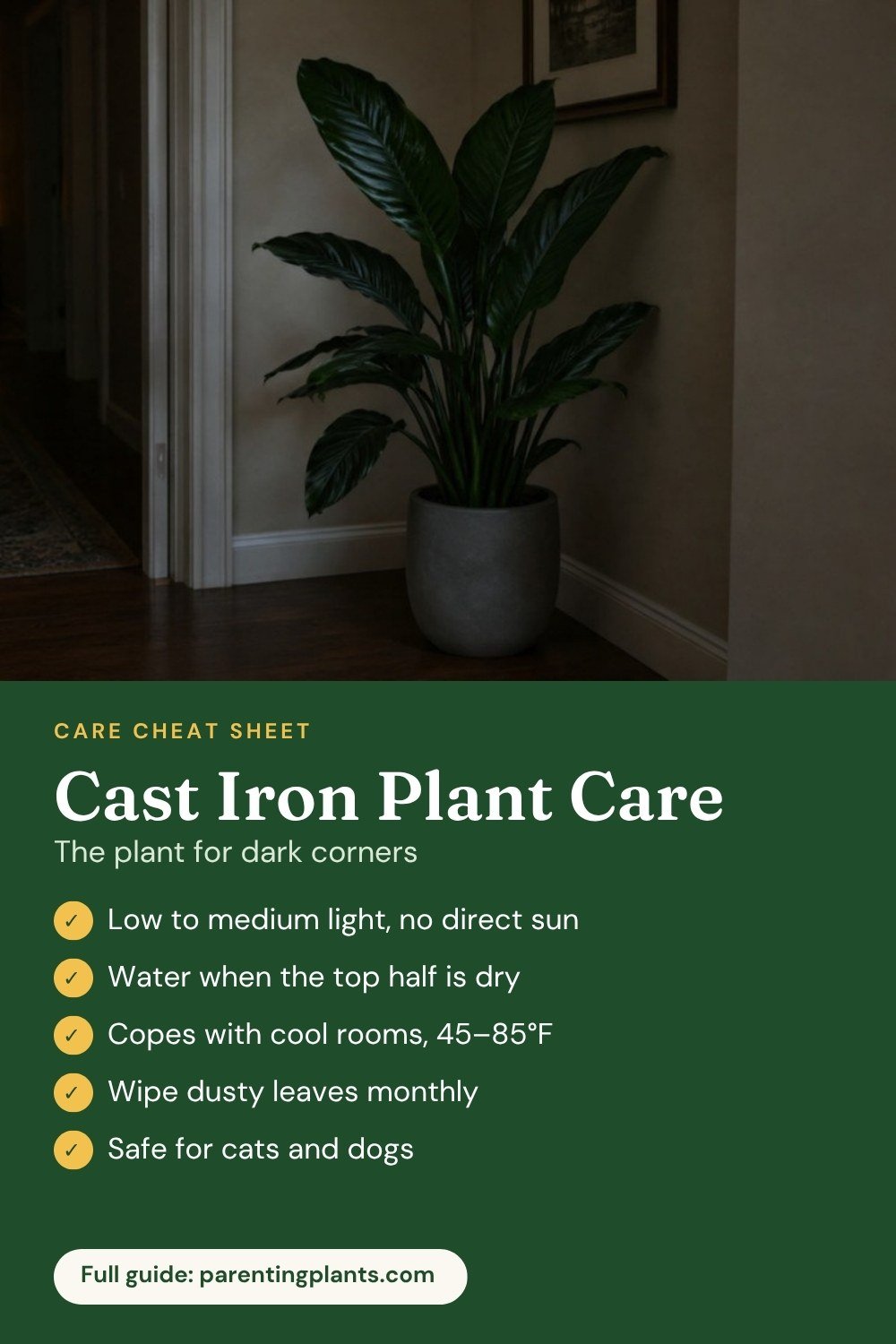
Save this for later: pin the cheat sheet below to your Pinterest plant board.
Want every plant’s care on one page?
The Houseplant Care Cards give you 30 printable one-page guides for popular houseplants: light, water, pet safety and quick fixes at a glance.
Cast iron plant care FAQ
Can a cast iron plant live in a room with no windows?
It survives in very low light better than most plants, but it still needs some light. In a windowless room, give it a grow light or bright overhead lighting for at least 8 to 10 hours a day.
How often do you water a cast iron plant?
When the top half of the soil is dry, usually every 2 to 3 weeks in spring and summer and every 3 to 4 weeks in winter.
Why does my cast iron plant have brown tips?
Usually uneven watering, salt build-up from fertilizer or tap water, or very dry air. Water thoroughly when needed, flush the soil a few times a year and feed less.
How fast does a cast iron plant grow?
Slowly. Most plants add only 2 to 5 new leaves a year, mostly in spring and summer.
Is a cast iron plant safe for cats?
Yes. The ASPCA lists cast iron plant as non-toxic to cats and dogs.
Can cast iron plant take direct sun?
No. Direct sun bleaches and scorches the leaves. Keep it in low to medium, indirect light.
Sources and further reading
This guide was written by Manik at Parenting Plants and checked against the university extension and expert resources below. Read how we research and update our guides in our editorial guidelines.
- NC State Extension Plant Toolbox: Aspidistra elatior (cast iron plant)
- UF/IFAS Gardening Solutions: Cast iron plant
- University of Arkansas Extension: Aspidistra elatior: cast-iron plant
- ASPCA: Toxic and non-toxic plants list
Looking for another plant? Browse all our houseplant care guides A to Z.
Free tracker
Never forget to water your Cast Iron Plant again
Track your Cast Iron Plant and every other plant you own. A ready-made plant care tracker for Google Sheets and Notion that shows exactly which plants need water today, with 90 houseplants built in.
You're in!
Check your inbox, plant friend! 📩
Your free Plant Care Tracker is on its way. We've emailed you both versions, Google Sheets and Notion, plus a bonus printable 2027 plant calendar. It usually arrives within a few minutes.
Can't find it? Check your Promotions or Spam folder, and add manik@parentingplants.com to your contacts so you never miss a plant tip.