Special Offer: Use code ILOVEPLANTS for 25% off on all digital products! Shop Now →

10 min read Fact-checked against ASPCA & university extension sources · How we research
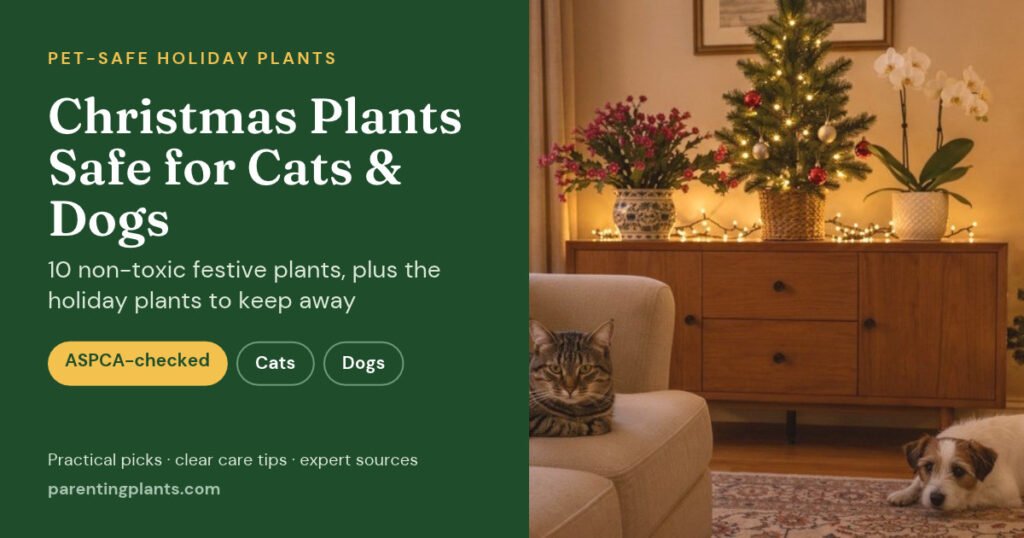
Every December, plant shops fill up with amaryllis, poinsettias, lilies and berry-covered wreaths, and every December vets see the results. Several of the most popular holiday plants are toxic to cats and dogs, and true lilies can be deadly to cats even in tiny amounts.
The good news: you do not have to choose between a festive home and a safe one. This list covers 10 Christmas plants that are non-toxic to cats and dogs according to the ASPCA, the holiday plants to keep out of reach (or out of the house), and what to do if your pet chews something it should not.
Short answer: The safest Christmas plants for homes with cats and dogs are Christmas cactus, Norfolk Island pine, a rosemary Christmas tree, moth orchids, African violets, blushing bromeliads, mistletoe cactus (Rhipsalis), Boston ferns, parlor palms and spider plants. All are listed as non-toxic by the ASPCA. Avoid lilies (potentially fatal to cats), amaryllis, paperwhites, mistletoe, holly, cyclamen, Jerusalem cherry and kalanchoe. Poinsettias are only mildly irritating, not deadly, but still best kept out of reach. Non-toxic does not mean edible: a pet that eats a lot of any plant may still vomit.
In this guide
Holiday plants and pets: quick check
Use this table when you are standing in the garden centre. “Safe” means listed as non-toxic to cats and dogs by the ASPCA.
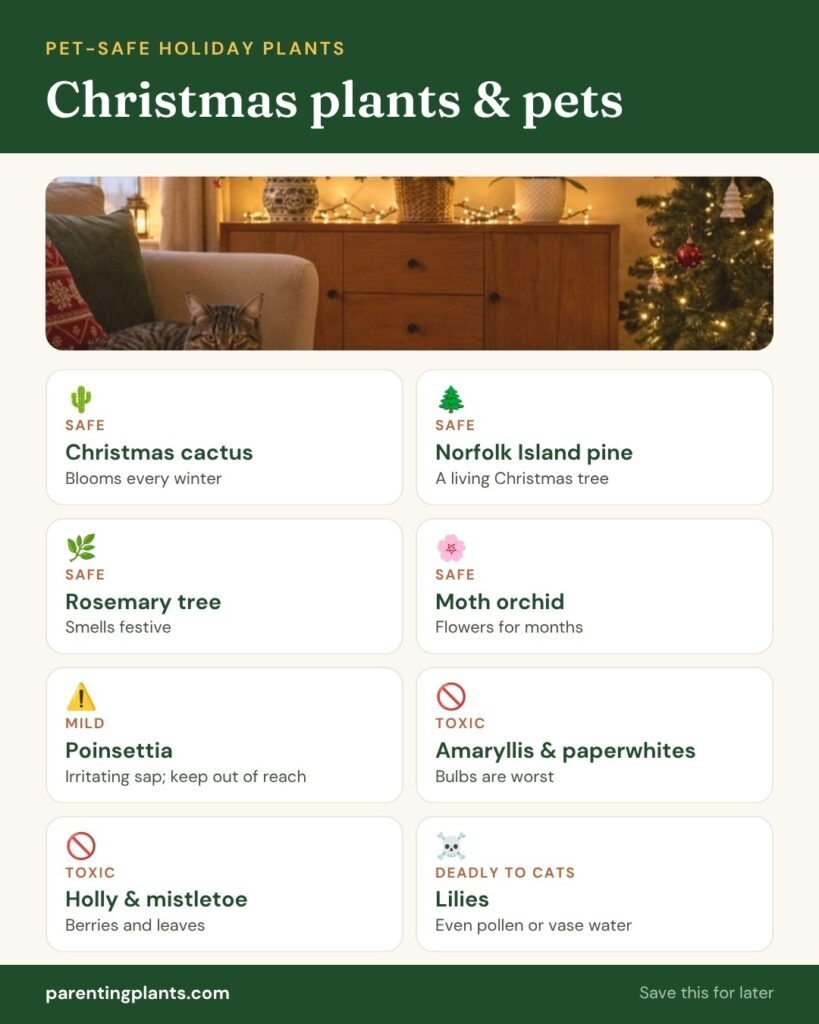
| Plant | Cats | Dogs | What happens if eaten |
|---|---|---|---|
| Christmas cactus | Safe | Safe | Possible mild tummy upset from fibre |
| Norfolk Island pine | Safe | Safe | Non-toxic |
| Rosemary tree | Safe | Safe | Non-toxic |
| Moth orchid | Safe | Safe | Non-toxic |
| Poinsettia | Mild | Mild | Mouth irritation, drooling, sometimes vomiting |
| Holly | Toxic | Toxic | Vomiting, diarrhoea, lethargy |
| Mistletoe | Toxic | Toxic | Vomiting, diarrhoea; larger amounts can affect heart rate and blood pressure |
| Amaryllis | Toxic | Toxic | Vomiting, drooling, lethargy, tremors (bulb is worst) |
| Paperwhites | Toxic | Toxic | Vomiting, diarrhoea; bulbs most dangerous |
| Cyclamen | Toxic | Toxic | Vomiting, diarrhoea; tubers most dangerous |
| True lilies | Deadly | Mild | Kidney failure in cats, even from pollen or vase water |
How we checked these plants
Every plant below was checked against the ASPCA toxic and non-toxic plants database and Penn State Extension’s guide to holiday plants and pets. Plant common names are confusing (there are several “Christmas” cacti, “pines” and “mistletoes”), so we have added the botanical name for each one. If your plant label shows a different botanical name, check it with our plant toxicity checker before bringing it home.
10 Christmas plants safe for cats and dogs
1. Christmas cactus (Schlumbergera)
Light: Bright, indirect · Water: When the top inch is dry · Size: 30–45 cm wide · Pets: Non-toxic (ASPCA)
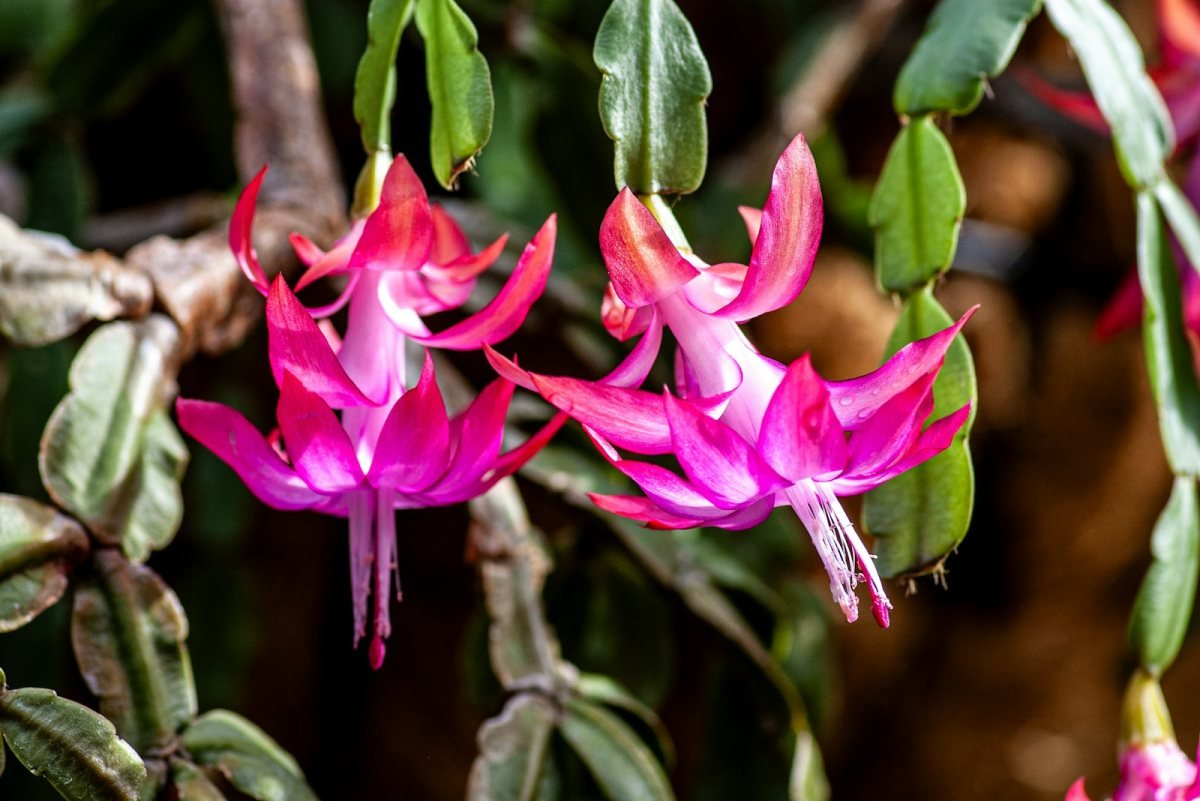
The classic pet-safe holiday plant, with pink, red, white or orange flowers that hang from flat, segmented stems. Thanksgiving cactus (Schlumbergera truncata) and Easter cactus are also non-toxic. It can live for decades and reblooms every year with cool nights and long darkness in autumn. A cat chewing the stems may vomit from the fibre, but there is no toxin to worry about.
➜ Full care: Christmas cactus care guide
2. Norfolk Island pine (Araucaria heterophylla)
Light: Bright, indirect · Water: When the surface is dry · Size: 1–2 m indoors · Pets: Non-toxic (ASPCA, listed as Australian pine)
A soft-needled living Christmas tree that stays a houseplant all year. It is light enough to decorate with a few small ornaments and LED fairy lights. The main risk with pets is physical, not chemical: cats love to climb it, so use a heavy pot and hang breakable decorations out of reach.
➜ Full care: Norfolk Island pine care guide
3. Rosemary Christmas tree (Salvia rosmarinus)
Light: Brightest window you have · Water: Check the top inch twice a week · Size: 30–60 cm · Pets: Non-toxic (ASPCA)
Rosemary clipped into a cone shape is sold everywhere in December. It is non-toxic, smells wonderful when brushed, and can go outside in spring. Most dogs ignore it because of the strong scent. Avoid spraying it with fake snow or glitter, which pets may lick off.
➜ Full care: rosemary Christmas tree care
4. Moth orchid (Phalaenopsis)
Light: Bright, indirect · Water: When the bark is nearly dry · Size: 40–60 cm tall in flower · Pets: Non-toxic (ASPCA)
White or red moth orchids look elegant on a holiday table and stay in flower for two to three months. They are non-toxic, but cats sometimes chew the long flower spikes, so place them where tails and paws cannot reach.
5. African violet (Streptocarpus sect. Saintpaulia)
Light: Bright, indirect · Water: Keep lightly moist; water from below · Size: 15–25 cm · Pets: Non-toxic (ASPCA)
Small, cheerful and in flower almost all year. Choose red or purple varieties for a festive look on a windowsill or side table. They are one of the few flowering plants that are both non-toxic and happy in ordinary room conditions.
6. Blushing bromeliad (Neoregelia carolinae)
Light: Bright, indirect · Water: Keep a little water in the central cup · Size: 30–40 cm wide · Pets: Non-toxic (ASPCA)
Its centre turns bright red as it matures, which makes it a natural Christmas plant without any flowers. Earth star (Cryptanthus) is another non-toxic bromeliad with red and pink striped leaves. Change the water in the cup every week or two so it does not go stale.
7. Mistletoe cactus (Rhipsalis baccifera)
Light: Bright, indirect · Water: When the top inch is dry · Size: Trails 60 cm+ · Pets: Non-toxic (ASPCA)
The pet-safe swap for real mistletoe. It has thin, trailing green stems and small white berries, so it gives a similar look in a hanging basket. Real mistletoe (Phoradendron and Viscum) is toxic and should stay out of homes with pets.
8. Boston fern (Nephrolepis exaltata)
Light: Bright, indirect · Water: Keep evenly moist · Size: 60–90 cm wide · Pets: Non-toxic (ASPCA)
A full, green fern for mantels and plant stands that adds a fresh, wintry look. It needs humidity, so keep it away from radiators and fires. Tie a red ribbon round the pot and you have a pet-safe alternative to holly arrangements.
➜ Full care: Boston fern care guide
9. Parlor palm (Chamaedorea elegans)
Light: Low to medium · Water: When the top inch is dry · Size: 60–120 cm · Pets: Non-toxic (ASPCA)
A good choice for a dim corner where a Norfolk pine would struggle. Wrap it in tiny battery LED lights for a soft, pet-safe glow. It is tolerant of central heating as long as it is not right next to a heater.
10. Spider plant (Chlorophytum comosum)
Light: Medium to bright · Water: When the top inch is dry · Size: 30–60 cm · Pets: Non-toxic (ASPCA)
Not traditionally festive, but a hanging spider plant with its arching leaves makes a lively, pet-safe swap for an ivy garland. Cats love to bat and nibble the dangling babies; it is safe, though a cat that eats a lot may vomit.
Holiday plants to keep away from cats and dogs
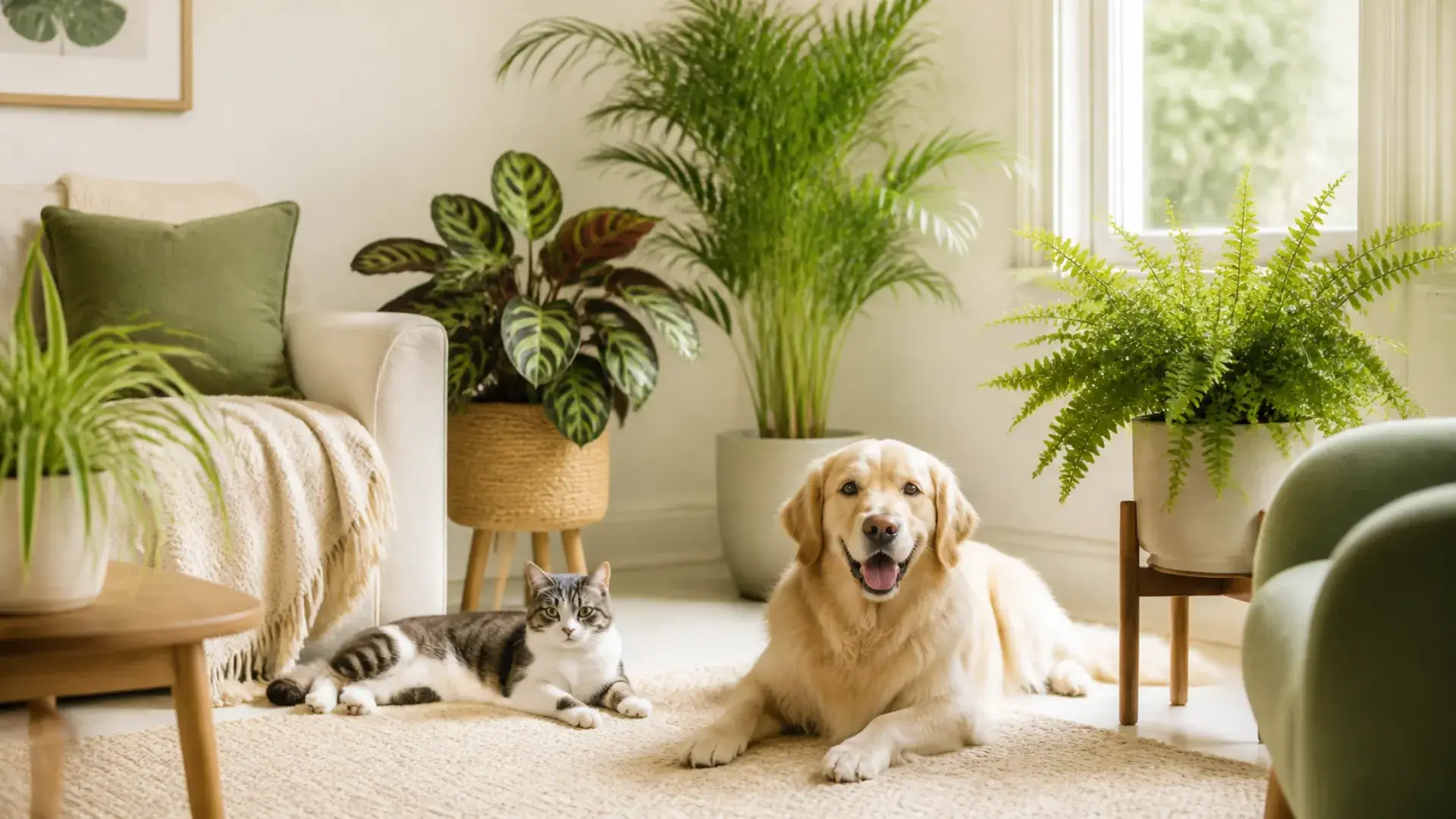
These plants are sold widely at Christmas and are listed as toxic by the ASPCA. If you already have them, keep them in a room your pets cannot enter, or on a high shelf a cat cannot reach (cats can reach most shelves).
| Plant | Risk | Toxic parts and signs |
|---|---|---|
| True lilies (Lilium, Hemerocallis) | Very high for cats | All parts, pollen and even vase water. Vomiting, lethargy and kidney failure. Emergency: see a vet immediately. |
| Amaryllis (Hippeastrum) | Moderate | Lycorine, mostly in the bulb. Vomiting, drooling, low blood pressure, tremors. |
| Paperwhites and daffodils (Narcissus) | Moderate | Bulbs are the most toxic. Vomiting, diarrhoea; large amounts can affect the heart. |
| Mistletoe | Moderate | Berries and leaves. Vomiting, diarrhoea, slow heart rate, low blood pressure. |
| Holly (Ilex) | Low to moderate | Berries and spiny leaves. Vomiting, diarrhoea, drooling. |
| Cyclamen | Moderate | Tubers are the most toxic. Vomiting, diarrhoea; heart rhythm problems in large amounts. |
| Jerusalem cherry (Solanum pseudocapsicum) | Moderate | Orange berries. Stomach upset, drowsiness, slowed heart rate. |
| Kalanchoe | Moderate | All parts. Vomiting, diarrhoea; rarely heart rhythm problems. |
| Christmas rose (Helleborus) | Moderate | All parts. Vomiting, diarrhoea, drooling. |
| English ivy (Hedera helix) | Low to moderate | Leaves. Vomiting, drooling, diarrhoea. |
Lilies are the one to really worry about. Many Christmas bouquets include white or pink lilies. If you have a cat, ask the florist to leave them out, and never put lily-containing bouquets anywhere in the house. A cat that licks pollen off its fur can be poisoned.
Are poinsettias really poisonous to pets?
Less than their reputation suggests. The milky sap can irritate a pet’s mouth and stomach, causing drooling, licking and sometimes vomiting, but Penn State Extension and the ASPCA both describe the effects as mild and usually short-lived without treatment. A poinsettia is not a reason to panic, but it is still best kept out of reach of a curious puppy or kitten. Our poinsettia care guide has tips on placement and keeping it looking good until spring.
Pet-proofing your holiday plants and decorations
- Use plain water in the Christmas tree stand. Tree preservatives, fertilisers and stagnant water can upset pets’ stomachs. Cover the stand with a tree skirt or basket so pets cannot drink from it.
- Sweep up fallen needles from real fir and pine trees. They are not highly toxic, but the oils and sharp needles can cause vomiting and mouth irritation.
- Skip glitter, fake snow and spray paint on living plants. Pets lick and chew decorated leaves.
- Keep tinsel and ribbon away from cats. Swallowed strings can cause serious intestinal blockages, a bigger risk than most plants.
- Check gifts on arrival. Remove lilies from bouquets and put bulb kits (amaryllis, paperwhites) out of reach before unwrapping.
- Give cats something they are allowed to chew, like a pot of cat grass, so they are less interested in your plants.
What to do if your pet eats a holiday plant
- Move your pet away from the plant and remove any pieces from its mouth if you can do so safely.
- Identify the plant. Check the label or take a photo. Note roughly how much was eaten and when.
- Call for advice before doing anything else. Do not try to make your pet vomit unless a vet tells you to.
- Go to a vet immediately if it was a lily and you have a cat, or if your pet is drooling heavily, vomiting repeatedly, wobbly, very quiet or having trouble breathing.
If you think your pet has eaten a toxic plant, call your vet or an animal poison line straight away: the ASPCA Animal Poison Control Center (888) 426-4435 or the Pet Poison Helpline (855) 764-7661 in the US and Canada (both may charge a consultation fee). Take the plant or a photo of its label with you.
Quick checklist
- Check the botanical name on the label before you buy
- Choose Christmas cactus, Norfolk pine, rosemary or moth orchids for pet homes
- Ask florists to leave lilies out of any bouquet if you have a cat
- Keep amaryllis, paperwhites, mistletoe, holly and cyclamen away from pets
- Use plain water in the Christmas tree stand and cover it
- Save the poison helpline numbers in your phone now
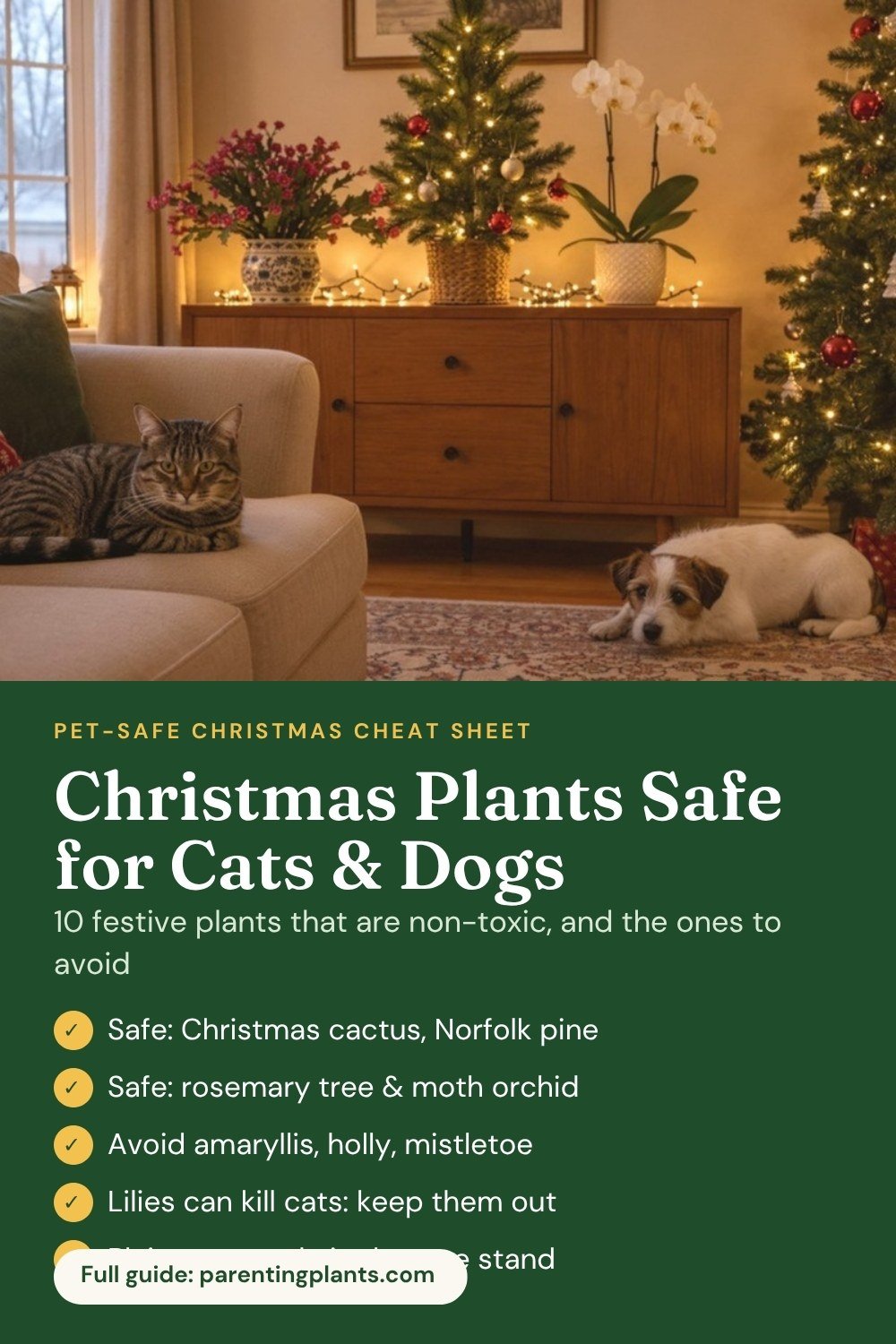
Save this for later: pin the cheat sheet below to your Pinterest plant board.
Want every plant’s care on one page?
The Houseplant Care Cards give you 30 printable one-page guides for popular houseplants: light, water, pet safety and quick fixes at a glance.
Pet-safe Christmas plants FAQ
Is Christmas cactus safe for cats and dogs?
Yes. The ASPCA lists Christmas cactus (Schlumbergera) as non-toxic to cats and dogs. Eating a lot of it can cause mild vomiting or diarrhoea from the fibre, but it contains no known toxins.
Are poinsettias poisonous to cats?
Poinsettias are only mildly toxic. The sap can irritate the mouth and stomach, causing drooling and sometimes vomiting, but serious poisoning is very unlikely. Keep them out of reach anyway.
What Christmas plant is most dangerous to cats?
True lilies (Lilium and Hemerocallis species) are the most dangerous. Small amounts of any part, including pollen and vase water, can cause kidney failure in cats. Contact a vet immediately if your cat has been near a lily.
Is a Norfolk Island pine safe for pets?
Yes. The ASPCA lists Norfolk Island pine (as Australian pine) as non-toxic to dogs, cats and horses, which makes it a good living Christmas tree for pet owners.
Is rosemary safe for dogs and cats?
Yes. Rosemary is listed as non-toxic to dogs and cats by the ASPCA, so a rosemary Christmas tree is a pet-friendly choice.
Is amaryllis toxic to dogs?
Yes. Amaryllis contains lycorine and other alkaloids, mostly in the bulb, which can cause vomiting, drooling, low blood pressure and tremors in dogs and cats.
Is mistletoe poisonous to pets?
Yes. Mistletoe can cause vomiting and diarrhoea, and larger amounts can slow the heart rate and lower blood pressure. Mistletoe cactus (Rhipsalis) is a non-toxic lookalike.
Sources and further reading
This guide was written by Manik at Parenting Plants and checked against the expert and university resources below. Read how we research and update our guides in our editorial guidelines.
- ASPCA: Toxic and non-toxic plants list
- Penn State Extension: Holiday plants and pets
- ASPCA: Holiday pet hazards to avoid
- ASPCA: Norfolk Island pine (Australian pine): non-toxic to dogs and cats
- Pet Poison Helpline: Poison control for dogs and cats
Looking for a specific plant? Browse all our houseplant care guides A to Z.
Free printable
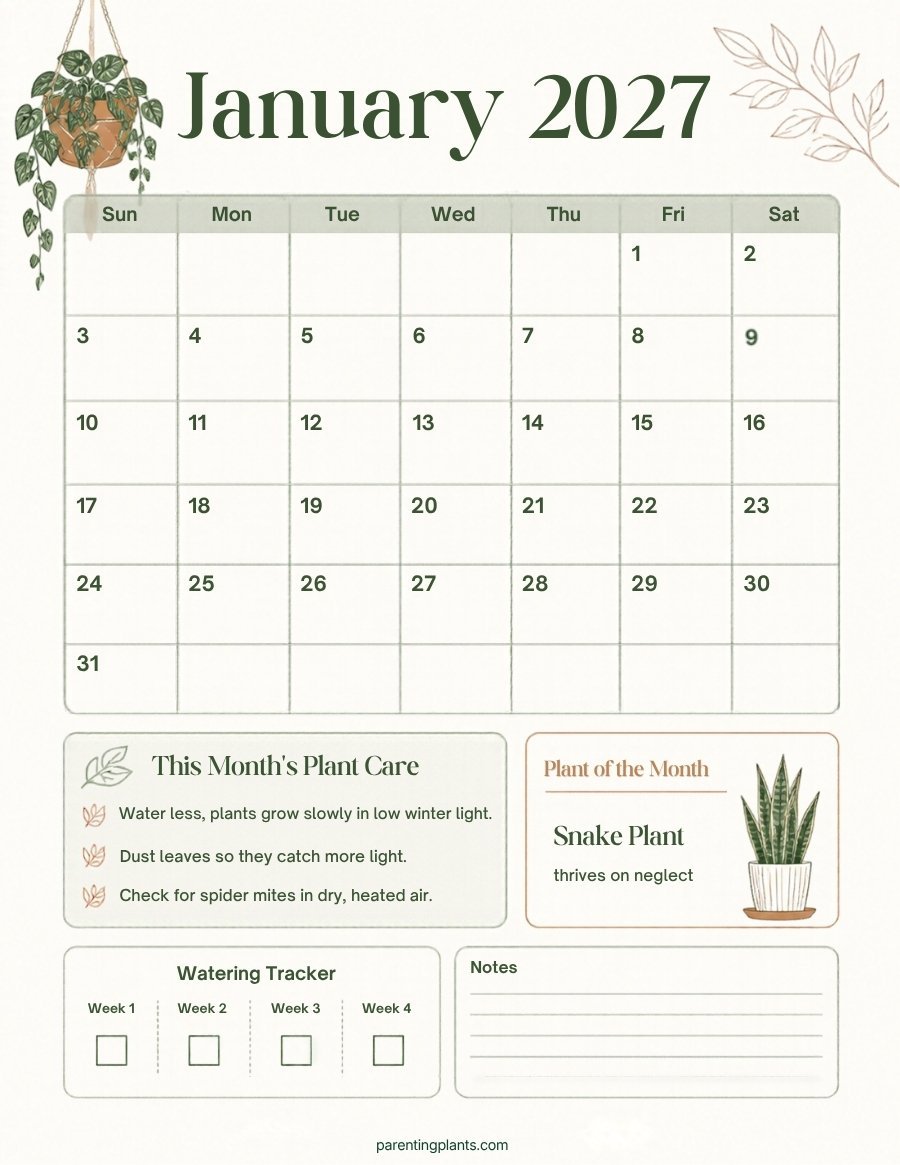
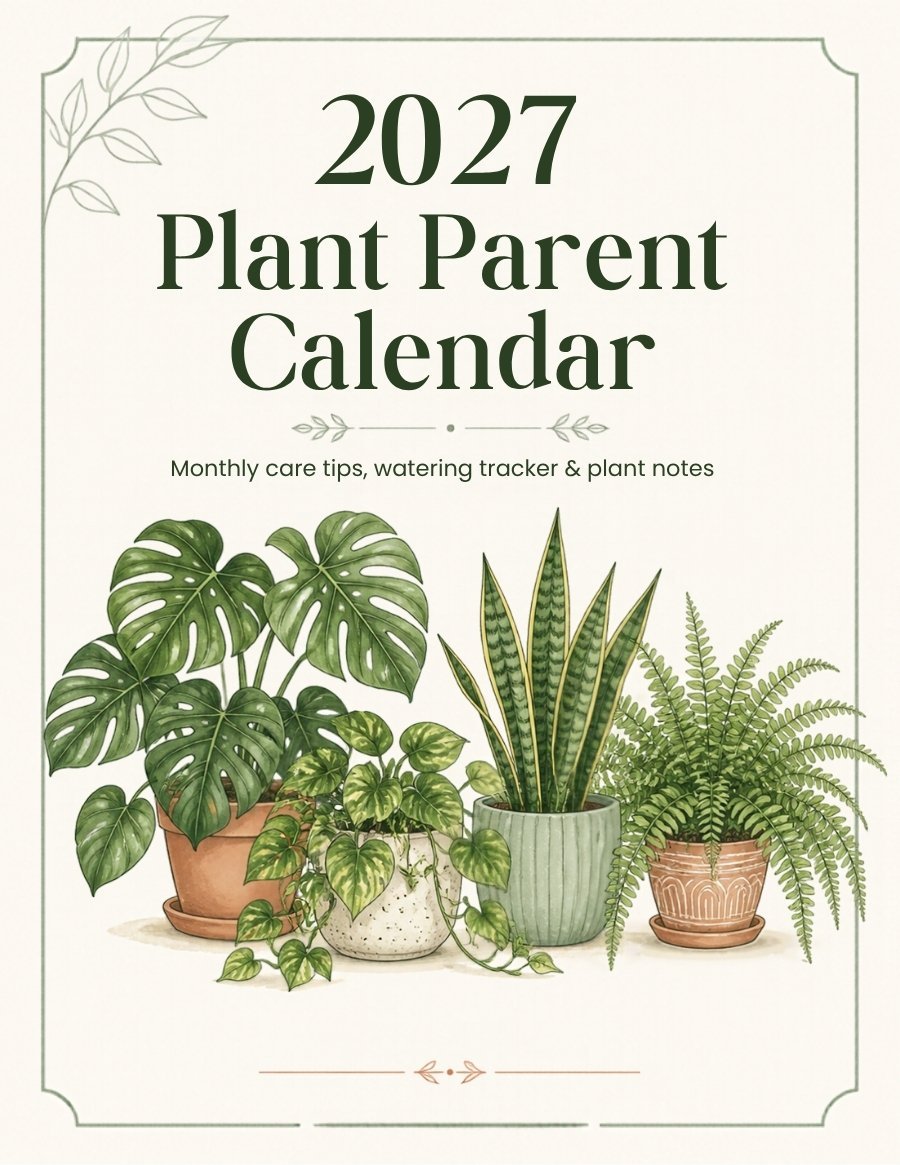
Get your free 2027 Plant Parent Calendar
14 beautiful printable pages to keep your houseplants happy all year. Enter your name and email and we'll send it straight to your inbox.
You're in!
Thank you, plant friend! 🌱
Your free 2027 Plant Parent Calendar is on its way to your inbox. It usually arrives within a few minutes.
Can't find it? Check your Promotions or Spam folder, and add manik@parentingplants.com to your contacts so you never miss a plant tip.