Special Offer: Use code ILOVEPLANTS for 25% off on all digital products! Shop Now →

8 min read Fact-checked against ASPCA & university extension sources · How we research
You have booked the trip, packed the bags, and then you look at your plants. Will they survive a week? Two weeks? A month over Christmas?
Most healthy houseplants can go a week without any help at all, and with a few simple preparations, many will cope with two to three weeks. This guide explains exactly what to do depending on how long you are away, the DIY watering methods that actually work (and the ones that do not), and how to brief a plant sitter so they do not drown everything.
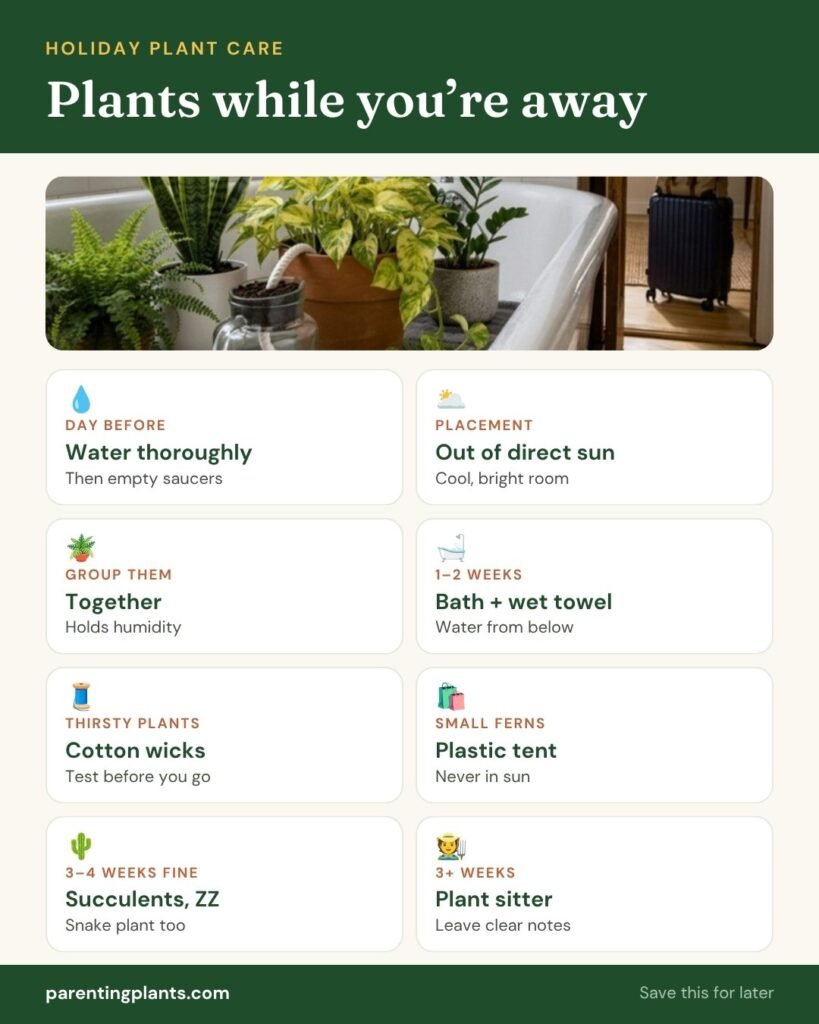
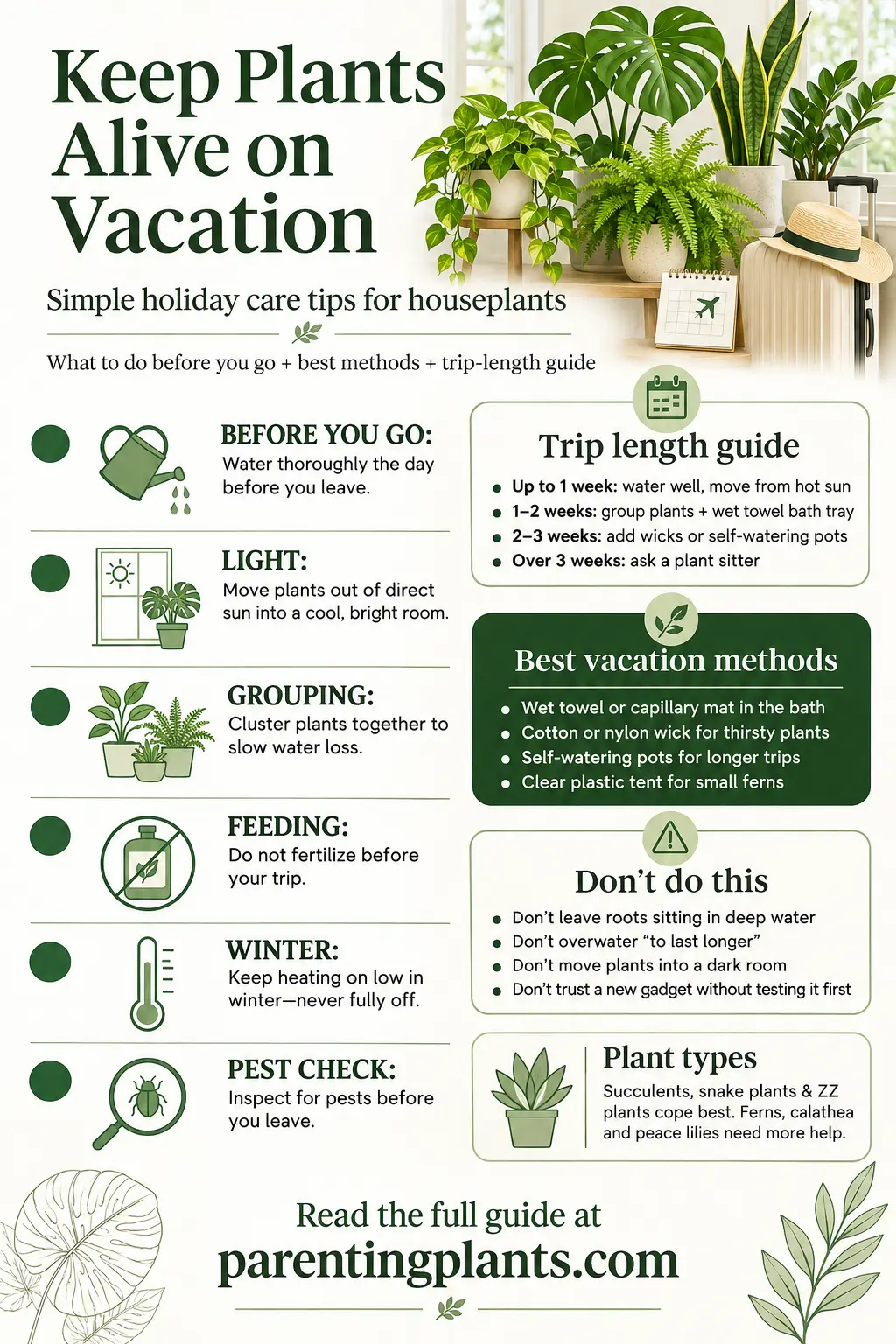
Short answer: For a trip of up to a week, water everything thoroughly the day before you leave and move plants out of direct sun. For 1 to 3 weeks, also group plants together in a cool, bright room, stand them on wet towels or capillary matting in the bath, use wick or self-watering systems for thirsty plants, and cover small, humidity-loving plants loosely with clear plastic. For longer than 3 weeks, ask a plant sitter. Do not feed before you leave, keep the heating on low (not off) in winter, and test any watering gadget a week before you go.
In this guide
How long can your plants go?
Typical time a healthy, well-watered plant can go without water in a cool room. Hot weather and small pots shorten it.
| Plant type | Examples | Without water | Best method |
|---|---|---|---|
| Succulents and cacti | Aloe, jade, Christmas cactus | 3–4 weeks+ | Water a few days before; move out of hot sun |
| Drought-tolerant foliage | ZZ plant, snake plant | 3–4 weeks | Water thoroughly; no extra help needed |
| Most foliage plants | Pothos, monstera, philodendron, rubber plant | 1–2 weeks | Group together; wet towels or wicks for longer trips |
| Thirsty, fine-rooted plants | Ferns, calathea, peace lily, herbs | 4–7 days | Wick, self-watering pot or plastic tent |
| Flowering winter plants | Cyclamen, amaryllis in bud, poinsettia | 5–7 days | Cool, bright room; ask a sitter for longer |
| Seedlings, cuttings in soil | New propagations | 2–4 days | Clear plastic cover, or a sitter |
Before you go: the essentials for every trip
- Water thoroughly the day before you leave, not weeks before. Water until it runs out of the drainage holes, let it drain, then empty saucers so roots are not sitting in water.
- Move plants out of direct sun. Pull them a few feet back from bright south and west windows. Less light means less water use. The RHS recommends a cool, light room out of direct sun.
- Group plants together. Clustered plants create a more humid pocket of air and lose less water.
- Do not fertilise. Feeding pushes new growth that needs more water.
- Remove flowers and buds that are about to open on plants like peace lilies, and pick off dead leaves, so there is less to rot or attract pests.
- Check for pests. A small spider mite or mealybug problem can explode in two weeks without you there. See our houseplant pests guide.
- Set the thermostat. In winter, keep the heating on low, around 55–60°F (13–16°C); a frozen room kills tropical plants. In summer, close blinds on sunny windows and, if you can, set air conditioning to a moderate temperature.
5 DIY ways to water plants while you’re away
1. The bath or sink tray (best for 1–2 weeks)
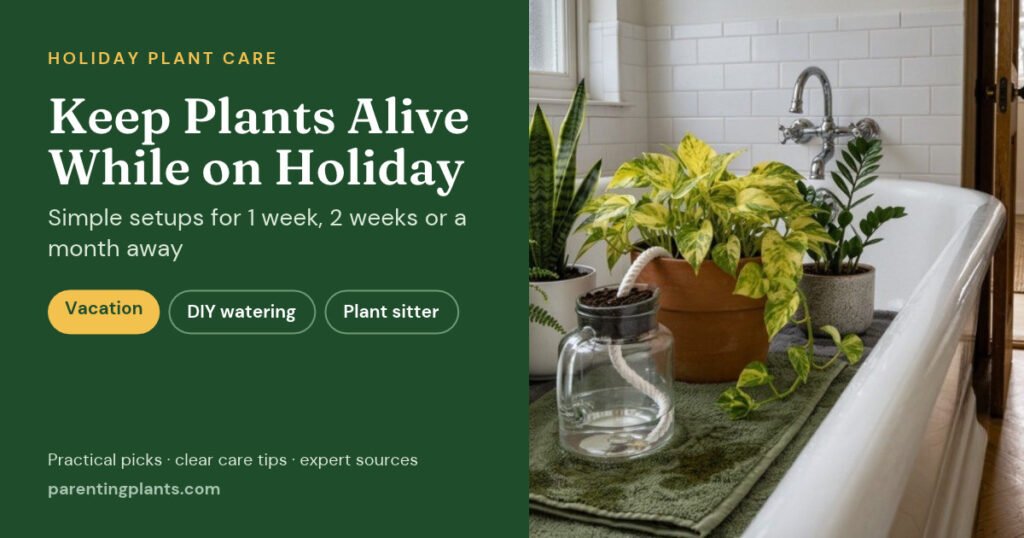
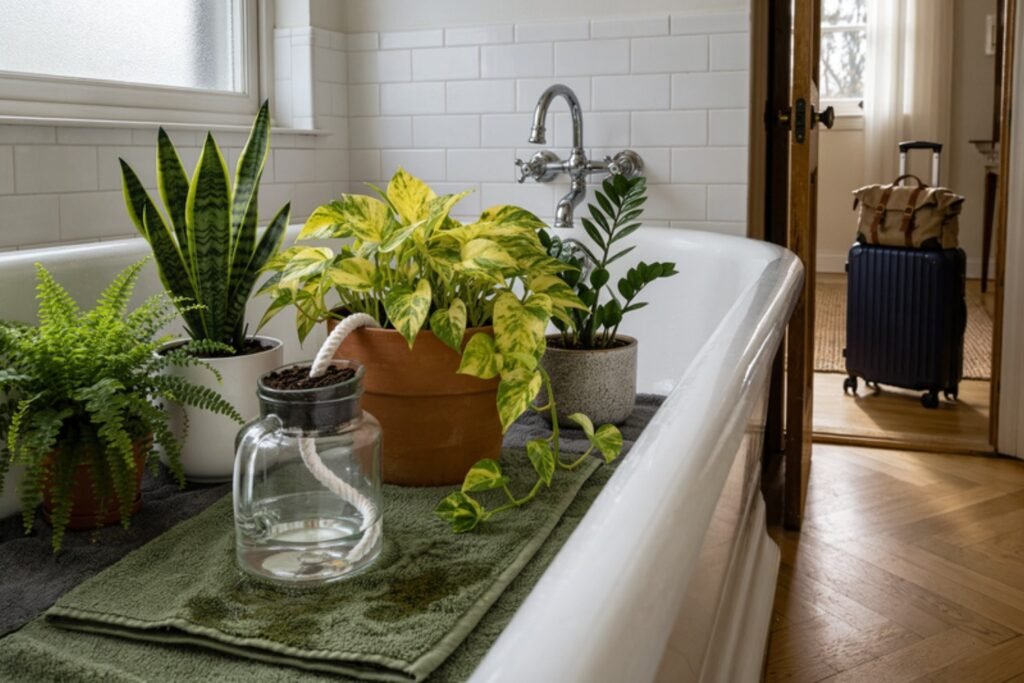
Lay an old towel or capillary matting in the bottom of the bath (or a large tray), wet it thoroughly and leave 1–2 cm of water. Stand your plants on top, in plastic pots with drainage holes. The pots draw up moisture from below as they need it. Put the plug in and leave the bathroom light window uncovered if it has one. This is the method University of Missouri Extension and the RHS both suggest, and it works well for groups of medium plants.
2. Capillary wicks (best for thirsty plants, 1–3 weeks)
Push one end of a cotton or nylon cord (cotton clothesline or shoelaces work) 2–3 inches into the soil, and put the other end in a jug or bucket of water set slightly higher than the pot. Water slowly travels along the wick into the soil. Soak the wick first, and use one wick per small pot or two for a large one. Test it for a week before you go: wick speed varies a lot with the material.
3. Self-watering pots and spikes
Self-watering planters with a reservoir can supply water for two to three weeks. Terracotta watering spikes and upturned bottles are less predictable; they can empty in a day in light, sandy mix or barely drip in heavy compost. Use them only after testing. Avoid bottles with a few holes pushed into the soil of small pots, which can flood the roots.
4. The clear plastic tent (small, humidity-loving plants)
Water small plants like ferns or calatheas, then cover each one loosely with a clear plastic bag supported by sticks so the plastic does not touch the leaves. Keep them in bright, indirect light, never in sun, or they will cook. The trapped moisture can keep them going for two to three weeks. Leave a small gap for air to reduce mould.
5. Mulch the surface
A layer of damp moss, pebbles or bark on the soil surface slows evaporation, especially in terracotta pots. It is a small extra on top of the other methods, not a solution on its own.
Do not: leave pots standing in saucers full of water for weeks (roots rot), give plants an extra-large drink “to last” (it just drains away or drowns them), or move plants into a dark room (they will drop leaves).
What to do by length of trip
| Trip length | What to do |
|---|---|
| Weekend to 1 week | Water thoroughly the day before; move out of direct sun; nothing else needed for most plants. |
| 1–2 weeks | All of the above, plus group plants, use the bath-towel tray and wicks for thirsty plants, plastic tent for small ferns. |
| 2–3 weeks | Combine methods; self-watering pots for large plants; test everything a week ahead. Succulents and ZZ plants will be fine alone. |
| More than 3 weeks | Ask a friend or plant sitter to visit once a week, or more often in summer. |
How to brief a plant sitter
Most plant-sitter disasters are overwatering. Make it easy for them:
- Group plants by watering needs and label each group: “Water every visit”, “Check the soil first”, “Do not water”.
- Show them the finger test: water only if the top inch of soil is dry.
- Leave a watering can next to the plants and say roughly how much each pot needs.
- Leave your vet’s number and the poison line numbers if they are also looking after pets.
- Send them a link to our free plant care tracker or write a simple schedule on the fridge.
When you get home
- Check each plant before watering. Some may still be moist, especially those on the towel tray.
- Remove plastic tents gradually over a day or two so leaves adjust to drier air.
- Trim off any crispy or yellow leaves, then move plants back to their usual spots.
- Wilted plant? Bottom-water it for 30 minutes and give it a day. Most recover. If not, see our guide to reviving a dying houseplant.
Going away over Christmas?
Winter trips are easier for plants than summer ones: growth is slow, days are short and soil dries more slowly. The big risk is cold. Keep the heating on low, move plants away from cold windows and draughty doors, and make sure holiday plants such as cyclamen, amaryllis and poinsettias are in a cool but frost-free, bright room. For more winter tips, see our winter houseplant care guide.
Quick checklist
- Water thoroughly the day before you leave
- Move plants out of direct sun, into a cool, bright room
- Group plants together
- Bath tray with wet towels for 1–2 week trips
- Wicks or self-watering pots for thirsty plants (test first)
- Clear plastic tents for small ferns
- No fertiliser before you go
- Heating on low in winter, never off
- Plant sitter for trips over 3 weeks
Save this for later: pin this infographic to your Pinterest plant board.
Want every plant’s care on one page?
The Houseplant Care Cards give you 30 printable one-page guides for popular houseplants: light, water, pet safety and quick fixes at a glance.
Houseplants on holiday FAQ
How long can houseplants go without water?
Most healthy houseplants can go about a week without water if they are watered thoroughly before you leave and kept out of direct sun. Succulents, cacti, ZZ plants and snake plants can often go three to four weeks.
How do I water my plants while on vacation for 2 weeks?
Water thoroughly the day before, group the plants in a cool, bright room, and stand them on wet towels or capillary matting in the bath. Use wicks or self-watering pots for thirsty plants and test them a week ahead.
Does the wet towel in the bathtub trick work?
Yes, for one to two weeks. Plants in plastic pots with drainage holes draw up moisture from the wet towel or matting below them. It works best with a little natural light in the bathroom.
Should I put plants in the bath while on holiday?
Yes, if the bathroom has a window. Stand pots on a wet towel with about 1 to 2 cm of water rather than leaving them sitting in deep water.
Should I turn the heating off while I am away in winter?
No. Keep it on low, around 55 to 60°F (13 to 16°C). Most tropical houseplants are damaged below about 50°F (10°C).
Do plant watering spikes work?
They can, but they are unpredictable. Some empty in a day, others barely drip. Test any spike or bottle for a week before relying on it.
Sources and further reading
This guide was written by Manik at Parenting Plants and checked against the expert and university resources below. Read how we research and update our guides in our editorial guidelines.
- Royal Horticultural Society: Houseplants: holiday care
- University of Florida IFAS: Vacation plant care
- University of Saskatchewan: Watering houseplants while on vacation
- University of Missouri Extension: Vacation planning includes plant care
Looking for a specific plant? Browse all our houseplant care guides A to Z.
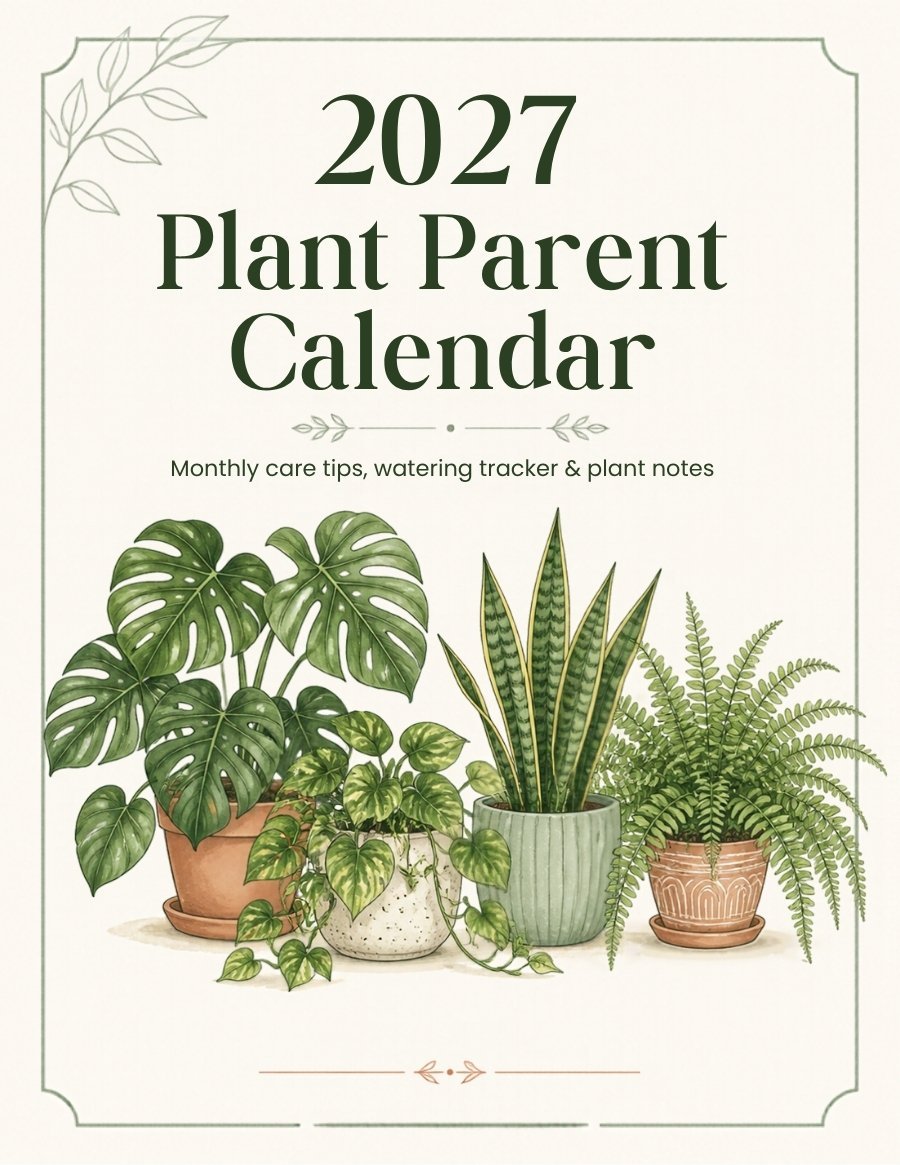
Free printable
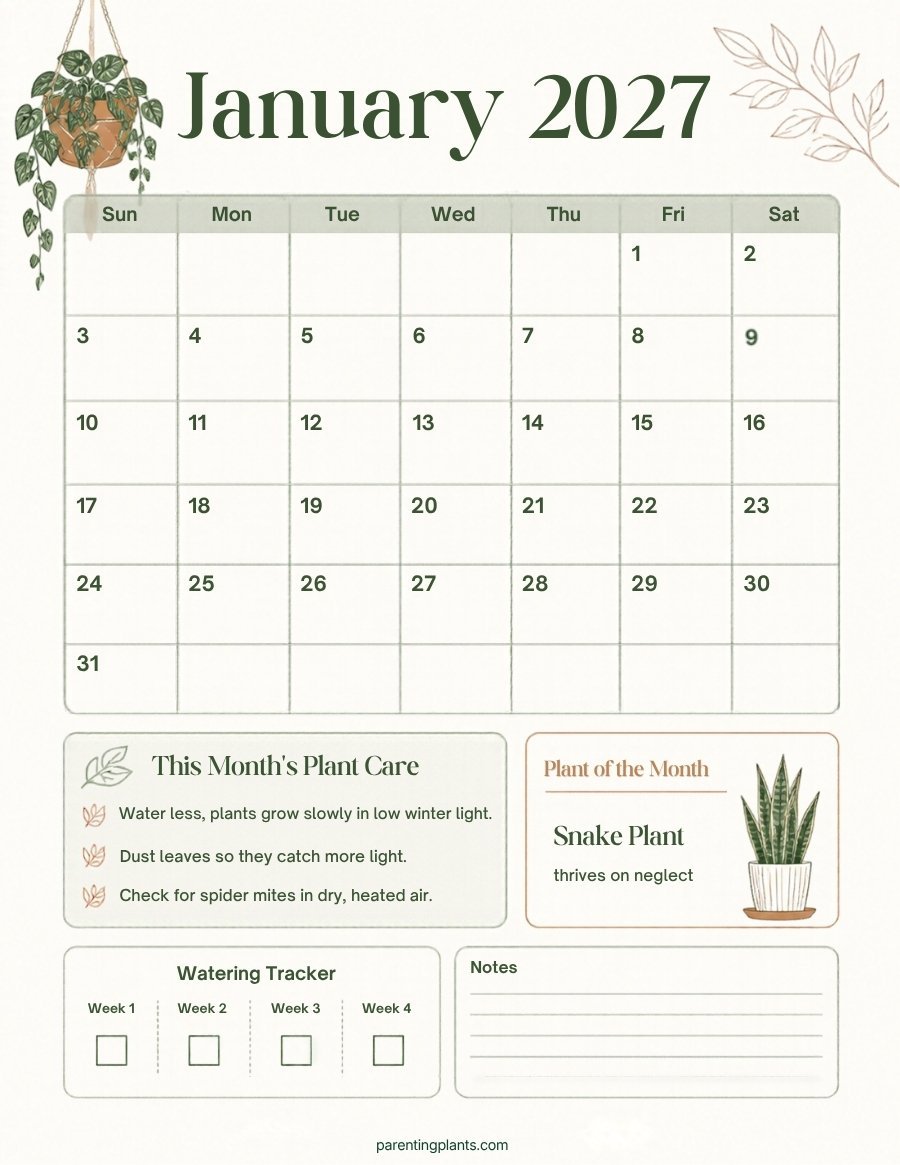
Get your free 2027 Plant Parent Calendar
14 beautiful printable pages to keep your houseplants happy all year. Enter your name and email and we'll send it straight to your inbox.
You're in!
Thank you, plant friend! 🌱
Your free 2027 Plant Parent Calendar is on its way to your inbox. It usually arrives within a few minutes.
Can't find it? Check your Promotions or Spam folder, and add manik@parentingplants.com to your contacts so you never miss a plant tip.