Special Offer: Use code ILOVEPLANTS for 25% off on all digital products! Shop Now →

7 min read Fact-checked against ASPCA & university extension sources · How we research
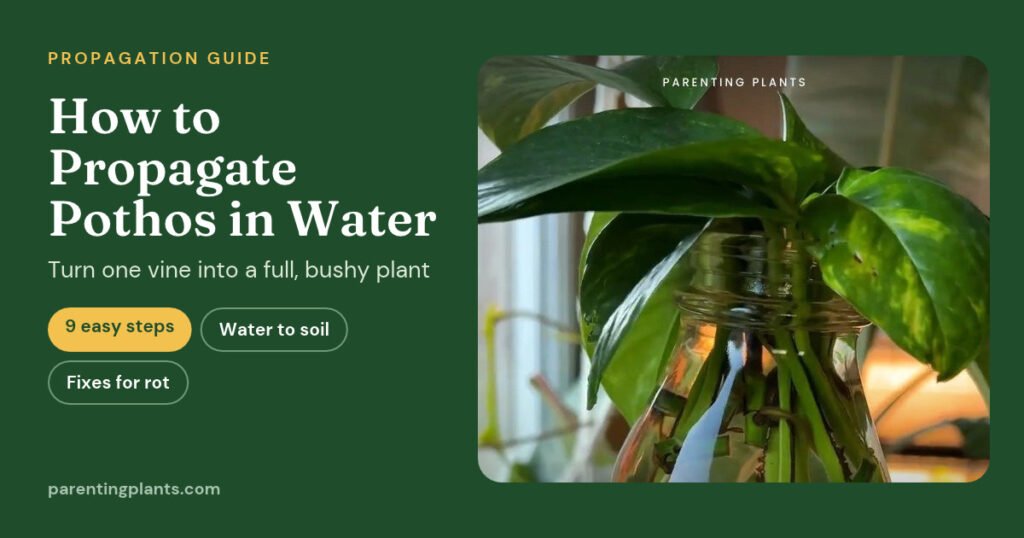
One pothos can become ten. Pothos (Epipremnum aureum) is one of the easiest houseplants to multiply: snip a vine, drop it in water, and in a few weeks you have roots. All you need is a pair of scissors and a glass jar. Once your cuttings are potted, our pothos care guide covers everything that comes next.
Short answer: To propagate pothos, cut a healthy vine just below a node (the small brown bump where a leaf meets the stem), so each cutting has at least one node and one leaf. Place the node in a jar of water in bright, indirect light and change the water when it turns cloudy. Roots appear in 1 to 3 weeks. Pot the cutting in soil once the roots are about 2 inches long.
In this guide
What you need
You only need a few household items. The best time to propagate is spring or summer, when the plant is actively growing, but pothos still roots indoors in winter, just more slowly.
- A healthy pothos with long vines and no yellow or mushy stems
- Sharp scissors or pruning snips
- 70% rubbing alcohol and a paper towel to clean the blades
- A clear glass jar or bottle, so you can watch the roots form
- Room-temperature tap water
- A small pot with drainage holes (3 to 4 inches is plenty for a few cuttings)
- A chunky, well-draining potting mix with perlite (see our potting soil guide)
Free Plant Care Tracker: Never forget a watering again. Get it free →
How to propagate pothos in water: 9 steps
Step 1: Find the node
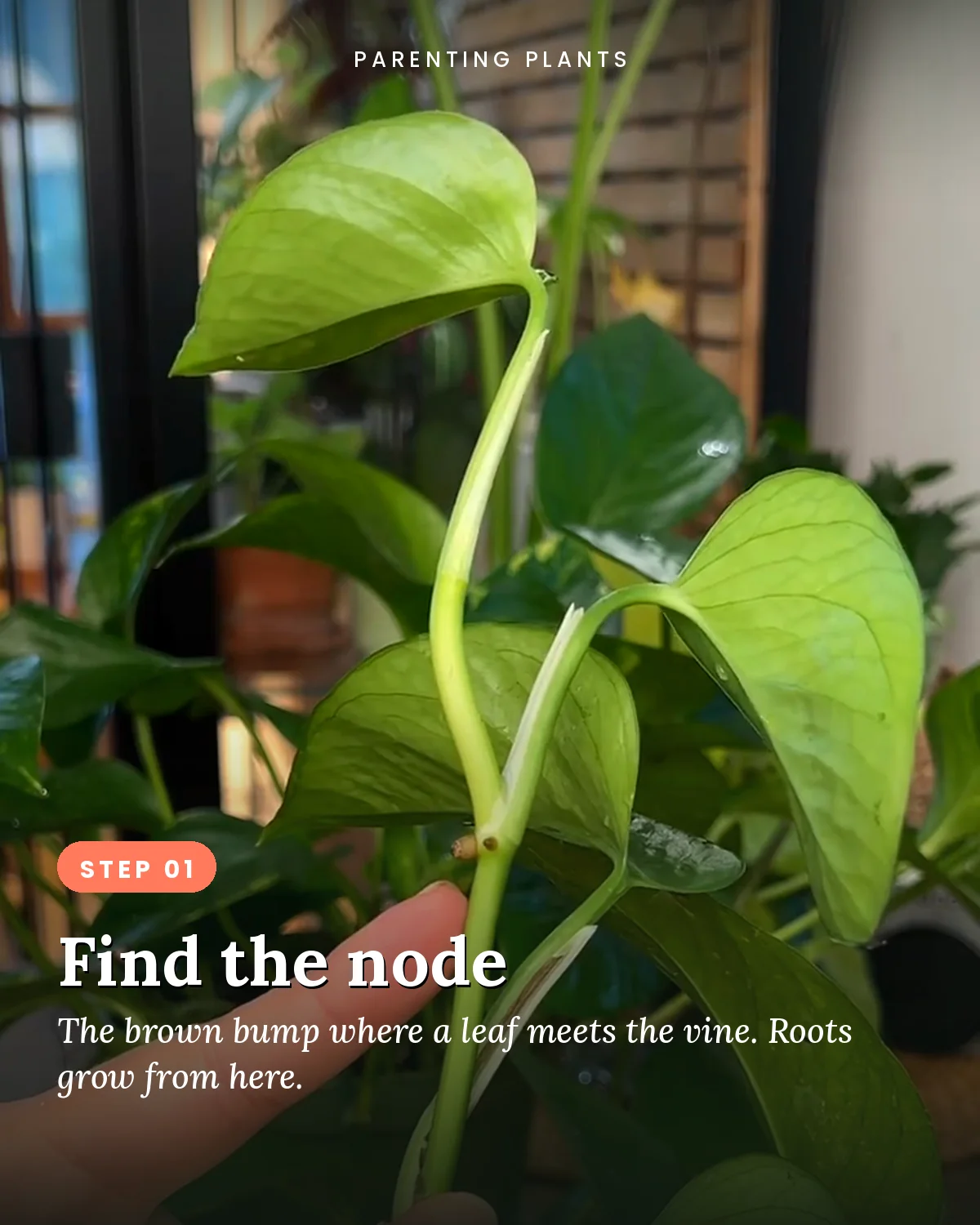
A node is the small brown bump where a leaf joins the vine, often with a short aerial root. Roots only grow from nodes, so a cutting without one will never root.
Step 2: Sterilize your scissors
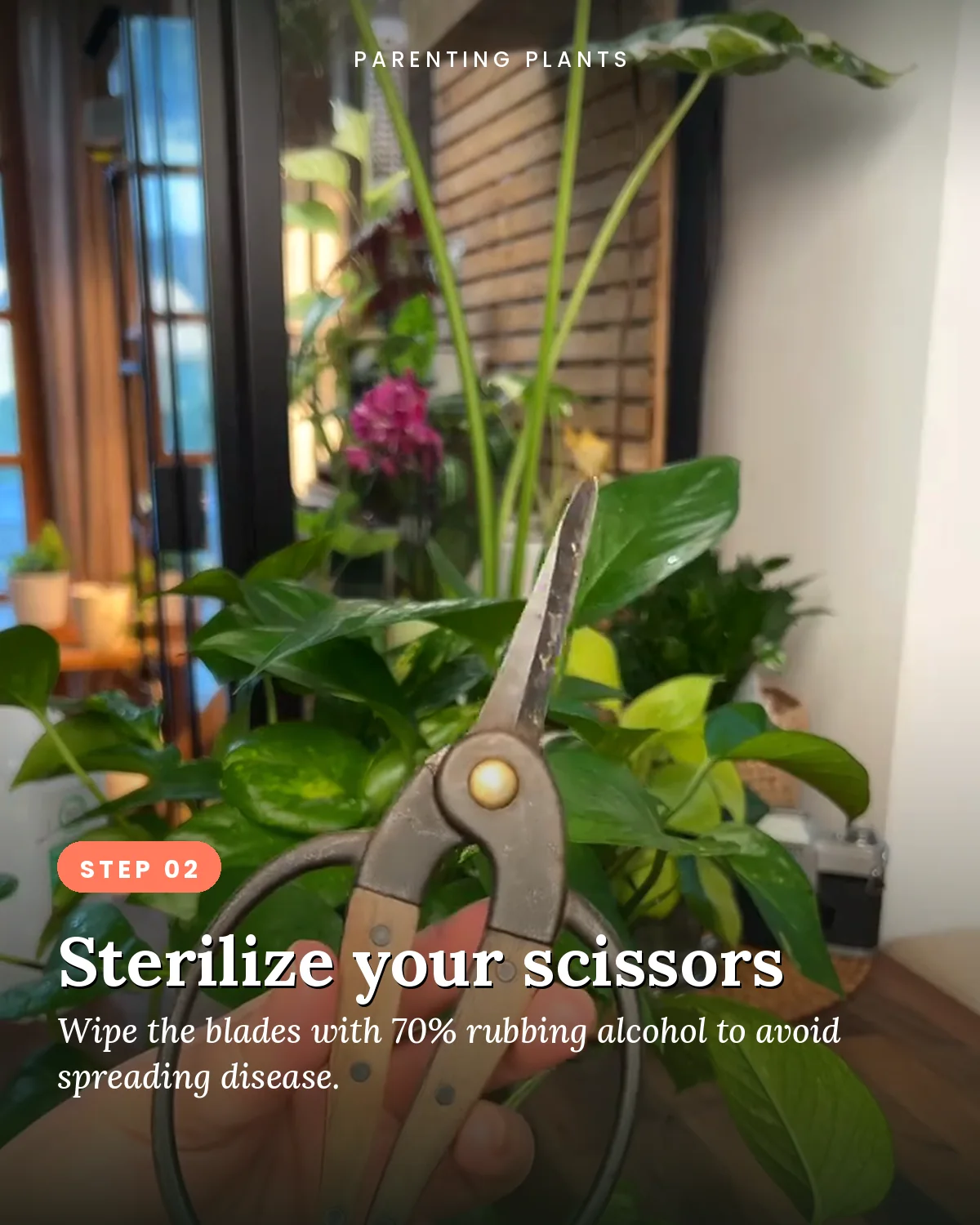
Wipe the blades with 70% rubbing alcohol so you don’t carry bacteria or fungus into the fresh cuts.
Step 3: Cut just below a node
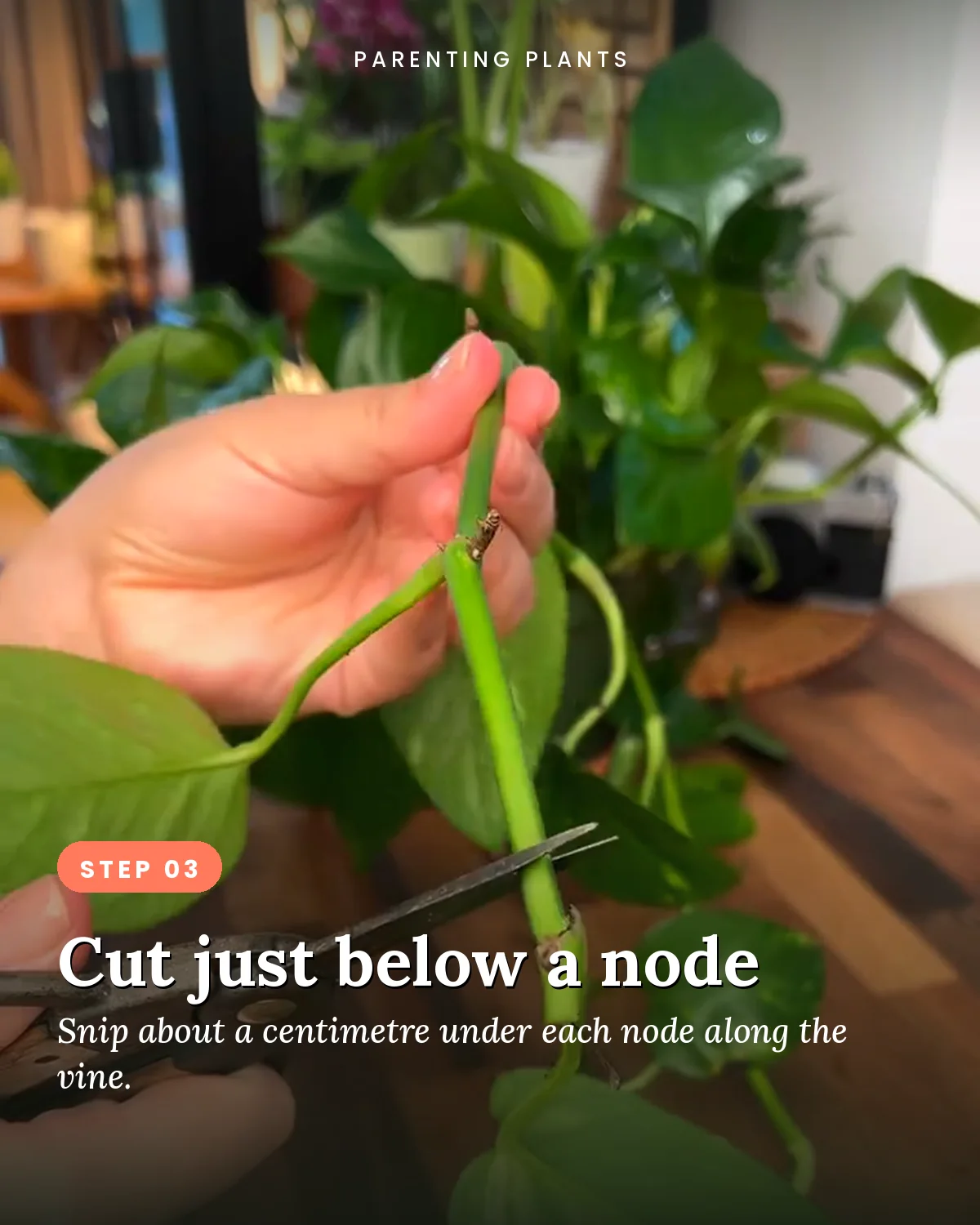
Snip about 1 cm (half an inch) below each node. You can cut one long vine into several pieces.
Step 4: Make single-node cuttings
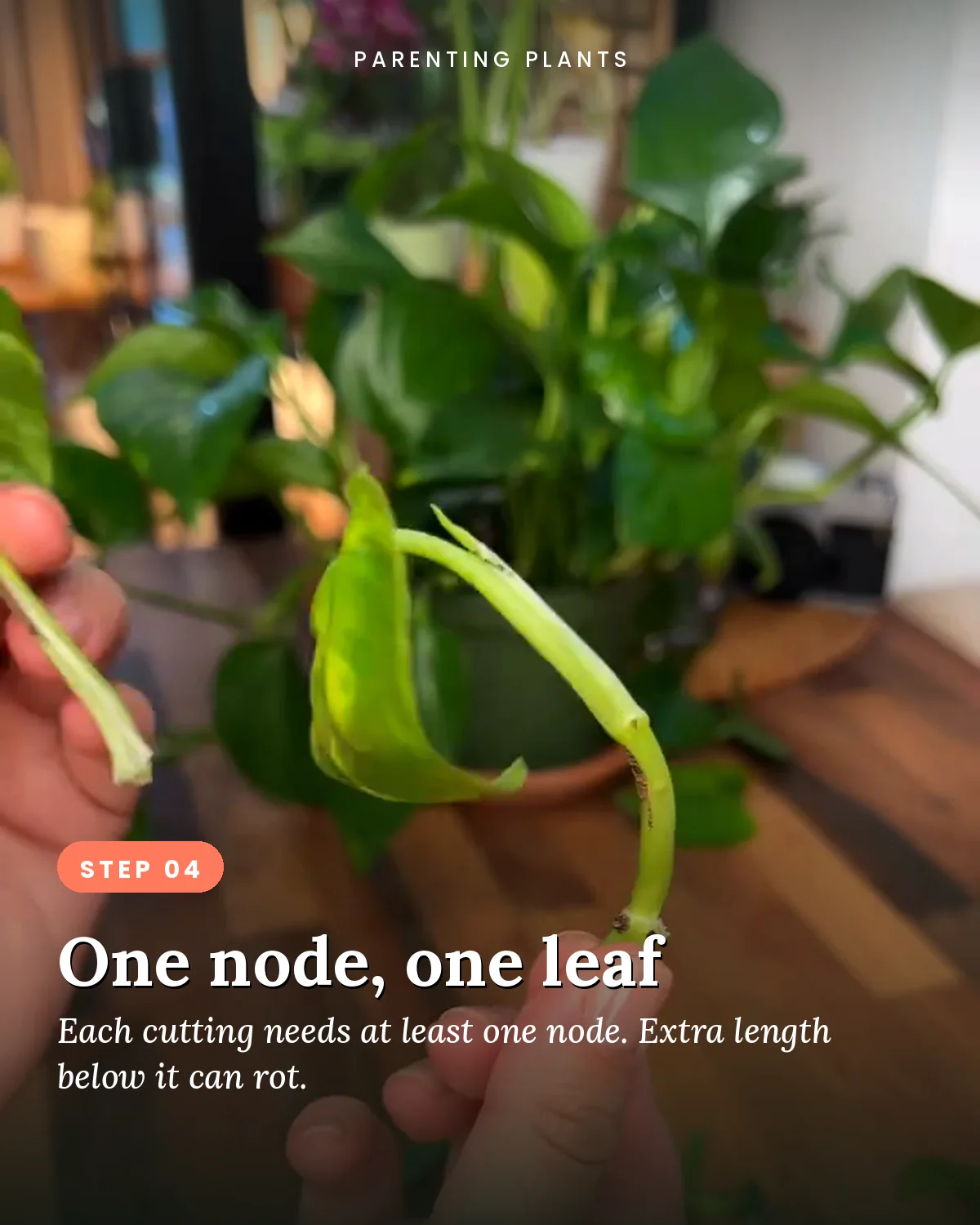
Each piece needs at least one node and one leaf. Trim off any long bare stem below the node, because it tends to rot in water.
Step 5: Place the cuttings in water
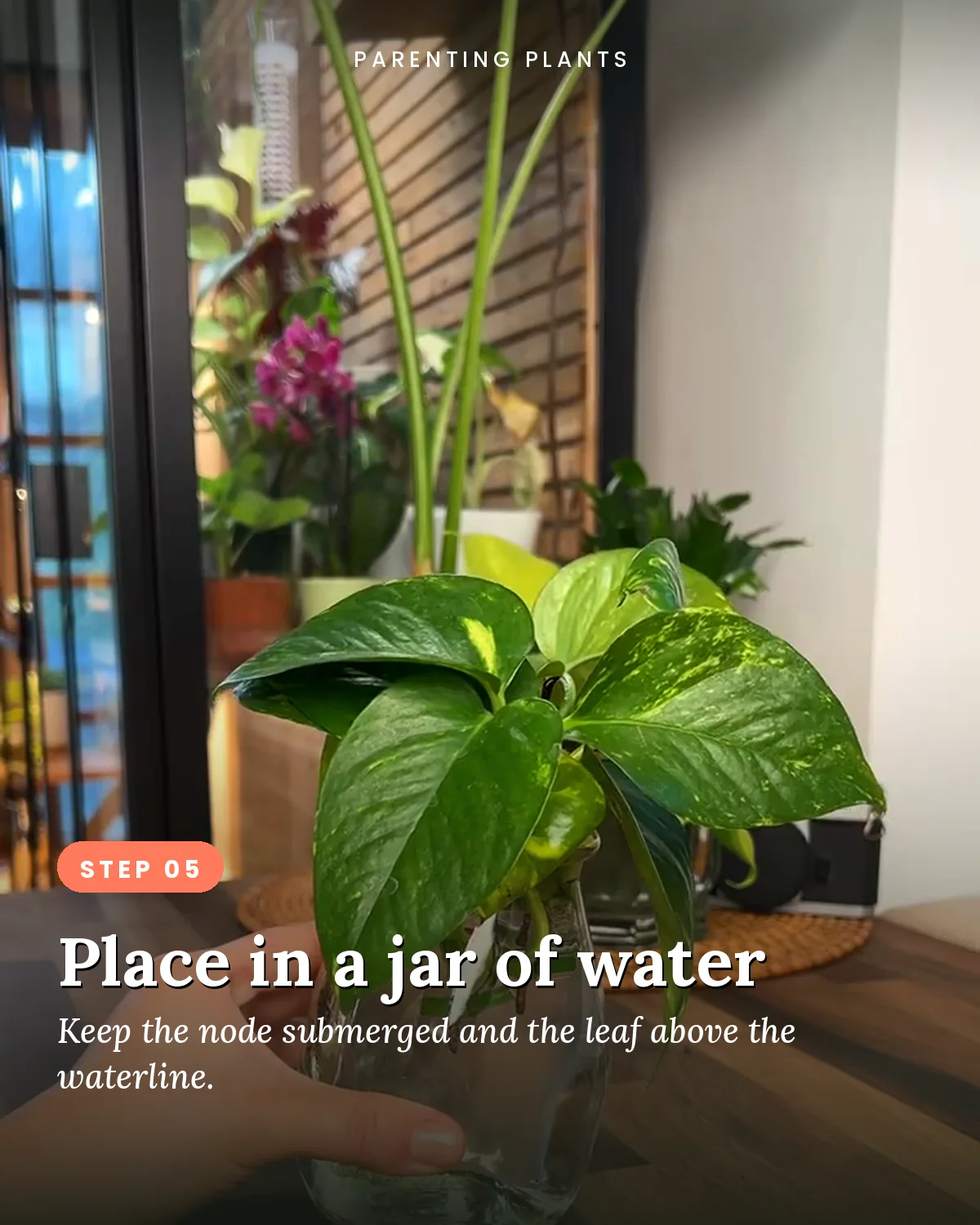
Submerge the nodes but keep the leaves above the waterline. Leaves sitting in water rot.
Step 6: Give them bright, indirect light
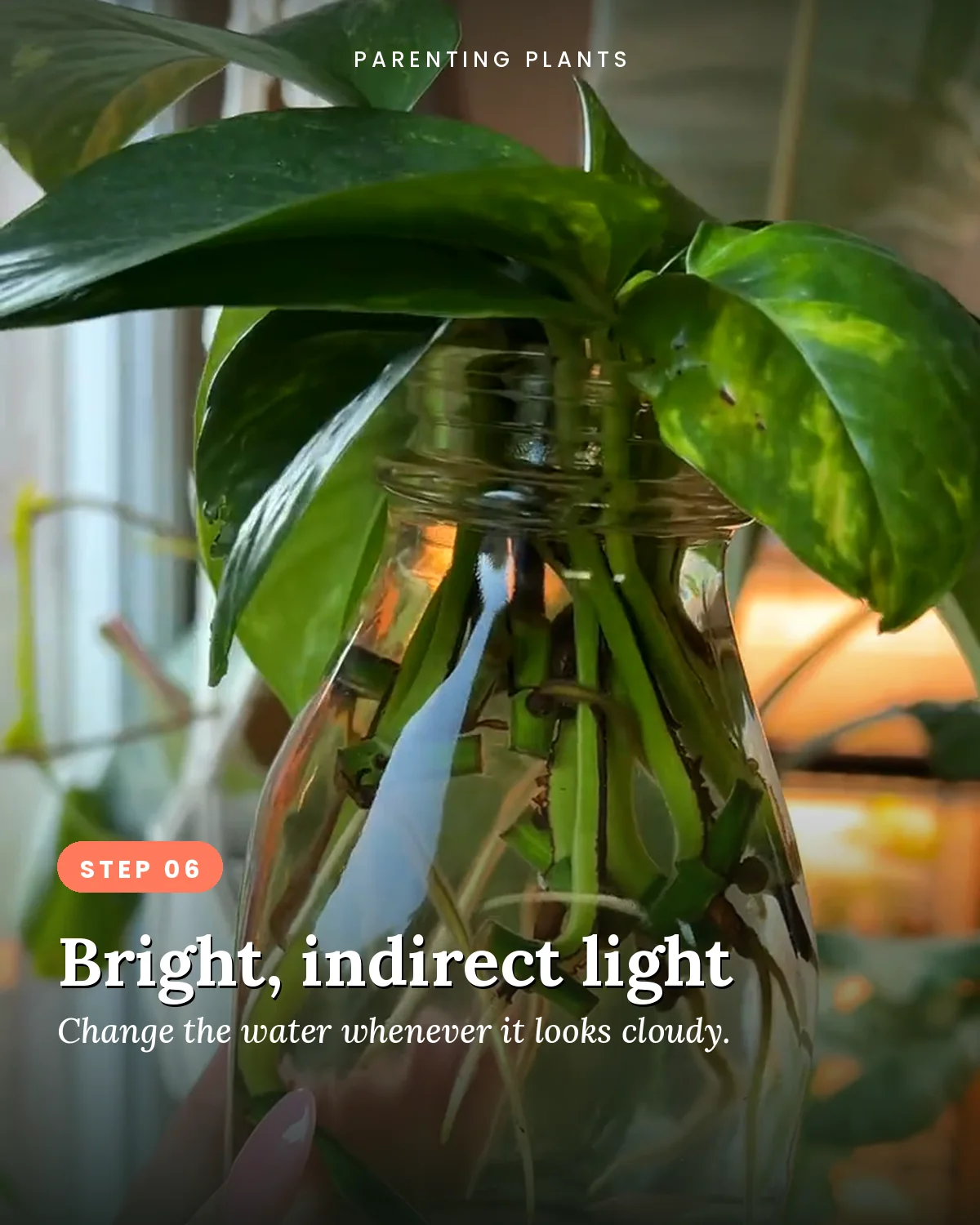
A spot near a window without harsh direct sun is ideal. Replace the water whenever it looks cloudy, or about once a week.
Step 7: Wait for 2-inch roots
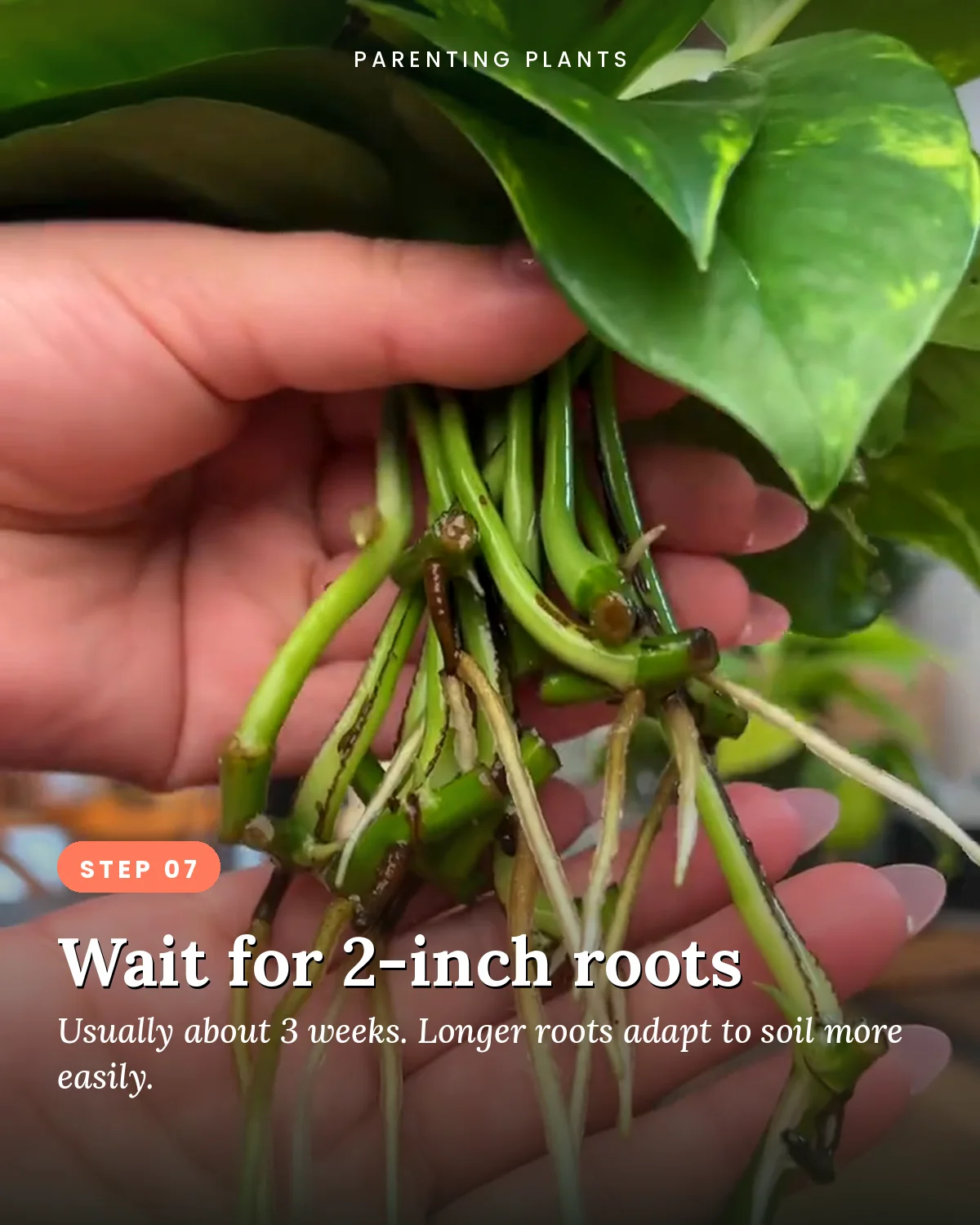
Most cuttings show white root tips in 1 to 3 weeks and are ready to pot once the roots are about 2 inches long. Don’t leave them much longer: the longer roots stay in water, the harder the move to soil.
Step 8: Pot them in an airy mix
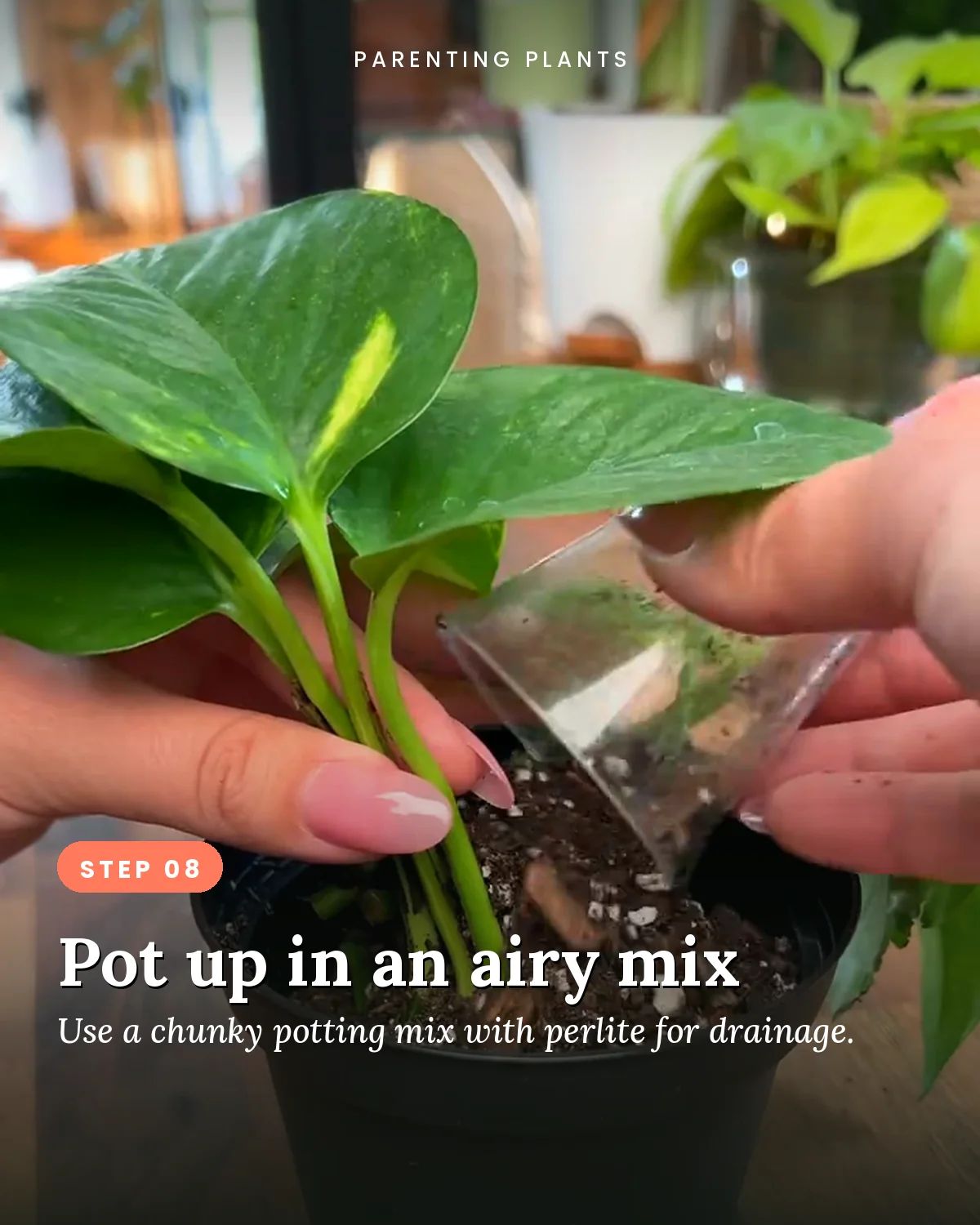
Plant several rooted cuttings together in one small pot for a fuller plant. Firm the mix gently around the roots. Our repotting guide shows how to pick the right pot size.
Step 9: Keep the soil slightly moist at first
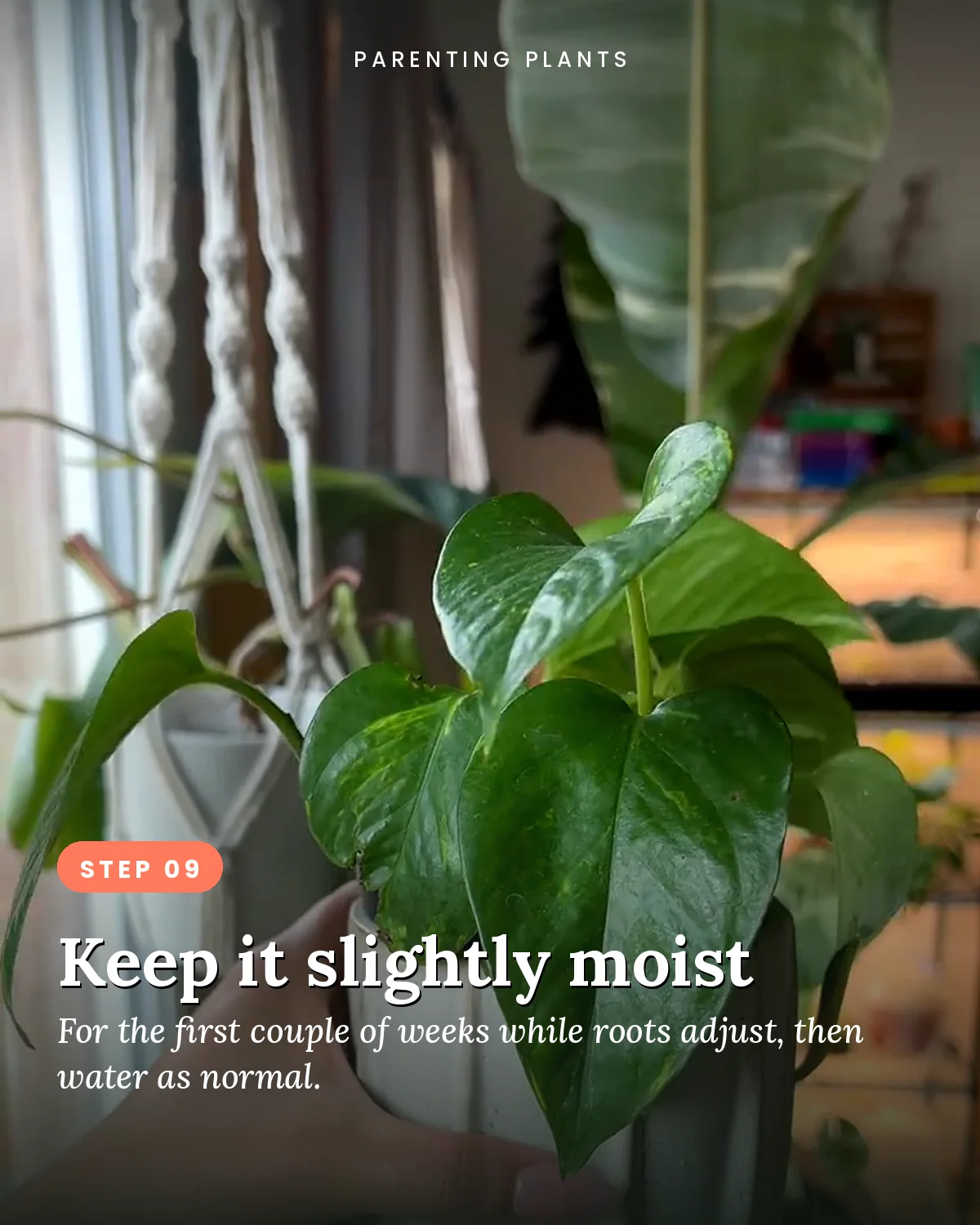
For the first two weeks, keep the mix lightly moist (never soggy) while the water roots adjust. After that, water only when the top inch of soil is dry.
Step photos: from a video by @mtplanters
Water vs soil vs sphagnum moss: which method is best?
Water is the best choice for beginners. Soil skips the transplant step, and moss suits growers who want strong roots and don’t mind checking moisture. For other plants and methods, see our guide to propagating houseplants.
| Method | Best for | Time to roots | Pros | Cons |
|---|---|---|---|---|
| Water | Beginners | 1–3 weeks to first roots | You can watch roots form; almost no effort | Roots must adjust when moved to soil |
| Soil | Skipping the transplant | 3–6 weeks | No transplant shock; roots are soil-ready | You can’t see progress; easy to over- or under-water |
| Sphagnum moss | Rare or valuable varieties | 2–4 weeks | Airy, moist medium; strong roots | Needs a clear container and regular moisture checks |
| Layering | Zero-risk propagation | 2–4 weeks | The vine stays attached to the mother plant until rooted | Slower; needs a second pot beside the plant |
How long does pothos take to root in water?
Most pothos cuttings show their first roots in 1 to 3 weeks and are ready for soil in about 3 to 6 weeks, depending on light and warmth.
| When | What you’ll see |
|---|---|
| Days 1–7 | Nothing visible yet. Keep the water clean. |
| Weeks 1–3 | Small white root tips appear at the nodes. Existing aerial roots often grow first. |
| Weeks 3–4 | Roots reach 1–2 inches and start to branch. |
| Weeks 4–6 | Roots are 2–3 inches long. Pot them up now. |
| 2 weeks after potting | New leaves or vine growth: the plant has settled in. |
Cuttings root faster in a warm room (18–27°C / 65–80°F) with bright, indirect light. In a cool winter room, expect the slower end of each range.
Why pothos cuttings fail (and how to fix it)
Most failures come from a missing node, dirty water or too little light, and all three are easy to fix.
| Problem | Likely cause | Fix |
|---|---|---|
| Stem turns brown and mushy | Bacterial rot from stale water or a long bare stem | Cut above the rot, rinse the jar, use fresh water and change it weekly |
| No roots after 4+ weeks | No node in the water, low light or a cold room | Check a node is submerged; move to a brighter, warmer spot |
| Leaf turns yellow | Normal energy use, or the leaf sitting in water | Keep leaves above water; one yellow leaf is fine if the node is firm |
| Cloudy or smelly water | Bacteria building up | Replace the water and wipe slime off the stem |
| Cutting wilts after potting | Water roots adjusting to soil | Keep the soil lightly moist for 2 weeks; avoid direct sun |
| Roots but no new leaves | The plant is building roots first | Be patient; new growth usually follows within a month of potting |
How to get a fuller, bushier pothos
The secret to a full pothos is planting many cuttings in one pot, not waiting for one cutting to fill out.
- Plant 4 to 6 cuttings per 4-inch pot. Pothos rarely branches on its own, so more cuttings means more vines from day one.
- Push cuttings back into the mother pot. Rooting cuttings in the original pot fills bare spots at the top.
- Prune regularly. Trimming long vines encourages growth nearer the soil, and every trim gives you new cuttings.
- Give it more light. Leggy vines with big gaps between leaves are a sign of too little light.
Regular trims and brighter light make the biggest difference to a leggy vine. Read our guides to pruning houseplants and houseplant lighting for the details.
Is pothos safe for pets?
No. Pothos is toxic to cats and dogs, so keep cuttings and propagation jars out of their reach. The ASPCA lists it as toxic because of insoluble calcium oxalates, which cause mouth irritation, drooling, vomiting and difficulty swallowing. If your pet chews on it, call your vet or the ASPCA Animal Poison Control Center at (888) 426-4435.
Looking for safer options? See our cat-safe houseplants and dog-safe houseplants, or check any plant with our plant toxicity checker.
Want every plant’s care on one page?
The Houseplant Care Cards give you 30 printable one-page guides for popular houseplants: light, water, pet safety and quick fixes at a glance.
Pothos propagation FAQ
Can you propagate pothos without a node?
No. Roots only grow from nodes, so a piece of stem or leaf without a node will not root, even if it stays green for weeks.
Can you propagate pothos from just a leaf?
No. A leaf with its stalk but no node can live in water for a while, but it will never grow roots or a new vine.
How long does pothos take to root in water?
First roots usually appear in 1 to 3 weeks. Most cuttings are ready to pot in 3 to 6 weeks, once the roots are about 2 inches long.
Where do you cut pothos for propagation?
Cut about 1 cm (half an inch) below a node, using clean, sharp scissors. Each cutting should have at least one node and one leaf.
When should I move pothos cuttings from water to soil?
When the roots are about 2 inches long. Waiting much longer makes the switch harder, because water roots are weaker in soil.
Can pothos live in water permanently?
Yes. Pothos can keep growing in water if you change it regularly and add a diluted liquid fertilizer, but it usually grows more slowly than in soil.
Do I need rooting hormone for pothos?
No. Pothos roots very easily on its own, so rooting hormone is optional.
Can you propagate pothos in winter?
Yes. Indoors it still roots in winter, just more slowly. Keep the jar in the brightest spot you have, away from cold windows and heaters.
Sources and further reading
This guide was written by Manik at Parenting Plants and checked against the university extension and expert resources below. Read how we research and update our guides in our editorial guidelines.
- Iowa State University Extension: How to propagate houseplants by stem tip cuttings
- Ohio State University, Chadwick Arboretum: Propagating pothos, philodendrons and spider plants
- University of Illinois Extension: Propagating houseplants
- University of Missouri Extension: Home propagation of houseplants
- ASPCA Animal Poison Control: Golden pothos
Looking for a specific plant? Browse all our houseplant care guides A to Z.
Free tracker
Get the free Plant Care Tracker
A ready-made plant care tracker for Google Sheets and Notion that shows exactly which plants need water today, with 90 houseplants built in.
You're in!
Check your inbox, plant friend! 📩
Your free Plant Care Tracker is on its way. We've emailed you both versions, Google Sheets and Notion, plus a bonus printable 2027 plant calendar. It usually arrives within a few minutes.
Can't find it? Check your Promotions or Spam folder, and add manik@parentingplants.com to your contacts so you never miss a plant tip.