Special Offer: Use code ILOVEPLANTS for 25% off on all digital products! Shop Now →

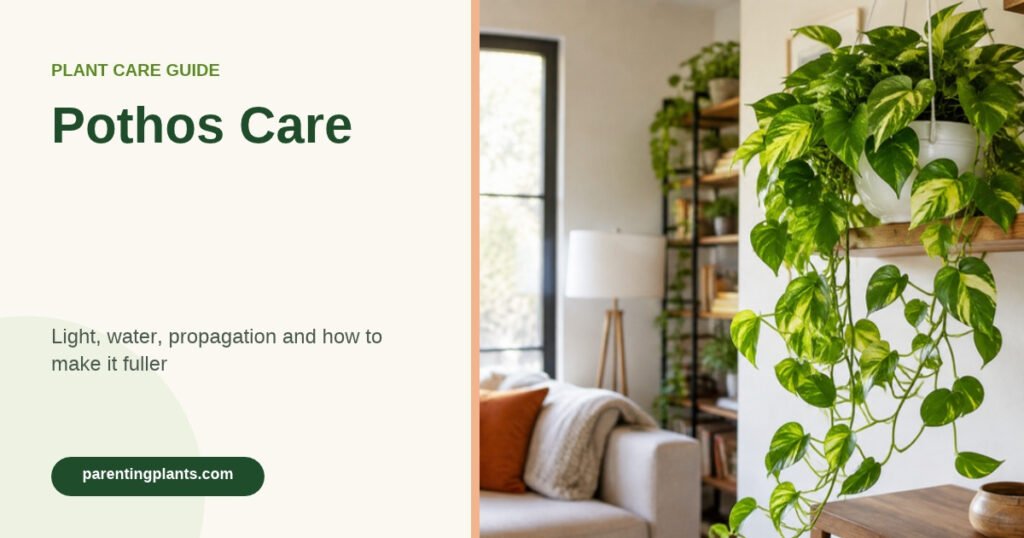
Pothos is the plant most people start with, and for good reason. It grows fast, forgives missed waterings, copes with less-than-perfect light and tells you clearly when something is wrong. With a few simple habits you can turn a small pot into a long, lush vine, then root the cuttings and fill your home for free.
Short answer: Give pothos bright, indirect light, though it tolerates lower light. Water when the top 1 to 2 inches of soil are dry, usually every 1 to 2 weeks, and water thoroughly so it drains. Keep it at 60 to 85°F (16 to 29°C), feed lightly in spring and summer, and trim long vines to keep it full.
In this guide
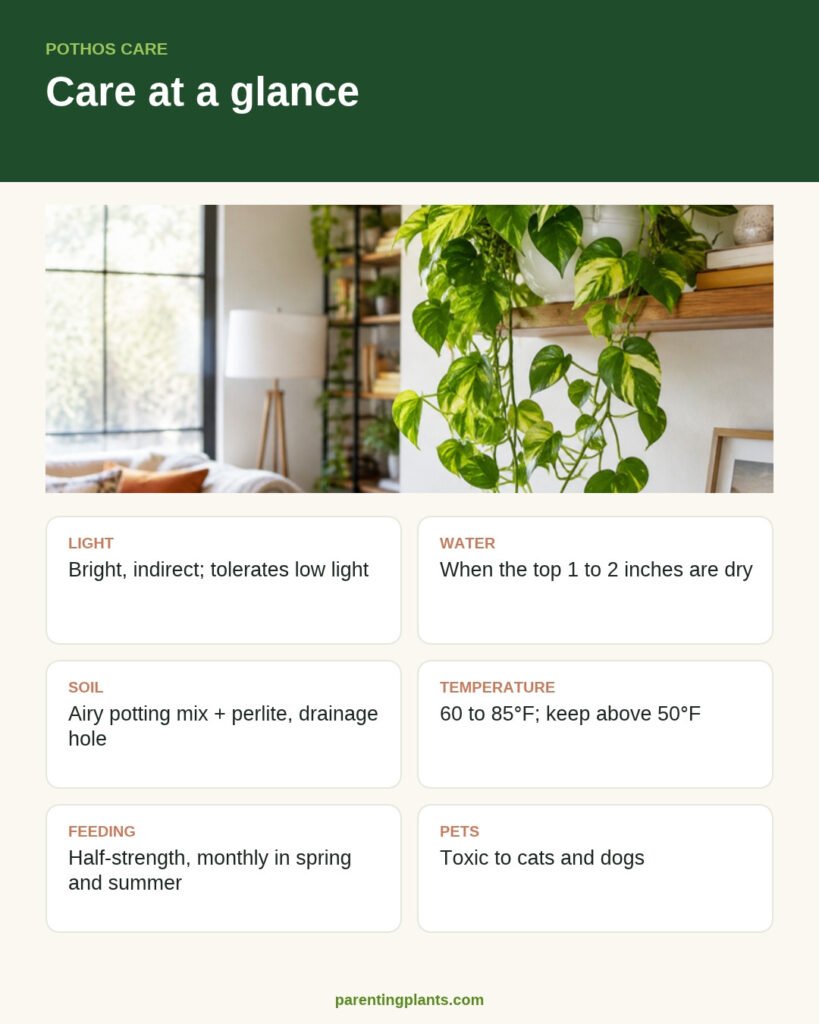
Pothos care at a glance
| Need | What pothos wants |
|---|---|
| Light | Bright, indirect light; tolerates low light (variegated types fade) |
| Water | When the top 1 to 2 inches are dry; water thoroughly |
| Soil | Airy, fast-draining potting mix in a pot with a drainage hole |
| Temperature | 70 to 85°F by day, 60 to 70°F at night; keep above 50°F |
| Humidity | Average home humidity is fine; 50% or more is ideal |
| Fertilizer | Balanced houseplant food at half strength, monthly in spring and summer |
| Growth | Fast; vines can grow several feet a year in good light |
| Pets | Toxic to cats and dogs (calcium oxalate crystals) |
Popular pothos varieties
All the pothos below are Epipremnum and need the same basic care. The main difference is light: the more white or cream in the leaves, the more light the plant needs to stay colorful and grow well.
| Variety | Looks like | Light needs |
|---|---|---|
| Golden pothos | Green leaves splashed with yellow | Low to bright; the classic, toughest choice |
| Jade pothos | Solid dark green | Copes best with low light |
| Neon pothos | Bright chartreuse | Low to bright; grows fast |
| Marble Queen | Heavily streaked white and green | Needs bright, indirect light |
| Pearls and Jade, N’Joy, Manjula | Crisp white and green patches | Bright, indirect light; slower growing |
| Cebu Blue | Narrow, silvery blue-green leaves | Bright, indirect light |
Satin pothos isn’t a pothos. It’s Scindapsus pictus, a close relative with silver-spotted leaves. Care is similar, but let it dry a little more between waterings.
How much light does pothos need?
Pothos grows fastest and looks best in bright, indirect light: near an east window, or a few feet back from a south or west window. It will survive in a dim room or under office lights, which is why it’s famous as a low-light plant, but it grows slowly there, with smaller leaves and long gaps between them.
- Too little light: long, bare stems; small new leaves; variegated leaves turning plain green.
- Too much direct sun: pale, bleached leaves and brown, crispy patches.
- Just right: steady new leaves that are the same size as, or bigger than, the older ones.
See our lighting guide for how to check your light, and our best low-light houseplants if your home is dim.
How often to water pothos
Let the top 1 to 2 inches of soil dry out, then water thoroughly until it drains from the bottom. That’s usually every 1 to 2 weeks in spring and summer and every 2 to 3 weeks in winter. Pothos would much rather be a little dry than soggy.
- Push a finger into the soil. If it’s dry to the second knuckle, water.
- Water slowly all over the soil until water flows from the drainage hole.
- Empty the saucer after 10 to 15 minutes.
- Check again in a week; plants in bright light dry out faster.
Pothos tells you when it’s thirsty. The leaves go soft and droop. Water and they’ll perk up within a few hours. If it droops and the soil is wet, the problem is too much water, not too little.
More in our watering guide.
Best soil and pot
Use a good all-purpose potting mix lightened with about one part perlite or orchid bark to three parts mix, so water drains quickly and roots get air. Any pot with a drainage hole works; hanging baskets show off trailing vines beautifully. See our potting soil guide.
Temperature and humidity
Pothos likes the same temperatures you do: 70 to 85°F (21 to 29°C) by day and 60 to 70°F (16 to 21°C) at night. Keep it away from cold windows and drafty doors in winter, and out of the direct blast of heating or air-conditioning vents.
It copes with normal home humidity, though it’s happiest at 50% or more. If leaf tips turn brown in dry winter air, a humidifier or grouping plants together helps. See our humidity guide.
Fertilizing pothos
Feed with a balanced liquid houseplant fertilizer at half strength about once a month in spring and summer, on damp soil. Don’t feed in autumn and winter. Pale, yellowish new growth on a plant with good light and watering often means it’s hungry. See our fertilizing guide.
How to make pothos fuller
A pothos with a few long, bare vines is the most common complaint. Pothos doesn’t branch much on its own, so you have to help it:
- Give it more light. Leaves grow closer together in brighter light.
- Trim long vines in spring or summer, cutting just above a leaf. New growth usually starts from the node below the cut.
- Root the cuttings and plant them back in the same pot, around the base. This is the fastest way to a bushy plant.
- Coil long vines back over the top of the soil and pin them down; they’ll root where nodes touch the soil.
Our pruning guide explains exactly where to cut.
How to propagate pothos
Pothos is one of the easiest plants to propagate. Every piece of stem with a node can become a new plant.
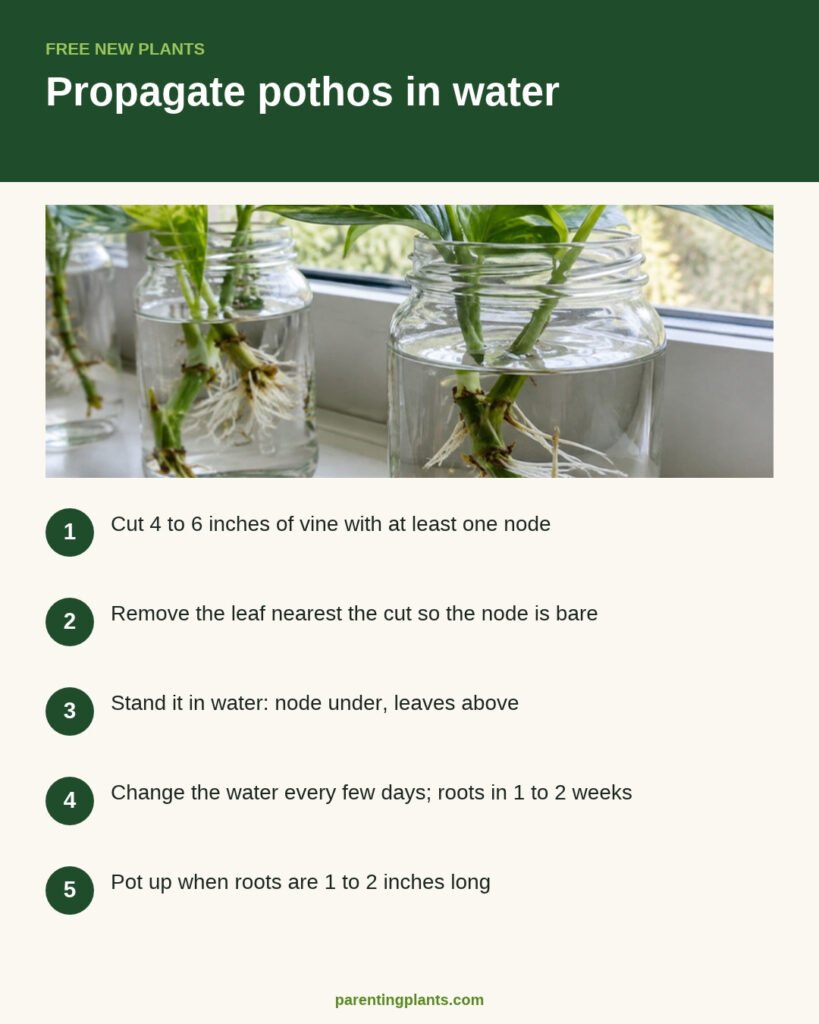
- Cut a 4 to 6 inch piece of vine with at least one node (the brown bump where a leaf and aerial root grow) and two or three leaves.
- Remove the leaf nearest the cut end so the node is bare.
- Stand the cutting in a glass of water, node underwater and leaves above, in bright, indirect light.
- Change the water every few days. Roots appear in 1 to 2 weeks.
- When roots are 1 to 2 inches long, pot the cutting in damp potting mix and keep it lightly moist for the first couple of weeks.
You can also root cuttings directly in damp potting mix. See our propagation guide for more methods.
Trailing or climbing: bigger leaves on a moss pole
In the wild, pothos climbs trees and produces huge, sometimes split leaves. Indoors, trailing vines stay small-leaved. If you want bigger leaves, give it a moss pole or plank to climb. Tie the vines loosely to the pole, keep the pole slightly damp so aerial roots grip it, and give the plant bright, indirect light. Leaves usually get noticeably larger as the plant climbs.
When to repot
Repot every 1 to 2 years in spring, when roots circle the pot or poke out of the drainage hole, or when the soil dries out within a couple of days. Move up only one pot size (1 to 2 inches wider). A pot that’s too big holds extra wet soil, which leads to root rot. Our repotting guide walks you through it.
Common pothos problems and fixes
| What you see | Most likely cause | What to do |
|---|---|---|
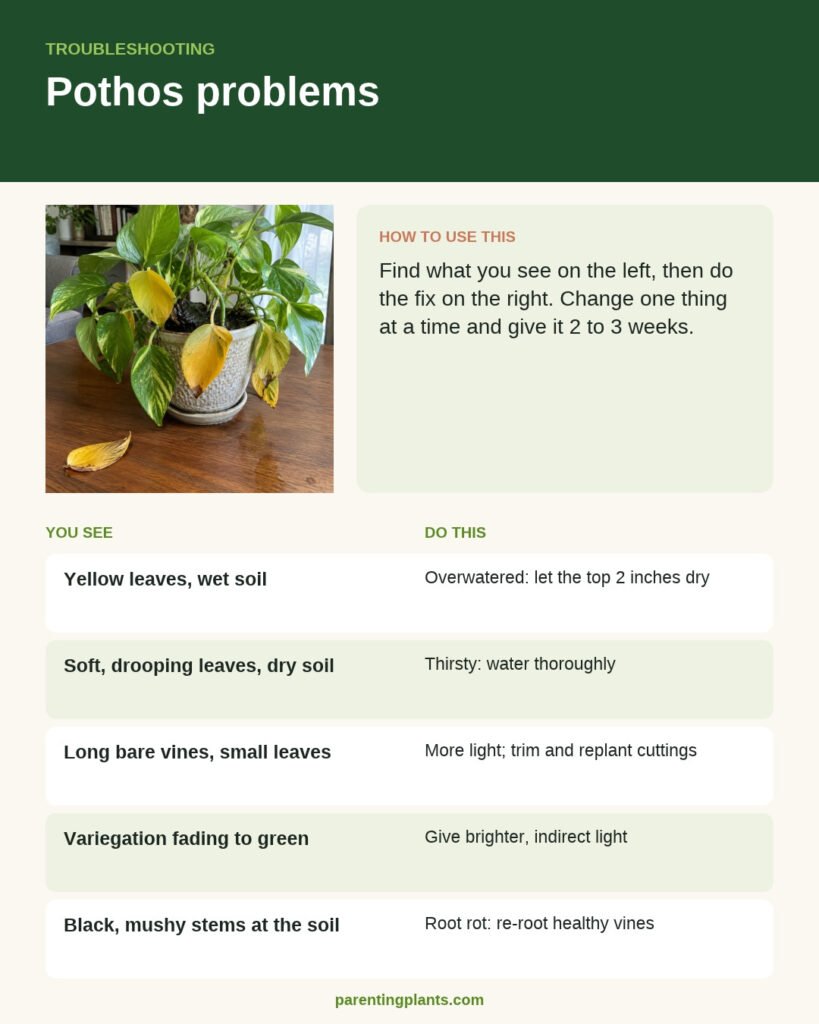
| Yellow leaves, soil wet | Overwatering | Let the top 2 inches dry; check drainage |
| Yellow leaves, soil dry | Underwatering or hunger | Water thoroughly; feed in spring and summer |
| Drooping, soft leaves | Thirst (or rot if soil is wet) | Water if dry; check roots if wet |
| Long bare vines, small leaves | Not enough light | Move to brighter light; trim and replant cuttings |
| Variegation fading to green | Not enough light | Give brighter, indirect light |
| Brown, crispy tips or patches | Dry air or direct sun | Raise humidity; move out of harsh sun |
| Black, mushy stems at soil | Root rot | Cut healthy vines to re-root; repot in fresh mix |
| Webbing or white fluff | Spider mites or mealybugs | Rinse the plant; treat with insecticidal soap |
More help in our guides to yellow leaves, root rot and houseplant pests.
Is pothos toxic to pets?
Yes. Pothos contains insoluble calcium oxalate crystals, and the ASPCA lists it as toxic to cats and dogs. Chewing a leaf causes mouth pain, drooling, pawing at the mouth, vomiting and difficulty swallowing. Hang it out of reach or choose from our pet-friendly houseplants.
Quick action checklist
- Bright, indirect light for the fastest, fullest growth
- Water when the top 1 to 2 inches are dry, then drain
- Use a pot with a drainage hole and an airy mix
- Feed at half strength monthly in spring and summer
- Trim long vines and replant the rooted cuttings
- Add a moss pole if you want bigger leaves
- Keep it out of reach of cats and dogs
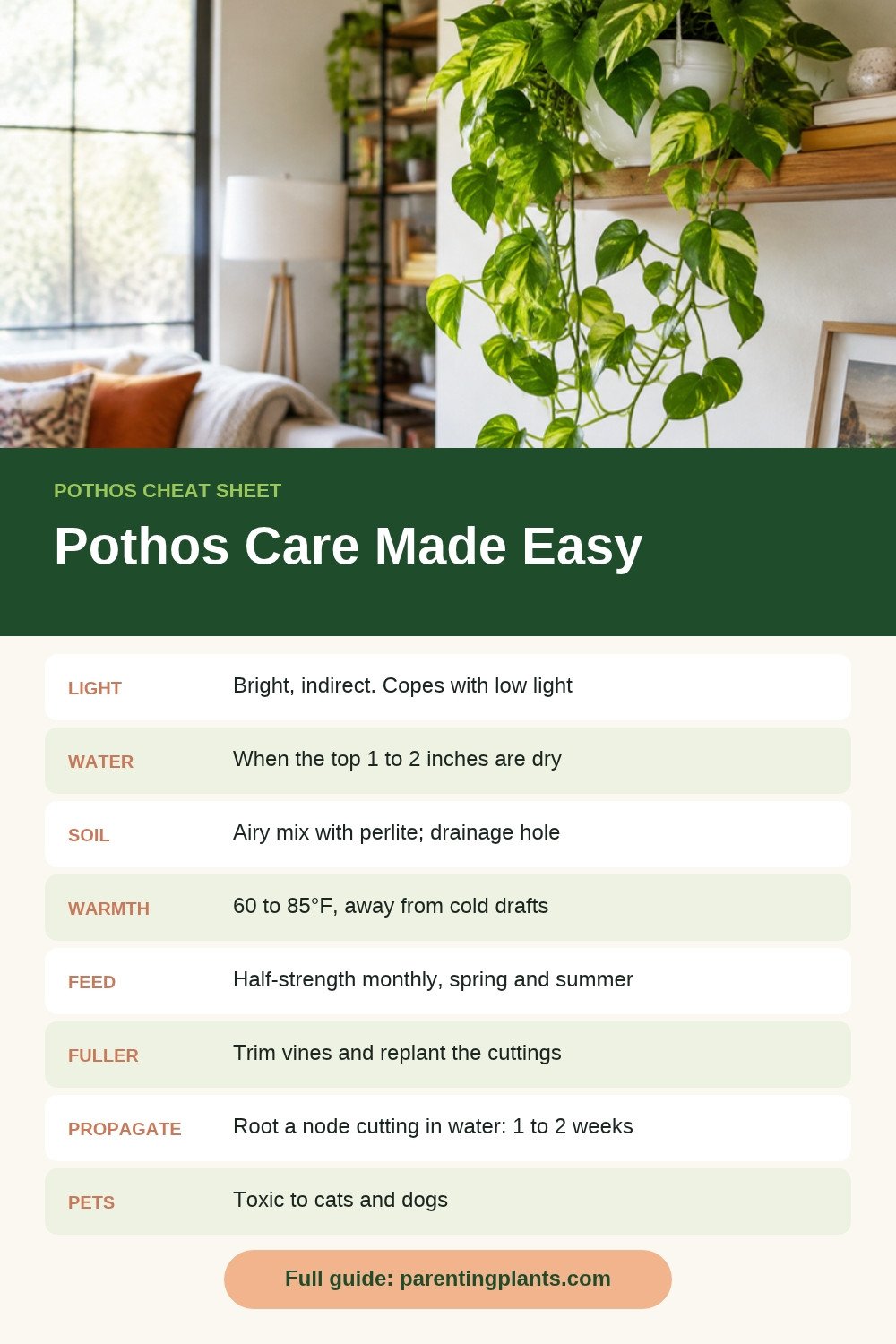
Save this for later: pin the cheat sheet below to your Pinterest plant board.
Pothos leaves turning yellow, brown or droopy?
The Houseplant Rescue Guide matches 26 common plant problems to a clear photo, then gives you simple steps to fix each one and stop it coming back. No jargon, 50 pages, with printable checklists.
Pothos care FAQ
How often should I water pothos?
When the top 1 to 2 inches of soil are dry, usually every 1 to 2 weeks in spring and summer and every 2 to 3 weeks in winter.
Can pothos grow in low light?
Yes, it tolerates low light better than most houseplants, but it grows slower and leggier. Plain green types like jade pothos cope best.
Why are my pothos leaves turning yellow?
Usually overwatering, especially if the soil stays wet. Underwatering, low light and lack of fertilizer can also cause it.
How do I make my pothos fuller?
Give it more light, trim long vines in spring or summer and plant the rooted cuttings back into the same pot.
Can pothos live in water?
Yes, cuttings can grow in water for a long time. Change the water every week or two and add a drop of diluted fertilizer occasionally.
Why is my pothos losing its variegation?
It needs more light. Move it to bright, indirect light and new leaves should show more color.
Is pothos safe for cats?
No. Pothos is toxic to cats and dogs and causes mouth irritation, drooling and vomiting if chewed.
Sources and further reading
Want to go deeper? These university extension and expert resources cover the same topic:
- Clemson Cooperative Extension: How to grow pothos indoors
- Penn State Extension: Pothos as a houseplant
- NC State Extension Plant Toolbox: Epipremnum aureum
- ASPCA: Golden pothos toxicity