Special Offer: Use code ILOVEPLANTS for 25% off on all digital products! Shop Now →

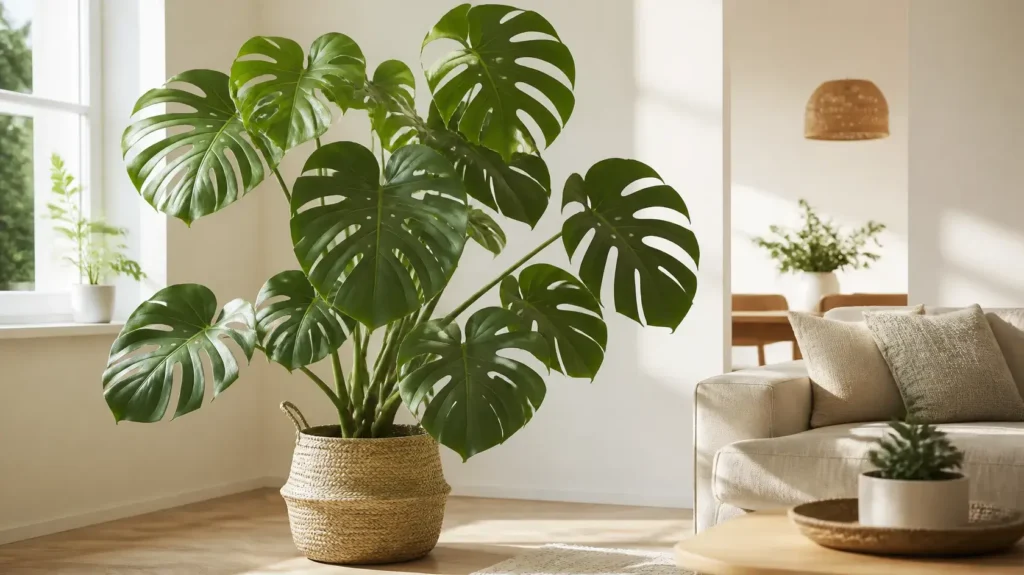
Monstera deliciosa, the Swiss cheese plant, is one of the easiest big statement plants you can grow indoors. Give it bright, indirect light, water only when the top of the soil dries, and something to climb, and it will reward you with huge leaves full of splits and holes. This monstera deliciosa care guide shows you exactly how.
This guide covers everything you need: light, watering, soil, feeding, support, repotting, propagation, and how to fix yellow leaves, brown edges and leaves that will not split.
Short answer: Grow monstera in bright, indirect light, 3 to 6 feet from a sunny window. Water when the top 2 inches of soil are dry (about every 1 to 2 weeks in summer, every 2 to 3 weeks in winter). Use a chunky, fast-draining mix, keep it at 65 to 85°F (18 to 29°C), feed monthly in spring and summer, and give it a moss pole to climb. More light is the number one way to get bigger, split leaves.
In this guide
Monstera deliciosa care at a glance
| Care need | What monstera wants |
|---|---|
| Light | Bright, indirect light; 1 to 2 hours of gentle morning sun is fine |
| Water | When the top 2 inches are dry; less in winter |
| Soil | Chunky aroid mix: potting mix, orchid bark and perlite |
| Temperature | 65 to 85°F (18 to 29°C); keep above 55°F (13°C) |
| Humidity | 40 to 60% is fine; higher helps new leaves open cleanly |
| Fertilizer | Balanced liquid feed every 4 weeks in spring and summer |
| Support | Moss pole or plank once it starts to lean |
| Repotting | Every 1 to 2 years in spring, 2 inches wider |
| Size indoors | Usually 6 to 8 feet tall with support |
| Pets | Toxic to cats and dogs if chewed |
Light: the secret to big, split leaves
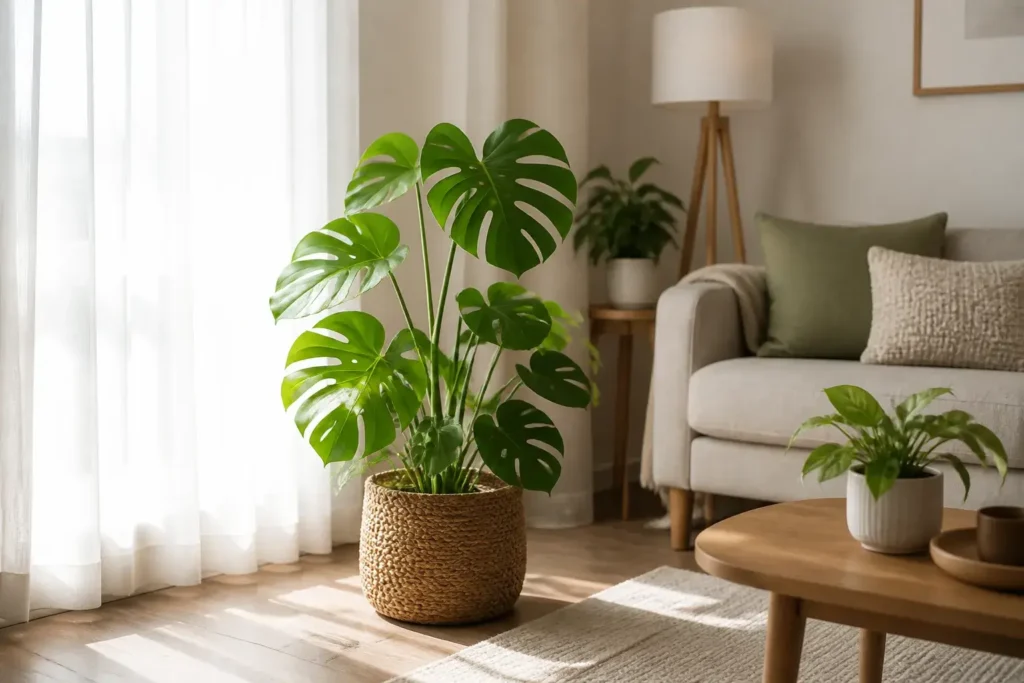
Light is the biggest factor in how your monstera grows. In its native rainforest it climbs toward the bright canopy, and the leaves only split once the plant gets enough light and maturity.
- Best spot: 3 to 6 feet from a south or west window, or right beside an east window.
- Gentle sun is fine: 1 to 2 hours of morning sun helps growth. Harsh afternoon sun through glass can scorch leaves.
- North windows are usually too dim for good growth. Add an LED grow light.
- Rotate the pot a quarter turn every week or two so it grows evenly.
| Sign | What it means |
|---|---|
| Small leaves with no splits, long gaps between leaves | Too little light |
| Stems stretching and leaning toward the window | Too little light |
| Bleached, yellow or crispy brown patches on top leaves | Too much direct sun |
Not sure how bright your spot is? Our houseplant lighting guide shows how to test it.
How often to water a monstera
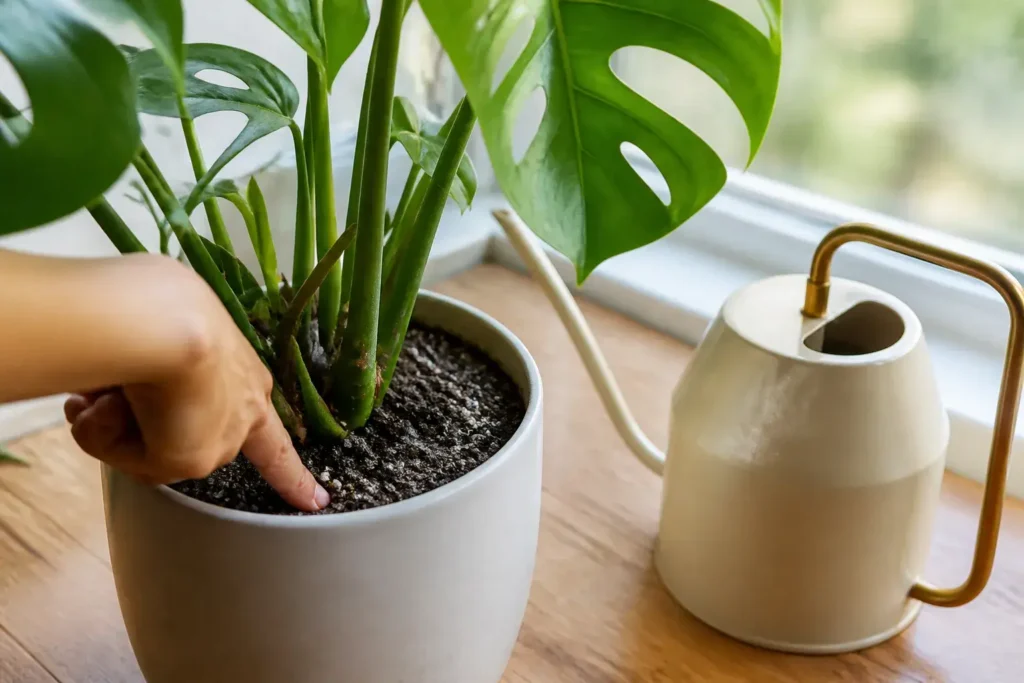
Water when the top 2 inches of soil are dry. In a bright room in summer that is often every 7 to 10 days. In winter it may be every 2 to 3 weeks. Always check the soil rather than watering on a schedule.
- Push your finger 2 inches into the soil, or use a moisture meter.
- If it is dry, water slowly until water runs out of the drainage hole.
- Let it drain fully and empty the saucer after 15 minutes.
- If it is still damp, check again in a few days.
Overwatering is the most common way monsteras die. Soggy soil causes yellow leaves, brown spots and root rot. When in doubt, wait a few more days. A slightly thirsty monstera droops a little and recovers within hours of watering.
Water drops on leaf tips? That is guttation: the plant pushing out extra water through the leaf edges, usually after a heavy watering. It is harmless, but frequent dripping can be a sign the soil is staying very wet.
See our full houseplant watering guide for more.
Best soil for monstera
Monsteras are aroids with thick roots that need air. A dense, peaty mix stays wet and invites rot. Use a chunky, well-draining mix:
Easy monstera mix: 2 parts indoor potting mix + 1 part orchid bark + 1 part perlite. Add a handful of worm castings for gentle nutrients.
Always use a pot with a drainage hole. More recipes in our potting soil guide.
Temperature and humidity
- Ideal temperature: 65 to 85°F (18 to 29°C). Growth slows below 60°F and leaves can be damaged below 50°F (10°C).
- Keep it away from AC vents, radiators and cold windows in winter.
- Humidity: average home humidity of 40 to 60% is fine. In very dry winter air, a humidifier helps new leaves unfurl without tearing or crisping.
- Skip misting. It barely raises humidity and can leave leaves wet.
See our temperature guide and humidity guide for details.
Fertilizing your monstera
- Feed with a balanced liquid houseplant fertilizer (such as 10-10-10 or 20-20-20) at half to full label strength every 4 weeks in spring and summer.
- Stop feeding in autumn and winter, unless the plant is actively growing under grow lights.
- Always water first, then feed, so you do not burn dry roots.
- Flush the pot with plain water every few months to clear fertilizer salts.
More in our fertilizing guide.
Moss poles: help your monstera climb
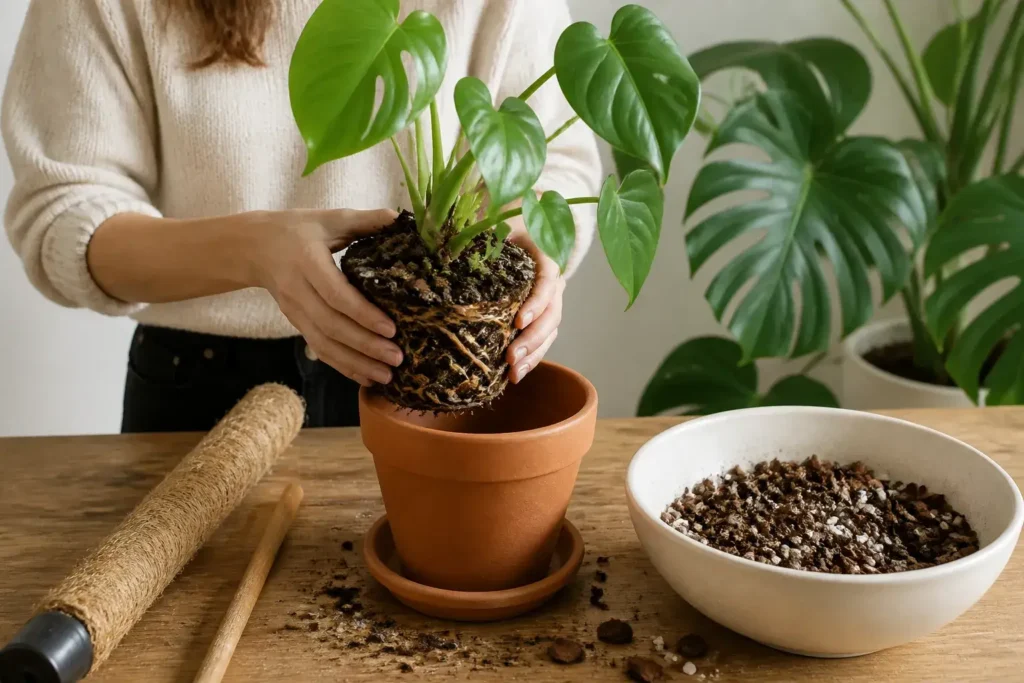
In nature, monsteras climb trees. Indoors, a moss pole, coir pole or wooden plank keeps the plant upright and encourages bigger, more mature leaves.
- Add the pole when you repot, or push it in carefully at the back of the pot.
- Face the plant so the stems lean toward the pole, then tie them loosely with soft plant ties.
- Guide aerial roots toward the pole or tuck them into the moss. They help the plant grip.
- Keep a moss pole slightly damp so aerial roots grow into it.
- Extend the pole as the plant grows taller.
Aerial roots are the brown, rope-like roots growing from the stems. They are normal. Guide them into the pot or onto the pole, or trim the ones in your way. It will not harm the plant.
Why is my monstera not splitting?
The holes and splits are called fenestrations. Young monsteras have solid, heart-shaped leaves. Splits appear as the plant matures, usually once leaves reach 1 to 2 feet across, but only if it has enough light.
- More light: move it closer to a bright window or add a grow light. This is the most important fix.
- Something to climb: a moss pole triggers larger, more mature leaves.
- Regular feeding during the growing season.
- Patience: a young plant may need a year or two of good care before splits appear.
Note: once a leaf has unfurled, it will not grow new splits. Look for improvement in the next leaves.
Pruning and cleaning
- Remove yellow or damaged leaves at the base of the leaf stem with clean scissors.
- To control size or a leggy plant, cut a stem just above a node in spring. The plant will branch from below the cut, and the top makes a great cutting.
- Wipe leaves with a damp cloth every month. Large leaves collect dust that blocks light.
- Wear gloves; the sap can irritate skin.
Our pruning guide shows where to cut.
How to repot a monstera
Repot every 1 to 2 years in spring, or when roots poke out of the drainage holes and the soil dries within a couple of days.
- Water the day before.
- Choose a pot about 2 inches wider with drainage holes. Too big a pot stays wet.
- Slide the plant out, loosen circling roots, and trim any mushy ones.
- Add the pole first if you are using one, then set the plant at the same depth in fresh chunky mix.
- Water thoroughly and keep it out of direct sun for a week. Wait 4 to 6 weeks before feeding.
Large, mature plants can stay in the same pot; just replace the top 2 inches of soil each spring. Full steps in our repotting guide.
How to propagate monstera
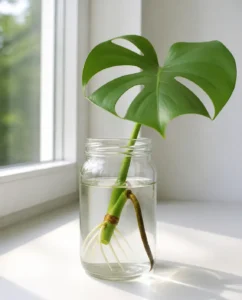
A monstera leaf on its own will not grow into a new plant. Every cutting needs at least one node, the bump on the stem where the leaf and aerial root grow.
- Find a node with a leaf, ideally with a short aerial root growing from it.
- Cut about 1 inch below the node with clean, sharp scissors.
- Place the node in a jar of water (keep the leaf above water), or plant it in moist, chunky mix.
- Keep it in bright, indirect light at 65 to 80°F. Change water weekly.
- Roots usually appear in 2 to 4 weeks. Pot up once they are 2 to 3 inches long.
A new leaf usually follows within 1 to 3 months. See our propagation guide for more methods.
Common monstera problems and fixes
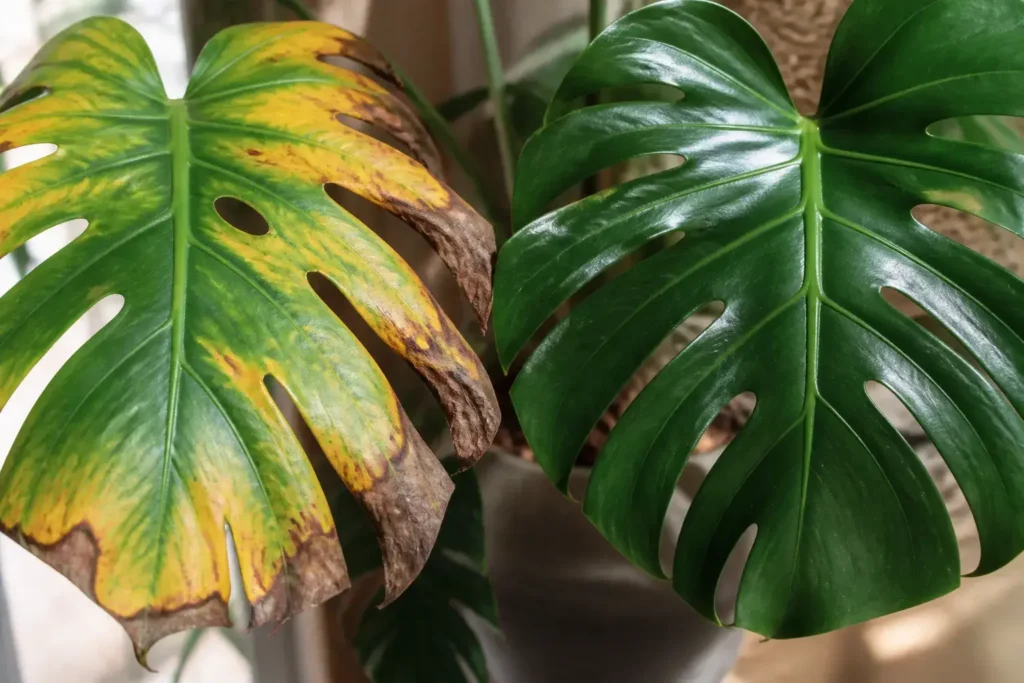
Yellow leaves
Spot it: One or more leaves turning yellow, often lower ones, sometimes with soft stems.
Why it happens: Usually overwatering. Can also be low light, an old leaf aging naturally, or lack of nutrients.
Fix it:
- Check the soil 2 inches down. If damp, stop watering until it dries.
- If the soil smells sour, check the roots for rot.
- Move it to brighter light and feed in the growing season.
Prevent it: Water only when the top 2 inches are dry. More causes in our yellow leaves guide.
Brown, crispy edges or spots
Spot it: Dry brown edges, crispy tips, or brown spots with a yellow halo.
Why it happens: Crispy edges: underwatering, very dry air, or too much sun. Soft brown spots with yellow halos: overwatering or fungal spots.
Fix it:
- Feel the soil to rule out watering problems.
- Move away from heaters and hot windows.
- Trim damaged areas with clean scissors.
Prevent it: Keep watering consistent and avoid harsh afternoon sun.
Drooping or curling leaves
Spot it: Leaves droop, curl inward or feel limp.
Why it happens: Thirst (soil dry), root rot (soil wet), cold drafts, or too much sun.
Fix it:
- If the soil is dry, water thoroughly.
- If the soil is wet, check the roots.
- Move it away from drafts and harsh sun.
Prevent it: Check the soil weekly and keep conditions stable.
Leggy growth and small leaves
Spot it: Long stems with big gaps, small leaves, plant leaning hard to one side.
Why it happens: Not enough light, or nothing to climb.
Fix it:
- Move it closer to a bright window or add a grow light.
- Add a moss pole and tie the stems to it.
- Prune leggy stems in spring and root the tops.
Prevent it: Bright light and a pole from the start.
Pests
Spot it: Fine webbing and pale speckling (spider mites), silvery streaks (thrips), brown bumps (scale), or white fluff (mealybugs).
Why it happens: Dry air, new plants, or plants brought in from outdoors.
Fix it:
- Isolate the plant and shower the leaves.
- Treat with insecticidal soap every 5 to 7 days for 3 to 4 rounds.
- Wipe scale and mealybugs off with rubbing alcohol.
Prevent it: Wipe leaves monthly and check undersides. Full guide: houseplant pests.
If your plant is badly struggling, follow our steps to revive a dying houseplant.
Is monstera toxic to pets?
Yes. Monstera deliciosa contains insoluble calcium oxalate crystals. If a cat or dog chews it, it can cause mouth irritation, drooling, pawing at the mouth and vomiting. It is rarely life-threatening, but keep it out of reach of pets and children, and contact your vet if your pet seems unwell.
Monstera deliciosa vs Monstera adansonii
| Monstera deliciosa | Monstera adansonii | |
|---|---|---|
| Leaf size | Very large, up to 1 to 3 feet indoors | Small, 4 to 8 inches |
| Leaf pattern | Splits from the edge plus holes | Oval holes inside the leaf |
| Growth | Large climber, needs a pole | Smaller vine, trails or climbs |
| Care | Very similar | Likes slightly more humidity |
Monstera deliciosa is also often confused with the split-leaf philodendron (Thaumatophyllum bipinnatifidum), which has deep lobes but no holes.
More plant care guides: Snake plant care · Spider plant care · Fiddle leaf fig care · ZZ plant care · Bird of paradise care · Lucky bamboo care · Orchid care · Peace lily care
Yellow, brown or drooping monstera leaves you can’t explain?
The Houseplant Rescue Guide matches 26 common plant problems to a clear photo, then gives you simple steps to fix each one and stop it coming back. No jargon, 50 pages, with printable checklists.
Quick action checklist
- Place it 3 to 6 feet from a bright window
- Water when the top 2 inches are dry
- Use chunky mix in a pot with drainage holes
- Keep it at 65 to 85°F, away from drafts and heaters
- Feed every 4 weeks in spring and summer
- Add a moss pole and tie stems loosely
- Wipe leaves monthly and check for pests
- Repot every 1 to 2 years in spring
- Keep it out of reach of pets
Track watering and new leaves in the Houseplant Journal, and find the poles, mixes and tools we recommend in our houseplant supplies guide.
Monstera deliciosa care FAQ
How often should I water a monstera?
Water when the top 2 inches of soil are dry. That is usually every 7 to 10 days in bright summer conditions and every 2 to 3 weeks in winter. Always check the soil first.
How much light does a monstera need?
Bright, indirect light for most of the day, such as 3 to 6 feet from a south or west window or beside an east window. An hour or two of gentle morning sun is fine.
Why is my monstera not getting holes or splits?
Usually not enough light, or the plant is still young. Move it to brighter light, give it a moss pole, and feed it in spring and summer. Splits appear on new leaves as the plant matures.
Why are my monstera leaves turning yellow?
The most common cause is overwatering. Let the top 2 inches of soil dry before watering, check the roots for rot if the soil smells sour, and make sure it gets bright light.
Can I propagate a monstera from a leaf?
No. A leaf alone may grow roots but will never grow a new plant. The cutting must include a node, the bump on the stem where the leaf and aerial root grow.
Is monstera toxic to cats and dogs?
Yes. It contains calcium oxalate crystals that cause mouth irritation, drooling and vomiting if chewed. Keep it out of reach and call your vet if your pet seems unwell.
Should I cut off monstera aerial roots?
You do not need to. Guide them into the soil or onto a moss pole. Trimming a few that are in the way will not harm the plant.
Sources and further reading
Want to go deeper? These university extension and expert resources cover the same topic:
- NC State Extension Plant Toolbox: Monstera deliciosa
- ASPCA: Toxic and non-toxic plants list
Free printable
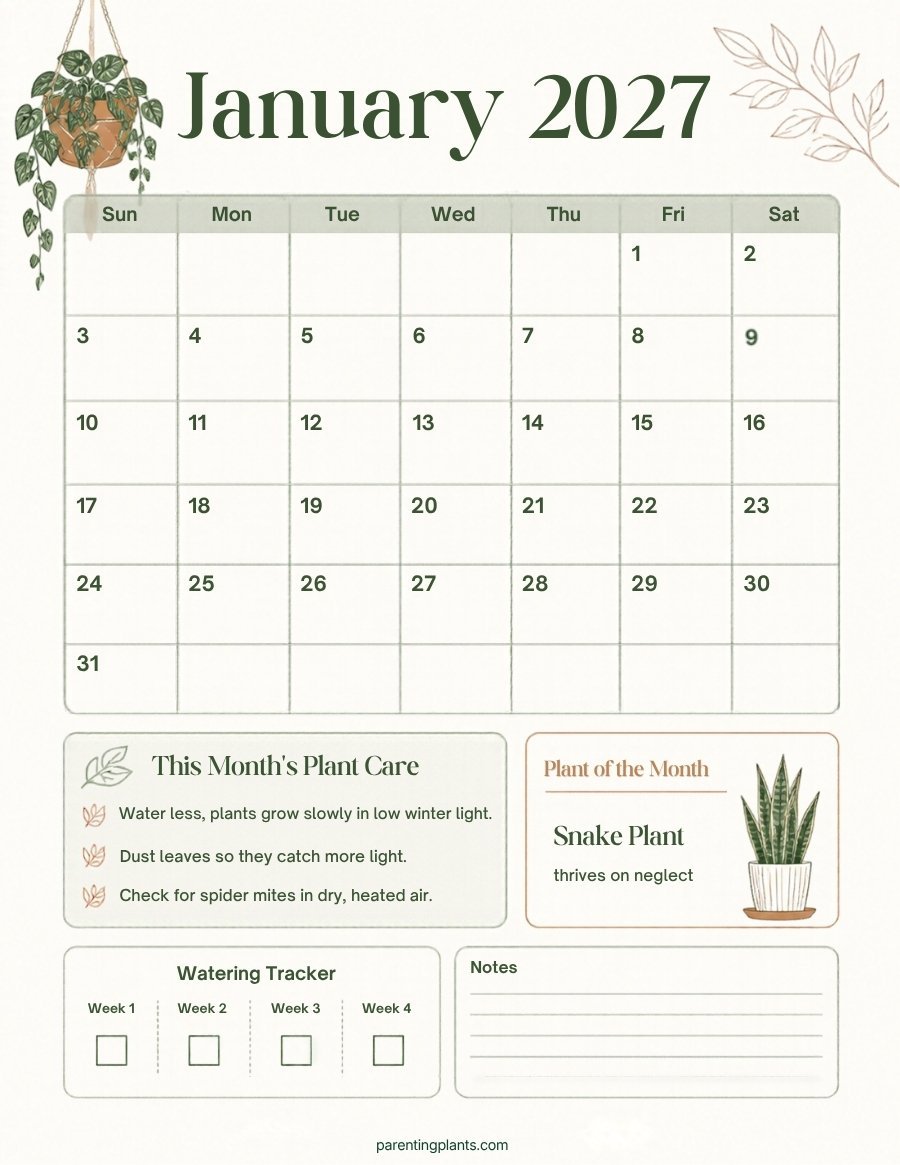
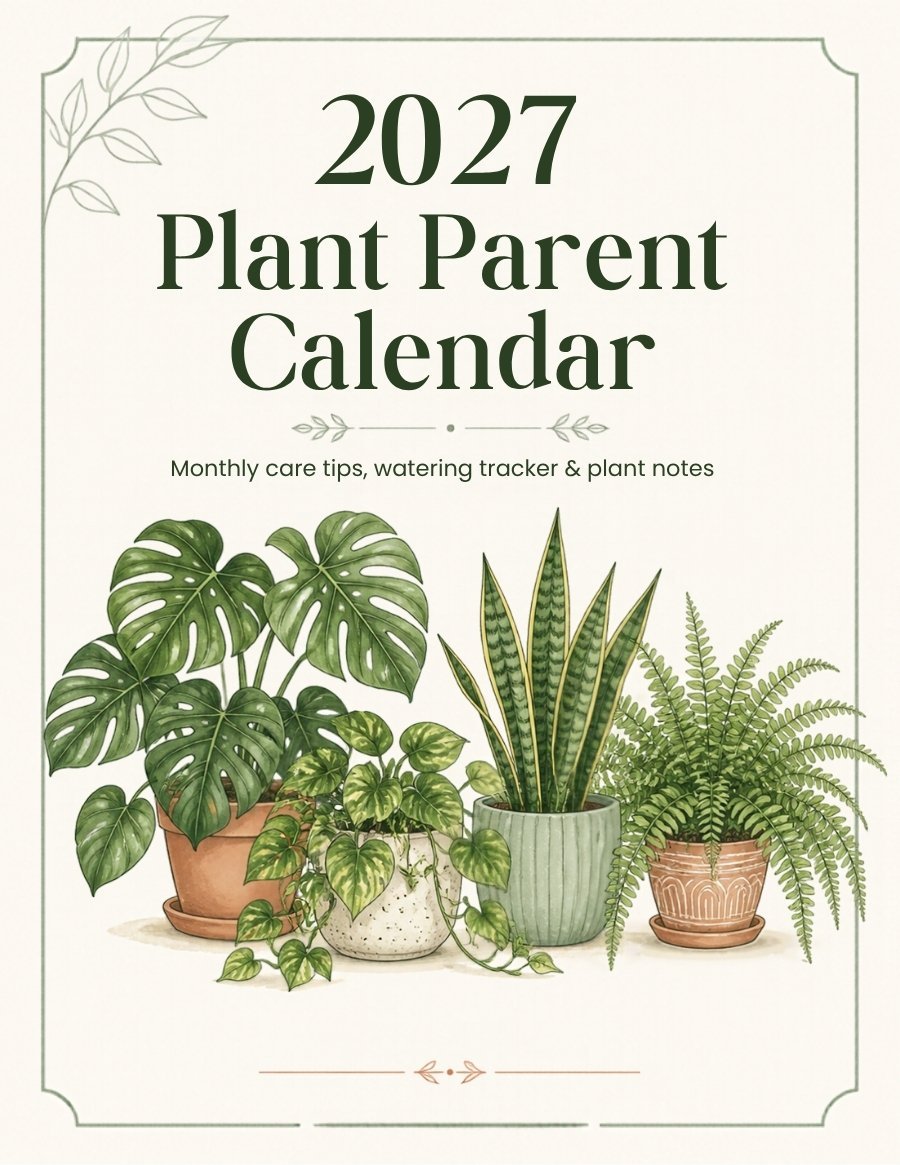
Get your free 2027 Plant Parent Calendar
14 beautiful printable pages to keep your houseplants happy all year. Enter your name and email and we'll send it straight to your inbox.
You're in!
Thank you, plant friend! 🪴
Your calendar is on its way to your inbox (check Promotions or Spam if you don't see it in a few minutes). You can also download it right now:
⬇ Download the 2027 calendar (PDF)
[…] own toxic plants? See our Monstera deliciosa care guide and snake plant care guide for how to grow them safely out of […]
[…] plant care guides: Spider plant care · Snake plant care · Monstera care · ZZ plant care · Fiddle leaf fig care · Bird of paradise care · Lucky bamboo […]
[…] plant care guides: Snake plant care · Monstera care · Spider plant care · Fiddle leaf fig care · Bird of paradise care · Lucky bamboo care · […]
[…] plant care guides: Snake plant care · Monstera care · Spider plant care · Fiddle leaf fig care · ZZ plant care · Bird of paradise care · Orchid […]
[…] plants such as monstera, pothos and philodendrons grow bigger leaves when they have something to climb. Keep the moss […]