Special Offer: Use code ILOVEPLANTS for 25% off on all digital products! Shop Now →

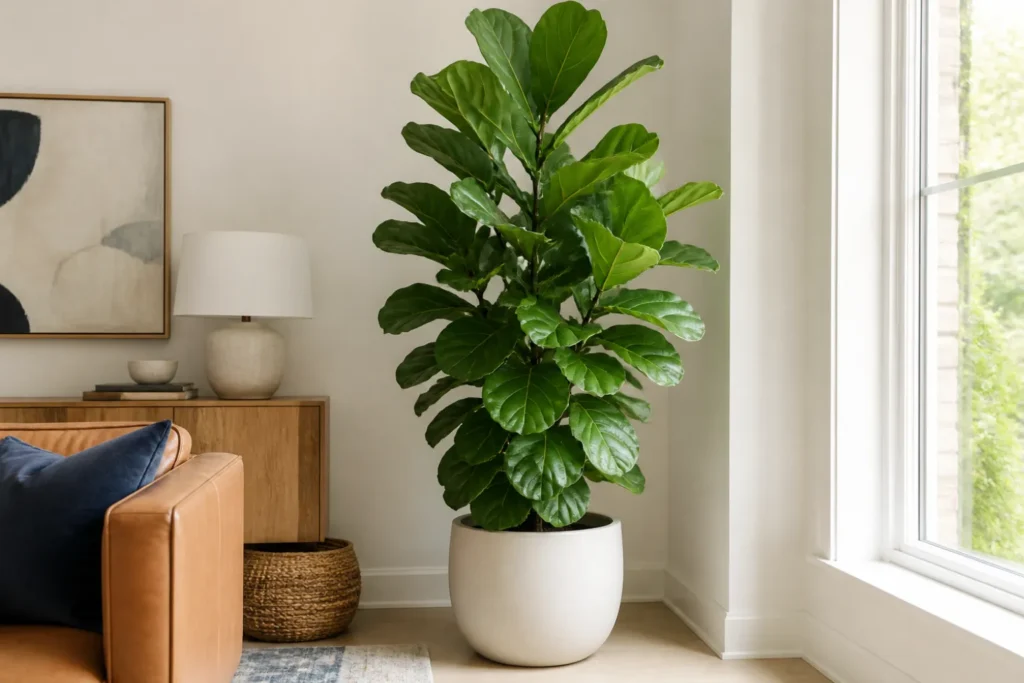
The fiddle leaf fig (Ficus lyrata) is the statement plant everyone wants: tall, sculptural, with huge glossy violin-shaped leaves. It also has a reputation for being dramatic. One week it looks perfect, the next it drops leaves or gets brown spots. Good fiddle leaf fig care comes down to a few simple habits.
The good news: a fiddle leaf fig is not hard once you understand what it wants. It craves bright light, steady watering and a spot it can stay in. This guide covers light, watering, soil, feeding, pruning, propagation and quick fixes for every common problem.
Short answer: Give your fiddle leaf fig bright, indirect light with some gentle direct morning sun, ideally right by an east, south or west window. Water thoroughly when the top 1 to 2 inches of soil are dry, usually every 7 to 10 days, and let the excess drain away. Keep it between 60 and 80°F (15 to 27°C), away from drafts, and avoid moving it around. Most leaf drop and brown spots come from too little light, overwatering or sudden changes.
In this guide
Fiddle leaf fig care at a glance
| Need | What your fiddle leaf fig wants |
|---|---|
| Light | Very bright, indirect light plus a few hours of gentle direct sun. The brighter the better indoors. |
| Water | When the top 1 to 2 inches of soil are dry, about every 7 to 10 days. Less in winter. |
| Soil | Chunky, fast-draining indoor plant mix with bark and perlite. |
| Temperature | 60 to 80°F (15 to 27°C). Keep above 55°F (13°C) and away from drafts. |
| Humidity | 40 to 60% is ideal; average homes are usually fine. |
| Fertilizer | Liquid fertilizer monthly in spring and summer. |
| Repotting | Every 1 to 2 years in spring, one pot size up. |
| Pet safety | Toxic to cats and dogs if chewed (ASPCA). |
| Difficulty | Moderate. Easy once you find the right spot. |
Light: the number one key to a happy fiddle leaf fig
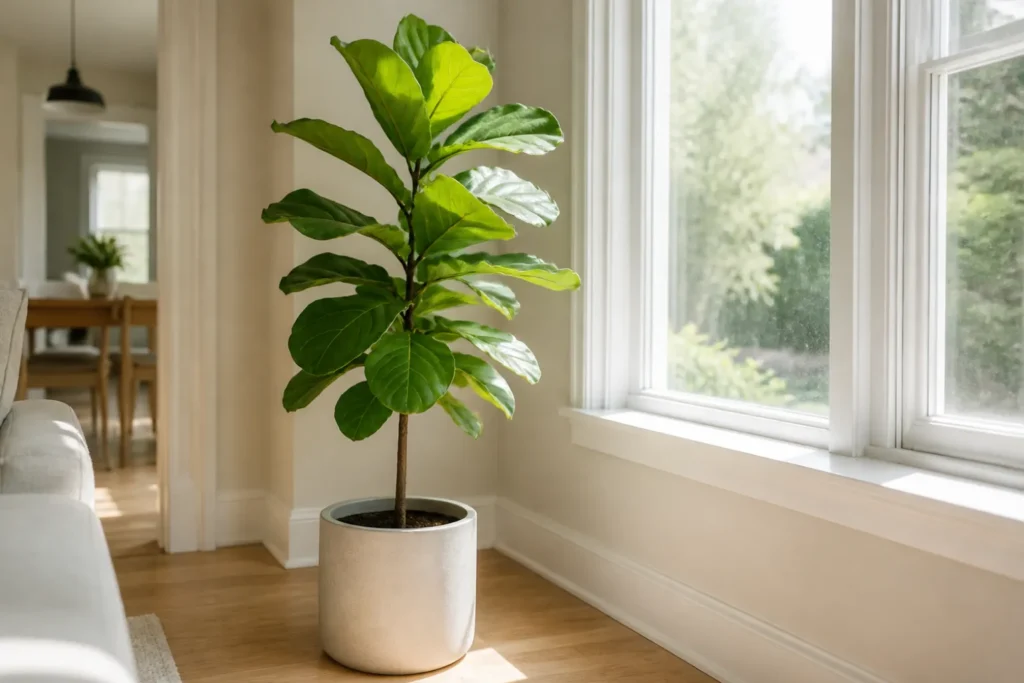
In nature, fiddle leaf figs grow as tall trees in full tropical sun. Indoors, the most common reason they struggle is not enough light. Place yours right next to a bright window, within about 3 feet, where it sees the sky most of the day.
- Best spot: by an east-facing window for gentle morning sun, or near a south or west window with a sheer curtain to soften hot afternoon sun.
- Too little light: slow growth, small new leaves, leaning toward the window and dropping lower leaves.
- Too much harsh sun too fast: pale or bleached patches. Increase sun gradually over a couple of weeks.
- Rotate the pot a quarter turn every few weeks so the tree grows straight instead of leaning.
Learn how to judge your windows in our houseplant light guide.
How often to water a fiddle leaf fig
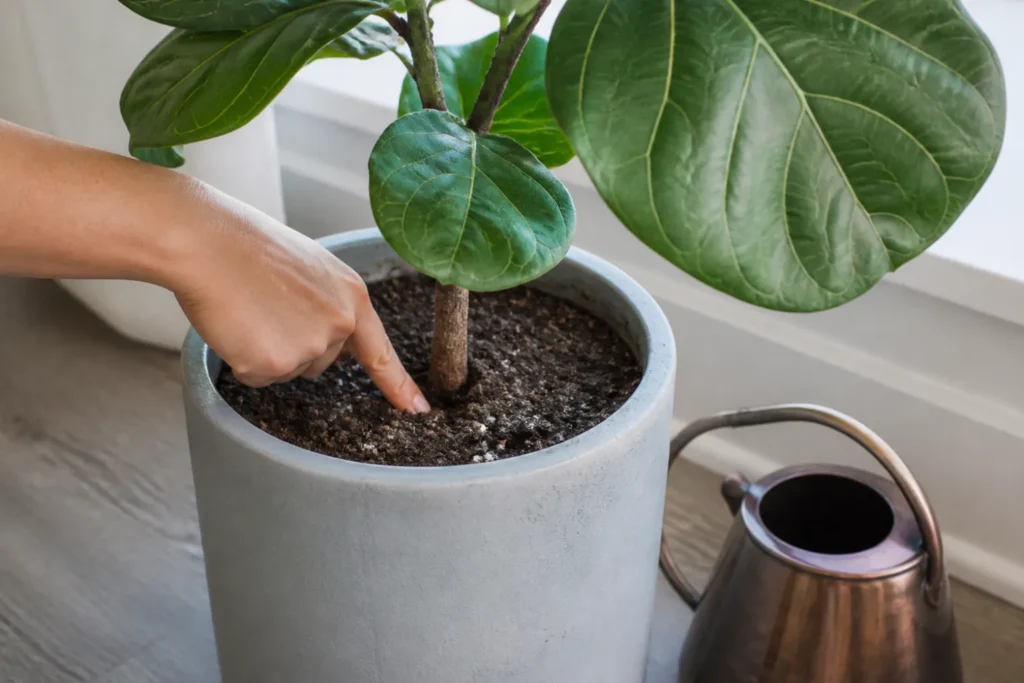
Water when the top 1 to 2 inches of soil are dry. For most homes that is about once every 7 to 10 days in spring and summer and every 2 to 3 weeks in winter. A fiddle leaf fig likes a deep, thorough drink followed by a chance to dry out, not small sips every few days.
- Push a finger or a moisture meter 2 inches into the soil. Only water if it feels dry.
- Water slowly until it flows out of the drainage holes, so the whole root ball gets wet.
- Empty the saucer after 15 minutes. Never let the pot sit in water.
- Keep to a steady rhythm. Big swings between soaked and bone dry stress the plant.
Overwatering is the most common killer. Soggy soil leads to root rot, which shows up as dark brown spots on the leaves and sudden leaf drop. If the soil is still wet a week after watering, your plant needs more light, a better draining mix or a smaller pot. See how to treat root rot.
More watering tips are in our guide to watering houseplants.
Best soil and pot
Use a chunky, fast-draining mix: about two parts quality indoor potting mix, one part orchid bark and one part perlite works well. The roots need air as much as water.
Always choose a pot with drainage holes, only 2 inches wider than the root ball. A pot that is too big holds extra wet soil that the roots cannot reach, which invites rot. Read more in our potting soil guide.
Temperature, humidity and drafts
Fiddle leaf figs like steady warmth between 60 and 80°F (15 to 27°C). Cold drafts from doors and windows, or hot dry air blowing from heaters and air conditioners, can make leaves drop or develop crispy brown edges.
Average home humidity of 40 to 60% is fine. In very dry winter air, group plants together or run a humidifier nearby. See our humidity guide and temperature guide.
Do not keep moving it. Fiddle leaf figs are famous for sulking after a move. Pick the brightest suitable spot and leave it there. A few dropped leaves after bringing a new plant home is normal; it will settle in within a few weeks.
Fertilizing your fiddle leaf fig
Feed monthly in spring and summer with a liquid fertilizer made for indoor plants or a fiddle leaf fig formula (a ratio like 3-1-2 suits leafy growth). Skip feeding in fall and winter when growth slows.
Always water before feeding and follow the label. Too much fertilizer burns roots and causes brown leaf edges. Our fertilizing guide explains how much and how often.
Pruning, cleaning and making it bushier
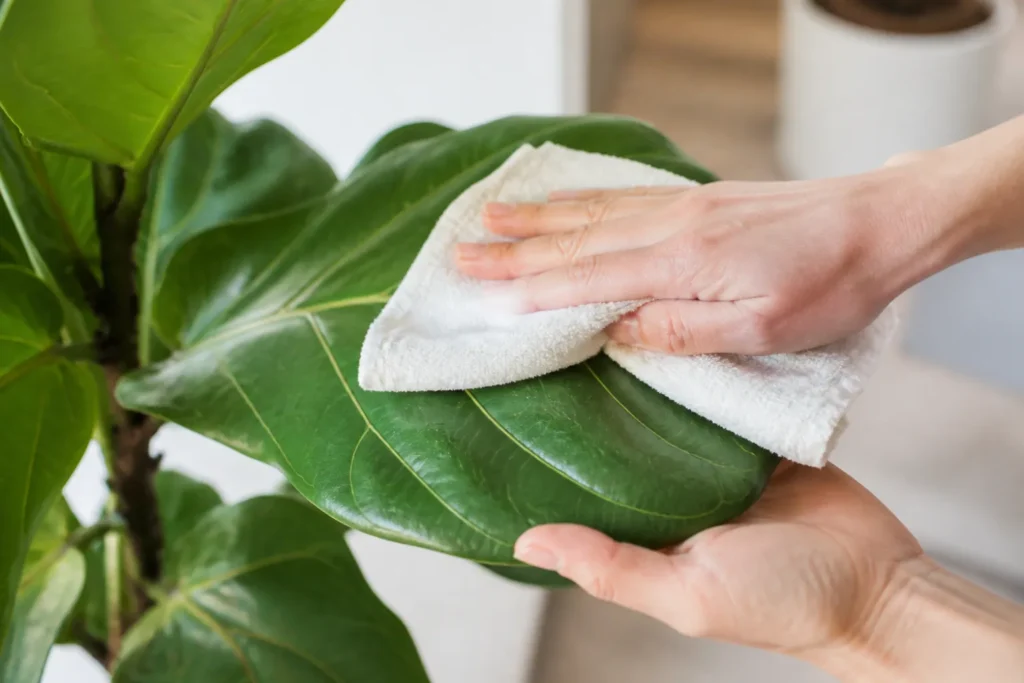
Big leaves collect dust, which blocks light. Wipe the leaves with a soft damp cloth every few weeks, supporting each leaf from below. It keeps them glossy and helps the plant photosynthesize.
- To make it fuller: in spring or early summer, cut the top stem just above a leaf. New branches usually grow from the 1 to 3 nodes below the cut.
- To control height: cut the main stem back to the height you want; it will branch below the cut.
- Remove damaged leaves close to the stem with clean, sharp shears.
- Expect a little milky sap from cuts. It can irritate skin, so wear gloves.
See our pruning guide for where exactly to cut.
How to propagate a fiddle leaf fig
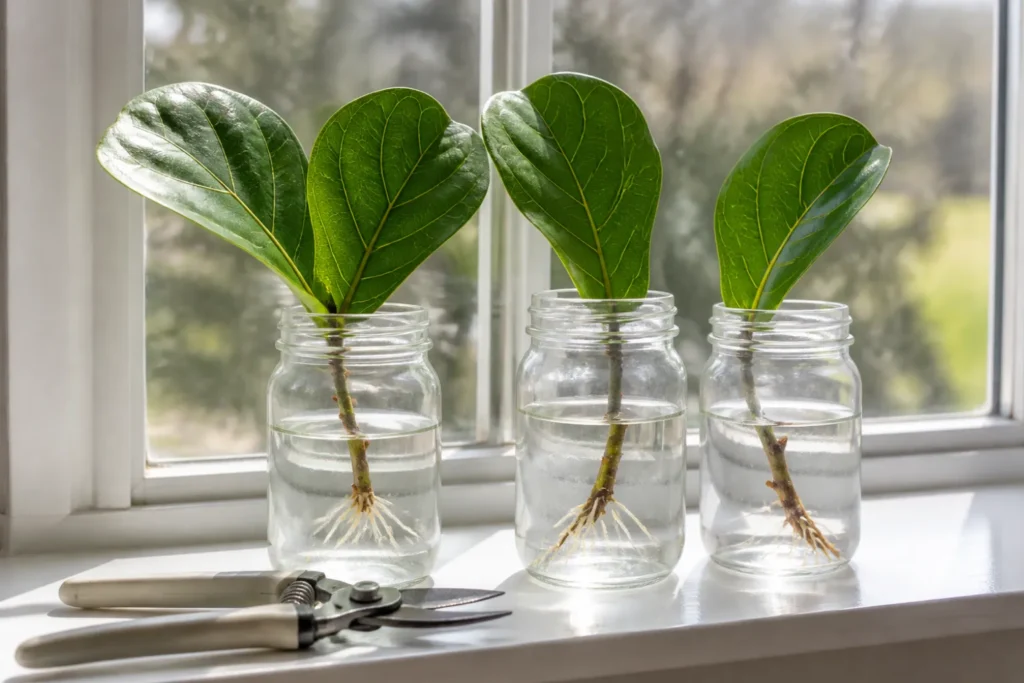
The easiest way is with stem cuttings, and pruning gives you free cuttings at the same time.
- Cut a healthy stem piece 6 to 12 inches long with 2 or 3 leaves, just below a node.
- Remove the lowest leaf so no leaves sit in the water.
- Place the cutting in a jar of clean water in bright, indirect light. Change the water weekly.
- Roots appear in about 3 to 6 weeks. Pot it up in a small pot of chunky mix once roots are 2 inches long.
You can also root cuttings directly in moist potting mix. Read more in how to propagate houseplants.
How to repot a fiddle leaf fig
Repot every 1 to 2 years in spring when roots circle the pot or grow out of the drainage holes. Move up just one size (2 inches wider), loosen the outer roots, trim any mushy ones and use fresh chunky mix. Large trees that are hard to repot can just get the top 2 inches of soil replaced each spring. See our repotting guide.
Common fiddle leaf fig problems and fixes
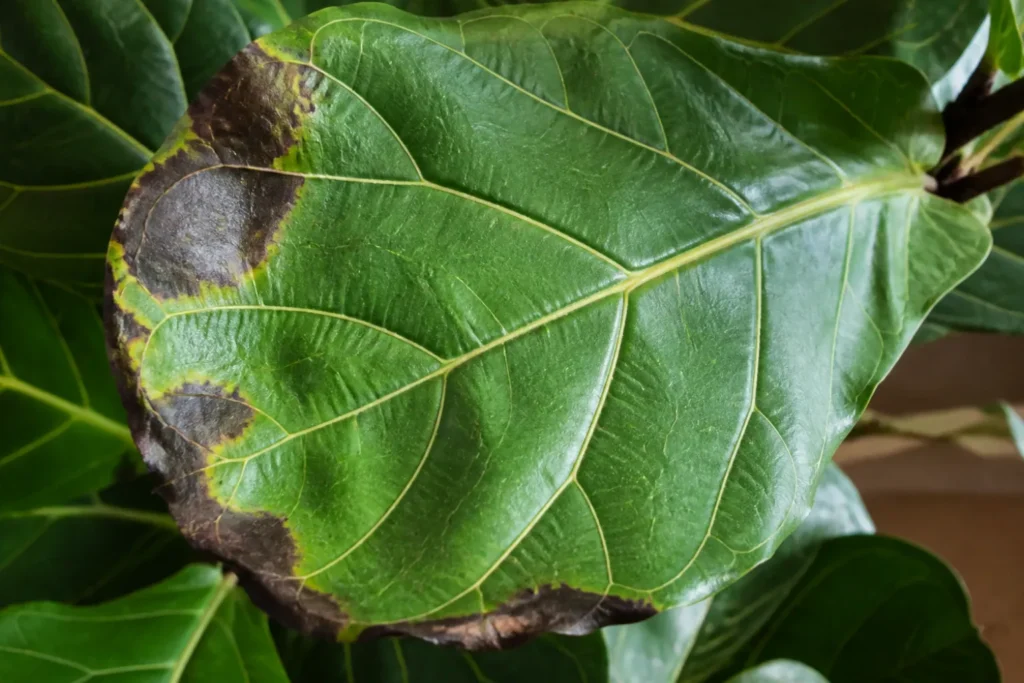
Dark brown spots on the leaves
Spot it: Dark brown or black patches, often starting at the edges or in the middle of lower leaves, sometimes with yellowing around them.
Why it happens: Usually root rot from overwatering, heavy soil or poor drainage, often combined with low light.
Fix it: Check the roots. Trim black, mushy roots, repot in fresh chunky mix and water only when the top 2 inches are dry. Remove badly damaged leaves.
Prevent it: Bright light, a draining pot and watering by soil feel, not on a fixed schedule.
Dropping leaves
Spot it: Healthy-looking or slightly yellow leaves fall, often the lower ones first.
Why it happens: A recent move, cold drafts, sudden temperature changes, too little light, or watering problems in either direction.
Fix it: Find a bright, stable spot away from vents and doors and keep watering steady. Leaf drop after a move usually stops within a few weeks.
Prevent it: Choose its home once and leave it there; rotate instead of relocating.
Light brown, crispy edges
Spot it: Dry, tan or light brown edges and tips that feel crunchy.
Why it happens: Underwatering, very dry air or too much fertilizer.
Fix it: Water thoroughly when the top 2 inches are dry and raise humidity in winter. Flush the soil if you have been feeding heavily.
Prevent it: Water deeply and consistently, and feed only in the growing season.
Red or brown dots on new leaves
Spot it: Tiny reddish-brown speckles on young leaves.
Why it happens: Edema, when the plant takes up water faster than it can use it, often from uneven watering.
Fix it: Usually harmless. The spots fade as leaves mature. Even out your watering rhythm.
Prevent it: Consistent watering and good light.
Leaning or no new growth
Spot it: The tree leans to one side, or it has not grown new leaves for months in spring and summer.
Why it happens: Not enough light, or always facing the same side to the window.
Fix it: Move it closer to the window or add a grow light, and rotate it a quarter turn every few weeks.
Prevent it: Bright light and regular rotation.
Also check for pests like spider mites and scale on the undersides of leaves; our houseplant pests guide shows how to treat them. If your tree is struggling badly, try our guide to reviving a dying houseplant.
Is a fiddle leaf fig toxic to pets?
Yes. The ASPCA lists the fiddle leaf fig as toxic to cats and dogs. Its milky sap can irritate the mouth and cause drooling and vomiting if chewed. Keep it out of reach of curious pets, or choose one of our pet-friendly houseplants instead.
More plant care guides: Snake plant care · Monstera care · Spider plant care · ZZ plant care · Bird of paradise care · Lucky bamboo care · Orchid care · Peace lily care
Brown spots spreading or leaves still dropping?
The Houseplant Rescue Guide matches 26 common plant problems to a clear photo, then gives you simple steps to fix each one and stop it coming back. No jargon, 50 pages, with printable checklists.
Quick action checklist
- Place it within 3 feet of your brightest window.
- Water deeply when the top 1 to 2 inches are dry; empty the saucer.
- Use a chunky, fast-draining mix and a pot with drainage holes.
- Keep it between 60 and 80°F, away from drafts and vents.
- Rotate a quarter turn every few weeks; do not keep moving it.
- Wipe leaves with a damp cloth every few weeks.
- Feed monthly in spring and summer only.
- Prune the top in spring for a fuller, branching tree.
- Track watering and new leaves in a printable plant journal.
Fiddle leaf fig care FAQ
How often should I water a fiddle leaf fig?
Water when the top 1 to 2 inches of soil are dry, which is usually every 7 to 10 days in spring and summer and every 2 to 3 weeks in winter. Water thoroughly and let the excess drain.
Why is my fiddle leaf fig dropping leaves?
Leaf drop is usually caused by a recent move, cold drafts, too little light or watering problems. Keep it in a bright, stable spot and water consistently, and it should recover.
What causes brown spots on fiddle leaf fig leaves?
Dark brown spots usually mean root rot from overwatering. Light brown, crispy edges mean underwatering or dry air. Small red dots on new leaves are edema and usually fade.
Can a fiddle leaf fig take direct sun?
Yes, gentle direct sun is good for it, especially morning sun. Increase direct sun gradually to avoid scorching, and filter strong afternoon sun with a sheer curtain.
How do I make my fiddle leaf fig bushier?
Prune the top of the main stem just above a leaf in spring or early summer. New branches usually grow from the nodes just below the cut.
Is a fiddle leaf fig safe for cats and dogs?
No. Fiddle leaf figs are toxic to cats and dogs. The sap can irritate the mouth and stomach and cause drooling and vomiting.
How fast does a fiddle leaf fig grow?
In bright light, a healthy indoor fiddle leaf fig can grow 1 to 2 feet per year, mostly in spring and summer. In low light it may barely grow.
Sources and further reading
Want to go deeper? These university extension and expert resources cover the same topic:
- NC State Extension Plant Toolbox: Ficus lyrata (fiddle leaf fig)
- ASPCA: Toxic and non-toxic plants list

[…] plant care guides: Snake plant care · Monstera care · Spider plant care · Fiddle leaf fig care · ZZ plant care · Lucky bamboo […]
[…] plant care guides: Snake plant care · Monstera care · Spider plant care · Fiddle leaf fig care · ZZ plant care · Bird of paradise care · Orchid […]
[…] plant care guides: Snake plant care · Spider plant care · Fiddle leaf fig care · ZZ plant care · Bird of paradise care · Lucky bamboo care · Orchid […]
[…] lutescens. Big, feathery and tropical; a pet-safe alternative to a fiddle leaf fig as a statement […]