Special Offer: Use code ILOVEPLANTS for 25% off on all digital products! Shop Now →

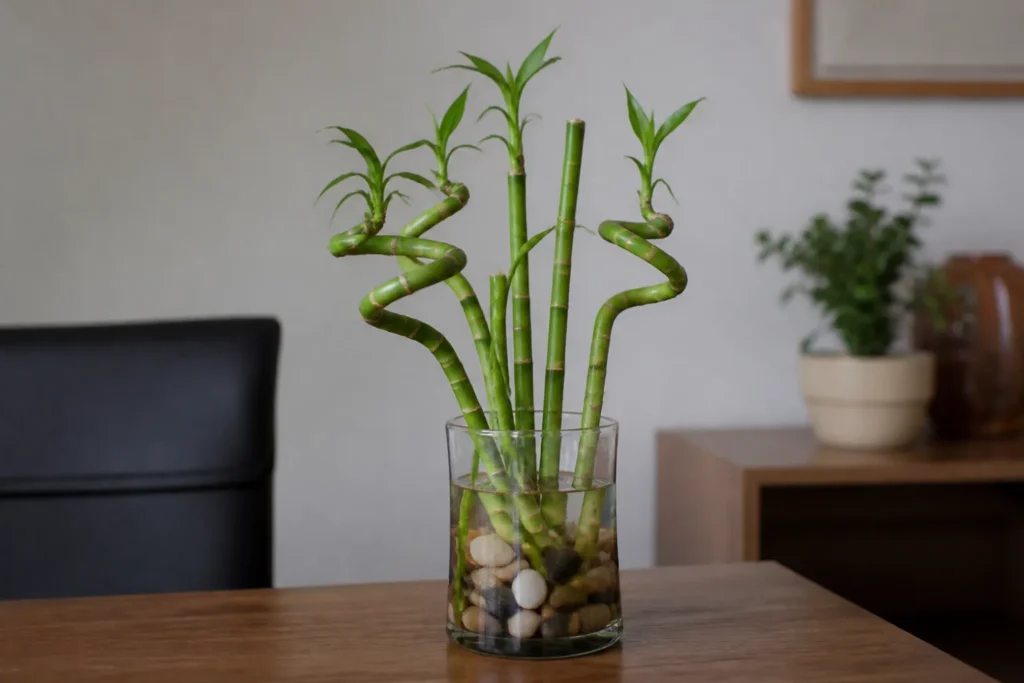
Lucky bamboo is one of the easiest plants to keep alive, and one of the most popular gifts for good luck, new homes and new businesses. It grows happily in a vase of water on a desk or shelf, with almost no fuss. Lucky bamboo care takes just a few minutes a month.
Here is a surprise: lucky bamboo is not bamboo at all. It is a dracaena (Dracaena sanderiana) trained into straight, spiral or braided stalks. This guide covers how to grow it in water or soil, the best light, the right water, feeding, trimming, propagation and how to fix yellow leaves and stalks.
Short answer: Keep lucky bamboo in bright, indirect light, out of direct sun. In water, keep the roots covered with 1 to 3 inches of filtered, distilled or rain water and change it every 1 to 2 weeks. In soil, water when the top inch is dry. Keep it between 65 and 90°F (18 to 32°C) and feed only with a very weak fertilizer every 1 to 2 months. Yellow leaves usually come from chlorine or fluoride in tap water, too much sun or too much fertilizer.
In this guide
Lucky bamboo care at a glance
| Need | What your lucky bamboo wants |
|---|---|
| Light | Bright to medium, indirect light. No harsh direct sun. |
| Water (in a vase) | Roots covered with 1 to 3 inches of water; change every 1 to 2 weeks. |
| Water type | Filtered, distilled, bottled spring or rain water. Avoid chlorinated or fluoridated tap water. |
| Water (in soil) | When the top inch of soil is dry; keep lightly moist, never soggy. |
| Temperature | 65 to 90°F (18 to 32°C). Keep above 50°F (10°C). |
| Fertilizer | A drop of diluted liquid fertilizer every 1 to 2 months, or none. |
| Container | Clean glass or ceramic vase with pebbles, or a small pot with drainage. |
| Pet safety | Toxic to cats and dogs (ASPCA). |
| Difficulty | Very easy, perfect for desks and beginners. |
Light: bright but indirect
Lucky bamboo grows naturally under a forest canopy, so it likes bright to medium, indirect light. A spot a few feet from a window, or on a desk in a bright office, is ideal.
- Too much direct sun: scorched, yellow or brown leaves.
- Too little light: pale leaves, slow growth and stretched, leggy new shoots.
- Office lighting: lucky bamboo copes well under fluorescent or LED lights.
- Rotate the container every week or two so the shoots grow straight.
Read our houseplant light guide to judge your spot.
Growing lucky bamboo in water

Most lucky bamboo is sold in water, and it can live that way for years if you keep the water clean.
- Keep the roots fully covered with 1 to 3 inches of water. Do not submerge more of the stalks than needed.
- Change the water every 1 to 2 weeks, or sooner if it looks cloudy or smells.
- Rinse the vase and pebbles each time to stop algae and bacteria building up.
- Top up between changes as water evaporates.
The water type matters most. Lucky bamboo is very sensitive to chlorine and fluoride in tap water, which turn the leaf tips brown and the leaves yellow. Use filtered, distilled, bottled spring or rain water. If you must use tap water, let it sit out uncovered for 24 hours first so chlorine can escape (this does not remove fluoride).
Algae in the vase? Green slime grows when light hits the water. Clean the vase, change the water more often, and switch to an opaque or colored container if it keeps coming back.
Growing lucky bamboo in soil
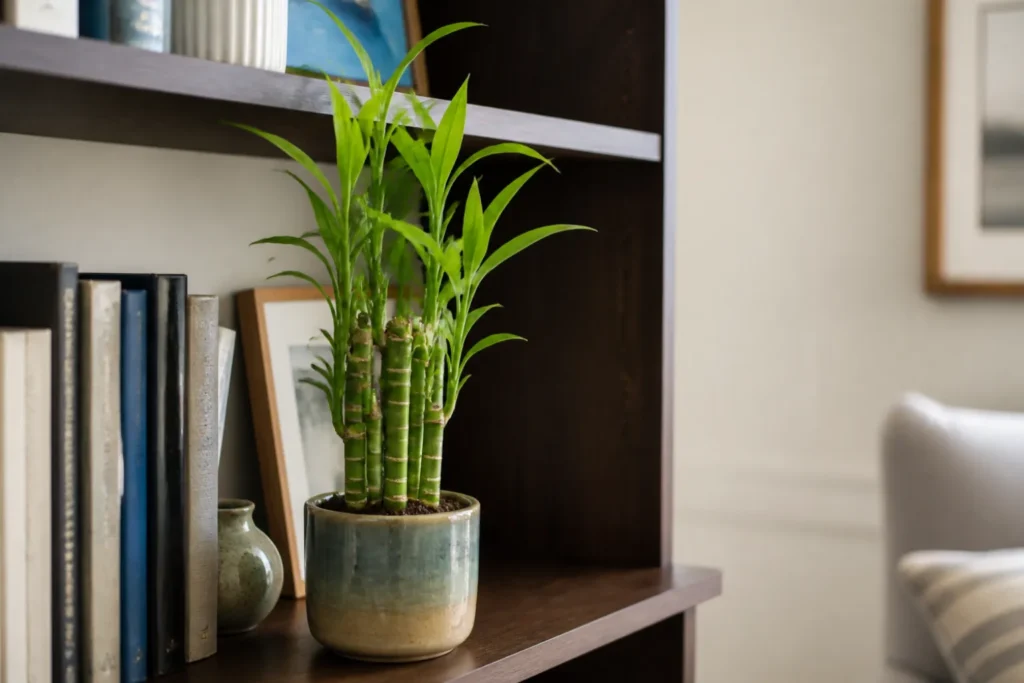
Lucky bamboo also grows well, and often lives longer, in soil. Use a well-draining indoor potting mix in a pot with drainage holes, and keep the soil lightly moist but never soggy: water when the top inch feels dry.
To move a water-grown plant into soil, plant it at the same depth, water it well and keep the soil a little moister than usual for the first few weeks while new soil roots form. Learn more about mixes in our potting soil guide.
Temperature and humidity
Keep lucky bamboo between 65 and 90°F (18 to 32°C). It dislikes cold, so keep it above 50°F (10°C) and away from air conditioning vents, heaters and cold windows. Average household humidity is fine. See our temperature guide.
Fertilizing lucky bamboo
Lucky bamboo needs very little food. In water, add a single drop of liquid houseplant fertilizer (or a fertilizer made for lucky bamboo) every 1 to 2 months when you change the water. In soil, feed with very diluted liquid fertilizer every couple of months in spring and summer. Too much fertilizer is a common cause of yellow leaves. See our fertilizing guide.
Trimming and propagating lucky bamboo
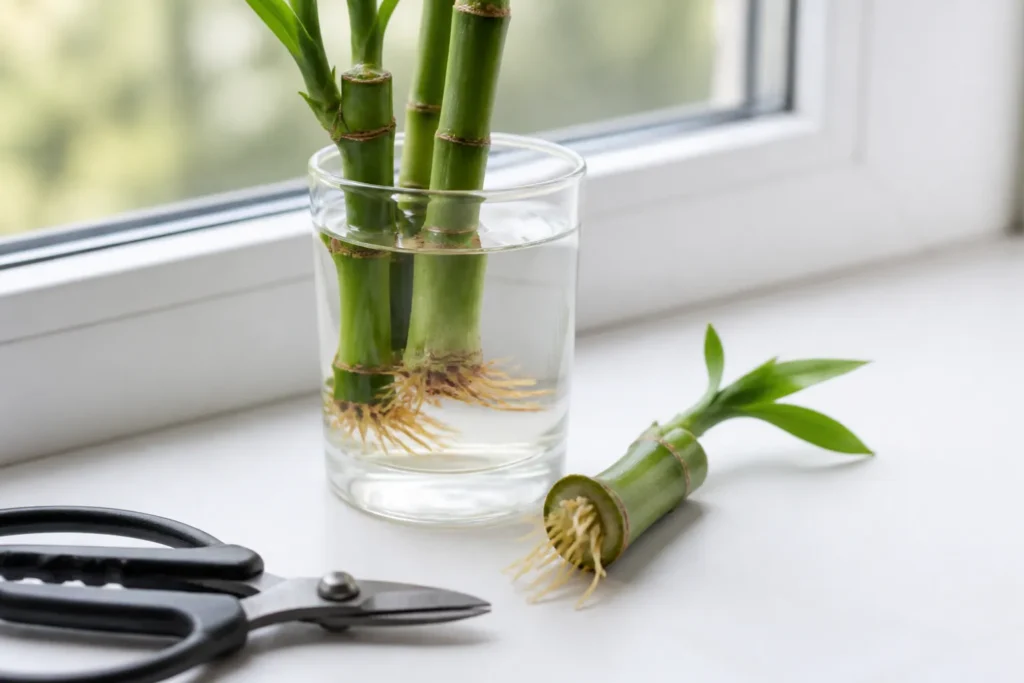
Lucky bamboo stalks do not grow taller once cut; new growth comes from side shoots along the stalk. If shoots get too long or leggy, trim them back with clean, sharp scissors close to the main stalk. New shoots will grow from just below the cut.
- Cut a healthy offshoot that has at least one leaf node, ideally 4 to 6 inches long.
- Remove the lowest leaves so none sit in the water.
- Place the cutting in a small container of clean, filtered water in bright, indirect light.
- Change the water weekly. Roots form in about 3 to 6 weeks.
- Keep it in water or pot it in soil once roots are an inch or two long.
Want to try other plants too? See how to propagate houseplants and our pruning guide.
Lucky bamboo stalk meanings and arrangements
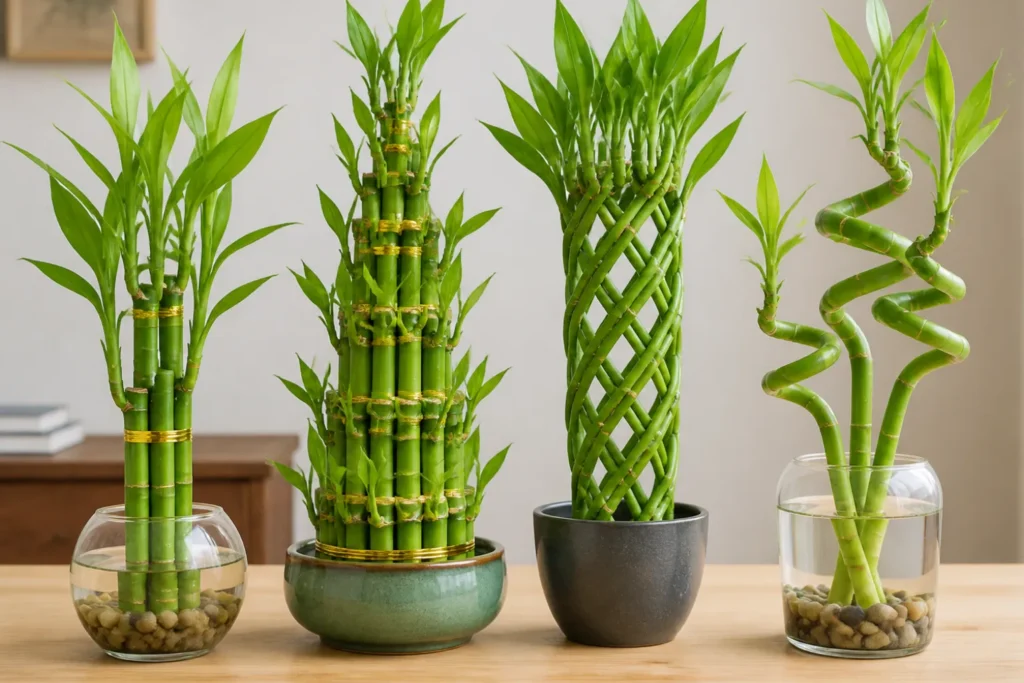
In feng shui, lucky bamboo is a symbol of good fortune, and the number of stalks is said to carry a meaning. These are traditional beliefs, but they make lucky bamboo a thoughtful gift.
| Stalks | Traditional meaning |
|---|---|
| 2 | Love and partnership |
| 3 | Happiness, wealth and long life |
| 5 | Health and balance |
| 6 | Good luck and wealth |
| 7 | Good health |
| 8 | Growth and abundance |
| 9 | Great luck |
| 10 | Perfection and completeness |
| 21 | A powerful blessing |
Four stalks are traditionally avoided, because the word for four sounds like the word for death in Chinese. Spiral, braided and tiered tower arrangements are trained by growers; once you buy them, simply keep caring for them the same way and trim stray shoots to keep the shape.
Common lucky bamboo problems and fixes
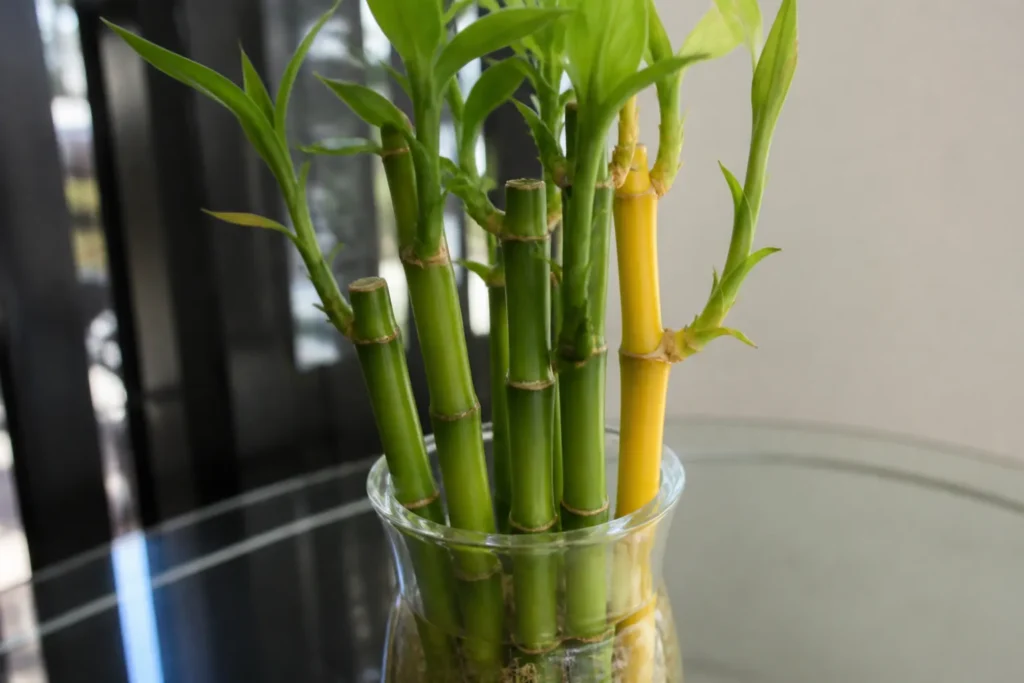
Yellow leaves
Spot it: Leaves turn yellow, from the tips or all over.
Why it happens: Chlorine or fluoride in tap water, too much direct sun, too much fertilizer, or old leaves aging.
Fix it: Switch to filtered, distilled or rain water, move out of direct sun and stop fertilizing for a while. Trim yellow leaves off.
Prevent it: Clean, chemical-free water and bright, indirect light. More causes in yellow leaves on houseplants.
Yellow or mushy stalk
Spot it: A stalk turns yellow from the base up, or feels soft.
Why it happens: Rot from bacteria in dirty water, too much fertilizer, or cold.
Fix it: Remove the yellow stalk right away so the rot does not spread. If the top is still green, cut it off above the yellow part and root it as a new cutting. Clean the vase and pebbles and refill with fresh water.
Prevent it: Change water every 1 to 2 weeks and rinse the vase each time.
Brown leaf tips
Spot it: Dry, brown tips on otherwise green leaves.
Why it happens: Fluoride or salts in water, dry air or fertilizer buildup.
Fix it: Trim the tips, switch water type and rinse the roots and container.
Prevent it: Filtered or rain water and very light feeding.
Smelly or cloudy water
Spot it: The water looks murky or smells bad, sometimes with slimy roots.
Why it happens: Bacteria and rotting roots in water that has not been changed.
Fix it: Rinse the roots, trim any brown, mushy roots, scrub the vase and pebbles and refill with fresh water.
Prevent it: Weekly to biweekly water changes.
Pale or stretched growth
Spot it: New shoots are thin, pale and floppy.
Why it happens: Too little light.
Fix it: Move to a brighter spot with indirect light and trim leggy shoots.
Prevent it: Bright, indirect light and regular rotation.
Lucky bamboo rarely gets pests, but check for mealybugs and spider mites in dry rooms. See our houseplant pests guide.
Is lucky bamboo toxic to pets?
Yes. Lucky bamboo is a type of dracaena, which the ASPCA lists as toxic to cats and dogs. Chewing it can cause vomiting, drooling and loss of appetite, and cats may get dilated pupils. Keep arrangements up high, out of reach of pets, or choose from our pet-friendly houseplants list.
More plant care guides: Snake plant care · Monstera care · Spider plant care · Fiddle leaf fig care · ZZ plant care · Bird of paradise care · Orchid care · Peace lily care
Yellow stalks or leaves that keep coming back?
The Houseplant Rescue Guide matches 26 common plant problems to a clear photo, then gives you simple steps to fix each one and stop it coming back. No jargon, 50 pages, with printable checklists.
Quick action checklist
- Place it in bright, indirect light, never in direct sun.
- In water, keep roots covered with 1 to 3 inches of water.
- Use filtered, distilled, bottled spring or rain water.
- Change the water and rinse the vase every 1 to 2 weeks.
- In soil, water when the top inch is dry.
- Keep it between 65 and 90°F, away from vents and cold glass.
- Feed only a drop of diluted fertilizer every 1 to 2 months.
- Remove yellow stalks quickly to stop rot spreading.
- Keep it out of reach of cats and dogs.
Lucky bamboo care FAQ
How often should I change lucky bamboo water?
Change the water every 1 to 2 weeks, or sooner if it becomes cloudy or smelly. Rinse the vase and pebbles each time to prevent algae and bacteria.
Can lucky bamboo grow in tap water?
It can, but chlorine and fluoride in tap water often cause yellow leaves and brown tips. Filtered, distilled, bottled spring or rain water is best. If using tap water, let it sit out for 24 hours first.
Why is my lucky bamboo turning yellow?
Yellow leaves are usually caused by chemicals in tap water, too much direct sun or too much fertilizer. A yellow stalk usually means rot and should be removed quickly.
Does lucky bamboo need sunlight?
Lucky bamboo needs bright, indirect light but not direct sun, which scorches the leaves. It also grows well under office lighting.
Is lucky bamboo real bamboo?
No. Lucky bamboo is Dracaena sanderiana, a tropical plant related to other dracaenas. It only looks like bamboo because of its segmented stalks.
Is lucky bamboo toxic to cats and dogs?
Yes. Lucky bamboo is a dracaena, which is toxic to cats and dogs and can cause vomiting, drooling and loss of appetite if chewed.
Can lucky bamboo live in soil?
Yes. Lucky bamboo grows well in a well-draining potting mix in a pot with drainage holes. Keep the soil lightly moist and water when the top inch is dry.
Sources and further reading
Want to go deeper? These university extension and expert resources cover the same topic:
- NC State Extension Plant Toolbox: Dracaena sanderiana (lucky bamboo)
- ASPCA: Toxic and non-toxic plants list

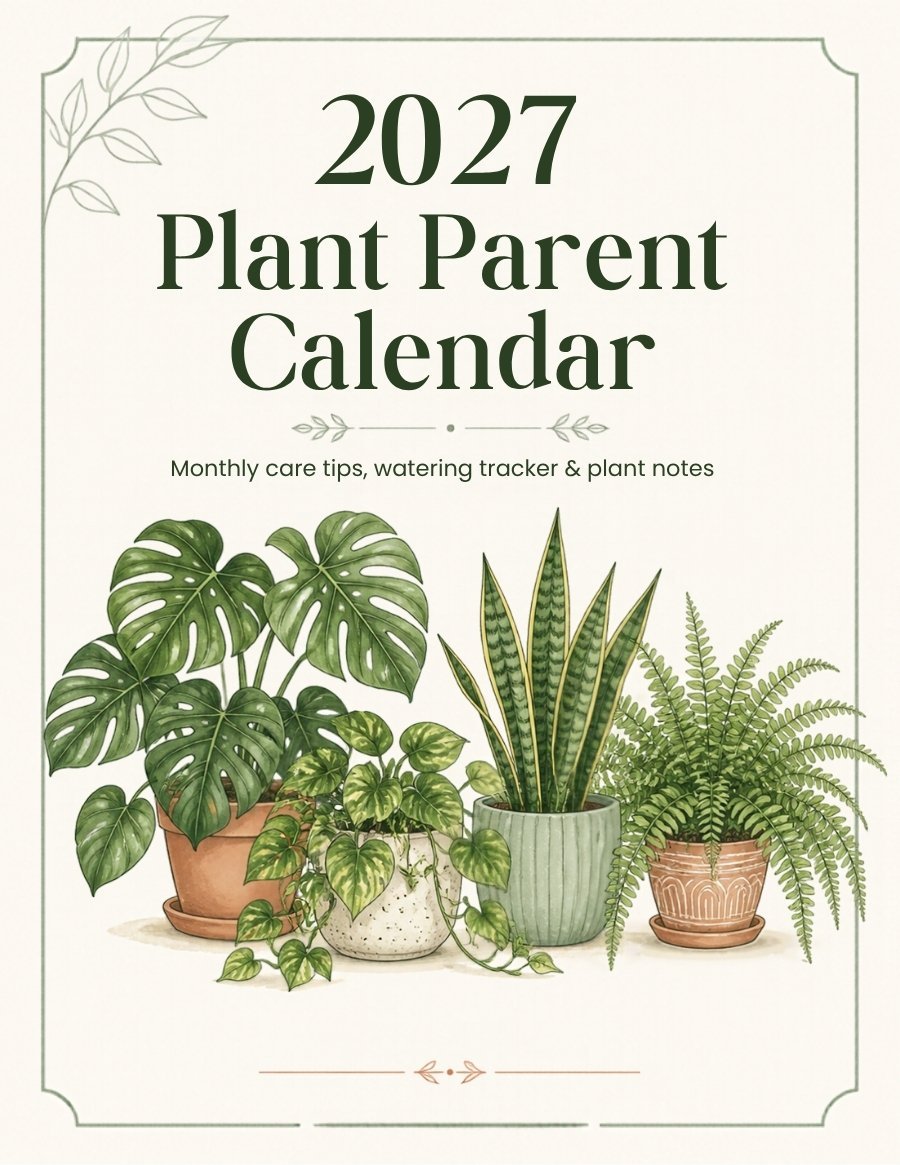
Free printable
Get your free 2027 Plant Parent Calendar
14 beautiful printable pages to keep your houseplants happy all year. Enter your name and email and we'll send it straight to your inbox.
You're in!
Thank you, plant friend! 🪴
Your calendar is on its way to your inbox (check Promotions or Spam if you don't see it in a few minutes). You can also download it right now:
⬇ Download the 2027 calendar (PDF)
[…] More plant care guides: Snake plant care · Monstera care · Spider plant care · Fiddle leaf fig care · Bird of paradise care · Lucky bamboo care […]
[…] More plant care guides: Snake plant care · Monstera care · Spider plant care · ZZ plant care · Bird of paradise care · Lucky bamboo care […]