Special Offer: Use code ILOVEPLANTS for 25% off on all digital products! Shop Now →

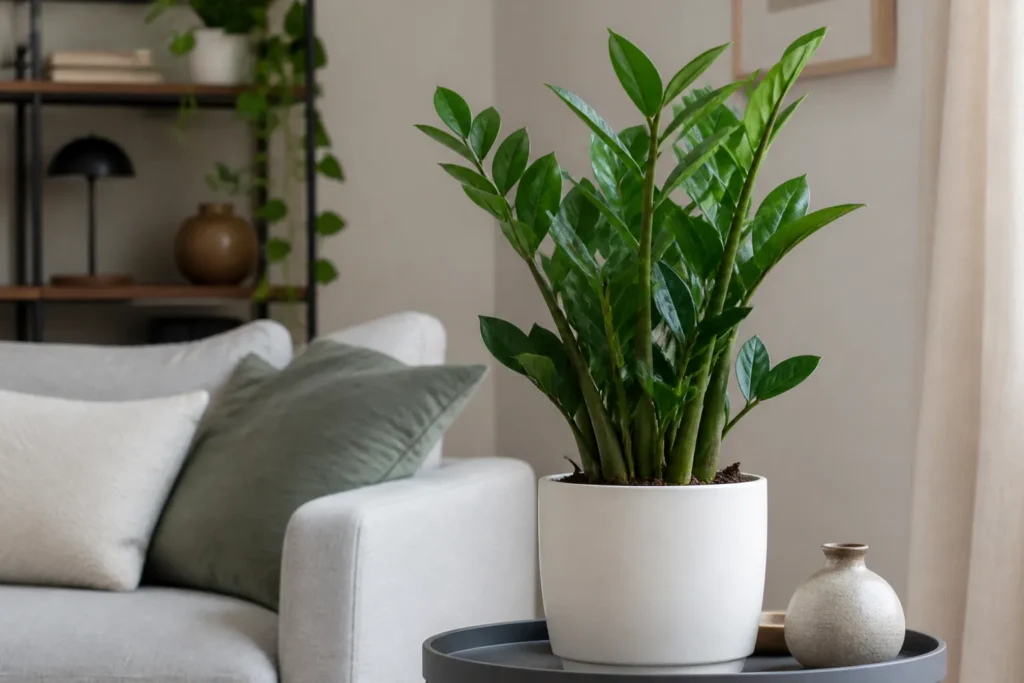
If you want a plant that looks glossy and lush while asking almost nothing of you, the ZZ plant (Zamioculcas zamiifolia) is it. It handles low light, dry air and forgotten waterings, which is why it shows up in offices, hallways and beginner plant collections everywhere. Good ZZ plant care is mostly about doing less, not more.
The one thing a ZZ plant cannot handle is too much love in the form of water. This guide covers exactly how much light and water it needs, plus soil, feeding, repotting, propagation and fixes for yellow leaves and other problems.
Short answer: Give your ZZ plant medium to bright, indirect light (it tolerates low light but grows slowly). Water only when the soil is completely dry, usually every 2 to 4 weeks, and even less in winter. Use a fast-draining mix and a pot with drainage holes, keep it between 60 and 85°F (15 to 29°C), and feed lightly a few times in spring and summer. Yellow leaves almost always mean overwatering.
In this guide
ZZ plant care at a glance
| Need | What your ZZ plant wants |
|---|---|
| Light | Medium to bright, indirect light. Tolerates low light; avoid harsh direct sun. |
| Water | When the soil is completely dry, about every 2 to 4 weeks. Less in winter. |
| Soil | Fast-draining mix: potting soil with perlite or cactus mix. |
| Temperature | 60 to 85°F (15 to 29°C). Keep above 45°F (7°C). |
| Humidity | Average home humidity is fine. |
| Fertilizer | Half-strength liquid fertilizer 2 to 3 times in spring and summer. |
| Repotting | Every 2 to 3 years, when rhizomes crowd or bulge the pot. |
| Pet safety | Not pet safe; can irritate the mouth and stomach if chewed. |
| Difficulty | Very easy, ideal for beginners and busy people. |
Light: how much does a ZZ plant need?
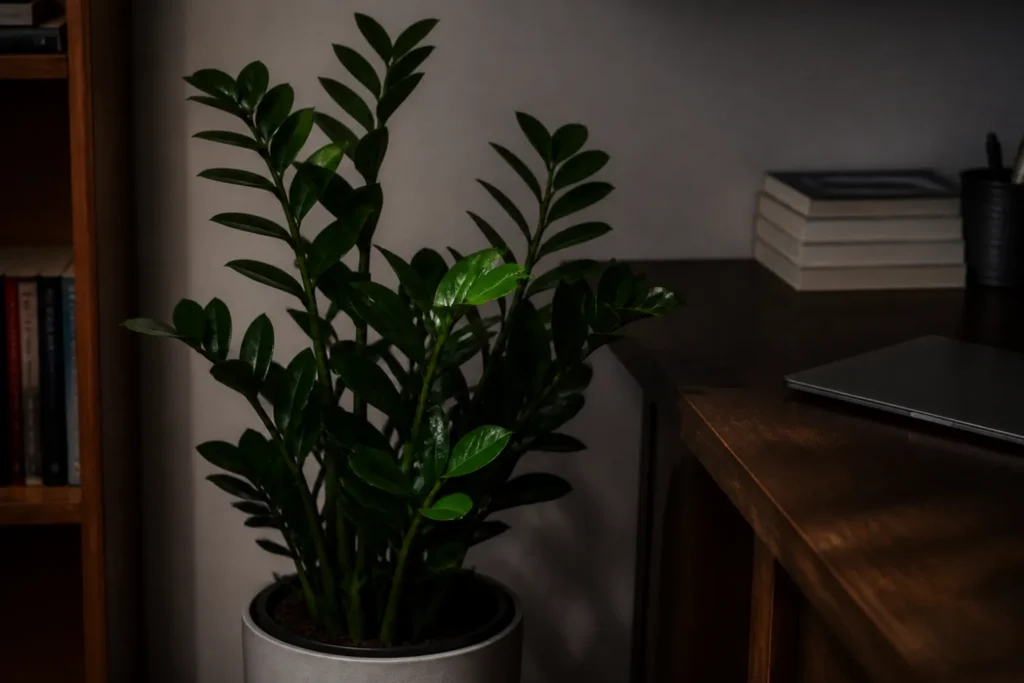
ZZ plants are famous for tolerating low light, but tolerating is not thriving. They grow fastest and fullest in medium to bright, indirect light, such as a few feet from an east or north window, or set back from a south or west window.
- Low light: survives happily but grows very slowly, with fewer new shoots. Water even less often here.
- Bright indirect light: more new stems, deeper green color, faster growth.
- Harsh direct sun: can scorch or yellow the leaves, especially in summer afternoons.
- Office plants: ZZ plants even grow under fluorescent and LED office lighting.
Not sure how bright your space is? Read our houseplant light guide.
How often to water a ZZ plant
Water only when the soil is completely dry all the way down. For most homes that is every 2 to 4 weeks in spring and summer and every 4 to 6 weeks in winter. In low light, it may be even less.
ZZ plants grow from thick, potato-like underground stems called rhizomes that store water. That is why they forgive drought and why soggy soil quickly rots them.
- Check the soil with your finger or a wooden skewer pushed to the bottom. Only water if it comes out dry.
- Water thoroughly until it drains from the bottom of the pot.
- Empty the saucer after 10 minutes.
- When in doubt, wait another week. Underwatering a ZZ is far safer than overwatering.
Signs you are overwatering: yellow leaves, mushy or brown stems at the soil line, a sour smell, or soil that stays wet for more than a week. Stop watering and check the rhizomes. See how to save a plant from root rot.
For more on technique, see how to water houseplants.
Best soil and pot
Use a fast-draining mix: regular indoor potting soil mixed about half and half with perlite, or a cactus and succulent mix with a little added bark. Avoid moisture-retaining mixes with lots of peat or water-holding crystals.
Choose a pot with drainage holes. Terracotta is a great choice because it breathes and helps soil dry out. ZZ rhizomes are strong enough to crack thin plastic pots when crowded. More in our potting soil guide.
Temperature and humidity
ZZ plants like normal room temperatures of 60 to 85°F (15 to 29°C). Keep them above 45°F (7°C) and away from freezing windows, cold drafts and heater vents.
They are not fussy about humidity, so average household air is fine. Read our temperature guide for winter tips.
Fertilizing a ZZ plant
ZZ plants need very little food. Feed with a balanced liquid fertilizer at half strength 2 to 3 times during spring and summer, and not at all in fall and winter. Too much fertilizer can burn the roots and cause brown leaf tips. See our fertilizing guide.
How to repot a ZZ plant
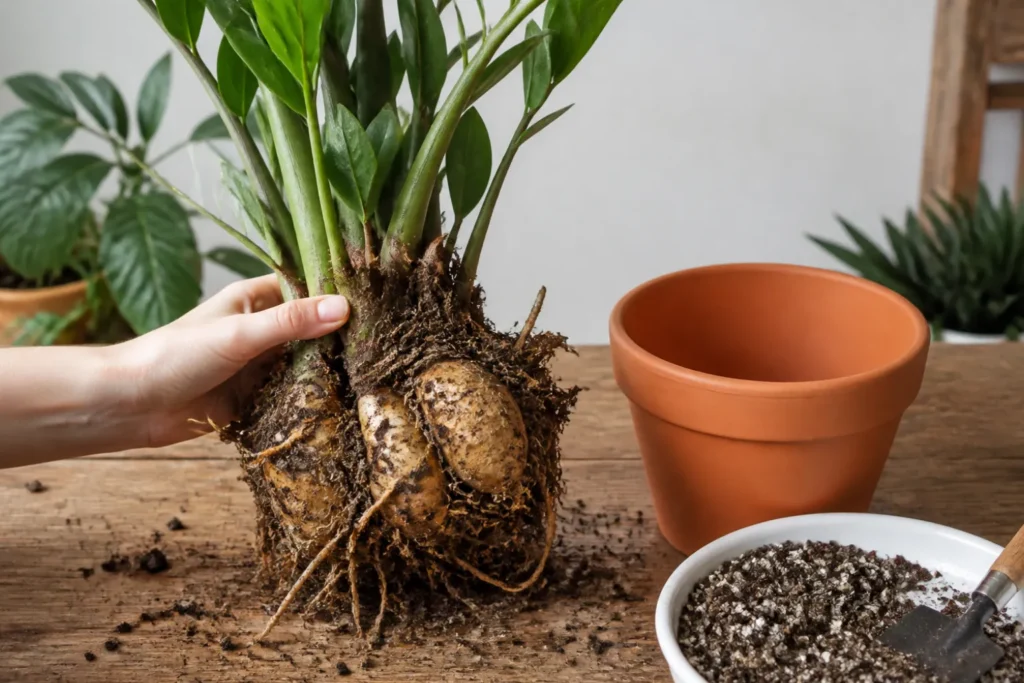
ZZ plants grow slowly and like being a little snug, so repot only every 2 to 3 years, in spring or summer, when rhizomes push against the pot, bulge it, or poke out the top of the soil.
- Let the soil dry out first; dry roots slide out more easily and heal faster.
- Gently ease the plant out and shake off old soil to see the rhizomes.
- Trim any soft, mushy or rotten rhizomes or roots with clean scissors.
- Replant at the same depth in a pot only 1 to 2 inches wider, with fresh fast-draining mix.
- Wait about a week before watering so any damaged roots can heal.
Large plants can also be divided into two or more plants, each with its own rhizomes and stems. Our repotting guide covers the basics.
How to propagate a ZZ plant
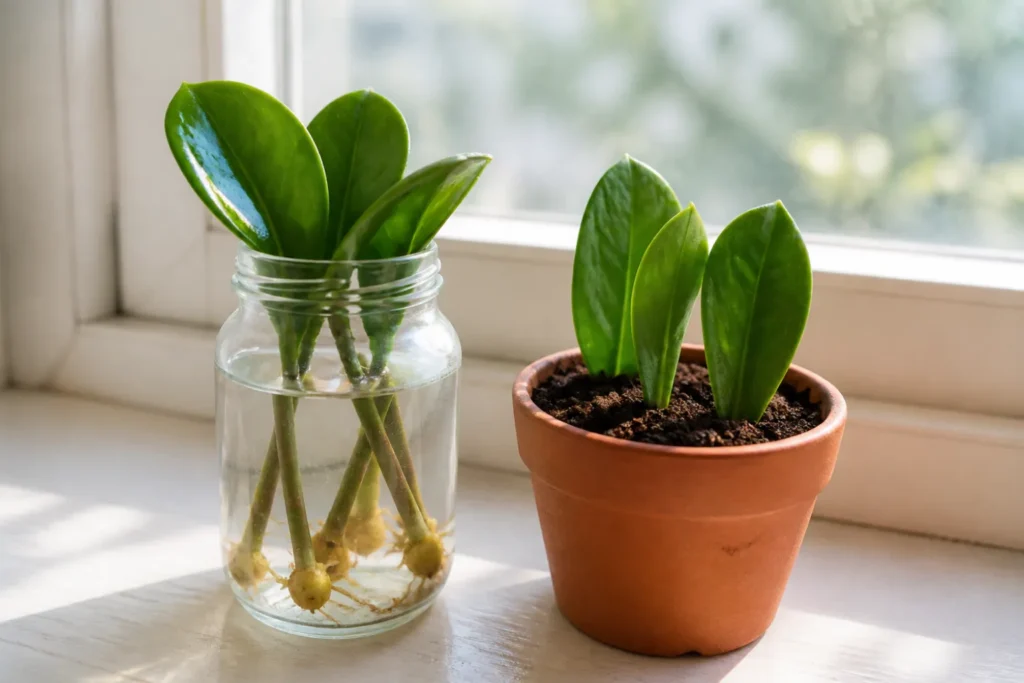
ZZ plants are easy but slow to propagate. Be patient: roots and new rhizomes can take a few months.
- Division (fastest): when repotting, separate clumps of rhizomes with stems attached and pot each one up.
- Stem cuttings in water: cut a whole stem near the base, place it in a jar of water in bright, indirect light and change the water weekly. Roots appear in 1 to 3 months.
- Leaf cuttings in soil: pull off healthy leaflets, let the ends dry for a day, then push them a third of the way into moist, gritty mix. Tiny rhizomes form first; new shoots can take 6 months or more.
See how to propagate houseplants for general tips.
Popular ZZ plant varieties
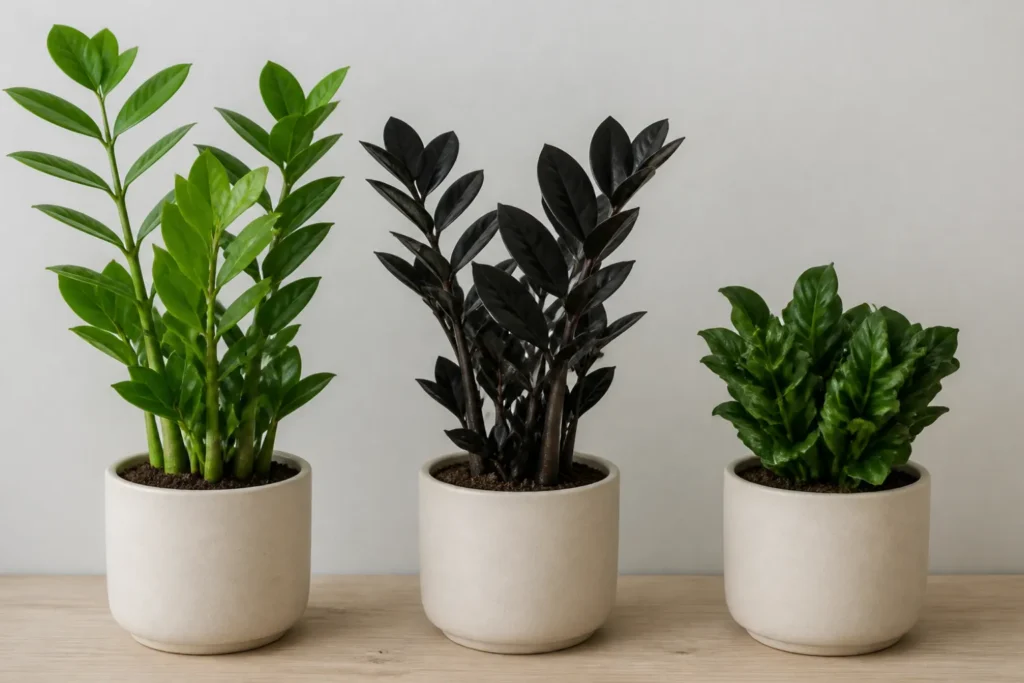
| Variety | Look | Good to know |
|---|---|---|
| Classic ZZ | Glossy, mid to dark green leaflets | The toughest and most common type. |
| Raven ZZ | New leaves emerge bright green and turn near black | Same easy care; dramatic modern look. |
| Zenzi ZZ | Compact, with smaller, curled leaves on short stems | Great for desks and shelves. |
| Variegated ZZ | Green leaves with cream or white patches | Needs brighter indirect light and grows slower. |
| Lucky Classic ZZ | Rounder, larger leaflets | Bold, full look. |
Common ZZ plant problems and fixes
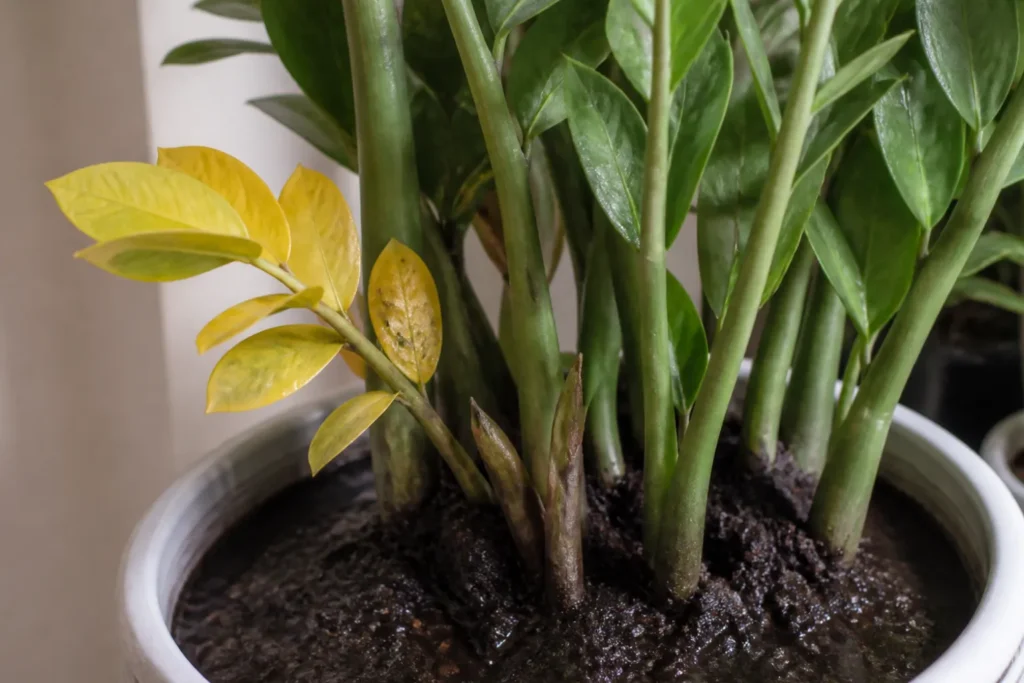
Yellow leaves
Spot it: Leaves turn yellow, often starting at the bottom of a stem, sometimes with soft stems.
Why it happens: Almost always overwatering or soil that drains poorly. Occasionally, one old stem yellowing on its own is normal aging.
Fix it: Stop watering until the soil is completely dry. Check the rhizomes and cut away any that are mushy, then repot in fresh fast-draining mix if needed.
Prevent it: Water only when the soil is fully dry and use a pot with drainage. More in yellow leaves on houseplants.
Mushy stems or rhizomes
Spot it: Stems feel soft or turn brown at the base, the plant flops over, the soil smells sour.
Why it happens: Root and rhizome rot from long periods of wet soil.
Fix it: Unpot, cut away all soft, dark tissue, let healthy rhizomes dry for a day and repot in dry, gritty mix. Root healthy stem pieces as backup.
Prevent it: Less water, faster-draining soil, and a pot that is not too big.
Wrinkled or drooping leaves
Spot it: Leaflets look shriveled, curled or droopy and stems lean.
Why it happens: Severe underwatering, with the rhizomes using up their stored water.
Fix it: Give a thorough soak and let it drain. The plant usually perks up within a few days.
Prevent it: Check the soil every couple of weeks and water when it is fully dry.
Leggy, leaning stems
Spot it: Long, stretched stems that flop over or lean toward the window.
Why it happens: Too little light.
Fix it: Move to brighter, indirect light and rotate the pot regularly. Stake floppy stems or cut them and propagate them.
Prevent it: Medium to bright, indirect light.
Brown tips or scorched patches
Spot it: Brown, crispy leaf tips or bleached, burned patches.
Why it happens: Too much direct sun, fertilizer buildup or very cold drafts.
Fix it: Move out of harsh sun, flush the soil with water and keep away from cold windows.
Prevent it: Indirect light and light feeding only.
ZZ plants rarely get pests, but check for mealybugs and scale now and then. Our houseplant pests guide shows how to deal with them.
Is a ZZ plant toxic to pets?
Yes, a ZZ plant is not pet safe. Like many plants in the aroid family, it contains calcium oxalate crystals that can irritate the mouth and stomach if a cat or dog chews it, causing drooling, pawing at the mouth or vomiting. Keep it out of reach, wash your hands after pruning, and see our pet-friendly houseplants for safer options.
More plant care guides: Snake plant care · Monstera care · Spider plant care · Fiddle leaf fig care · Bird of paradise care · Lucky bamboo care · Orchid care · Peace lily care
Yellow leaves, soft stems or a ZZ plant that has stopped growing?
The Houseplant Rescue Guide matches 26 common plant problems to a clear photo, then gives you simple steps to fix each one and stop it coming back. No jargon, 50 pages, with printable checklists.
Quick action checklist
- Place it in medium to bright, indirect light (low light is OK).
- Water only when the soil is completely dry, about every 2 to 4 weeks.
- Use fast-draining mix and a pot with drainage holes.
- Keep it between 60 and 85°F and away from cold drafts.
- Feed at half strength just 2 to 3 times in spring and summer.
- Wipe the glossy leaves with a damp cloth to remove dust.
- Repot every 2 to 3 years when rhizomes crowd the pot.
- Keep away from pets that chew plants.
- Log waterings in a printable plant journal so you never overwater.
ZZ plant care FAQ
How often should I water a ZZ plant?
Water a ZZ plant only when the soil is completely dry, usually every 2 to 4 weeks in spring and summer and every 4 to 6 weeks in winter. Less often in low light.
Can a ZZ plant live in low light?
Yes. ZZ plants tolerate low light and even office lighting, but they grow faster and fuller in medium to bright, indirect light.
Why are my ZZ plant leaves turning yellow?
Yellow leaves on a ZZ plant are almost always caused by overwatering. Let the soil dry out completely, check the rhizomes for rot, and water less often.
Is the ZZ plant toxic to cats and dogs?
Yes. ZZ plants contain calcium oxalate crystals that can irritate the mouth and stomach of pets if chewed, causing drooling and vomiting.
How fast does a ZZ plant grow?
ZZ plants grow slowly, usually putting out a few new stems a year. In bright, indirect light and warm temperatures they grow faster.
Should I cut off yellow ZZ leaves?
Yes. Cut fully yellow leaves or stems at the base with clean scissors, but fix the cause, usually overwatering, first.
Do ZZ plants clean the air?
Like all houseplants, ZZ plants absorb tiny amounts of indoor pollutants, but you would need a huge number of plants to noticeably change indoor air. Enjoy them for their looks and easy care.
Sources and further reading
Want to go deeper? These university extension and expert resources cover the same topic:
- NC State Extension Plant Toolbox: Zamioculcas zamiifolia (ZZ plant)
- ASPCA: Toxic and non-toxic plants list

[…] plant care guides: Spider plant care · Snake plant care · Monstera care · ZZ plant care · Fiddle leaf fig care · Bird of paradise care · Lucky bamboo care · Orchid […]
[…] care guides: Snake plant care · Monstera care · Spider plant care · Fiddle leaf fig care · ZZ plant care · Lucky bamboo care · Orchid care · Peace lily […]
[…] plant care guides: Snake plant care · Monstera care · Spider plant care · ZZ plant care · Bird of paradise care · Lucky bamboo care · Orchid care · Peace lily […]
[…] ZZ plants and peace lilies do not grow from stem cuttings. Divide them […]