Special Offer: Use code ILOVEPLANTS for 25% off on all digital products! Shop Now →

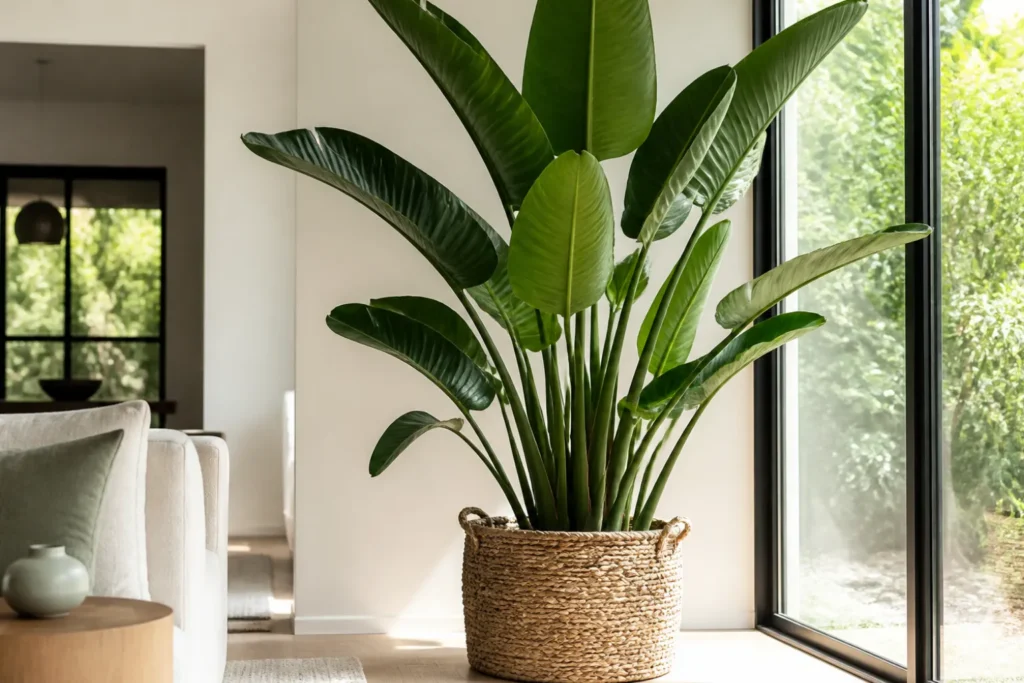
Few houseplants say tropical like a bird of paradise. Its huge paddle-shaped leaves fan out like a banana plant and can turn any bright corner into a mini resort. Grown well, it becomes a tall, dramatic floor plant that keeps adding new leaves every year. Bird of paradise plant care indoors is easy once you give it enough sun.
Two types are sold as houseplants: the white bird of paradise (Strelitzia nicolai), grown for its giant leaves, and the orange bird of paradise (Strelitzia reginae), smaller and famous for its bird-shaped flowers. Both need the same care, covered here: light, water, soil, feeding, leaf splits, repotting and blooming.
Short answer: A bird of paradise needs lots of bright light, including several hours of direct sun a day, ideally by a south or west window. Water thoroughly when the top 2 inches of soil are dry, usually every 1 to 2 weeks, and less in winter. Keep it between 65 and 85°F (18 to 29°C), feed every 2 to 4 weeks in spring and summer, and do not worry about split leaves: they are natural.
In this guide
Bird of paradise care at a glance
| Need | What your bird of paradise wants |
|---|---|
| Light | Very bright light with 4 to 6 hours of direct sun. The brightest window you have. |
| Water | When the top 2 inches of soil are dry, about every 1 to 2 weeks. Less in winter. |
| Soil | Rich, well-draining indoor mix with bark and perlite. |
| Temperature | 65 to 85°F (18 to 29°C). Keep above 55°F (13°C). |
| Humidity | 40 to 60% is ideal; it tolerates average homes. |
| Fertilizer | Balanced liquid fertilizer every 2 to 4 weeks in spring and summer. |
| Repotting | Every 2 years or so in spring; it blooms best slightly root-bound. |
| Pet safety | Mildly toxic to cats and dogs (ASPCA). |
| Difficulty | Moderate. Easy if it gets enough light. |
Light: give it the sunniest spot you have
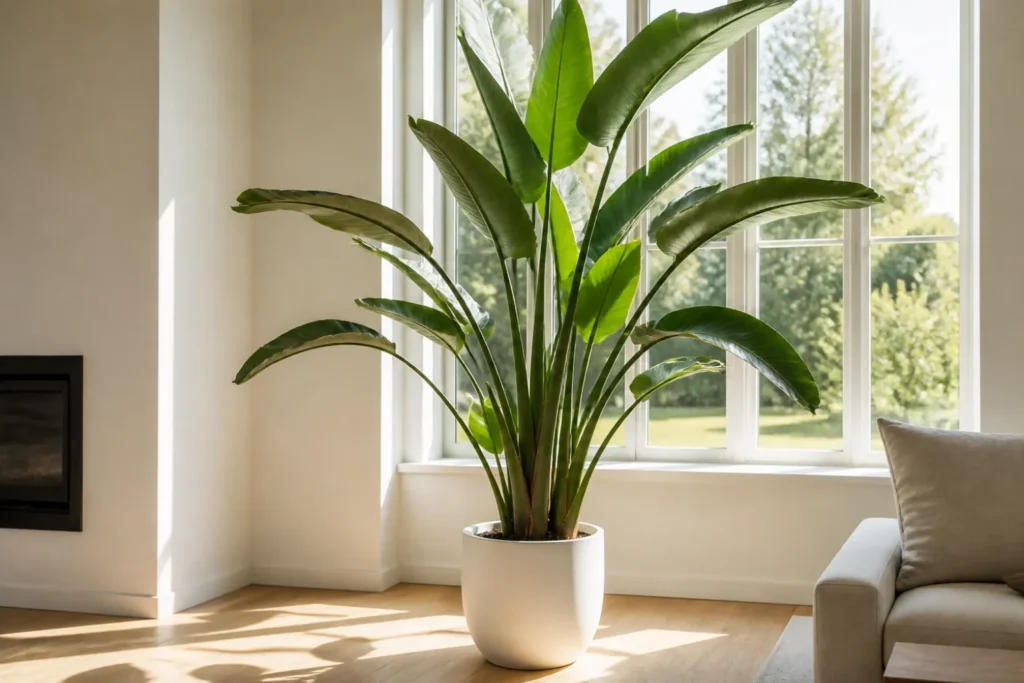
A bird of paradise is a sun lover. Indoors it needs very bright light with at least 4 to 6 hours of direct sun, which usually means right in front of a south- or west-facing window, or in a sunroom. This is the number one factor for strong growth and flowers.
- Not enough light: slow growth, few new leaves, leggy stems, and no flowers.
- Adjusting to sun: if your plant has been in lower light, move it into stronger sun over 1 to 2 weeks to avoid scorched patches.
- Rotate the pot every few weeks so it grows evenly instead of leaning toward the light.
- Dark homes: a strong full-spectrum grow light can help, but a bird of paradise rarely thrives in a dim room.
Use our houseplant light guide to find your brightest spot.
How often to water a bird of paradise
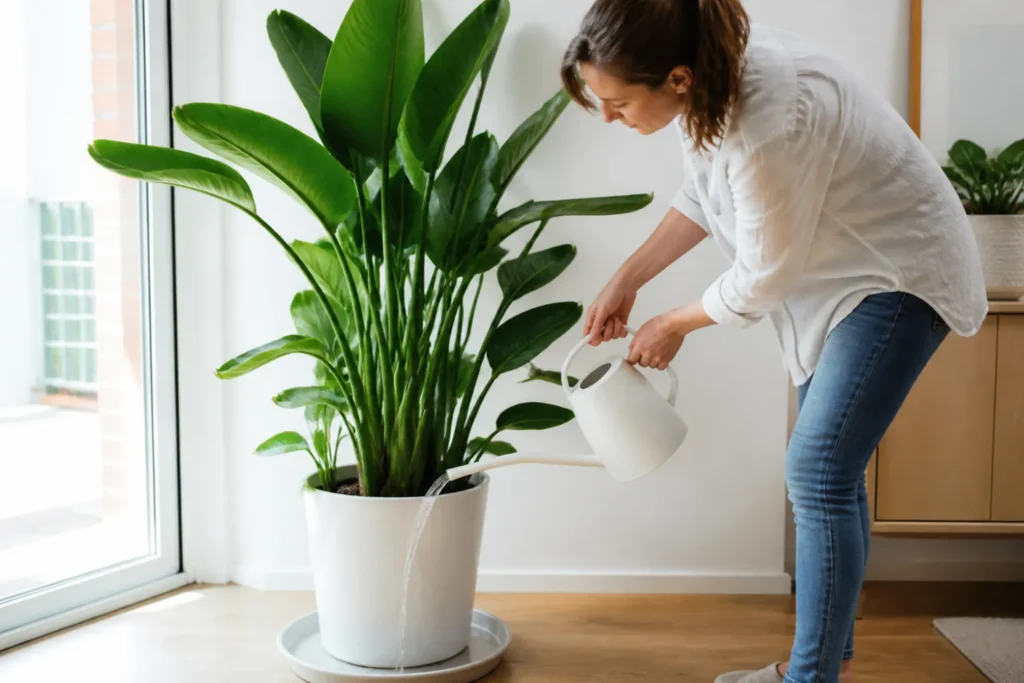
Water thoroughly when the top 2 inches of soil are dry. In a bright, warm spot that is usually every 1 to 2 weeks in spring and summer, and every 2 to 3 weeks in winter.
- Check the soil with your finger before every watering.
- Water slowly until it runs out of the drainage holes, so the whole root ball is moistened.
- Empty the saucer after 15 minutes.
- Allow the top layer to dry before the next watering; never keep it soggy.
Watch your water: soggy soil quickly leads to root rot, while letting it dry out completely makes leaves curl. Bird of paradise can also get brown edges from salts in hard tap water, so flush the soil with plenty of water every few months.
More watering tips in our watering guide.
Best soil and pot
Use a rich but well-draining mix: indoor potting soil with about a quarter orchid bark and a quarter perlite works well. Choose a sturdy, heavy pot with drainage holes, because tall plants can tip over in lightweight containers. See our potting soil guide.
Temperature and humidity
Keep your plant between 65 and 85°F (18 to 29°C) and above 55°F (13°C). Cold drafts and chilly windows in winter cause brown patches and slow growth.
Average home humidity is fine, but in very dry winter air the leaf edges may brown or curl. Group it with other plants or use a humidifier. Read more in our humidity guide and temperature guide.
Fertilizing a bird of paradise
A bird of paradise is a hungry grower. Feed with a balanced liquid fertilizer every 2 to 4 weeks in spring and summer, following the label, and stop in fall and winter. Flowering types benefit from a fertilizer a little higher in phosphorus once they are mature. See our fertilizing guide.
Why bird of paradise leaves split (and why that is OK)
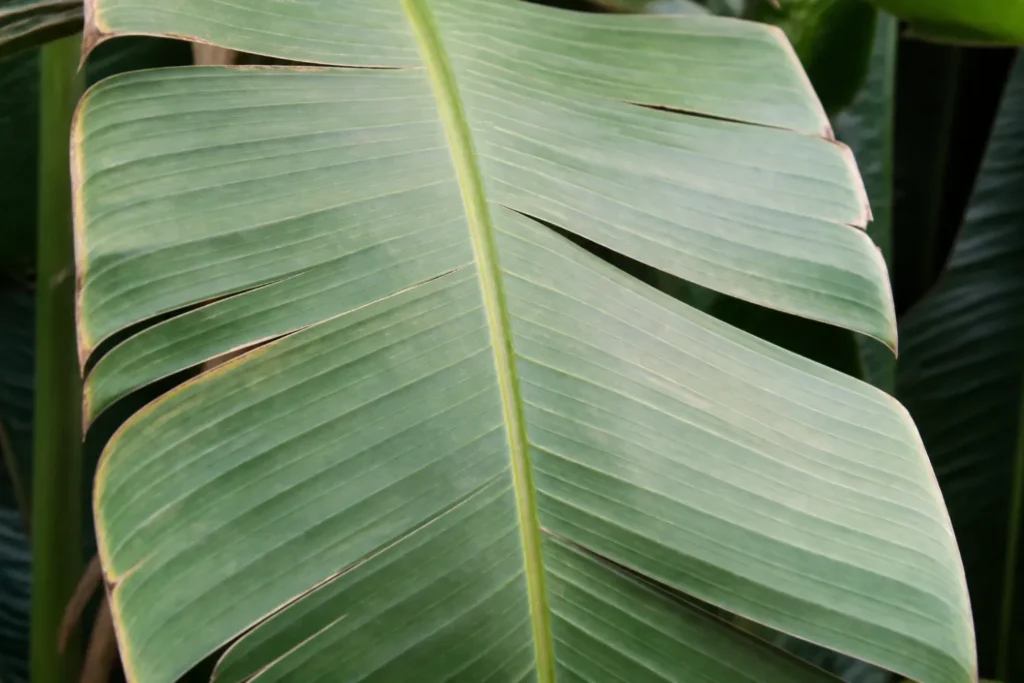
Splits along the leaf edges are completely normal. In the wild, the leaves split to let strong winds pass through without the whole leaf tearing off. Indoors, bumping, drafts, low humidity and simply age all cause splits too.
- A few splits do not harm the plant and many people love the natural look.
- Very heavy splitting on new leaves can mean low humidity or underwatering, so check both.
- Badly damaged or brown leaves can be cut off at the base of the stem.
- Place the plant away from walkways and doors where leaves get brushed.
How to get a bird of paradise to bloom
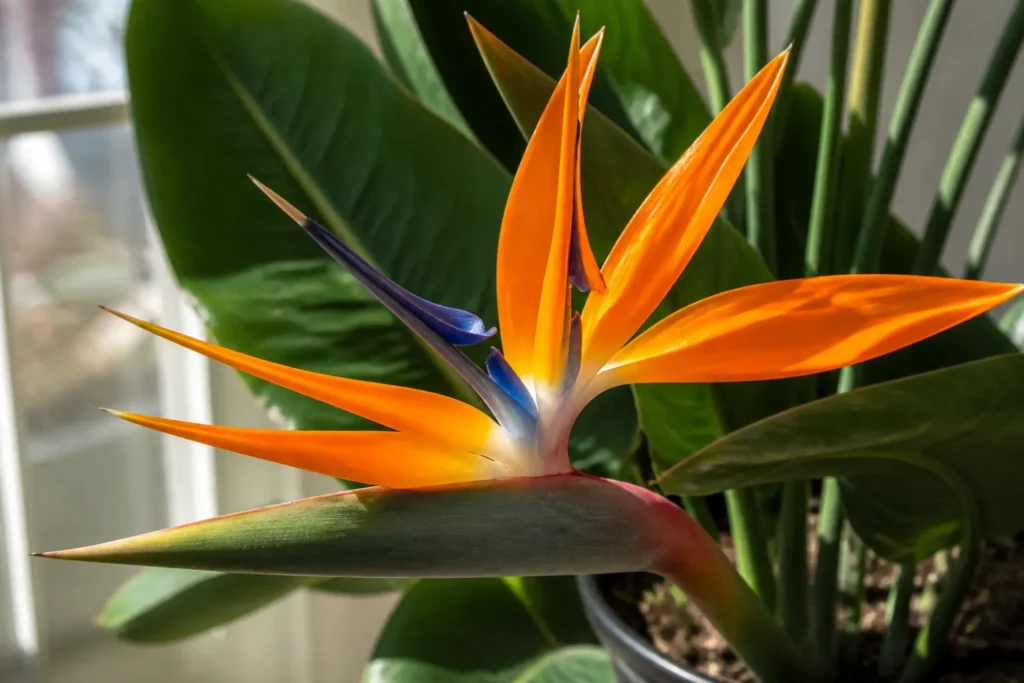
The orange bird of paradise (Strelitzia reginae) is the one most likely to flower indoors; the white Strelitzia nicolai rarely blooms inside. Even so, flowering indoors takes patience.
- Age: plants usually need to be several years old (often 3 to 5 years) before they bloom.
- Sun: lots of direct sun is essential. A summer outdoors in a sunny, sheltered spot can trigger flowers.
- Snug roots: slightly root-bound plants bloom more readily, so do not over-pot.
- Food: regular feeding in the growing season.
- Cooler winter rest: slightly cooler nights and less water in winter help set buds.
How to repot and divide a bird of paradise
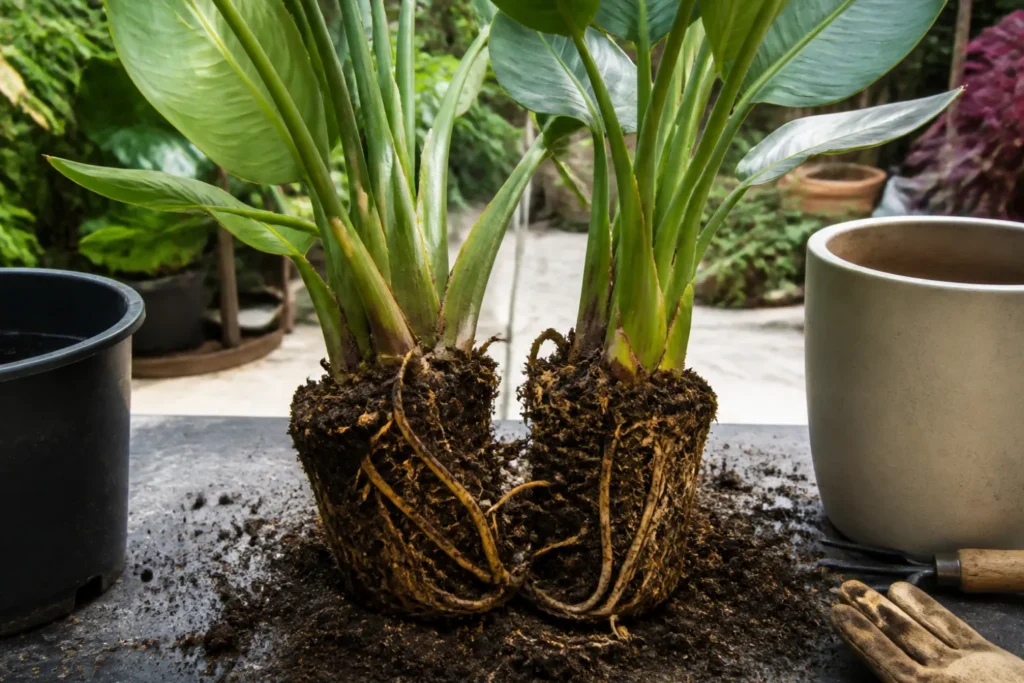
Repot every 2 years or so in spring, moving up just one pot size. Bird of paradise has thick, fleshy roots that can crack plastic pots when crowded. Water the day before, ease the plant out, loosen the roots gently and replant at the same depth in fresh mix.
Division is the best way to propagate. When repotting a large plant, separate it into sections that each have several leaves and a good set of roots, using a clean knife if needed. Pot each section, keep it in bright indirect light for a few weeks, then move it back into the sun. See our repotting guide and propagation guide.
Common bird of paradise problems and fixes
Curling leaves
Spot it: Leaves curl inward along their length.
Why it happens: Underwatering or very dry air; sometimes root damage.
Fix it: Water thoroughly when the top 2 inches are dry and raise humidity. Check roots if curling continues despite good watering.
Prevent it: Steady watering and grouping plants in dry seasons.
Yellow leaves
Spot it: Lower leaves turn yellow, sometimes with soft stems at the base.
Why it happens: Overwatering or poor drainage; occasionally old leaves aging naturally.
Fix it: Let the soil dry more between waterings and check that water drains freely. Remove fully yellow leaves.
Prevent it: Water by soil feel, use a draining mix. See yellow leaves on houseplants.
Brown leaf edges or crispy tips
Spot it: Brown, dry edges and tips on the leaves.
Why it happens: Low humidity, salt buildup from tap water or fertilizer, or cold drafts.
Fix it: Trim brown edges with clean scissors, flush the soil and keep away from vents and cold windows.
Prevent it: Flush soil every few months and keep humidity moderate.
No new leaves
Spot it: The plant has not grown a new leaf in months during spring and summer.
Why it happens: Too little light, needing food, or roots out of space.
Fix it: Move to the brightest, sunniest spot, start regular feeding and repot if roots fill the pot.
Prevent it: Bright sun and regular feeding in the growing season.
Pests
Spot it: Fine webbing (spider mites), white fluffy spots (mealybugs) or bumps on stems (scale).
Why it happens: Dry indoor air and stressed plants.
Fix it: Wipe leaves, rinse the plant and treat with insecticidal soap or neem oil every 5 to 7 days until clear.
Prevent it: Dust leaves monthly and inspect the undersides. Our pests guide helps identify each one.
Is a bird of paradise toxic to pets?
The ASPCA lists the bird of paradise (Strelitzia reginae) as mildly toxic to cats and dogs. Eating the leaves, flowers or seeds can cause mild stomach upset, vomiting and drowsiness. Do not confuse it with the outdoor shrub Caesalpinia, also called bird of paradise, which is more toxic. For pet homes, see our pet-friendly houseplants.
More plant care guides: Snake plant care · Monstera care · Spider plant care · Fiddle leaf fig care · ZZ plant care · Lucky bamboo care · Orchid care · Peace lily care
Curling, browning or torn leaves that look worse than normal splitting?
The Houseplant Rescue Guide matches 26 common plant problems to a clear photo, then gives you simple steps to fix each one and stop it coming back. No jargon, 50 pages, with printable checklists.
Quick action checklist
- Give it your sunniest window, with 4 to 6 hours of direct sun.
- Water thoroughly when the top 2 inches of soil are dry.
- Use a rich, well-draining mix and a heavy pot with drainage holes.
- Keep it between 65 and 85°F and away from cold drafts.
- Feed every 2 to 4 weeks in spring and summer.
- Rotate the pot every few weeks for even growth.
- Accept natural leaf splits; trim only badly damaged leaves.
- Repot or divide every 2 years in spring.
- Track sun, water and new leaves in a printable plant journal.
Bird of paradise care FAQ
How much light does a bird of paradise need indoors?
A bird of paradise needs very bright light with at least 4 to 6 hours of direct sun each day, usually right by a south- or west-facing window.
How often should I water a bird of paradise?
Water when the top 2 inches of soil are dry, usually every 1 to 2 weeks in spring and summer and every 2 to 3 weeks in winter. Always let excess water drain away.
Why are my bird of paradise leaves splitting?
Leaf splitting is natural and helps the leaves survive wind in the wild. Indoors it is also caused by bumping, dry air and age. It does not harm the plant.
Why are my bird of paradise leaves curling?
Curling leaves usually mean the plant is thirsty or the air is very dry. Water thoroughly when the top 2 inches are dry and raise the humidity.
Will my bird of paradise flower indoors?
The orange Strelitzia reginae can flower indoors once it is several years old and gets lots of direct sun, regular feeding and slightly snug roots. The white Strelitzia nicolai rarely flowers inside.
Is bird of paradise toxic to cats and dogs?
Yes, mildly. The ASPCA lists Strelitzia reginae as toxic to cats and dogs, causing mild vomiting and drowsiness if eaten.
How big does an indoor bird of paradise get?
The white bird of paradise can reach 6 to 8 feet indoors over time, while the orange bird of paradise usually stays around 3 to 5 feet.
Sources and further reading
Want to go deeper? These university extension and expert resources cover the same topic:
- NC State Extension Plant Toolbox: Strelitzia reginae (bird of paradise)
- ASPCA: Toxic and non-toxic plants list
Free printable
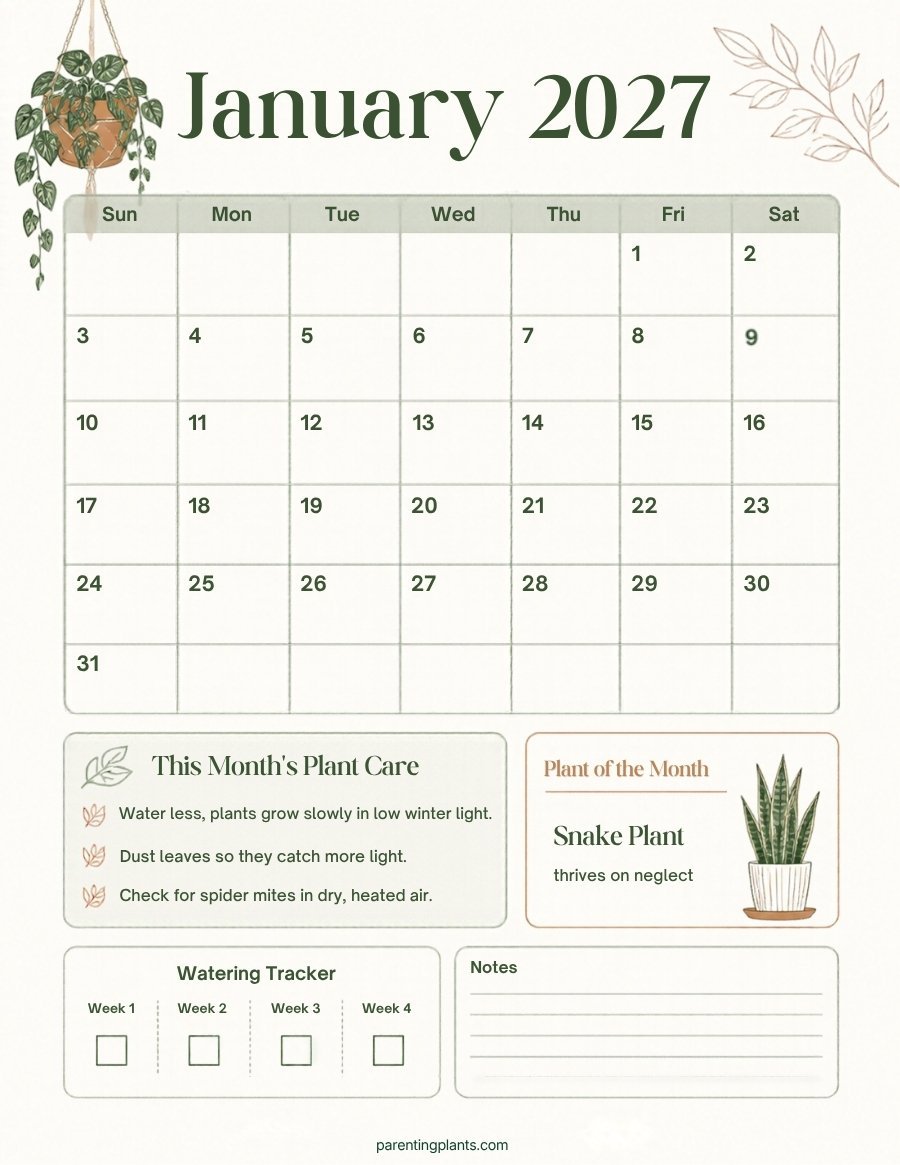
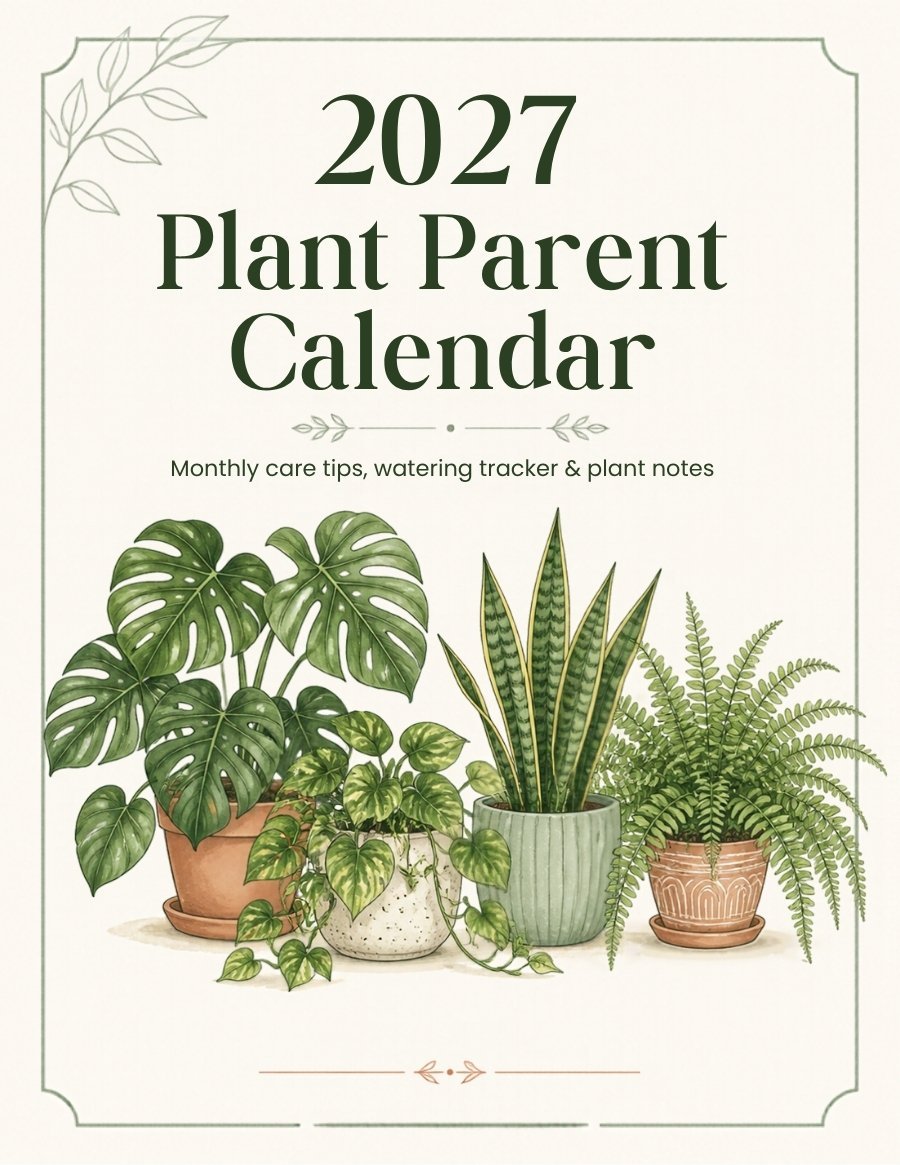
Get your free 2027 Plant Parent Calendar
14 beautiful printable pages to keep your houseplants happy all year. Enter your name and email and we'll send it straight to your inbox.
You're in!
Thank you, plant friend! 🪴
Your calendar is on its way to your inbox (check Promotions or Spam if you don't see it in a few minutes). You can also download it right now:
⬇ Download the 2027 calendar (PDF)