Special Offer: Use code ILOVEPLANTS for 25% off on all digital products! Shop Now →

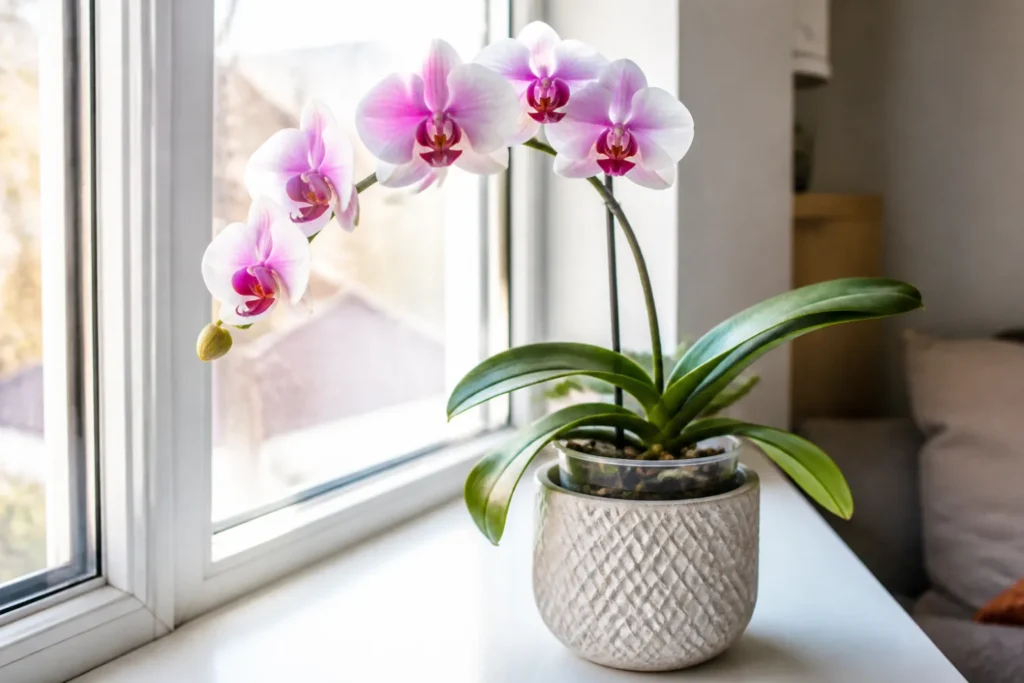
Orchids have a reputation for being fussy, but the orchid you most likely own, the moth orchid (Phalaenopsis), is one of the easiest flowering houseplants there is. Its blooms can last two to three months, and with the right care it will flower again every year.
Most orchids die from too much love: too much water, or soil that stays wet. Once you understand that orchids grow on trees in the wild, with their roots in the air, everything about their care makes sense. This guide shows you exactly how to care for an orchid, covering light, watering, potting, feeding, reblooming and quick fixes for common problems.
Short answer: To care for an orchid, give it bright, indirect light (an east window is ideal), water thoroughly about once a week, only when the roots look silvery and the bark is nearly dry, and let all the water drain away. Grow it in orchid bark, not regular soil, in a pot with drainage holes. Keep it at 65 to 80°F (18 to 27°C), feed weakly every 2 weeks while growing, and give it slightly cooler nights in fall to trigger new flowers.
In this guide
Orchid care at a glance
| Need | What your orchid (Phalaenopsis) wants |
|---|---|
| Light | Bright, indirect light. An east window or a few feet from a south or west window. |
| Water | About every 7 to 10 days, when roots turn silvery and the bark is nearly dry. |
| Potting mix | Orchid bark or sphagnum moss, never regular potting soil. |
| Pot | Clear orchid pot with plenty of drainage and air holes. |
| Temperature | 65 to 80°F (18 to 27°C) by day, about 10°F cooler at night. |
| Humidity | 40 to 70%. Higher humidity keeps leaves and roots plump. |
| Fertilizer | Orchid fertilizer at quarter to half strength every 2 weeks during growth. |
| Repotting | Every 1 to 2 years, after flowering. |
| Blooms | Once or twice a year; flowers last 2 to 3 months. |
| Pet safety | Non-toxic to cats and dogs (ASPCA). |
Light: bright but never harsh
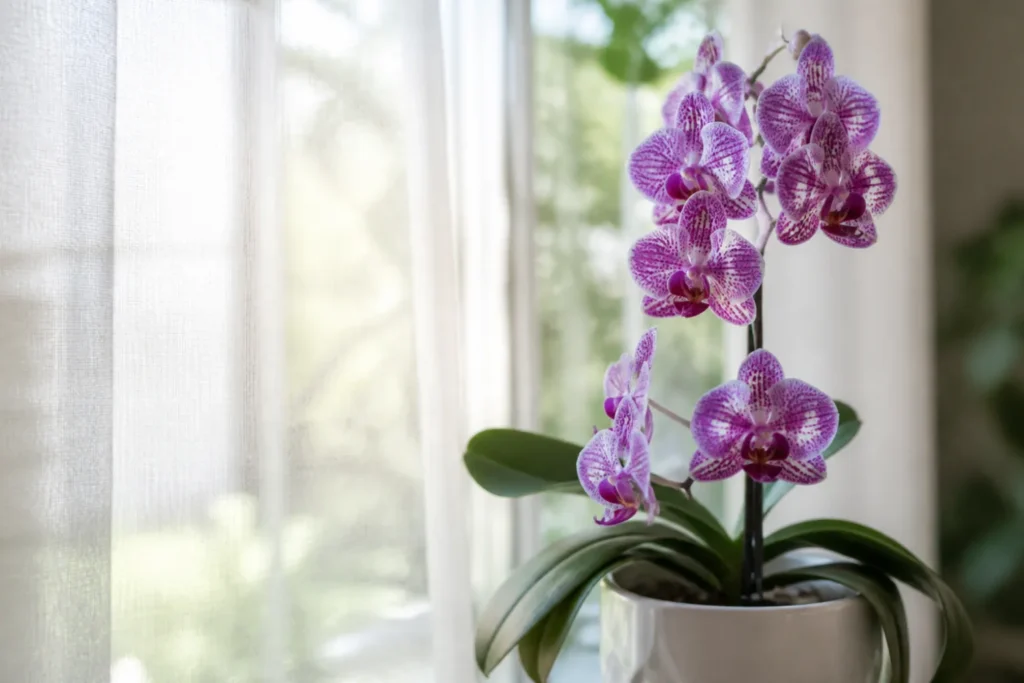
Moth orchids want bright, indirect light, similar to the dappled light under a tree canopy. An east-facing window with gentle morning sun is perfect. A south or west window works too if the orchid sits a few feet back or behind a sheer curtain.
- Healthy light: leaves are a medium, olive green.
- Too little light: dark green, floppy leaves and no new flower spikes.
- Too much light: yellowish or reddish leaves, or bleached and scorched patches.
- Dark homes: a simple LED grow light for 10 to 12 hours a day works well.
See our houseplant light guide to find the best window.
How often to water an orchid
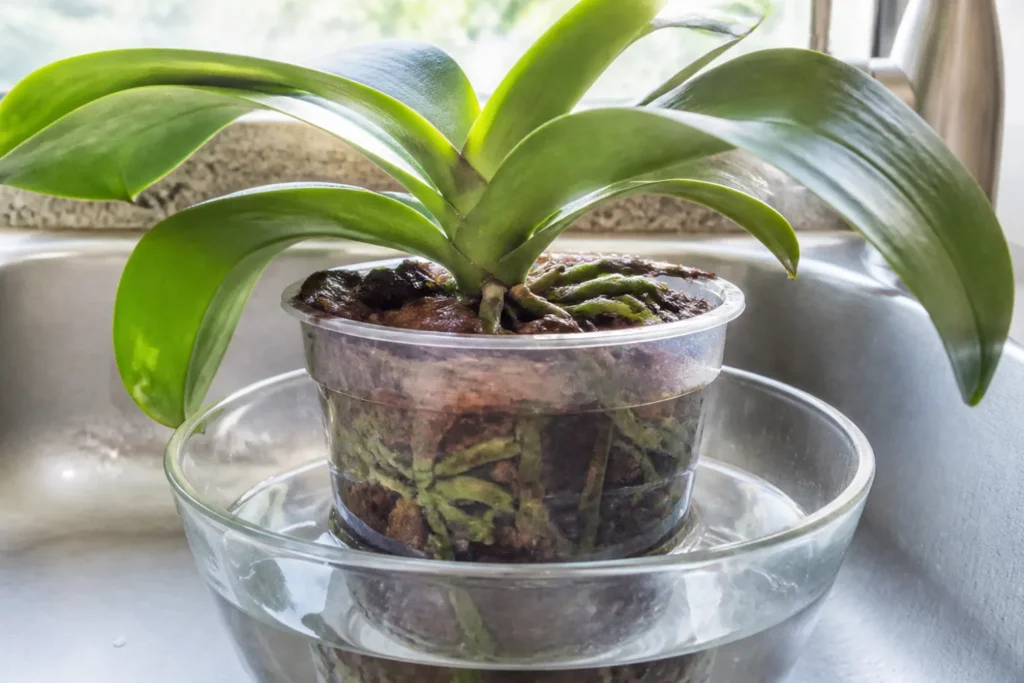
Most orchids need water about once every 7 to 10 days, but the real answer is: water when the orchid is almost dry. Overwatering kills far more orchids than underwatering.
The soak method (easiest and safest)
- Take the orchid in its plastic pot out of any decorative pot.
- Set it in a bowl or sink of room-temperature water for 10 to 15 minutes so the bark and roots soak it up.
- Lift it out and let it drain completely. No water should collect in the bottom of the cachepot.
- Wipe away any water sitting in the center of the leaves (the crown) to prevent rot.
- Water in the morning so the plant dries before night.
What about the ice cube method? Three ice cubes a week is popular on store labels, but it gives uneven, very small amounts of water and can chill the roots. Most orchid growers recommend a thorough soak and drain instead. If you prefer ice cubes, keep them away from the roots and leaves and check the roots regularly.
More on watering technique in our watering guide.
Read the roots: when to water and aerial roots
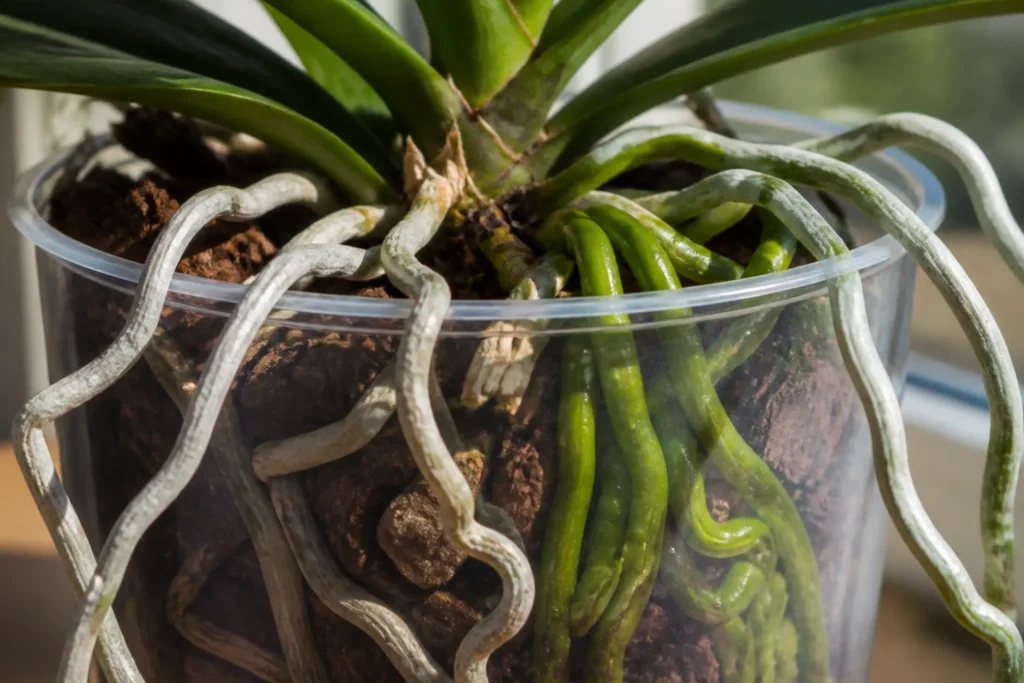
Orchid roots tell you exactly when to water, which is why clear pots are so helpful:
- Silvery-grey or white roots: dry, time to water.
- Bright green roots: still moist, wait a few days.
- Brown, mushy or hollow roots: rotted from too much water. Trim them when you repot.
- Shrivelled, papery roots: long-term thirst or old roots.
Aerial roots, the roots that grow up and out of the pot, are completely normal. In nature they cling to trees and absorb moisture from the air. Do not cut healthy aerial roots; just mist them occasionally in very dry rooms.
Potting mix and pots for orchids
Moth orchids are epiphytes: in the wild they grow on tree branches, not in the ground. Their roots need air, so never pot an orchid in regular potting soil. Use an orchid mix of fir bark, often with perlite and charcoal, or sphagnum moss.
- Bark: airy and forgiving, the best choice for most beginners. It dries faster, so water every week or so.
- Sphagnum moss: holds more water, so water less often. Great in dry homes, risky if you tend to overwater.
- Clear plastic orchid pots with side holes let you see the roots and give them air.
- A decorative pot is fine on the outside, but always remove the orchid to water and drain it.
Learn how mixes differ in our potting soil guide.
Temperature and humidity
Moth orchids like the same temperatures we do: 65 to 80°F (18 to 27°C) during the day, with nights about 10°F cooler. Avoid temperatures below 55°F (13°C), cold drafts and hot air blowing from heaters, which can cause buds to drop.
They prefer 40 to 70% humidity. In dry winter air, group plants together, use a humidity tray or run a humidifier nearby. Misting has only a brief effect and can leave water in the crown. See our humidity guide and temperature guide.
Fertilizing orchids
Orchids are light feeders. Use an orchid fertilizer at quarter to half strength every 2 weeks while the plant is growing new leaves or roots, and flush the pot with plain water once a month to rinse out salts. Many growers follow the rule “weakly, weekly” with very diluted feed.
Feed less in winter and while the plant is in full bloom. Never fertilize a bone-dry orchid; water first. More in our fertilizing guide.
How to get your orchid to rebloom
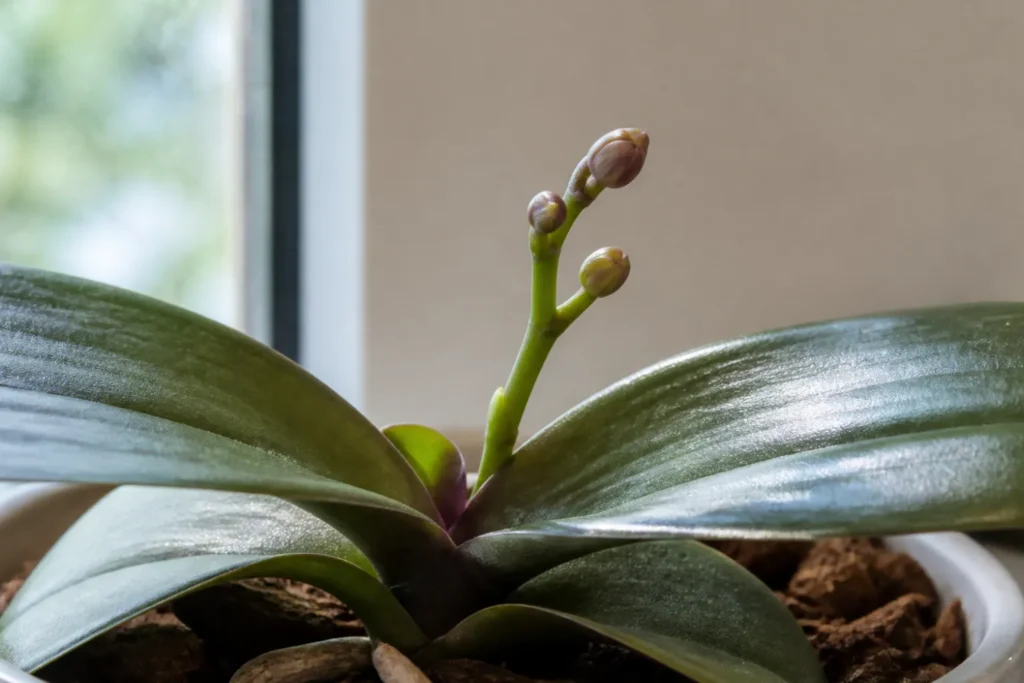
After the last flower falls, your orchid is resting, not dying. With a little help it will send up a new flower spike, usually within 6 to 12 months.
What to do with the old flower spike
- Green spike: cut it just above the second node (a small bump) below where the lowest flower was. A new branch of flowers may grow from that node within a couple of months.
- Brown or yellow spike: cut it off at the base. The plant will put its energy into new leaves and roots, then a fresh spike.
- Always use clean, sharp scissors.
How to trigger new flowers
- Keep the plant healthy with good light, regular watering and feeding through spring and summer.
- In fall, give it about 3 to 4 weeks of cooler nights, around 55 to 65°F (13 to 18°C), 10 to 15°F cooler than the day. A spot near a cool window often does it.
- Keep light bright. Low light is the most common reason orchids never rebloom.
- When a new spike appears (it looks like a green, mitten-shaped root), support it with a stake and clip as it grows, and do not move the plant around.
How to repot an orchid
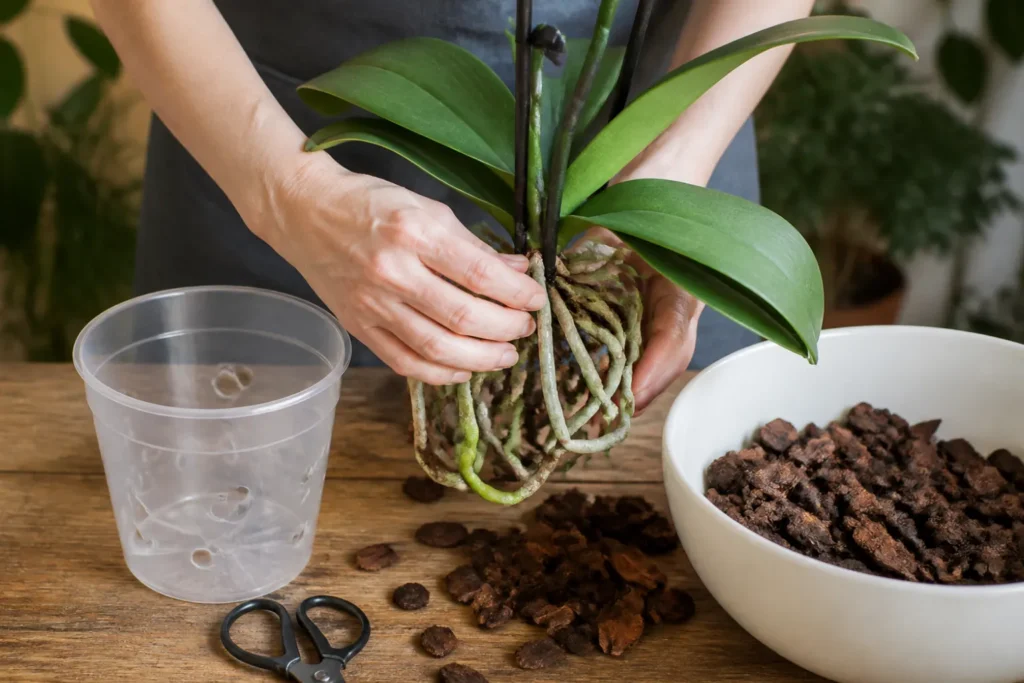
Repot every 1 to 2 years, ideally right after flowering, or sooner if the bark has broken down into soggy, soil-like crumbs or the roots are rotting.
- Water the orchid the day before so roots are flexible.
- Gently remove it from the pot and shake off all old bark.
- Trim brown, mushy or hollow roots with sterilized scissors. Keep firm green and silvery roots.
- Place the plant in a pot just big enough for the roots, with the base of the lowest leaf at the top of the mix.
- Fill around the roots with fresh, moist orchid bark, tapping the pot so it settles. Do not pack it tight.
- Wait about a week before watering normally to let trimmed roots heal.
See our repotting guide for general tips.
Common orchid problems and fixes
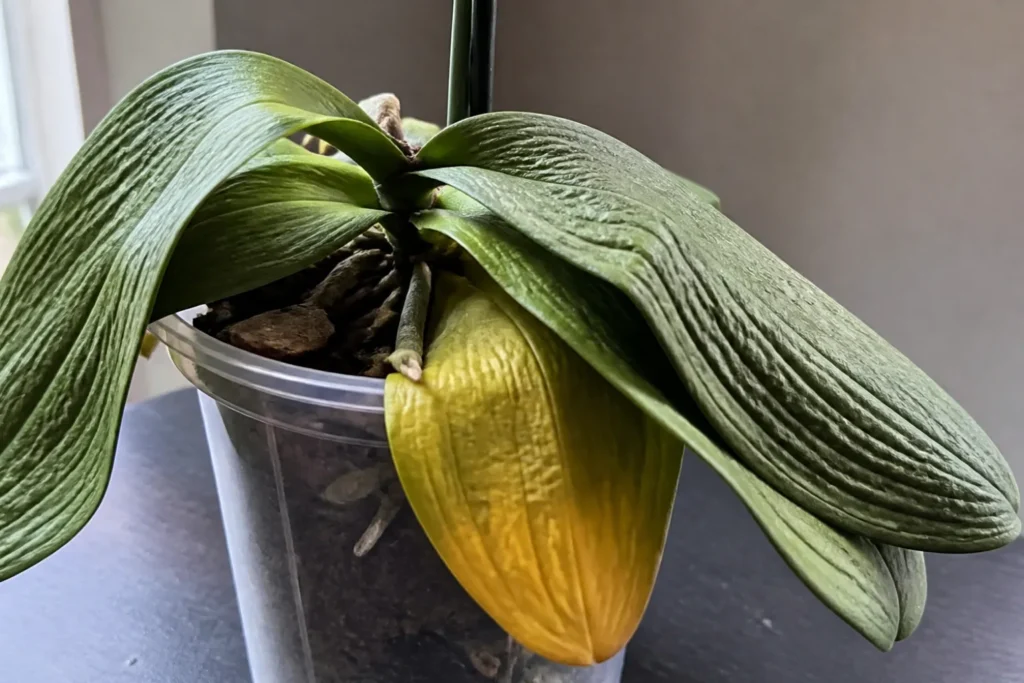
Wrinkled, limp leaves
Spot it: Leaves look soft, leathery and wrinkled instead of firm.
Why it happens: The plant is dehydrated, either from underwatering or because rotted roots can no longer take up water.
Fix it: Check the roots. If roots are firm and silvery, soak the plant and water more regularly. If they are brown and mushy, repot in fresh bark and trim the rot.
Prevent it: Water when roots turn silvery and repot every 1 to 2 years. More in our root rot guide.
Yellow leaves
Spot it: A yellow leaf at the bottom of the plant, or several yellow leaves at once.
Why it happens: One old bottom leaf yellowing slowly is normal aging. Several at once usually means overwatering, root rot or too much direct sun.
Fix it: Let the old leaf drop naturally. For several, check the roots and light, and adjust watering.
Prevent it: Water only when nearly dry and keep out of harsh sun. See yellow leaves on houseplants.
Buds dropping before they open
Spot it: Flower buds turn yellow and fall off (bud blast).
Why it happens: Sudden changes: moving the plant, cold drafts, hot vents, very dry air, letting it dry out, or ethylene gas from ripening fruit nearby.
Fix it: Keep the plant in one stable spot away from vents, doors and the fruit bowl, and water consistently.
Prevent it: Do not move a budding orchid around.
Crown rot
Spot it: The center of the plant turns black or brown and new leaves fall out.
Why it happens: Water sitting in the crown between the leaves, especially in cool, still air.
Fix it: Remove rotted tissue, keep the crown dry and improve air flow. Severe crown rot is often fatal.
Prevent it: Water in the morning, never pour water into the center, and blot it dry if it gets wet.
No flowers
Spot it: Healthy leaves but no new spike for a year or more.
Why it happens: Not enough light, no cool nights in fall, or too little feeding.
Fix it: Move to brighter indirect light, feed regularly in the growing season and give 3 to 4 weeks of cooler nights in autumn.
Prevent it: Bright light year round.
Also watch for mealybugs and scale hiding at the base of leaves. Our houseplant pests guide shows how to treat them, and our guide to reviving a dying houseplant can help a struggling orchid.
Are orchids safe for cats and dogs?
Yes. The moth orchid (Phalaenopsis) is listed as non-toxic to cats and dogs by the ASPCA. Chewing can still upset a pet’s stomach a little and damage your flowers, and fertilizer or pesticide residue can be harmful, so keep it out of reach if your pet loves to nibble. See more pet-friendly houseplants.
More plant care guides: Spider plant care · Snake plant care · Monstera care · ZZ plant care · Fiddle leaf fig care · Bird of paradise care · Lucky bamboo care · Peace lily care
Wrinkled leaves, mushy roots or buds dropping before they open?
The Houseplant Rescue Guide matches 26 common plant problems to a clear photo, then gives you simple steps to fix each one and stop it coming back. No jargon, 50 pages, with printable checklists.
Quick action checklist
- Place it in bright, indirect light, ideally an east window.
- Water about weekly, only when roots look silvery; soak, then drain completely.
- Never leave water in the crown or the bottom of the cachepot.
- Grow in orchid bark or moss, never regular potting soil.
- Keep it at 65 to 80°F, a little cooler at night, away from drafts.
- Feed with diluted orchid fertilizer every 2 weeks while growing.
- Leave aerial roots alone; they are normal.
- After blooming, trim the spike and give cooler nights in fall to rebloom.
- Repot every 1 to 2 years after flowering.
- Track watering and blooms in a printable plant journal.
Orchid care FAQ
How do I care for an orchid?
Give your orchid bright, indirect light, water it about once a week when the roots turn silvery and the bark is nearly dry, and let it drain completely. Grow it in orchid bark in a pot with drainage, keep it at 65 to 80u00b0F and feed it with diluted orchid fertilizer every 2 weeks while it is growing.
How often should I water an orchid?
Most moth orchids need water about every 7 to 10 days. Water when the roots look silvery and the potting mix is nearly dry, soak for 10 to 15 minutes, then drain completely.
Should I use ice cubes to water my orchid?
Ice cubes are popular but give small, uneven amounts of water and can chill the roots. A thorough soak with room-temperature water followed by full drainage is better for most orchids.
What do I do with my orchid after the flowers fall off?
Cut a green flower spike just above the second node below the old flowers, or cut a brown spike at the base. Keep caring for the plant normally and give it cooler nights in fall to trigger new blooms.
Why are my orchid leaves wrinkly?
Wrinkled leaves mean the orchid is dehydrated, either from underwatering or from rotted roots that cannot absorb water. Check the roots to find out which, then water more or repot.
Should I cut off orchid aerial roots?
No. Aerial roots are normal and help the orchid take in moisture and air. Only trim roots that are dead, brown and mushy or completely dried up.
Are orchids toxic to cats?
No. Phalaenopsis orchids are listed as non-toxic to cats and dogs by the ASPCA, although chewing any plant can cause mild stomach upset.
Sources and further reading
Want to go deeper? These university extension and expert resources cover the same topic:
- NC State Extension Plant Toolbox: Phalaenopsis (moth orchid)
- Iowa State University Extension: Growing orchids indoors


Free printable
Get your free 2027 Plant Parent Calendar
14 beautiful printable pages to keep your houseplants happy all year. Enter your name and email and we'll send it straight to your inbox.
You're in!
Thank you, plant friend! 🪴
Your calendar is on its way to your inbox (check Promotions or Spam if you don't see it in a few minutes). You can also download it right now:
⬇ Download the 2027 calendar (PDF)

[…] More plant care guides: Spider plant care · Snake plant care · Monstera care · ZZ plant care · Fiddle leaf fig care · Bird of paradise care · Lucky bamboo care · Orchid care […]
[…] care · Spider plant care · Fiddle leaf fig care · Bird of paradise care · Lucky bamboo care · Orchid care · Peace lily […]