Special Offer: Use code ILOVEPLANTS for 25% off on all digital products! Shop Now →

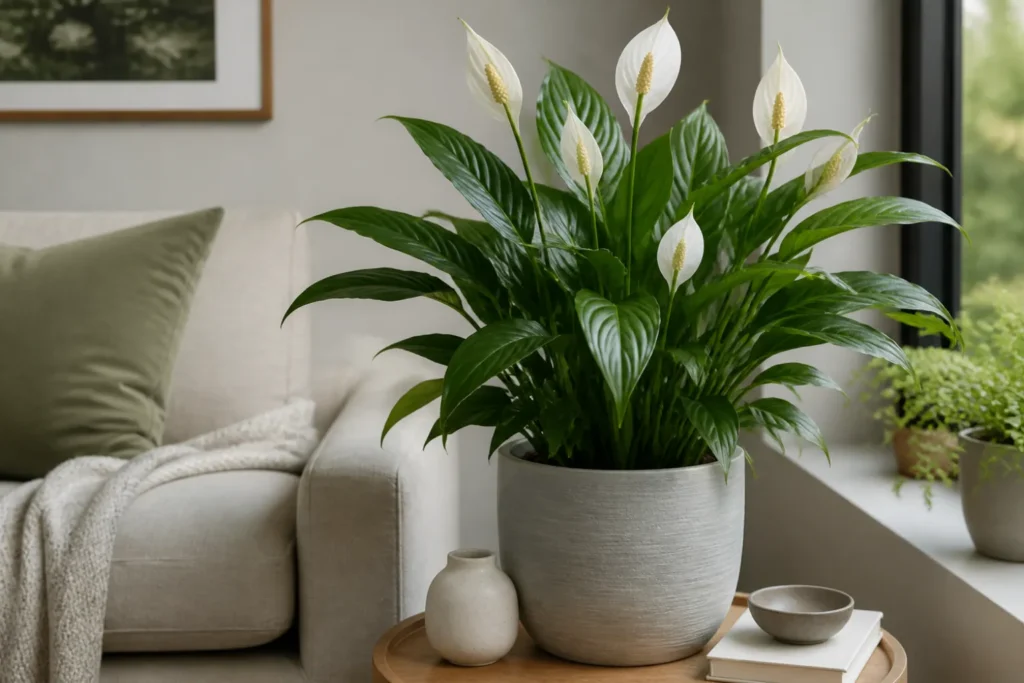
The peace lily (Spathiphyllum) is one of the most popular houseplants for good reason: glossy dark leaves, elegant white flowers, and a rare talent for growing in lower light. It also tells you exactly when it needs water by drooping dramatically, then perks right back up.
Good peace lily care is simple once you know its few quirks: steady moisture, no harsh sun, and water that is not too heavy in chemicals. This guide covers light, watering, soil, feeding, getting more flowers, repotting and quick fixes for drooping, brown tips and yellow leaves.
Short answer: Give your peace lily medium to bright, indirect light (it tolerates low light but flowers less). Water when the top inch of soil is dry, usually about once a week, and do not let it sit soggy. Keep it between 65 and 80°F (18 to 27°C) with average to high humidity, feed lightly every 6 to 8 weeks in spring and summer, and use filtered or rain water if you see brown tips. Peace lilies are toxic to cats and dogs.
In this guide
Peace lily care at a glance
| Need | What your peace lily wants |
|---|---|
| Light | Medium to bright, indirect light. Tolerates low light; no direct sun. |
| Water | When the top inch of soil is dry, about once a week. It droops when thirsty. |
| Water type | Filtered, distilled or rain water helps prevent brown tips. |
| Soil | Rich, well-draining indoor potting mix. |
| Temperature | 65 to 80°F (18 to 27°C). Keep above 55°F (13°C). |
| Humidity | 50% or more is ideal; average homes are usually fine. |
| Fertilizer | Balanced liquid fertilizer at half strength every 6 to 8 weeks in spring and summer. |
| Flowers | Mostly spring and summer on mature plants in good light. |
| Repotting | Every 1 to 2 years, when roots fill the pot. |
| Pet safety | Toxic to cats and dogs (ASPCA). |
Light: the right spot for a peace lily
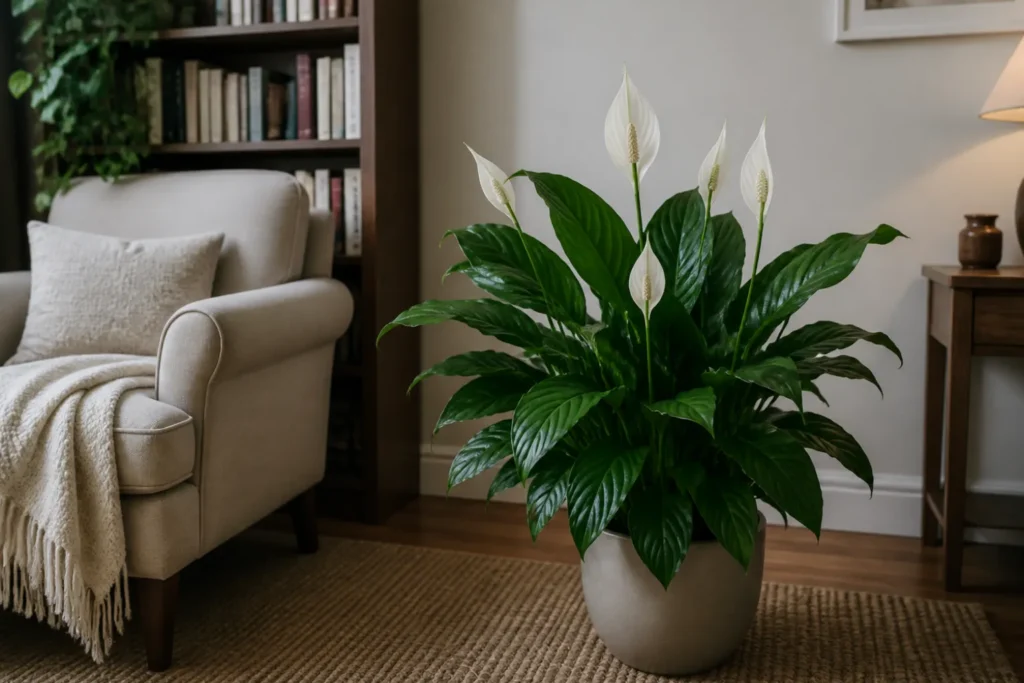
Peace lilies grow on rainforest floors in dappled shade, so they like medium to bright, indirect light. A spot a few feet from an east or north window, or set back from a south or west window, is ideal.
- Low light: it survives and stays green, but usually stops flowering.
- Bright, indirect light: the most flowers and the fullest growth.
- Direct sun: scorches the leaves, causing pale, yellow or brown patches.
- Rotate the pot every few weeks for even, upright growth.
Not sure how bright your room is? Read our houseplant light guide.
How often to water a peace lily
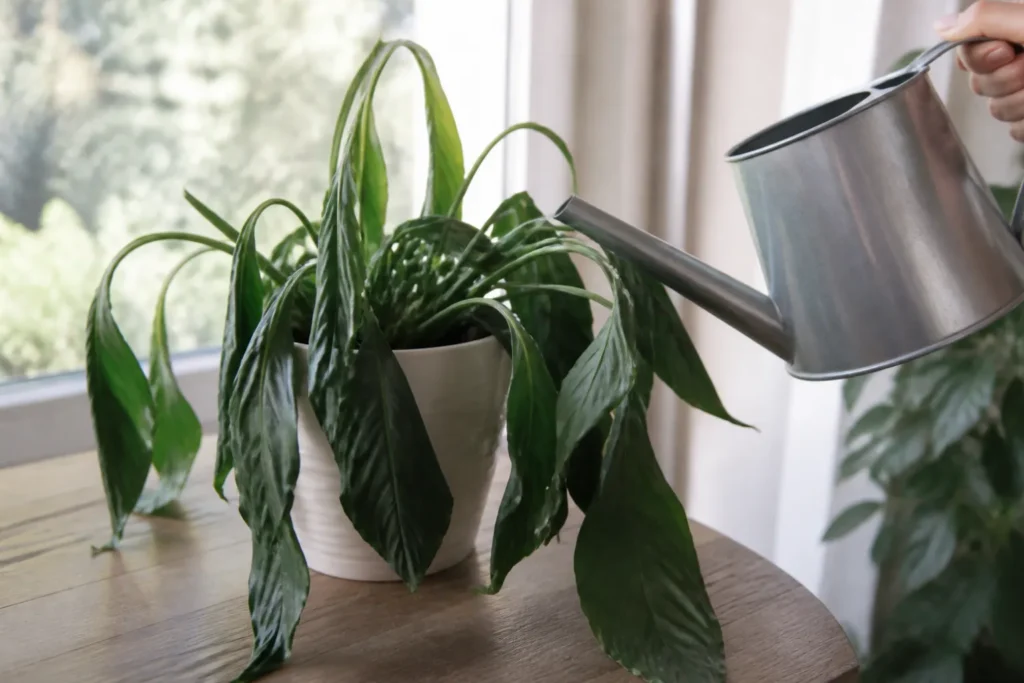
Water when the top inch of soil feels dry, which is about once a week in spring and summer and every 1 to 2 weeks in winter. Peace lilies like evenly moist soil, but not soggy soil.
The droop is your watering reminder. When a peace lily gets thirsty, its leaves flop dramatically. Water thoroughly and it usually stands back up within a few hours. Just do not let it happen too often, because repeated wilting leads to yellow leaves and brown tips.
- Check the soil with your finger before watering.
- Water slowly until it runs out of the drainage holes.
- Empty the saucer after 10 to 15 minutes so roots never sit in water.
- If it droops while the soil is still wet, stop watering and check the roots for rot.
Water quality matters: peace lilies are sensitive to chlorine, fluoride and salts in tap water, which cause brown leaf tips. Use filtered, distilled or rain water, or let tap water stand overnight, and flush the soil with plain water every couple of months.
For more on technique, see how to water houseplants. Constantly soggy soil can lead to root rot and fungus gnats.
Best soil and pot
Use a rich, well-draining indoor potting mix. Adding a handful of perlite or orchid bark keeps it airy while still holding the even moisture peace lilies like. Always use a pot with drainage holes. More in our potting soil guide.
Temperature and humidity
Peace lilies like warm, steady temperatures of 65 to 80°F (18 to 27°C). Keep them above 55°F (13°C) and away from cold drafts, open doors in winter and heater or air conditioning vents.
They appreciate humidity of 50% or more. In dry winter air, group plants together or use a humidifier to prevent brown tips. See our humidity guide and temperature guide.
Fertilizing a peace lily
Feed with a balanced liquid fertilizer at half strength every 6 to 8 weeks in spring and summer, and stop in fall and winter. Peace lilies are light feeders: too much fertilizer causes brown leaf tips and can turn the flowers green. See our fertilizing guide.
How to get your peace lily to bloom
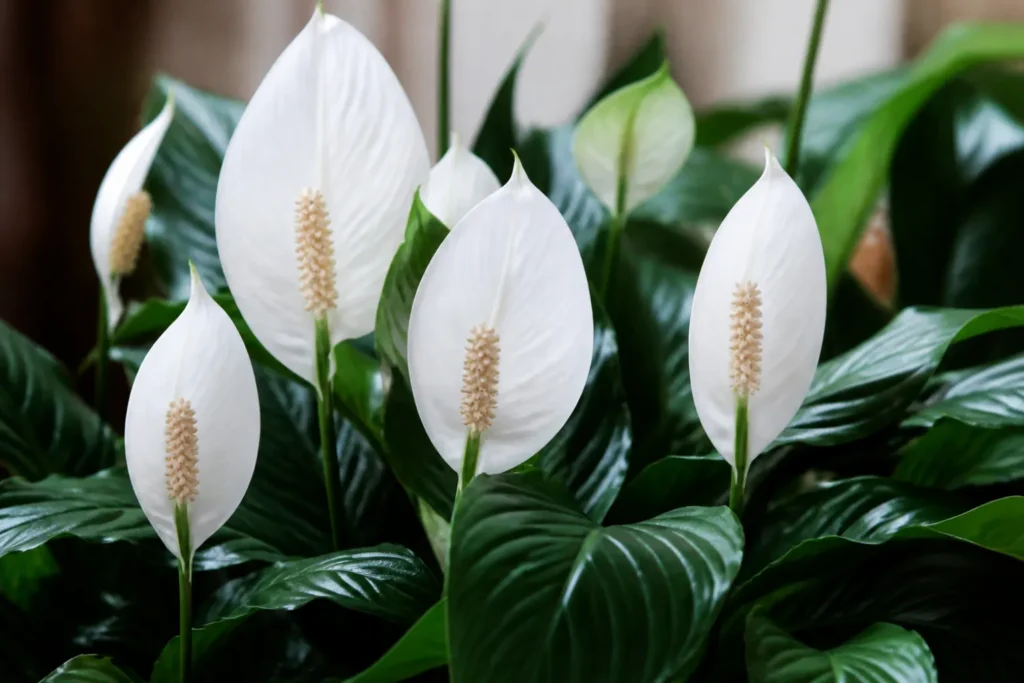
The white “flower” is actually a modified leaf called a spathe wrapped around a spike of tiny true flowers. Store-bought plants are often treated to bloom, so a plant that flowers less after you bring it home is normal.
- More light: the most common reason a peace lily does not bloom is low light. Move it to bright, indirect light.
- Maturity: young plants or freshly divided ones may need a year to settle and bloom.
- Light feeding: regular, gentle feeding in spring and summer supports flowers.
- Snug roots: peace lilies often bloom better when slightly root-bound.
- Old flowers: when a flower turns green or brown, cut its stalk off at the base to tidy the plant.
How to repot and divide a peace lily
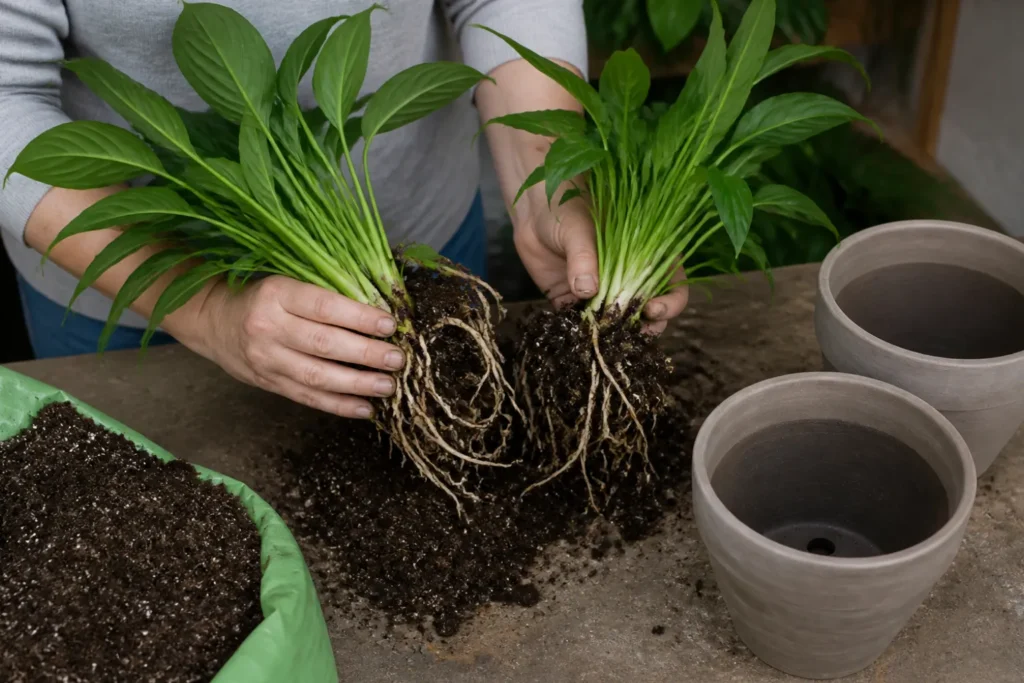
Repot every 1 to 2 years in spring, when roots circle the pot or the plant dries out very quickly. Move up just one pot size, 1 to 2 inches wider, and use fresh mix.
Division is the easiest way to propagate. When repotting a large plant, gently pull or cut the root ball into clumps that each have several leaves and healthy roots, and pot each one separately. Keep them in bright, indirect light and slightly moist while they settle. See our repotting guide and propagation guide.
Common peace lily problems and fixes
Drooping leaves
Spot it: The whole plant wilts and leaves flop over.
Why it happens: Usually thirst. If the soil is wet, it can mean root rot or a recent repot or move.
Fix it: If dry, water thoroughly and it will perk up within hours. If wet, let it dry out and check the roots for rot.
Prevent it: Check the soil weekly and water before it dries out completely.
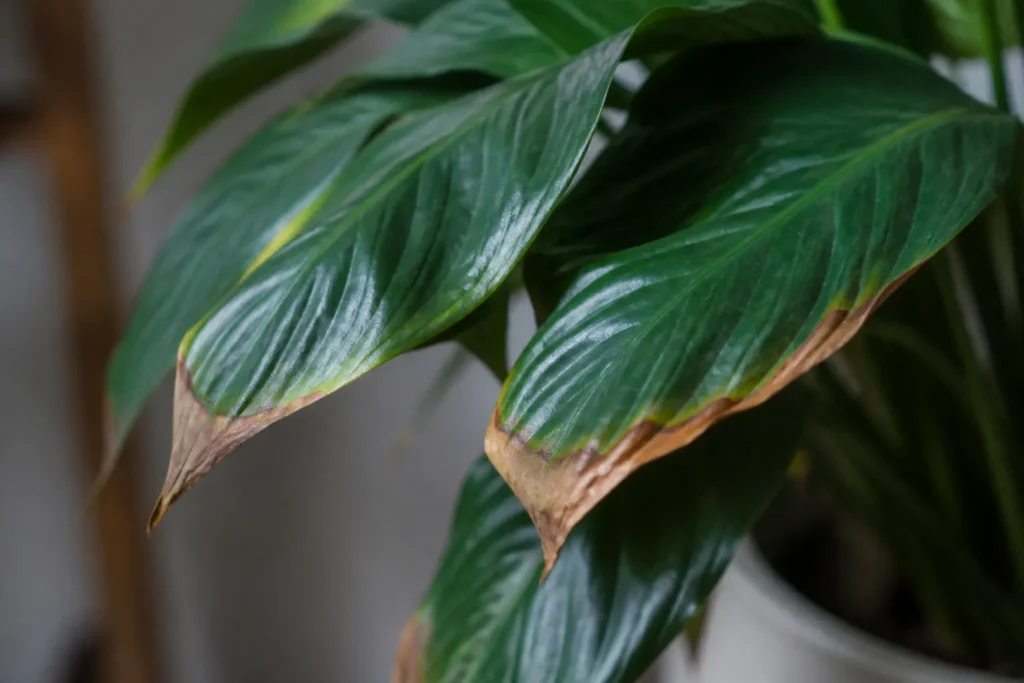
Brown leaf tips
Spot it: Dry, brown, crispy leaf tips and edges.
Why it happens: Chemicals or salts in tap water, too much fertilizer, low humidity or repeated wilting.
Fix it: Trim the tips with clean scissors, switch to filtered or rain water and flush the soil.
Prevent it: Steady watering, light feeding and humidity of 50% or more.
Yellow leaves
Spot it: Leaves turn yellow, often older, lower leaves first.
Why it happens: Overwatering, too much direct sun, or natural aging of old leaves.
Fix it: Remove yellow leaves at the base, let the soil dry a little more between waterings and move out of direct sun.
Prevent it: Water by soil feel. More causes in yellow leaves on houseplants.
Green or brown flowers
Spot it: White flowers turn green or brown.
Why it happens: Green is a normal part of aging, though excess fertilizer can cause it too. Brown means the flower is finished.
Fix it: Cut the old flower stalk off at its base.
Prevent it: Feed only at half strength in the growing season.
No flowers
Spot it: Healthy leaves but no new blooms.
Why it happens: Too little light, a very young plant, or a lack of feeding.
Fix it: Move to bright, indirect light and feed every 6 to 8 weeks in spring and summer.
Prevent it: Bright, indirect light year round.
Also check leaf undersides for spider mites and mealybugs; our houseplant pests guide shows how to treat them. For a plant in bad shape, see how to revive a dying houseplant.
Is a peace lily toxic to cats and dogs?
Yes. The ASPCA lists the peace lily as toxic to cats and dogs. It contains calcium oxalate crystals that irritate the mouth and stomach, causing drooling, pawing at the mouth, vomiting and difficulty swallowing. Despite its name, it is not a true lily, so it does not cause the kidney failure that true lilies cause in cats, but it should still be kept out of reach. See our pet-friendly houseplants for safer choices.
More plant care guides: Spider plant care · Snake plant care · Monstera care · ZZ plant care · Fiddle leaf fig care · Bird of paradise care · Lucky bamboo care · Orchid care
Peace lily still drooping, browning at the tips or refusing to flower?
The Houseplant Rescue Guide matches 26 common plant problems to a clear photo, then gives you simple steps to fix each one and stop it coming back. No jargon, 50 pages, with printable checklists.
Quick action checklist
- Place it in medium to bright, indirect light, out of direct sun.
- Water when the top inch of soil is dry; empty the saucer.
- Use filtered, distilled or rain water to prevent brown tips.
- Use rich, well-draining mix in a pot with drainage holes.
- Keep it between 65 and 80°F and away from drafts.
- Raise humidity in dry winter air.
- Feed at half strength every 6 to 8 weeks in spring and summer.
- Cut off faded flowers and yellow leaves at the base.
- Repot or divide every 1 to 2 years.
- Keep it away from cats and dogs.
Peace lily care FAQ
How often should I water a peace lily?
Water a peace lily when the top inch of soil is dry, usually about once a week in spring and summer and every 1 to 2 weeks in winter. Water thoroughly and let the excess drain away.
Why is my peace lily drooping?
A drooping peace lily is usually thirsty and perks up within hours of watering. If the soil is already wet, the cause is likely root rot or recent stress such as repotting or moving.
Can a peace lily live in low light?
Yes. Peace lilies tolerate low light and stay green, but they need medium to bright, indirect light to flower well.
Why are the tips of my peace lily turning brown?
Brown tips are usually caused by chemicals or salts in tap water, too much fertilizer, low humidity or repeated wilting. Use filtered water, feed lightly and keep watering steady.
How do I get my peace lily to bloom again?
Move it to bright, indirect light, feed it at half strength every 6 to 8 weeks in spring and summer and let it get slightly root-bound. Mature plants bloom best.
Is a peace lily poisonous to cats?
Yes. Peace lilies are toxic to cats and dogs and can cause mouth irritation, drooling and vomiting. They are not true lilies, so they do not cause kidney failure, but keep them out of reach.
Should I cut off brown peace lily flowers?
Yes. Cut faded green or brown flowers off at the base of their stalk to keep the plant tidy and direct energy into new growth.
Sources and further reading
Want to go deeper? These university extension and expert resources cover the same topic:
- NC State Extension Plant Toolbox: Spathiphyllum (peace lily)
- ASPCA: Toxic and non-toxic plants list
- University of Illinois Extension: Watering houseplants
Free printable
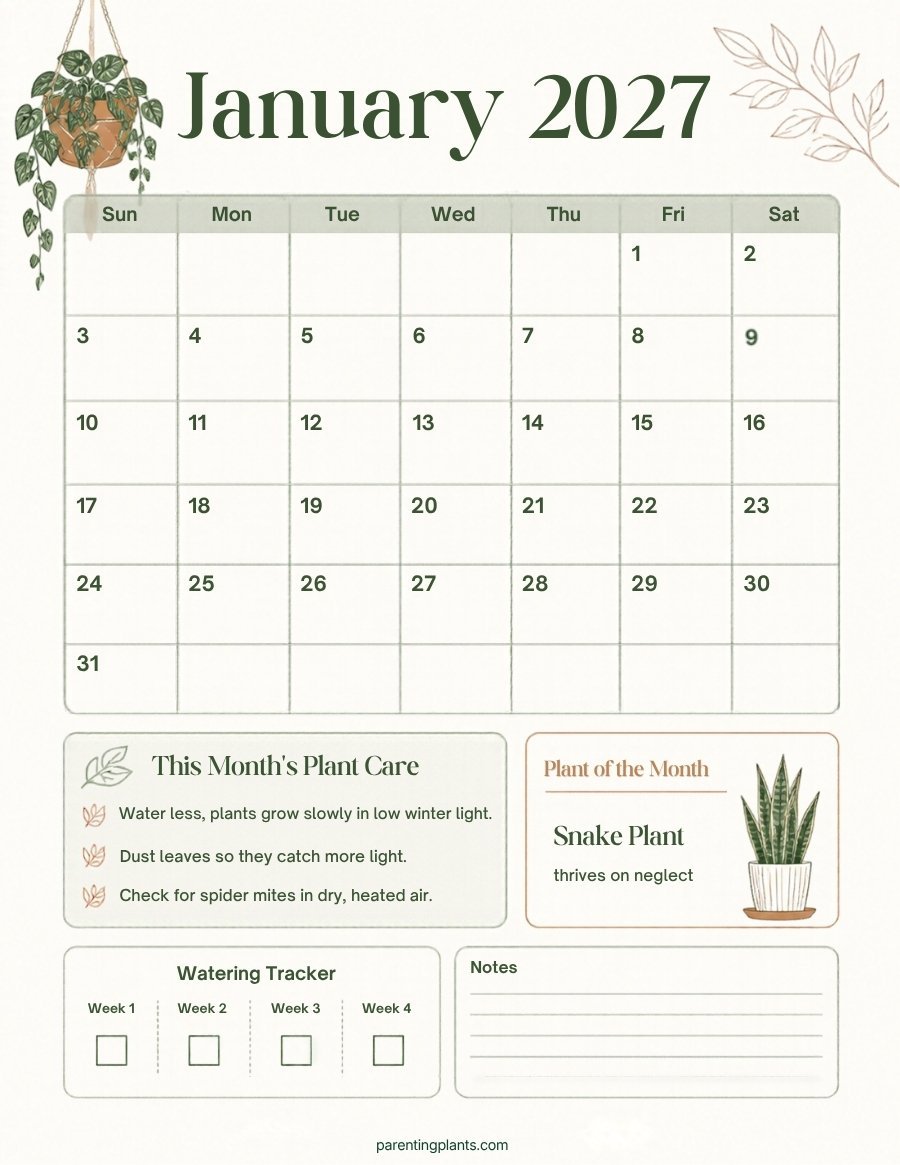
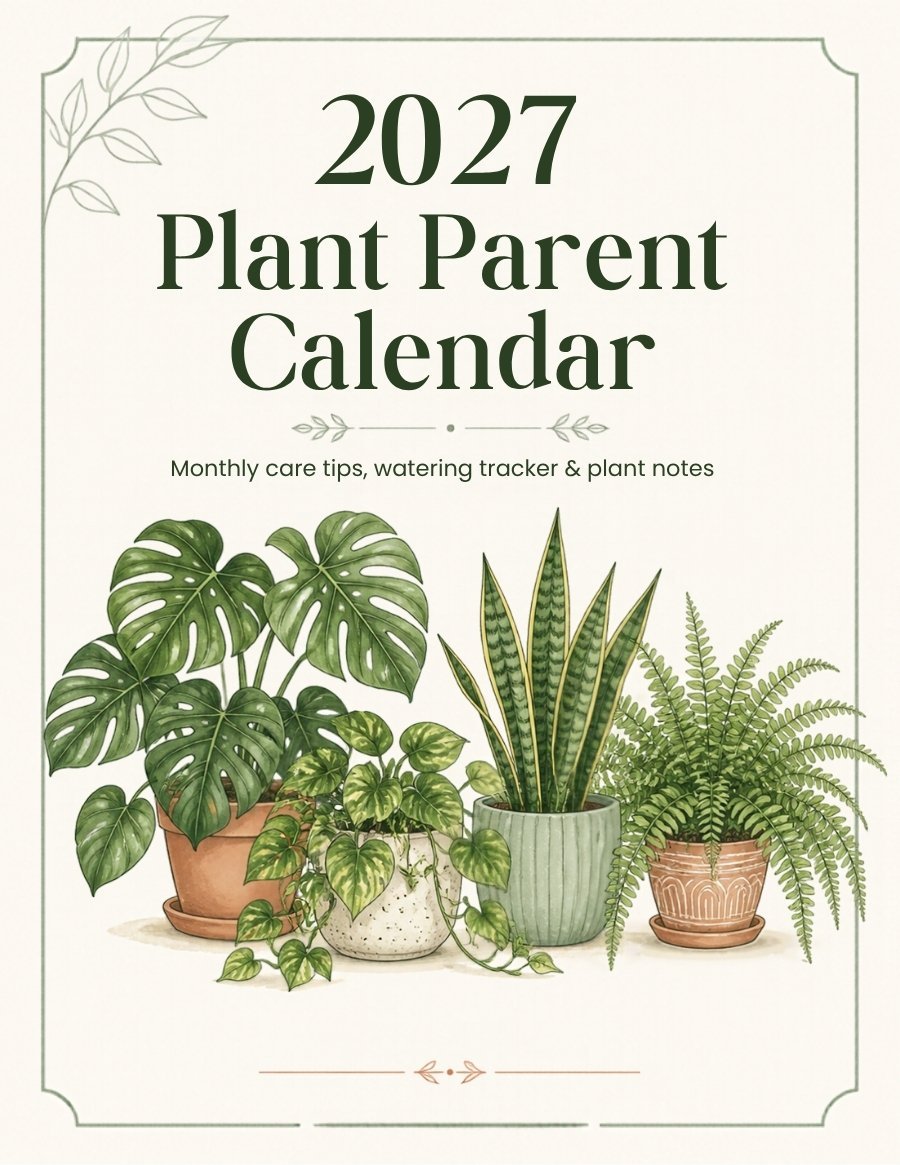
Get your free 2027 Plant Parent Calendar
14 beautiful printable pages to keep your houseplants happy all year. Enter your name and email and we'll send it straight to your inbox.
You're in!
Thank you, plant friend! 🪴
Your calendar is on its way to your inbox (check Promotions or Spam if you don't see it in a few minutes). You can also download it right now:
⬇ Download the 2027 calendar (PDF)

[…] More plant care guides: Monstera care · Spider plant care · Fiddle leaf fig care · ZZ plant care · Bird of paradise care · Lucky bamboo care · Orchid care · Peace lily care […]
[…] No flowers on plants that normally bloom, like peace lilies. […]