Special Offer: Use code ILOVEPLANTS for 25% off on all digital products! Shop Now →

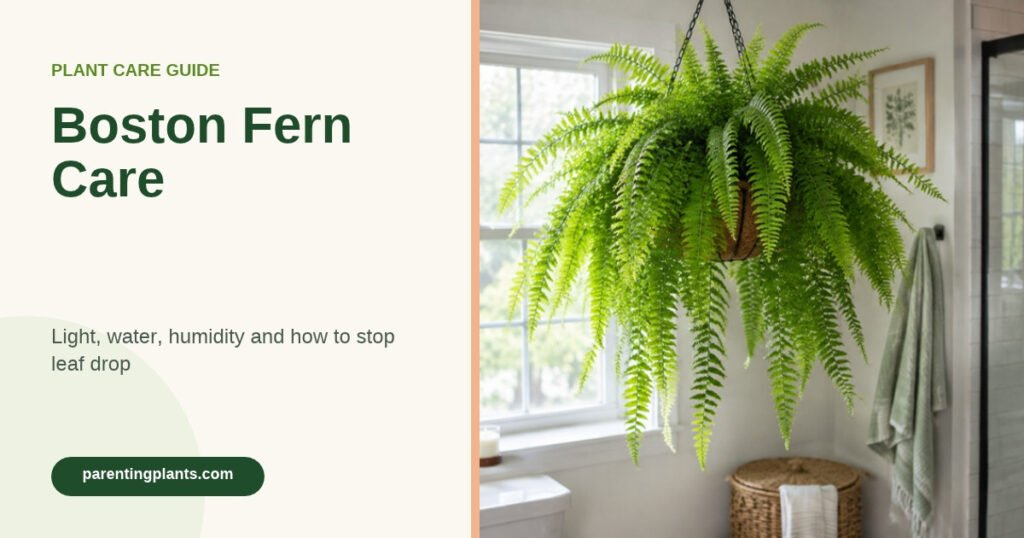
A healthy Boston fern is one of the most beautiful houseplants you can grow: a fountain of soft, arching fronds that looks stunning in a hanging basket. It also has a reputation for dropping leaflets all over the floor. The reason is almost always the same: indoor air that’s too dry and soil that’s been allowed to dry out. Fix those two things and a Boston fern becomes much easier to keep.
Short answer: Give a Boston fern bright, indirect light, keep the soil consistently moist but never soggy, and raise the humidity to 50% or more. Keep it at 60 to 75°F (16 to 24°C), away from heaters and vents, and feed at half strength once a month in spring and summer. Never let the soil dry out completely.
In this guide
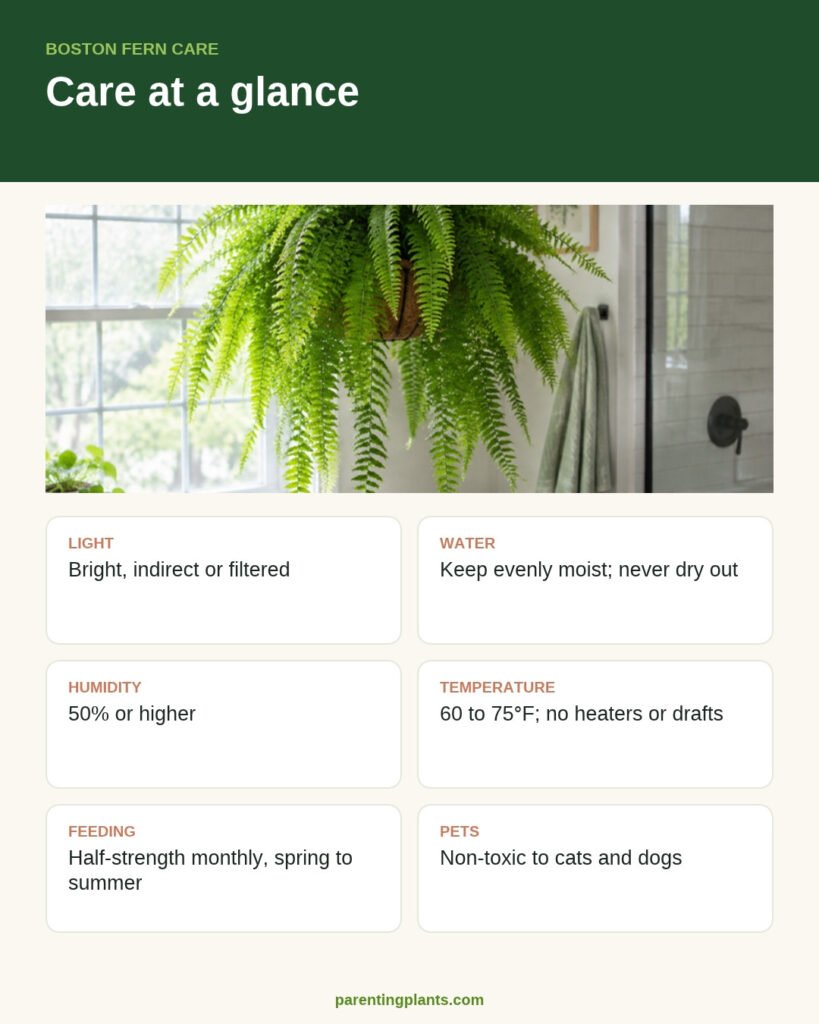
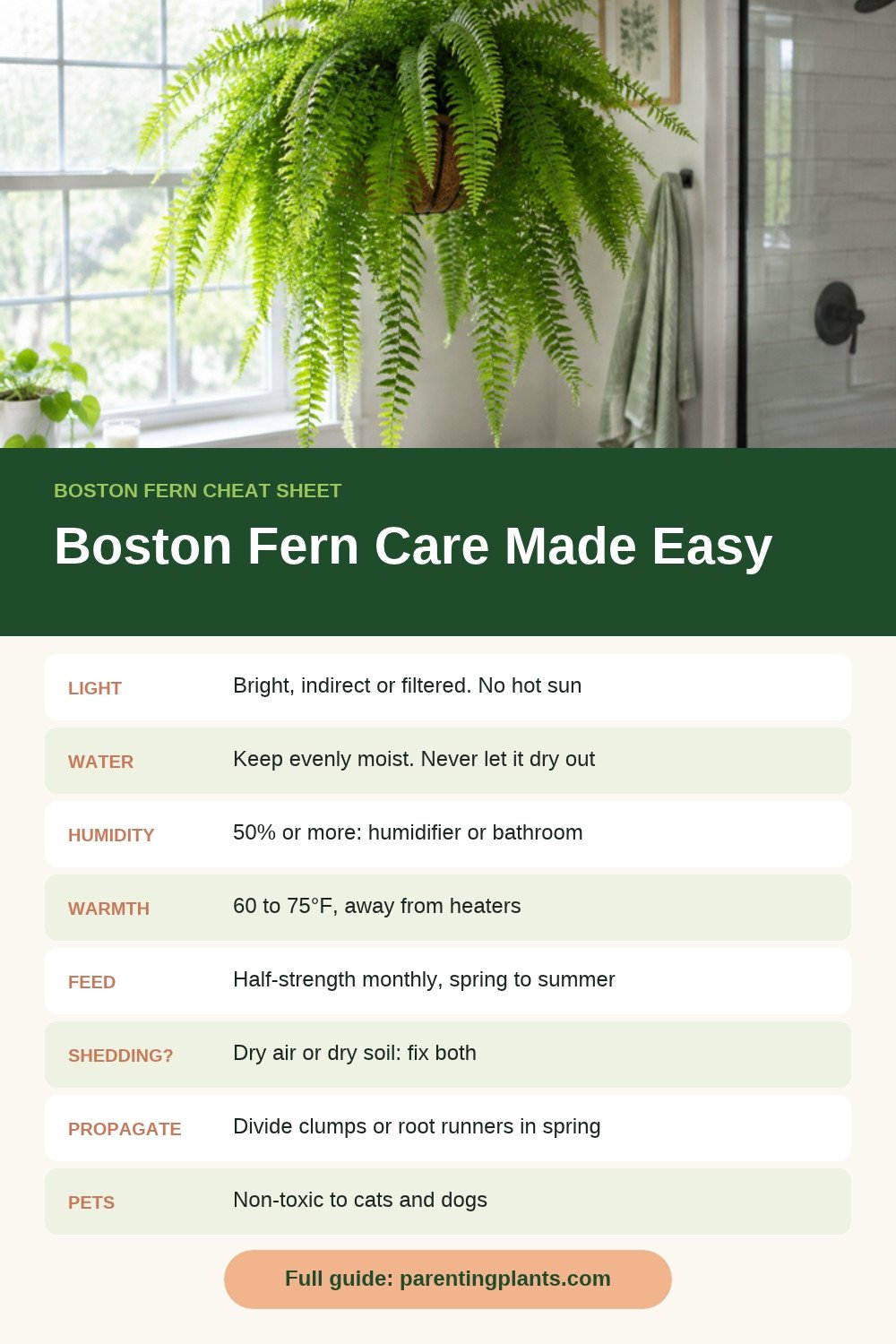
Boston fern care at a glance
| Need | What a Boston fern wants |
|---|---|
| Light | Bright, indirect or filtered light; no direct afternoon sun |
| Water | Keep evenly moist; water when the surface just starts to dry |
| Humidity | 50% or higher |
| Temperature | 60 to 75°F (16 to 24°C) by day; slightly cooler at night is fine |
| Soil | Rich, moisture-holding potting mix with a drainage hole |
| Fertilizer | Half-strength liquid feed monthly from spring to late summer |
| Size | Fronds typically 1 to 3 feet long |
| Pets | Non-toxic to cats and dogs (ASPCA) |
How much light does a Boston fern need?
Boston ferns like bright, indirect or filtered light, like the dappled light under trees. A spot near an east or north window, or a few feet back from a bright south or west window, is ideal. Direct afternoon sun scorches the fronds, turning them pale and crispy, while a dark corner leads to thin, sparse growth and yellowing. See our lighting guide.
How to water a Boston fern
Boston ferns need evenly moist soil at all times. Water as soon as the surface starts to feel dry, which can be every 2 to 3 days in a warm, bright room and about once a week in cooler weather. Letting the soil dry out completely is the fastest way to get crispy fronds and falling leaflets.
- Touch the soil surface every couple of days.
- As soon as it feels just dry, water thoroughly until it drains from the bottom.
- Empty the saucer so the roots don’t sit in water.
- For a dense, dried-out root ball, soak the whole pot in a bowl of water for 15 to 20 minutes, then drain.
Hanging baskets dry out fastest. Warm air rises, so a fern hanging near the ceiling needs checking more often than one on a stand. Lift the basket: a light pot needs water.
More in our watering guide.
Humidity: what keeps fronds green
Boston ferns need high humidity, ideally 50% or more. Most heated homes in winter are much drier, which is why ferns often struggle from autumn to spring.
- Use a humidifier nearby. This makes the biggest difference.
- Grow it in a bright bathroom or kitchen, where the air is naturally more humid.
- Group it with other plants.
- Double-pot it: set the pot inside a larger container packed with damp sphagnum moss.
- Keep it away from radiators, fireplaces, heating vents and air-conditioning.
Light misting helps a little but doesn’t last long, so pair it with one of the methods above. See our humidity guide.
Temperature
Boston ferns prefer moderate temperatures of 60 to 75°F (16 to 24°C), with slightly cooler nights. They struggle in hot, dry rooms and are damaged by frost, so keep them away from heaters and cold drafts.
Best soil and pot
Use a rich, moisture-holding potting mix, such as houseplant mix with some peat-free coir or compost added, that still drains freely. A plastic or glazed pot or a lined hanging basket keeps soil moist longer than terracotta. Always use a drainage hole; soggy soil leads to root rot. See our potting soil guide.
Fertilizing a Boston fern
Ferns are light feeders. Use a liquid houseplant fertilizer at half strength about once a month from spring to late summer, on damp soil. Don’t feed in winter, and don’t feed newly repotted ferns for a few months. Too much fertilizer burns the delicate roots and browns frond tips. See our fertilizing guide.
Bringing a Boston fern indoors for winter
Many people grow Boston ferns outside on a porch in summer. To keep yours through winter:
- Bring it in before night temperatures drop below 50°F (10°C).
- Check carefully for pests and hose off the fronds before bringing it inside.
- Trim off any brown or tired fronds at the base.
- Give it your brightest spot out of direct sun, away from heating vents.
- Keep the soil moist and humidity as high as you can. Some leaflet drop as it adjusts is normal.
How to propagate a Boston fern
Boston ferns don’t grow from cuttings, but they’re easy to multiply. The simplest way is division in spring, ideally when repotting a crowded plant.
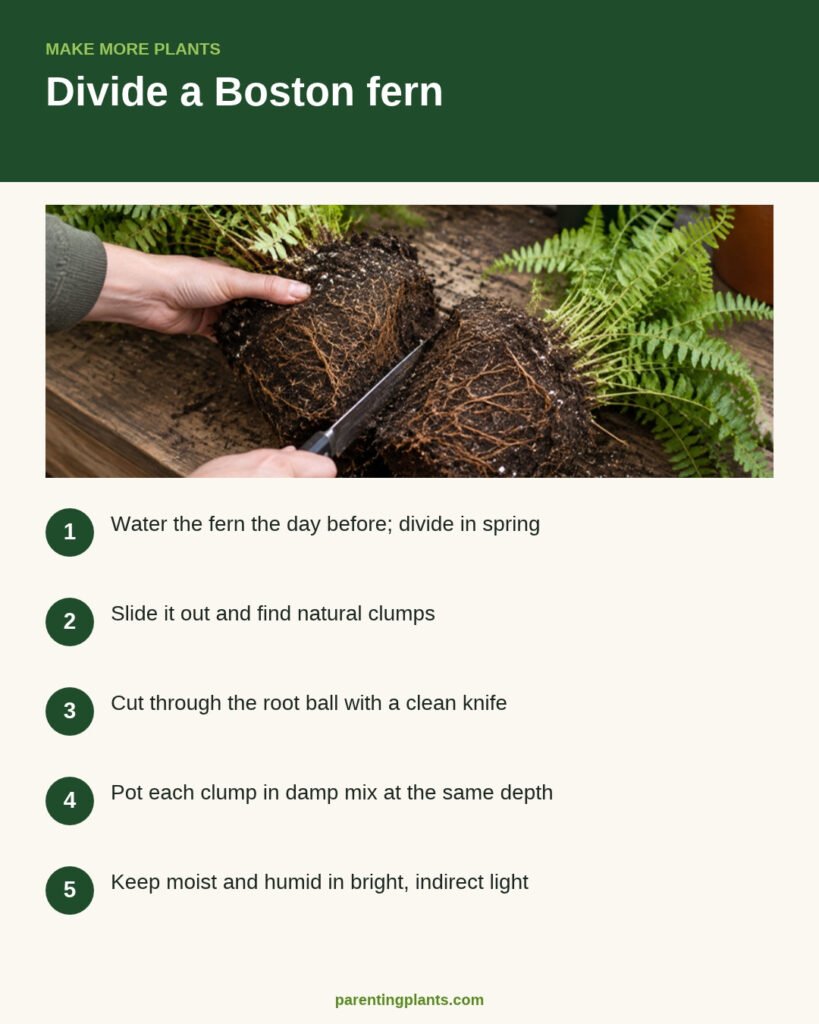
- Water the fern the day before.
- Slide it out of its pot and find natural clumps, each with fronds and roots.
- Cut through the root ball with a clean, sharp knife to separate the clumps.
- Pot each section in fresh, damp mix at the same depth as before.
- Keep the new plants moist, humid and in bright, indirect light while they settle.
Boston ferns also send out runners: thin, fuzzy stems without leaves. Pin one onto a small pot of damp mix next to the plant; once it roots and grows new fronds, cut it free. See our propagation guide.
Common Boston fern problems and fixes
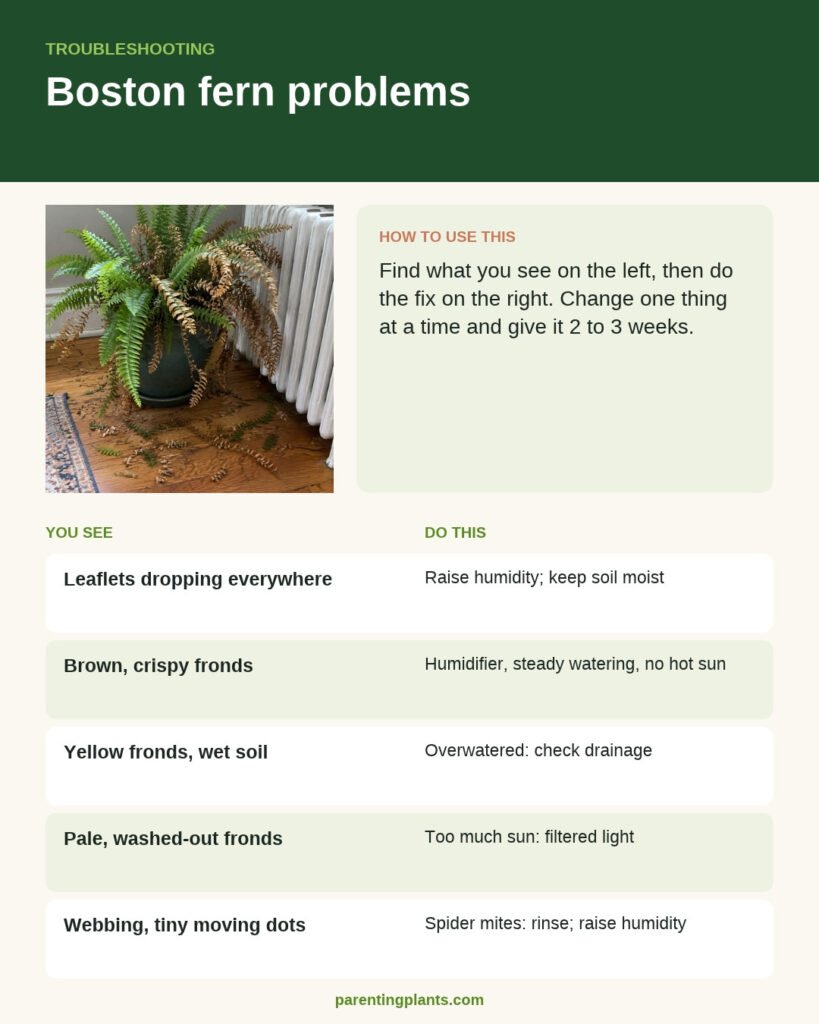
| What you see | Most likely cause | What to do |
|---|---|---|
| Leaflets dropping everywhere | Dry air or dry soil | Raise humidity; keep the soil evenly moist |
| Brown, crispy fronds | Low humidity, drying out or hot sun | Humidifier, steady watering, bright indirect light |
| Yellow fronds, soil wet | Overwatering or poor drainage | Let the surface dry slightly; check the drainage hole |
| Yellow fronds, soil dry | Underwatering | Soak the root ball; water more often |
| Pale, washed-out fronds | Too much direct sun | Move to filtered or indirect light |
| Thin, sparse growth | Too little light or crowded roots | More light; divide or repot in spring |
| Webbing or tiny moving dots | Spider mites | Rinse the fronds; raise humidity; test any spray on one frond first |
Cut fully brown fronds off at the base to make room for new growth. Ferns are sensitive to some sprays, so test any treatment on a small area first. More help in our guide to houseplant pests.
Easier ferns if yours keeps struggling
If your home is dry and your Boston fern keeps shedding, these relatives are more forgiving:
- Kimberly Queen fern (Nephrolepis obliterata): upright fronds and better tolerance of drier air.
- Bird’s nest fern (Asplenium nidus): solid, wavy fronds that don’t shed leaflets.
- Rabbit’s foot fern (Davallia): fuzzy creeping rhizomes and good tolerance of normal home conditions.
- Lemon button fern (Nephrolepis cordifolia ‘Duffii’): compact and tidy.
See all our beginner-friendly picks in houseplant varieties.
Is Boston fern safe for pets?
Yes. The ASPCA lists Boston fern as non-toxic to cats and dogs, so it’s a great choice for pet owners, although cats sometimes enjoy batting at the fronds. Note that asparagus fern is not a true fern and is toxic. See our list of pet-friendly houseplants.
Quick action checklist
- Bright, indirect or filtered light; no hot afternoon sun
- Keep the soil evenly moist; never let it dry out
- Raise humidity to 50% or more, especially in winter
- Keep it away from heaters, vents and cold drafts
- Feed at half strength monthly from spring to late summer
- Cut brown fronds at the base
- Divide crowded plants in spring
Save this for later: pin the cheat sheet below to your Pinterest plant board.
Boston fern shedding leaflets or turning brown?
The Houseplant Rescue Guide matches 26 common plant problems to a clear photo, then gives you simple steps to fix each one and stop it coming back. No jargon, 50 pages, with printable checklists.
Boston fern care FAQ
Why is my Boston fern dropping leaves?
Usually dry air or soil that has dried out. Keep the soil evenly moist and raise humidity to 50% or more, especially when the heating is on.
How often should I water a Boston fern?
Whenever the soil surface starts to feel dry, which can be every 2 to 3 days in warm rooms and about weekly in cooler weather.
Should I mist my Boston fern?
Misting helps only briefly. A humidifier, a bright bathroom or a pebble tray is much more effective.
Can a Boston fern live in low light?
It tolerates medium light but grows thin and yellows in dark spots. Bright, indirect light is best.
Why are my Boston fern fronds turning brown?
Dry air, dry soil, hot direct sun or too much fertilizer. Check humidity and watering first.
Can I keep a Boston fern outside in summer?
Yes, in a shady spot. Bring it inside before nights drop below 50°F (10°C).
Is Boston fern safe for cats?
Yes. The ASPCA lists Boston fern as non-toxic to cats and dogs.
Sources and further reading
Want to go deeper? These university extension and expert resources cover the same topic:
- Clemson Cooperative Extension: Indoor ferns
- UF/IFAS Extension: Boston fern (Nephrolepis exaltata)
- University of Wisconsin Extension: Boston fern
- ASPCA: Boston fern toxicity
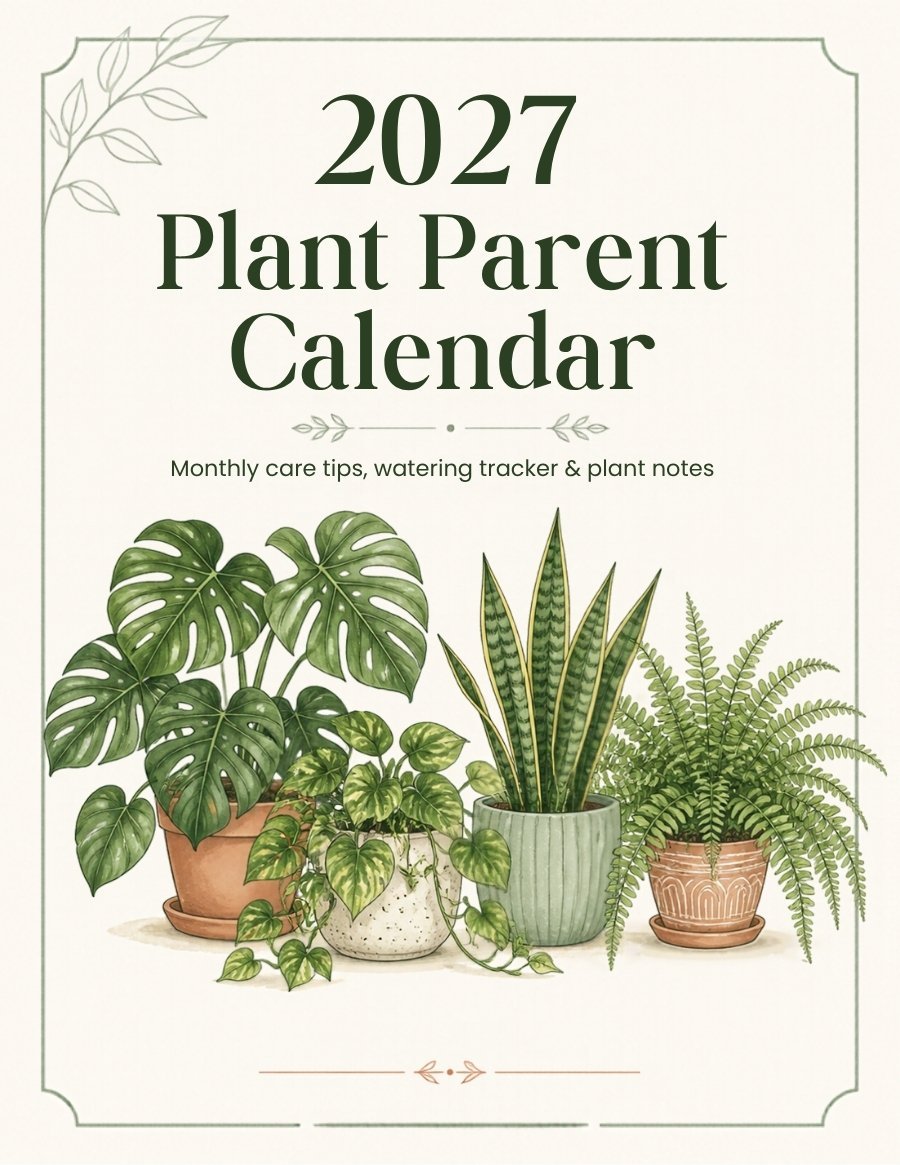
Free printable
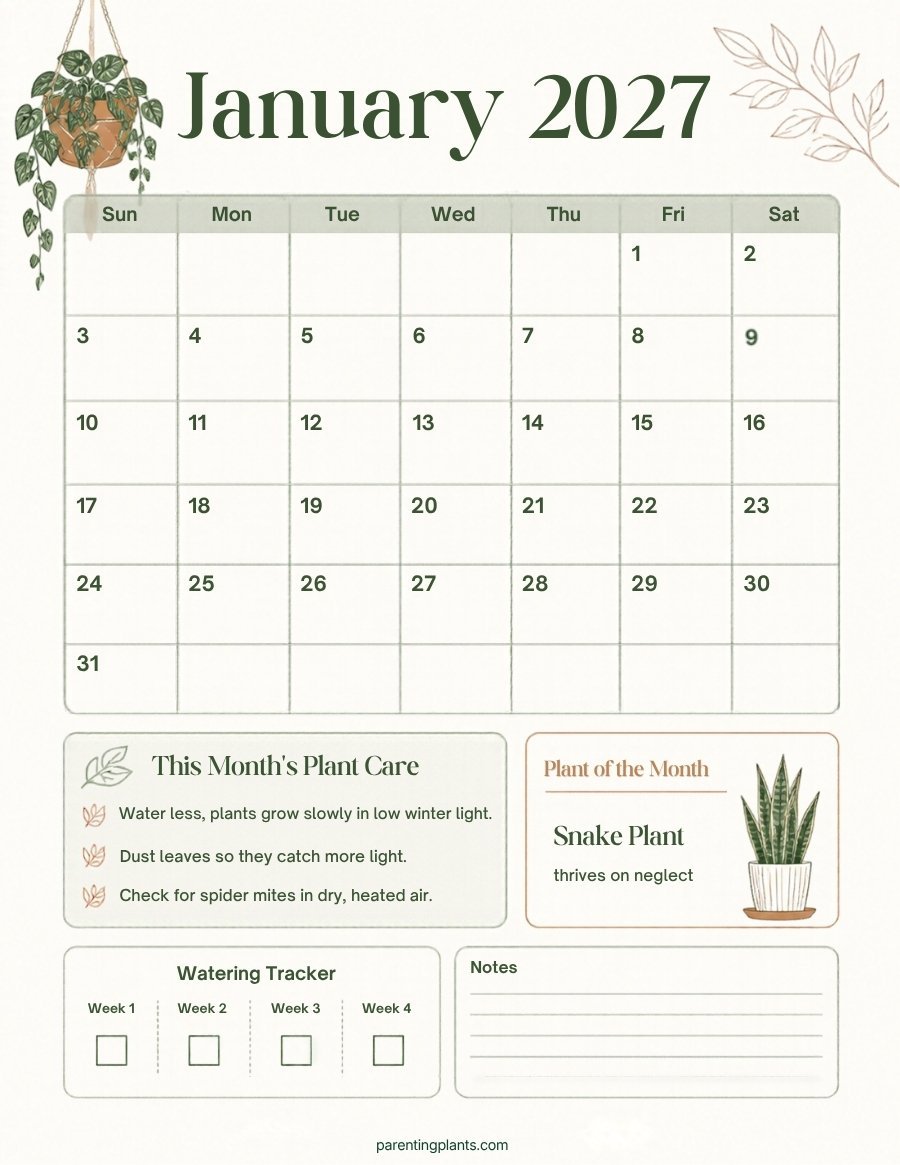
Get your free 2027 Plant Parent Calendar
14 beautiful printable pages to keep your houseplants happy all year. Enter your name and email and we'll send it straight to your inbox.
You're in!
Thank you, plant friend! 🪴
Your calendar is on its way to your inbox (check Promotions or Spam if you don't see it in a few minutes). You can also download it right now:
⬇ Download the 2027 calendar (PDF)