Special Offer: Use code ILOVEPLANTS for 25% off on all digital products! Shop Now →

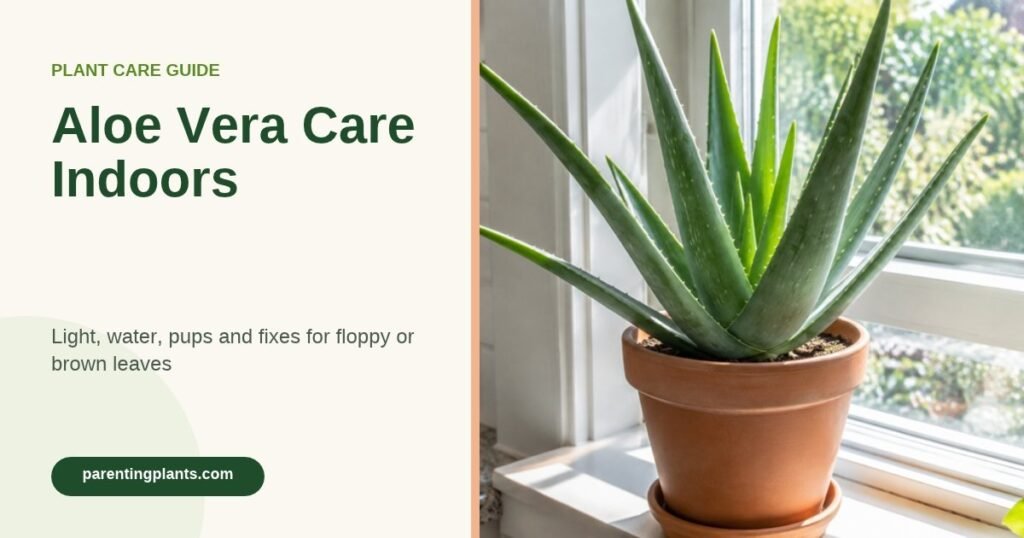
Aloe vera is a tough, good-looking succulent that thrives on a sunny windowsill and asks for very little. Most indoor aloes that struggle get too much water and too little light. Fix those two things and your aloe will stay firm, upright and produce baby plants you can share.
Short answer: Grow aloe vera indoors in your sunniest window, with at least 6 hours of bright light and some direct sun. Water deeply only when the soil is completely dry, usually every 2 to 3 weeks in spring and summer and every 4 to 6 weeks in winter. Plant it in a gritty cactus mix in a terracotta pot with a drainage hole.
In this guide
Aloe vera care at a glance
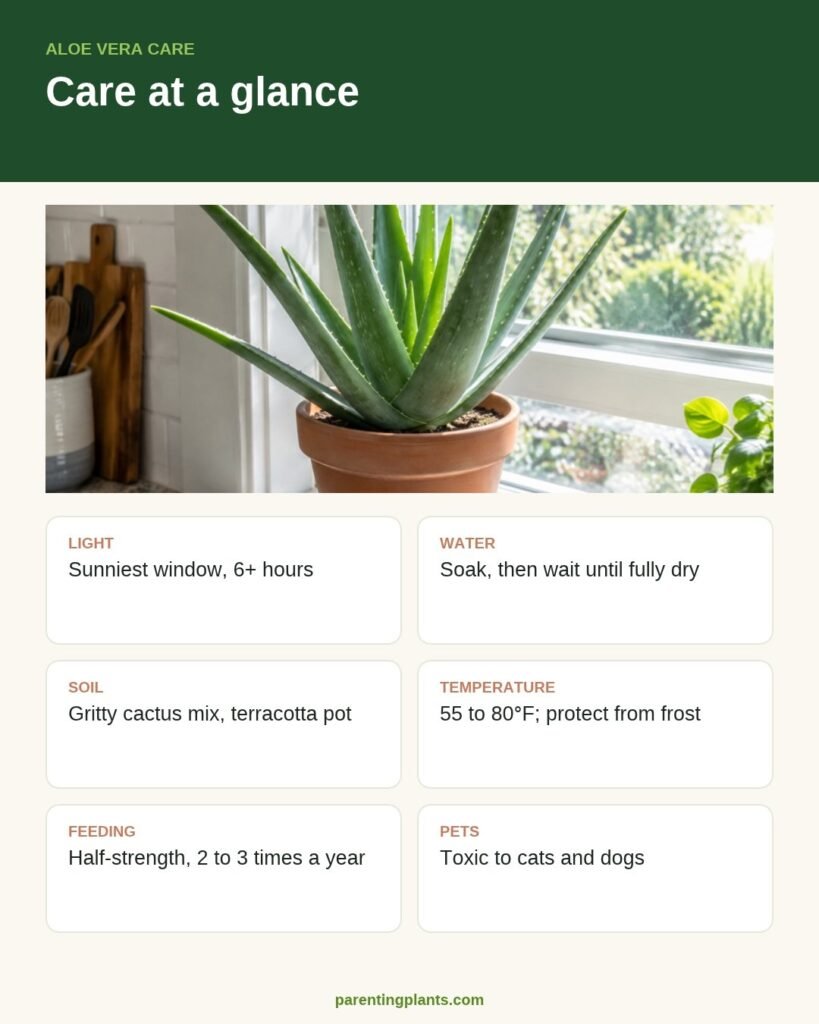
| Need | What aloe vera wants |
|---|---|
| Light | 6+ hours of bright light; a south or west window is best |
| Water | Soak, then wait until the soil is completely dry |
| Soil | Gritty cactus or succulent mix |
| Pot | Terracotta with a drainage hole, slightly wider than deep |
| Temperature | 55 to 80°F (13 to 27°C); protect from frost |
| Humidity | Dry indoor air is ideal |
| Fertilizer | Succulent fertilizer at half strength 2 to 3 times in spring and summer |
| Pets | Toxic to cats and dogs if eaten |
How much light does an indoor aloe need?
Aloe needs a lot of light: at least 6 hours of bright light a day, with some direct sun. A south- or west-facing windowsill is ideal. An east window can work if it is very bright.
- Too little light: leaves grow flat, thin and floppy, bend over at the base and lean toward the window. The plant looks pale and stretched.
- Good light: thick, firm leaves that grow upward in a tight rosette.
- Sudden strong sun: aloe can turn brown, red or orange when moved straight from a dim room into hot sun. Increase light over a week or two.
In a dark home, a grow light for 12 to 14 hours a day keeps aloe compact. See our lighting guide.
How often to water aloe vera indoors
Aloe stores water in its thick leaves, so it is built for drought. Use the soak and dry method:
- Check that the soil is dry all the way down. Push a wooden skewer to the bottom: if it comes out clean and dry, water.
- Water slowly and deeply until it drains out of the bottom.
- Empty the saucer. Never let aloe sit in water.
- Wait until the soil is completely dry again: about every 2 to 3 weeks in spring and summer, and every 4 to 6 weeks in winter.
Firm leaves are happy leaves. Thin, curling or wrinkled leaves mean the plant is thirsty. Soft, mushy, see-through or brown leaves near the base mean too much water.
Water the soil, not the center of the rosette, so water does not collect between the leaves. More tips in our watering guide.
Best soil and pot for aloe
Use a cactus or succulent mix, or blend regular potting mix half and half with perlite or coarse sand. The soil should never stay wet for long.
A terracotta pot is best: it breathes, helps the soil dry out, and its weight stops a top-heavy aloe from tipping over. Pick a pot about as wide as it is deep, or a little wider, with a drainage hole. See our potting soil guide.
Temperature and humidity
Aloe is happy at normal room temperatures of 55 to 80°F (13 to 27°C). It handles cool winter nights but must be kept away from frost and icy window glass. Dry indoor air is perfect. Do not mist aloe: water sitting on the leaves can lead to rot.
You can move aloe outside for summer once nights stay above 50°F (10°C). Start in light shade and move it into more sun over 1 to 2 weeks, and bring it back in before the first frost.
Fertilizing aloe vera
Aloe needs very little feeding. Use a succulent fertilizer at half strength 2 or 3 times between spring and late summer, on damp soil. Do not feed in autumn and winter. Too much fertilizer causes weak, floppy growth. See our fertilizing guide.
How to propagate aloe vera from pups
Healthy aloe plants send up baby plants, called pups, around the base. These are the easiest way to make new plants. Aloe leaf cuttings usually rot, so use pups instead.
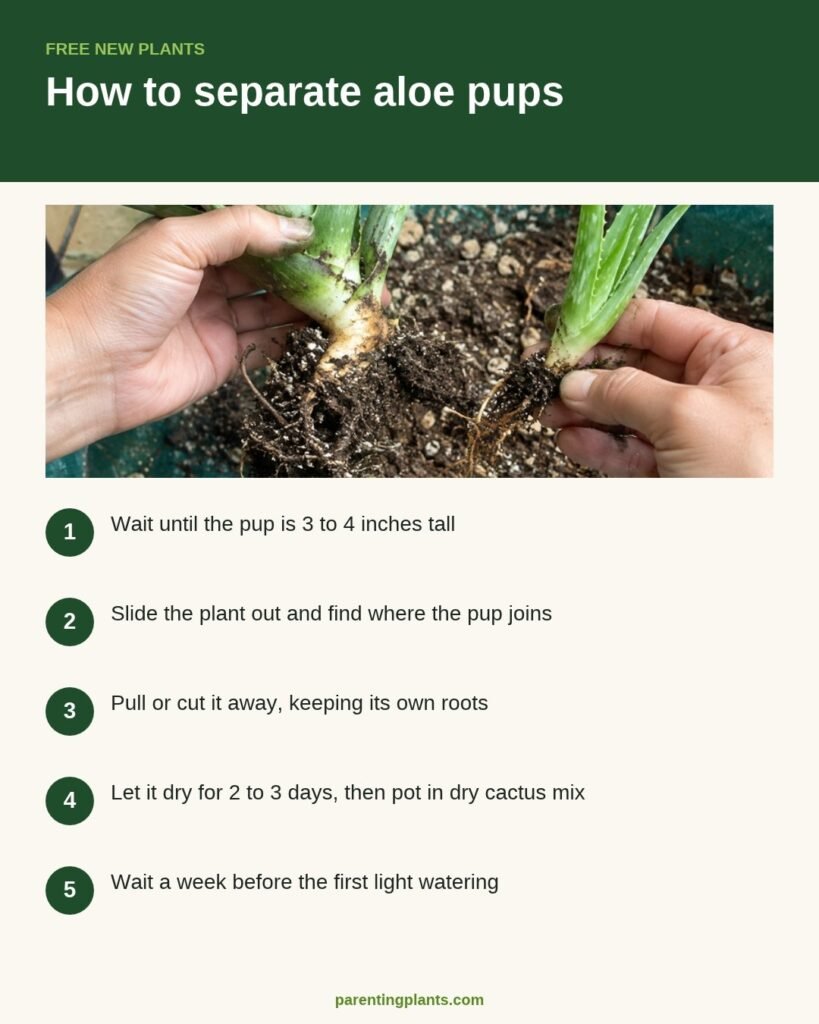
- Wait until a pup is 3 to 4 inches tall and has a few leaves of its own, ideally in spring or summer.
- Slide the whole plant out of its pot and brush away soil to see where the pup joins the mother.
- Gently pull or cut the pup away with a clean knife, keeping as many of its own roots as possible.
- Let the pup sit somewhere dry for 2 to 3 days so the cut can seal.
- Pot it in dry cactus mix in a small pot with a drainage hole.
- Wait about a week before the first light watering, then care for it like an adult aloe.
More methods in our propagation guide.
When and how to repot aloe
Repot every 2 to 3 years in spring, or when the plant is top-heavy, crowded with pups or roots fill the pot. Move up only one pot size and use fresh cactus mix. Wait a week before watering so any broken roots can heal. Our repotting guide covers each step.
Can you use the gel from your plant?
Many people grow aloe for its soothing gel. If you do, cut one of the outer, older leaves close to the base with a clean knife, and let the yellow sap (latex) drain out before using the clear gel inside, since the latex can irritate skin and upset stomachs. Only take a leaf or two at a time so the plant keeps growing. Test a small patch of skin first, and talk to a doctor before using aloe on a serious burn or taking it by mouth.
Common aloe vera problems and fixes
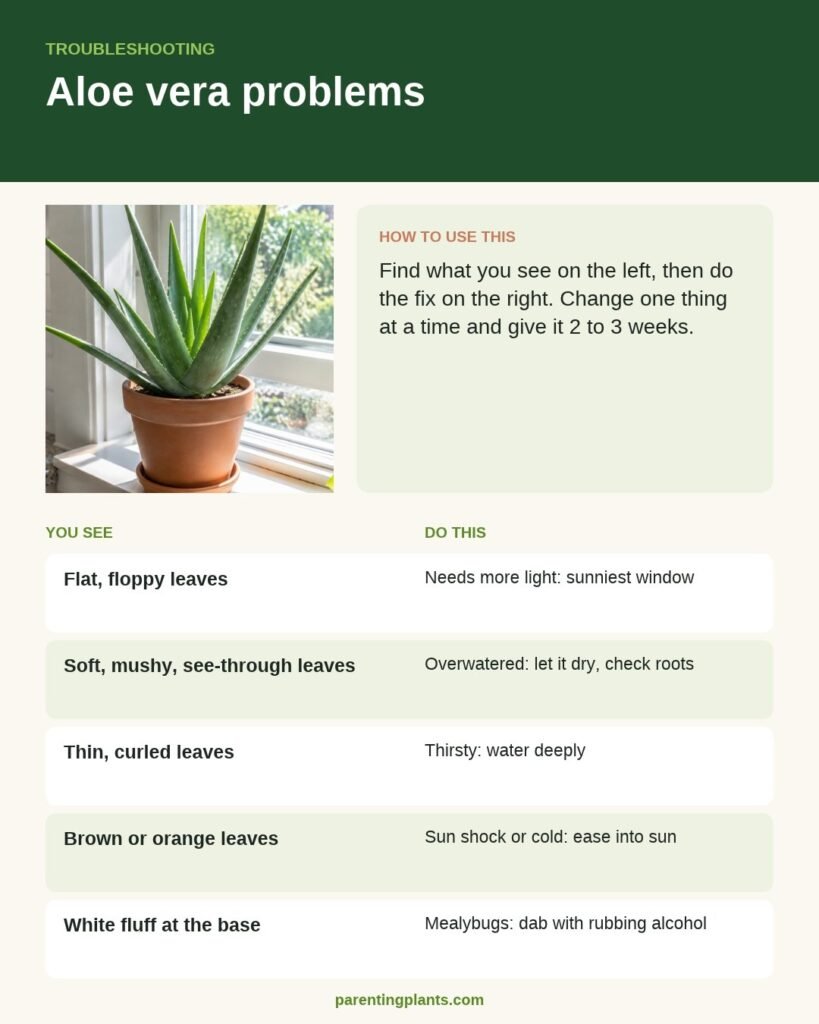
| What you see | Most likely cause | What to do |
|---|---|---|
| Leaves flat, floppy or bending at the base | Not enough light | Move to the sunniest window; increase light gradually |
| Soft, mushy, see-through leaves | Overwatering | Stop watering, let soil dry, check roots for rot |
| Brown, mushy base or stem | Root rot | Cut away rot, let healthy pieces dry, repot in fresh mix |
| Thin, curled or wrinkled leaves | Underwatering | Water deeply; leaves plump up in a few days |
| Brown, red or orange leaves | Sun stress after a sudden move, or cold | Ease into sun gradually; keep above 50°F |
| Brown, dry leaf tips | Long drought or salt build-up | Water deeply when dry; flush the pot every few months |
| No pups | Young plant, small pot or low light | Give more light; pups come with age |
| White cottony bugs at the base | Mealybugs | Dab with 70% rubbing alcohol; repeat weekly |
If the base goes soft, act fast with our root rot guide. Bugs? See our houseplant pests guide.
Is aloe vera toxic to pets?
Yes. The ASPCA lists aloe as toxic to cats and dogs. The plant contains saponins and anthraquinones that can cause vomiting, lethargy and diarrhea if eaten. Keep aloe out of reach and call your vet if your pet chews it. Looking for safer plants? See our pet-friendly houseplants.
Quick action checklist
- Give it your sunniest window: 6+ hours of bright light
- Water deeply only when the soil is completely dry
- Use cactus mix in a terracotta pot with a drainage hole
- Water even less in winter and never let it sit in water
- Feed only 2 to 3 times in spring and summer
- Separate pups when they are 3 to 4 inches tall
- Keep it out of reach of cats and dogs
Aloe leaves going soft, brown or floppy?
The Houseplant Rescue Guide matches 26 common plant problems to a clear photo, then gives you simple steps to fix each one and stop it coming back. No jargon, 50 pages, with printable checklists.
Aloe vera care FAQ
How often should I water an aloe vera plant indoors?
Only when the soil is completely dry, usually every 2 to 3 weeks in spring and summer and every 4 to 6 weeks in winter. Water deeply, then let it drain.
Why is my aloe vera drooping or falling over?
The most common cause is not enough light, which makes leaves grow thin and floppy. Overwatering and a pot that is too small or light can also cause it.
Why are my aloe leaves turning brown?
Brown leaves usually mean too much direct sun after a sudden move, cold, overwatering or salt build-up. Mushy brown leaves point to overwatering; dry brown tips point to drought or salts.
Can aloe vera grow in low light?
Not well. In low light it stretches, goes pale and flops over. Give it a sunny window or a grow light.
Should I mist my aloe plant?
No. Aloe likes dry air, and water sitting on its leaves can cause rot.
How do I get my aloe to make pups?
Give it plenty of light, avoid overwatering and be patient. Mature plants that are slightly snug in their pot produce pups most freely.
Is aloe vera safe for cats and dogs?
No. The ASPCA lists aloe as toxic to cats and dogs. Eating it can cause vomiting, lethargy and diarrhea.
Sources and further reading
Want to go deeper? These university extension and expert resources cover the same topic:
- NC State Extension Plant Toolbox: Aloe vera
- Iowa State University Extension: Growing succulents indoors
- ASPCA: Aloe toxicity

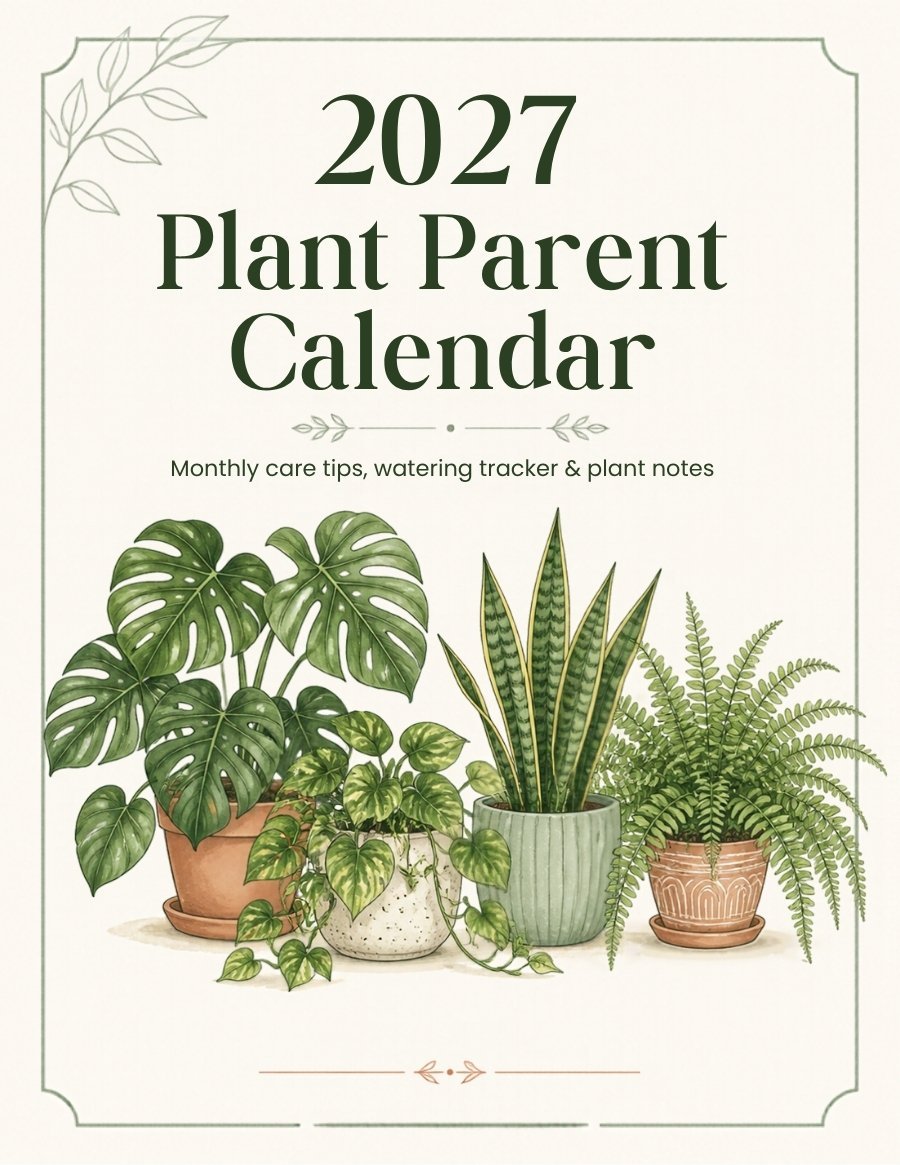
Free printable
Get your free 2027 Plant Parent Calendar
14 beautiful printable pages to keep your houseplants happy all year. Enter your name and email and we'll send it straight to your inbox.
You're in!
Thank you, plant friend! 🪴
Your calendar is on its way to your inbox (check Promotions or Spam if you don't see it in a few minutes). You can also download it right now:
⬇ Download the 2027 calendar (PDF)