Special Offer: Use code ILOVEPLANTS for 25% off on all digital products! Shop Now →

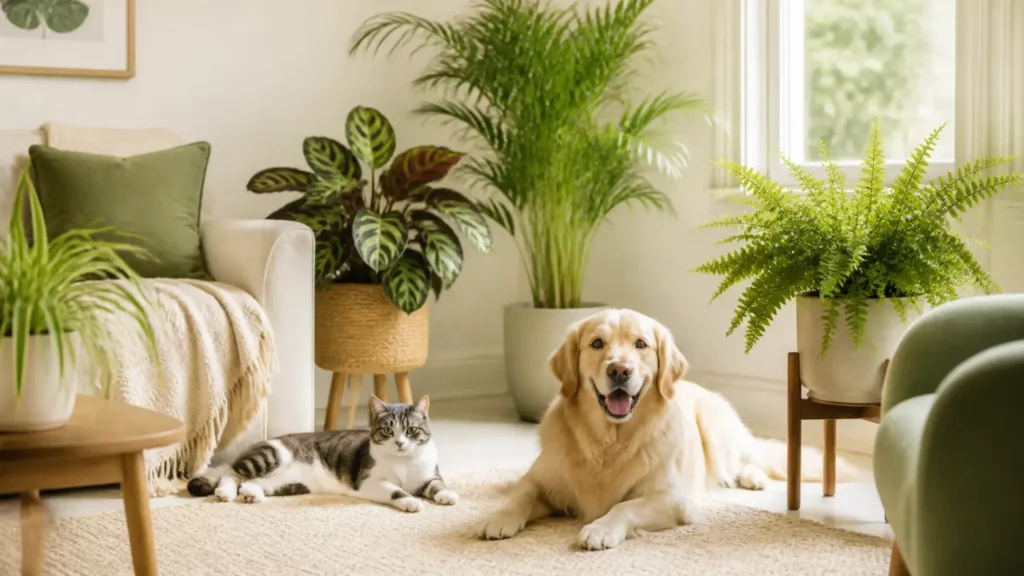
Cats chew leaves, puppies dig in pots, and many of the most popular houseplants, like pothos, monstera and snake plants, are toxic to pets. The good news: plenty of beautiful, easy houseplants are non-toxic to cats and dogs, so you do not have to choose between a green home and a safe one.
This guide lists the best pet-friendly houseplants with simple care for each, the common plants to keep away from pets, and what to do if your pet eats a plant.
Short answer: The best pet-friendly houseplants are spider plant, calathea and prayer plant, parlor palm, areca palm, Boston fern, peperomia, haworthia, African violet, Christmas cactus, cast iron plant, money tree, hoya and polka dot plant. All are listed as non-toxic to cats and dogs by the ASPCA. Avoid pothos, monstera, philodendron, snake plant, ZZ plant, peace lily, aloe, jade, dieffenbachia and ficus. Even safe plants can cause a mild upset stomach if eaten in large amounts.
In this guide
Pet-friendly houseplants at a glance
| Plant | Light | Water | Difficulty |
|---|---|---|---|
| Spider plant | Bright, indirect | When top inch is dry | Very easy |
| Calathea / prayer plant | Medium, indirect | Keep lightly moist | Moderate |
| Parlor palm | Low to bright, indirect | When top inch is dry | Easy |
| Areca palm | Bright, indirect | When top inch is dry | Moderate |
| Boston fern | Bright, indirect | Keep lightly moist | Moderate |
| Peperomia | Medium to bright | When half the soil is dry | Very easy |
| Haworthia | Bright, some sun | When fully dry | Very easy |
| African violet | Bright, indirect | When top is dry, from below | Moderate |
| Christmas cactus | Bright, indirect | When top inch is dry | Easy |
| Cast iron plant | Low to medium | When top 2 inches are dry | Very easy |
| Money tree | Bright, indirect | When top 2 inches are dry | Easy |
| Hoya | Bright, indirect | When mostly dry | Easy |
| Polka dot plant | Bright, indirect | Keep lightly moist | Moderate |
All plants on this list appear as non-toxic to cats and dogs on the ASPCA toxic and non-toxic plants list. Always check the exact species, because similar-looking plants can differ.
The best pet-friendly houseplants
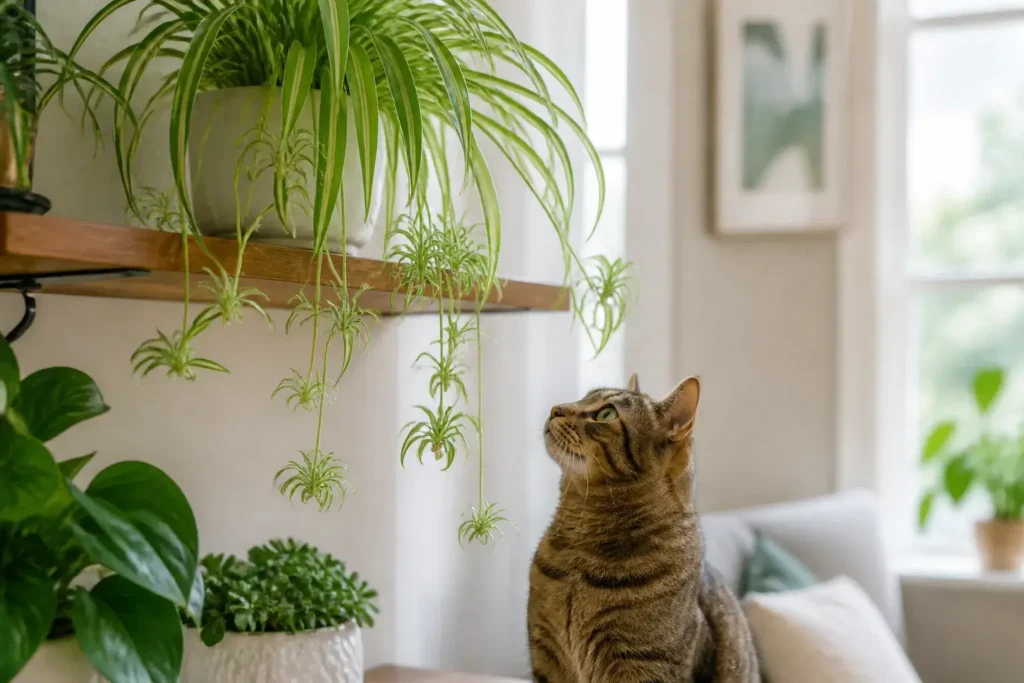
1. Spider plant
Chlorophytum comosum. The classic beginner plant: tough, fast-growing and full of arching striped leaves and baby plantlets.
Care: Bright, indirect light. Water when the top inch of soil is dry. Brown tips often come from tap water minerals; filtered water helps.
Pet tip: Cats love to chew the dangling leaves. It is non-toxic, but a lot can cause mild vomiting. Hang it out of reach if your cat is a nibbler.
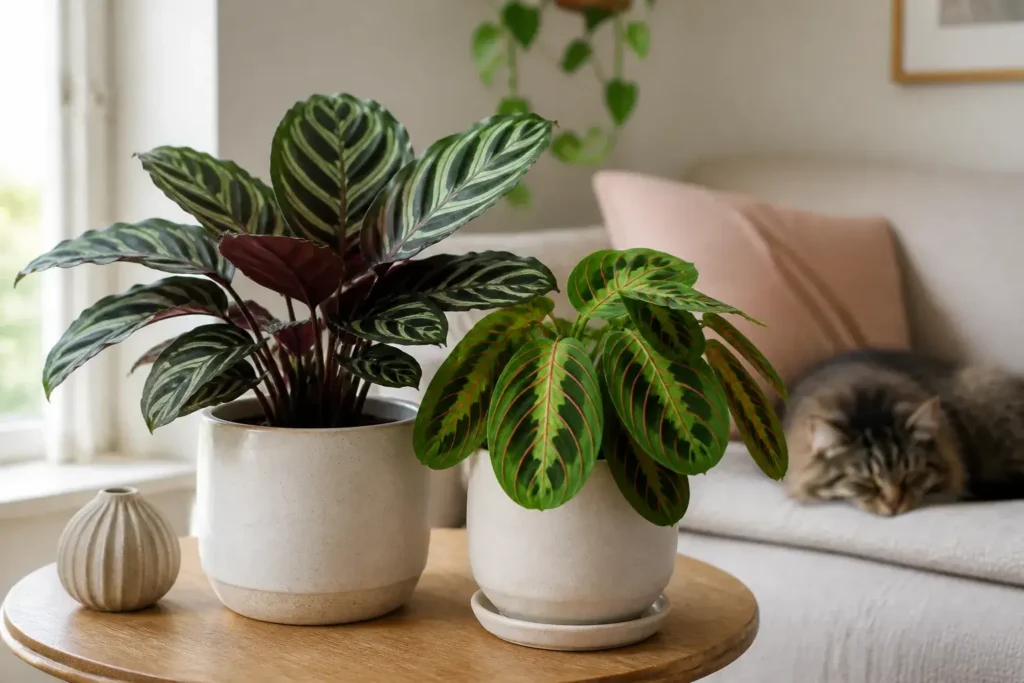
2. Calathea and prayer plant
Calathea (Goeppertia) and Maranta leuconeura. Stunning patterned leaves, and prayer plants fold their leaves up at night.
Care: Medium to bright, indirect light, no direct sun. Keep the soil lightly moist and use filtered water. They like humidity of 50% or more.
Pet tip: A great swap for people who love the look of toxic plants like dieffenbachia.
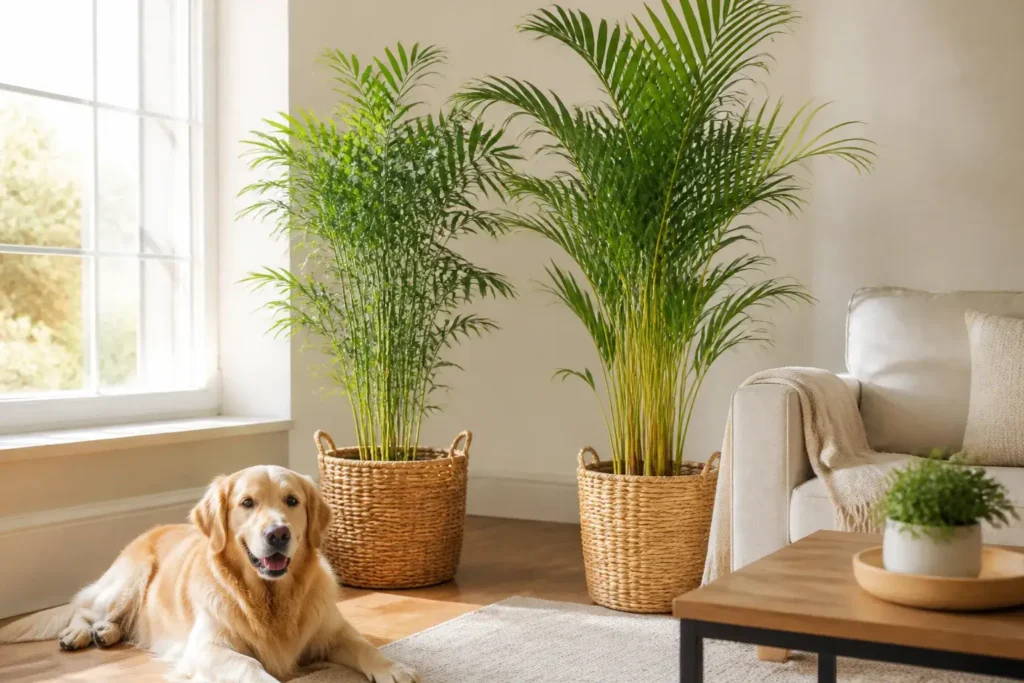
3. Parlor palm
Chamaedorea elegans. A graceful, slow-growing palm that copes with lower light.
Care: Low to bright, indirect light. Water when the top inch is dry. Avoid soggy soil.
Pet tip: A safe choice for a dog-friendly living room corner.
4. Areca palm
Dypsis lutescens. Big, feathery and tropical; a pet-safe alternative to a fiddle leaf fig as a statement plant.
Care: Bright, indirect light. Water when the top inch is dry. Brown tips mean dry air or uneven watering.
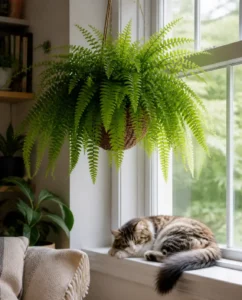
5. Boston fern
Nephrolepis exaltata. Lush, full fronds that look great in a hanging basket.
Care: Bright, indirect light. Keep the soil evenly moist and humidity high. A bright bathroom is ideal.
Pet tip: Hanging it keeps it safe from digging dogs and fronds stay out of reach.
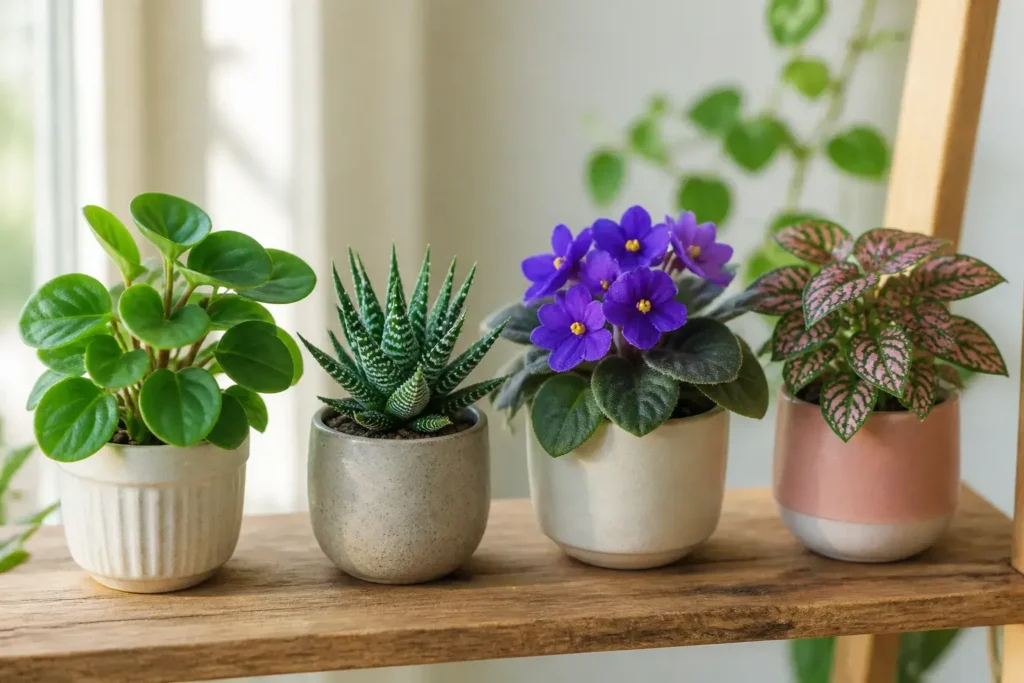
6. Peperomia
Peperomia spp.. Compact, thick-leaved and nearly indestructible, with dozens of shapes and colours.
Care: Medium to bright, indirect light. Water when half the soil is dry. Its thick leaves store water.
7. Haworthia
Haworthiopsis / Haworthia spp.. A small, striped succulent that looks like an aloe but is safe for pets.
Care: Bright light with a little direct sun. Water only when the soil is completely dry. Use gritty cactus mix.
Pet tip: Choose this instead of aloe vera, which is toxic to cats and dogs.
8. African violet
Saintpaulia spp.. One of the few houseplants that flowers almost all year indoors.
Care: Bright, indirect light. Water from below when the top of the soil is dry and keep water off the fuzzy leaves.
9. Christmas cactus
Schlumbergera spp.. Easy and long-lived, with bright flowers in winter.
Care: Bright, indirect light. Water when the top inch is dry. Cool nights in autumn trigger blooms.
Pet tip: Pet safe, unlike many other holiday plants such as amaryllis and lilies.
10. Cast iron plant
Aspidistra elatior. Earned its name by surviving low light, dry air and neglect.
Care: Low to medium light. Water when the top 2 inches are dry.
Pet tip: A safe alternative to the toxic snake plant or ZZ plant for dark corners.
11. Money tree
Pachira aquatica. A braided trunk with glossy, hand-shaped leaves; a popular gift plant.
Care: Bright, indirect light. Water when the top 2 inches are dry. Rotate it for even growth.
12. Hoya
Hoya carnosa. A trailing vine with waxy leaves and sweet, star-shaped flower clusters.
Care: Bright, indirect light. Let the soil dry out mostly between waterings.
Pet tip: A pet-safe swap for pothos and philodendron if you love trailing vines.
13. Polka dot plant
Hypoestes phyllostachya. Bright pink, red or white speckled leaves that add colour fast.
Care: Bright, indirect light. Keep the soil lightly moist. Pinch tips to keep it bushy.
Also pet safe: bird’s nest fern, ponytail palm, echeveria and rattlesnake plant. See our propagation guide to grow more of these for free.
Common houseplants that are toxic to pets
These popular plants are listed as toxic to cats and dogs. Keep them out of reach, or swap them for a safe alternative:
| Toxic plant | What it can cause | Pet-safe swap |
|---|---|---|
| Pothos, philodendron | Mouth irritation, drooling, vomiting | Hoya |
| Monstera | Mouth irritation, drooling, vomiting | Calathea or areca palm |
| Snake plant, ZZ plant | Vomiting, diarrhea | Cast iron plant |
| Peace lily | Mouth irritation, drooling | Calathea or Boston fern |
| Aloe vera, jade plant | Vomiting, lethargy | Haworthia, echeveria |
| Dieffenbachia | Severe mouth irritation, swelling | Prayer plant |
| Fiddle leaf fig, rubber plant | Mouth and skin irritation | Money tree or parlor palm |
| Dracaena | Vomiting, drooling | Parlor palm |
True lilies (Lilium) and daylilies (Hemerocallis) are extremely dangerous to cats. Even a small amount of pollen, a leaf or the vase water can cause kidney failure. Never keep them, including in cut flower bouquets, in a home with cats.
Already own toxic plants? See our Monstera deliciosa care guide and snake plant care guide for how to grow them safely out of reach.
How to keep pets and plants safe together

- Know the exact plant name before bringing it home. Common names can be misleading.
- Use height: hanging planters, high shelves and tall plant stands keep plants away from curious paws.
- Cover the soil with large pebbles or a mesh topper to stop digging and soil eating.
- Offer cat grass (wheat or oat grass) as a chewing alternative.
- Check products, not just plants. Fertilizers, systemic pesticides and some leaf shines can be harmful. Store them away and keep pets off treated plants until dry.
- Clean up fallen leaves and flowers, especially from toxic plants.
- Watch for chewing habits. Constant plant chewing can mean boredom; more play and enrichment helps.
Need to treat pests? Our houseplant pests guide covers gentle options like rinsing and insecticidal soap. Find hanging planters and stands in our houseplant supplies guide.
What to do if your pet eats a plant
- Remove any plant material from your pet’s mouth and move the plant away.
- Identify the plant. Take a photo or the plant tag with you.
- Call your vet or a pet poison hotline right away, even if your pet seems fine. In the US, the ASPCA Animal Poison Control Center is available 24/7 at (888) 426-4435 (a consultation fee may apply).
- Do not try to make your pet vomit unless a vet tells you to.
- Watch for symptoms: drooling, pawing at the mouth, vomiting, diarrhea, lethargy or loss of appetite.
Call your vet immediately if your cat has had any contact with a lily, or if your pet shows trouble breathing, swelling, seizures or collapse.
This guide is for general information and is not veterinary advice. Always contact your vet with concerns about your pet.
Picked your pet-safe plants? The next step is keeping them healthy.
The Houseplant Rescue Guide matches 26 common plant problems to a clear photo, then gives you simple steps to fix each one and stop it coming back. No jargon, 50 pages, with printable checklists.
Quick action checklist
- Check every plant against the ASPCA list before buying
- Choose from safe plants like spider plant, calathea, palms and peperomia
- Move toxic plants out of reach or rehome them
- Never keep lilies in a home with cats
- Use hanging planters and high shelves for nibblers
- Store fertilizers and sprays away from pets
- Save your vet and poison hotline numbers in your phone
Keep a list of every plant in your home, with its safety status, in the Houseplant Journal. For light and watering basics, see our lighting guide and watering guide.
Pet-friendly houseplants FAQ
What houseplants are safe for cats and dogs?
Spider plant, calathea, prayer plant, parlor palm, areca palm, Boston fern, peperomia, haworthia, African violet, Christmas cactus, cast iron plant, money tree, hoya and polka dot plant are all listed as non-toxic to cats and dogs by the ASPCA.
Is a spider plant safe for cats?
Yes. Spider plants are non-toxic to cats and dogs. Cats often love chewing them, and eating a lot may cause mild vomiting, so hang it out of reach if your cat overdoes it.
Which common houseplants are toxic to pets?
Pothos, monstera, philodendron, snake plant, ZZ plant, peace lily, aloe vera, jade plant, dieffenbachia, dracaena and ficus are toxic to cats and dogs. True lilies are especially dangerous to cats.
Can non-toxic plants still make my pet sick?
Yes, mildly. Non-toxic means the plant is not poisonous, but eating a lot of any plant can cause vomiting or an upset stomach. Fertilizers and pesticides on the plant can also be harmful.
What should I do if my dog or cat eats a toxic plant?
Remove the plant, identify it, and call your vet or the ASPCA Animal Poison Control Center at (888) 426-4435 right away. Do not make your pet vomit unless a vet tells you to.
Is a money tree safe for pets?
Yes. Pachira aquatica, the money tree, is listed as non-toxic to cats and dogs. Do not confuse it with the jade plant, sometimes also called a money plant, which is toxic.
Sources and further reading
Want to go deeper? These university extension and expert resources cover the same topic:
- ASPCA: Toxic and non-toxic plants list
- ASPCA: Animal Poison Control Center
- Pet Poison Helpline: 24/7 animal poison control
[…] pawing at the mouth or vomiting. Keep it out of reach, wash your hands after pruning, and see our pet-friendly houseplants for safer […]
[…] The ASPCA lists the bird of paradise (Strelitzia reginae) as mildly toxic to cats and dogs. Eating the leaves, flowers or seeds can cause mild stomach upset, vomiting and drowsiness. Do not confuse it with the outdoor shrub Caesalpinia, also called bird of paradise, which is more toxic. For pet homes, see our pet-friendly houseplants. […]
[…] cause drooling and vomiting if chewed. Keep it out of reach of curious pets, or choose one of our pet-friendly houseplants […]
[…] cats may get dilated pupils. Keep arrangements up high, out of reach of pets, or choose from our pet-friendly houseplants […]
[…] Most of the methods here are pet-friendly. BTi only affects the larvae of certain flies and mosquitoes and is considered safe around cats and dogs. Keep sticky traps out of reach, because fur and paws get stuck on them, and keep peroxide and vinegar dishes where pets cannot drink them. Looking for plants that are safe too? See our pet-friendly houseplants. […]
[…] Pet safety is based on the ASPCA toxic and non-toxic plant list. If you have cats or dogs, see our full list of pet-friendly houseplants. […]