Special Offer: Use code ILOVEPLANTS for 25% off on all digital products! Shop Now →

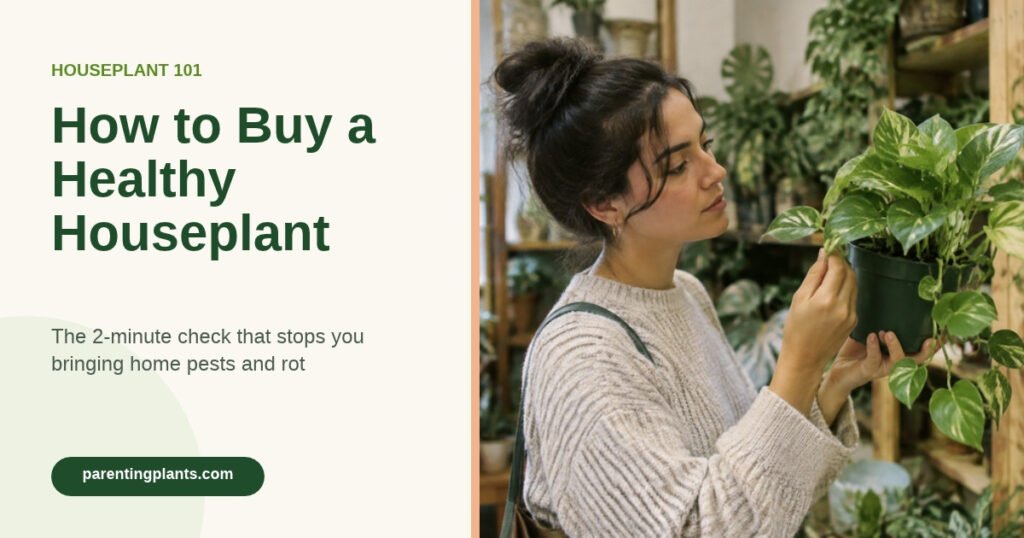
Most houseplant problems don’t start at home. They start in the shop, when we fall for a beautiful plant without checking its leaves, roots or the light it needs. The good news is that picking a healthy plant takes about two minutes once you know what to look for. This guide walks you through exactly what to check, the red flags to walk away from and how to get your new plant home safely.
Short answer: Before you shop, know how much light your spot gets. In the shop, choose a plant with firm, evenly colored leaves and fresh new growth, check the undersides of leaves and the stems for pests, make sure the soil isn’t soggy or smelly, and look for white or light tan roots rather than brown, mushy ones. Skip plants with webbing, sticky leaves, lots of yellowing or roots circling out of the bottom of the pot.
In this guide
Before you shop: 3 questions to answer
The best plant in the shop is the wrong plant if it can’t live where you’ll put it. Answer these three questions first and you’ll avoid most beginner disappointments:
- How much light does the spot get? Stand where the plant will go at midday. Can you read comfortably without a lamp? Can you see the sky from there? Our light guide shows you how to check in a minute.
- How much time do you have? If you travel or forget to water, choose a forgiving plant like a snake plant, ZZ plant or pothos. See our best houseplants for beginners.
- Do you have pets or small children? Many popular plants are toxic if chewed. Check our list of pet-friendly houseplants before you buy.
Darker home? Don’t fight it. Start with a plant that genuinely copes with less light, from our list of low-light houseplants, and you’ll have far more success.
Where to buy houseplants
You can find great plants almost anywhere, but the place affects how carefully you need to check them.
| Where | Pros | Watch out for |
|---|---|---|
| Local garden center or plant shop | Healthiest stock, staff who can advise, plants kept in good light | Higher prices on rare plants |
| Supermarket or big-box store | Cheap, convenient, common easy plants | Dark aisles, irregular watering, pests and soggy soil |
| Online shop | Huge choice, rare varieties | Shipping stress in cold or heat; you can’t inspect it first |
| Plant swaps and friends | Free or cheap, often well-adapted cuttings | Hitchhiking pests: always quarantine |
A useful rule from university extension advice: look at the whole shop, not just the plant you want. If lots of plants nearby are wilted, yellow or covered in bugs, shop somewhere else, because problems spread between plants on the same bench.
The 6-point health check

Pick the plant up, turn it around in good light and run through these six checks. It takes a minute or two.
| Check | Healthy sign | Warning sign |
|---|---|---|
| Leaves | Firm, evenly colored, typical shape for the plant | Yellowing, brown crispy edges, spots, holes or wilting |
| Leaf undersides and joints | Clean | Webbing, white fluff, tiny bumps, sticky or shiny residue |
| Stems | Firm and upright at the soil line | Soft, dark or mushy near the soil |
| New growth | Fresh leaves or buds coming | No new growth, or new leaves much smaller and paler |
| Soil | Slightly moist, smells earthy | Soggy, sour smell, mold, or bone dry and pulling away from the pot |
| Roots and shape | White or tan roots; full, balanced plant | Brown mushy roots, roots circling out of the holes, leggy and sparse |
Look where pests hide: under the leaves, where the leaf meets the stem and in new, folded leaves. Mealybugs look like tiny bits of cotton, scale like small brown bumps, and spider mites leave fine webbing and pale speckles. Learn to spot them in our houseplant pests guide.
How to check the roots (without upsetting the shop)
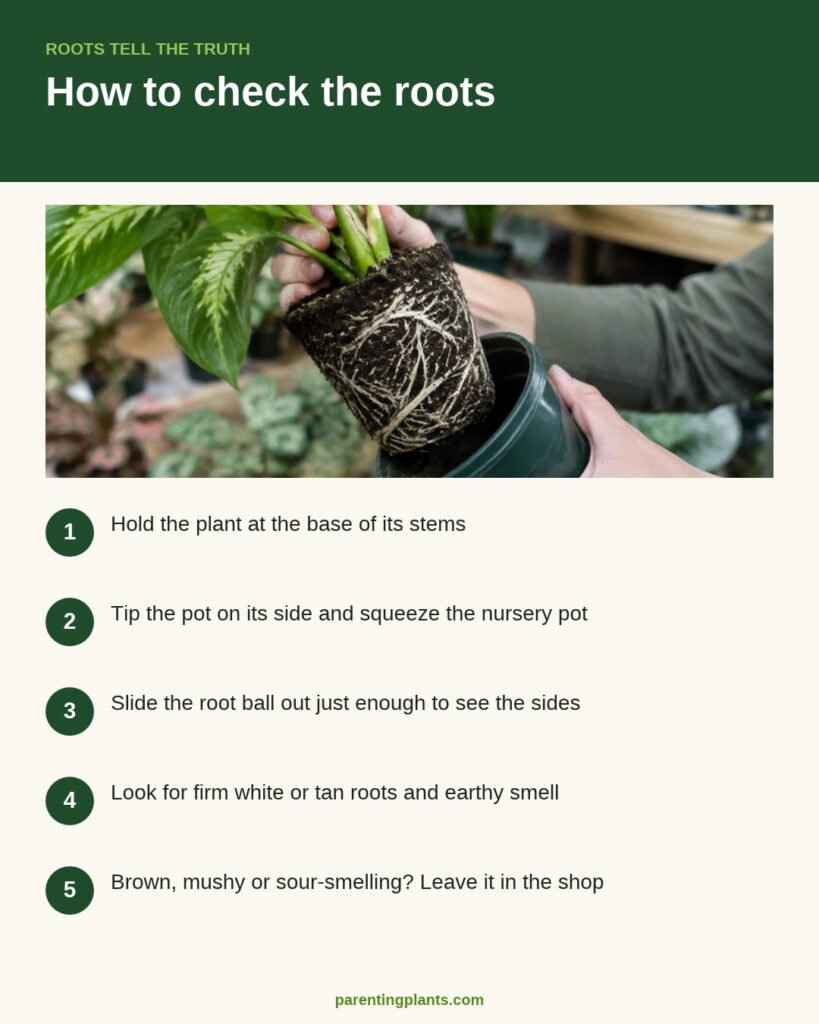
Roots tell you more than leaves, because a plant can look fine on top for weeks while its roots rot. Most garden centers don’t mind a quick, careful look, but ask if you’re unsure.
- Hold the plant at the base of its stems with one hand.
- Turn the pot on its side and gently squeeze the plastic nursery pot.
- Slide the root ball out just far enough to see the sides.
- Look for firm white or light tan roots holding the soil together.
- Slide it back in. If you can’t slide it out, look into the drainage holes instead.
- Healthy: firm, pale roots that smell like earth.
- Root rot: brown or black, mushy roots with a sour smell. Walk away. See our guide to root rot.
- Root-bound: a solid mat of circling roots with little soil. Fine for tough plants, but plan to repot in spring using our repotting guide.
Red flags: walk away from these
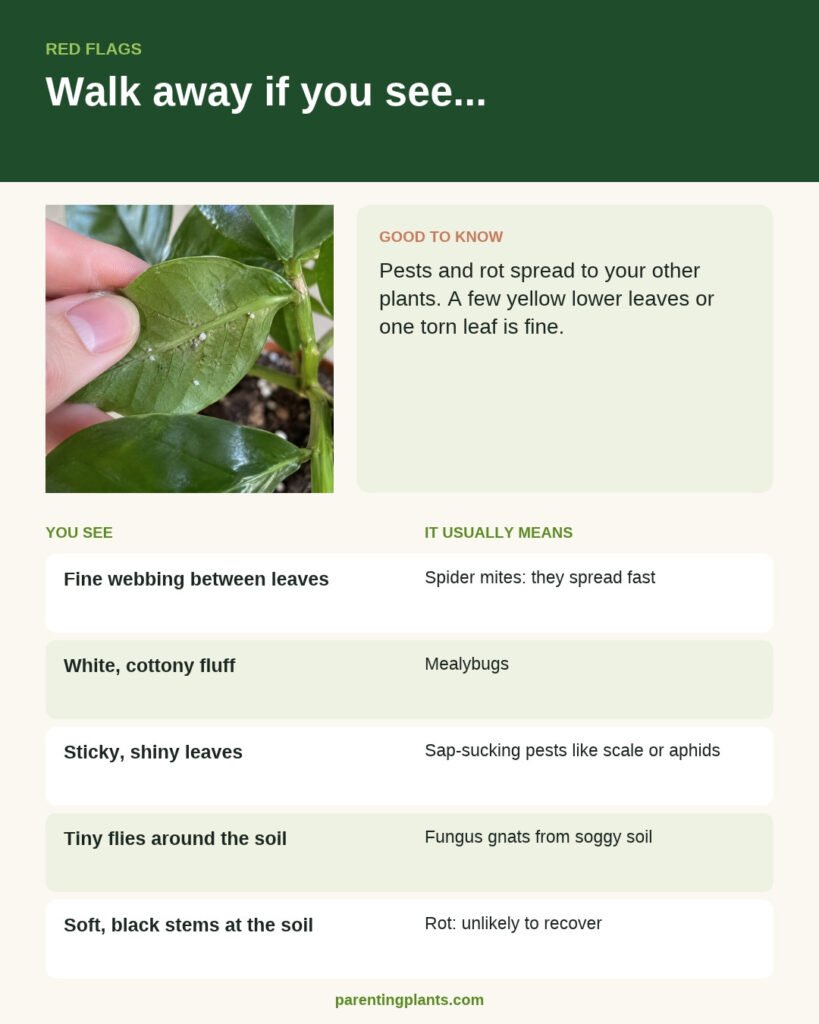
| You see | It usually means |
|---|---|
| Fine webbing between leaves | Spider mites, which spread fast to other plants |
| White cottony fluff | Mealybugs |
| Sticky, shiny leaves or furniture | Sap-sucking pests like scale, aphids or mealybugs |
| Tiny flies around the soil | Fungus gnats from soggy soil (fixable, but avoid if you can) |
| Lots of yellow or dropped leaves | Stress from overwatering, low light or cold |
| Soft, black stems at the soil | Rot. The plant is unlikely to recover |
| Painted, dyed or glued-on flowers | Decoration that hides the plant’s real condition |
A couple of yellow lower leaves or one torn leaf is normal, especially on big plants that have been shipped. What you’re avoiding is pests and rot, because they spread to your other plants and are the hardest to fix.
Is a discount or rescue plant worth it?
Discounted plants can be great value, as long as the problem is cosmetic, not contagious.
- Worth it: a few brown tips, a broken stem, a leggy plant you can prune, a thirsty plant that perks up with water, or a plant that has simply finished flowering.
- Skip it: any sign of pests, mushy stems, rotten roots or a sour smell. No discount is worth infesting your collection.
- Rescues need care: keep them well away from your other plants and follow our guide on how to revive a dying houseplant.
Buying houseplants online
Online shops offer far more choice, but you can’t check the plant first, so check the seller instead:
- Read recent reviews with photos of what customers actually received.
- Check the pot size and plant height, not just the photo. A “4-inch plant” means a 4-inch pot.
- Look for a live arrival guarantee and a clear refund policy.
- Avoid ordering in freezing or very hot weather unless the seller adds heat packs or holds orders.
- Unbox it the day it arrives, photograph any damage and contact the seller straight away.
Getting it home safely
The trip home can stress a plant more than you’d think, especially in cold weather. Extension services warn that even a short walk to the car in freezing weather can damage tropical leaves.
- In cold weather: ask the shop to wrap the plant in a paper sleeve or bag, and carry it in the warm car, not the cold trunk. Keep tropical plants away from temperatures below 50°F (10°C).
- In hot weather: never leave a plant in a parked car. It can cook in minutes.
- Wedge the pot in a box or footwell so it can’t tip over and snap stems.
- Go straight home rather than leaving the plant in the car while you run errands.
Once it’s home, the next two weeks matter most. Follow our guide to what to do in the first two weeks to help it settle in without shock.
Printable buying checklist
- I know how much light my spot gets
- The plant suits my light, my schedule and my pets
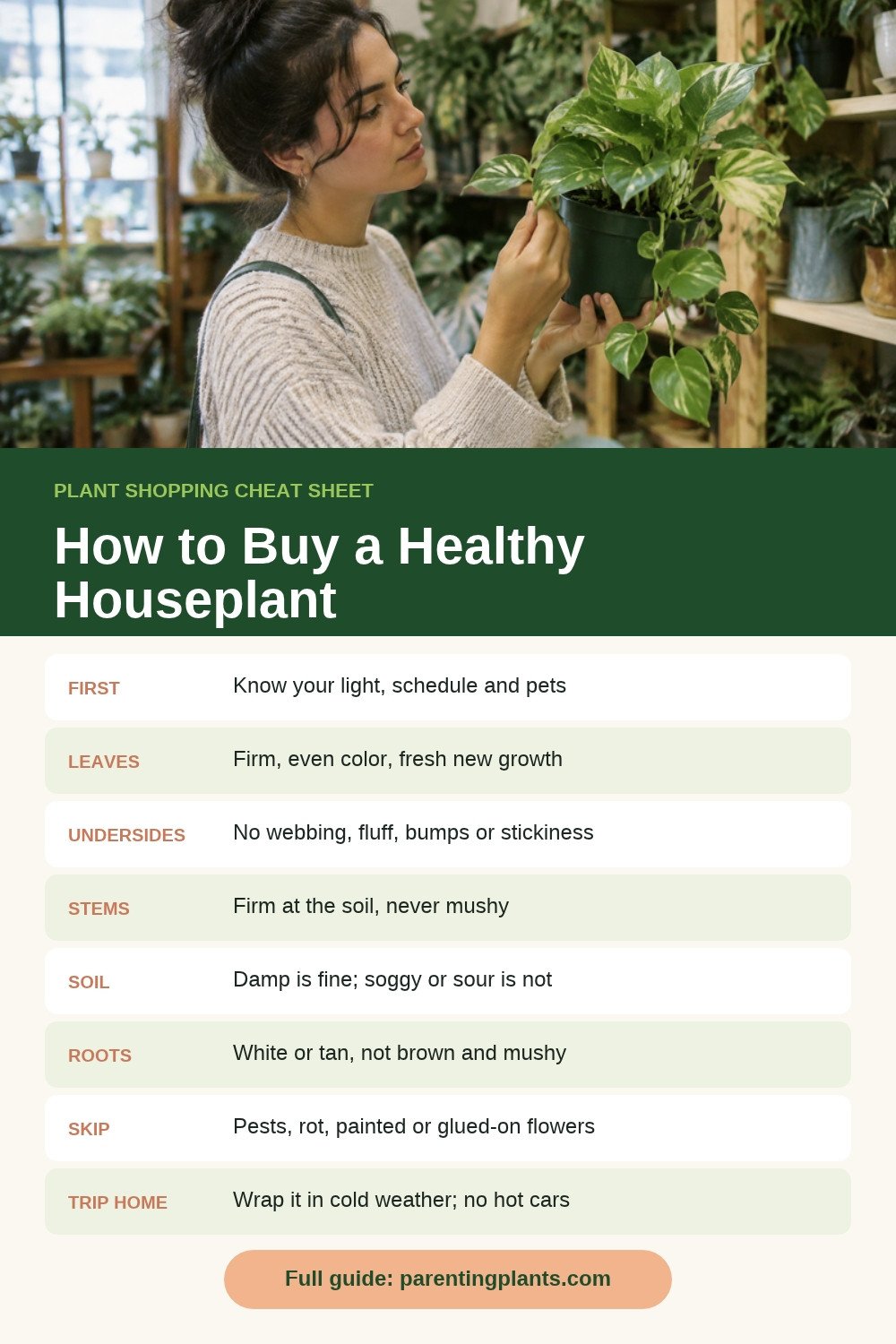
- Leaves are firm and evenly colored, with new growth
- No webbing, fluff, bumps or stickiness under leaves or at the joints
- Stems are firm at the soil line
- Soil is not soggy, moldy or smelly
- Roots are white or tan, not brown and mushy
- I have a plan to keep it warm and steady on the way home
Save this for later: pin the cheat sheet below to your Pinterest plant board, or pull it up on your phone in the shop.
Already brought home a plant with problems?
The Houseplant Rescue Guide matches 26 common plant problems to a clear photo, then gives you simple steps to fix each one and stop it coming back. No jargon, 50 pages, with printable checklists.
Buying houseplants FAQ
How do I know if a houseplant is healthy before buying?
Check for firm, evenly colored leaves, fresh new growth, firm stems, slightly moist (not soggy) soil and white or tan roots. Look under the leaves and at the joints for pests.
What are signs of pests on a new plant?
Webbing, white cotton-like fluff, small brown bumps on stems, sticky or shiny leaves, pale speckling and tiny insects flying from the soil.
Is it OK to buy houseplants from a supermarket?
Yes, but check them carefully. They are often kept in dim light with irregular watering, so look closely for pests, rot and soggy soil.
Should I buy a big plant or a small plant?
Smaller plants are cheaper and adapt to a new home more easily. Larger plants give instant impact but cost more and suffer more if they don’t like your conditions.
Is it bad if roots are coming out of the pot?
It means the plant is root-bound. Tough plants cope fine; just plan to repot in spring. Avoid plants whose roots are brown and mushy.
Should I repot a new plant right away?
Usually no. Let it settle for at least two weeks unless the soil is waterlogged or the roots are rotting.
Sources and further reading
Want to go deeper? These university extension and expert resources cover the same topic:
- Washington State University Extension: Houseplants (PNW Gardener’s Handbook)
- University of Georgia: Buy healthy plants from the nursery
- Penn State Extension: Preventing, diagnosing and correcting common houseplant problems
- Costa Farms: Preventing houseplant pests
Free printable
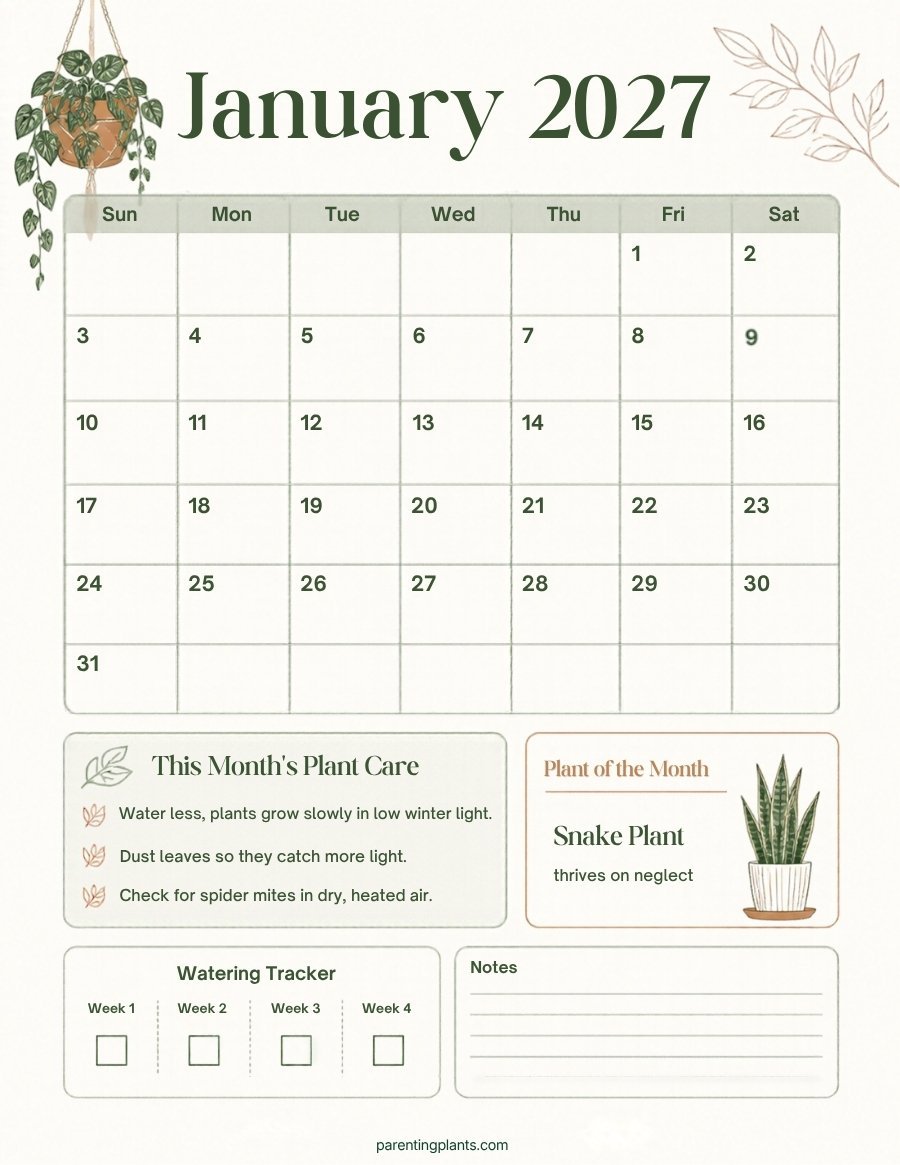
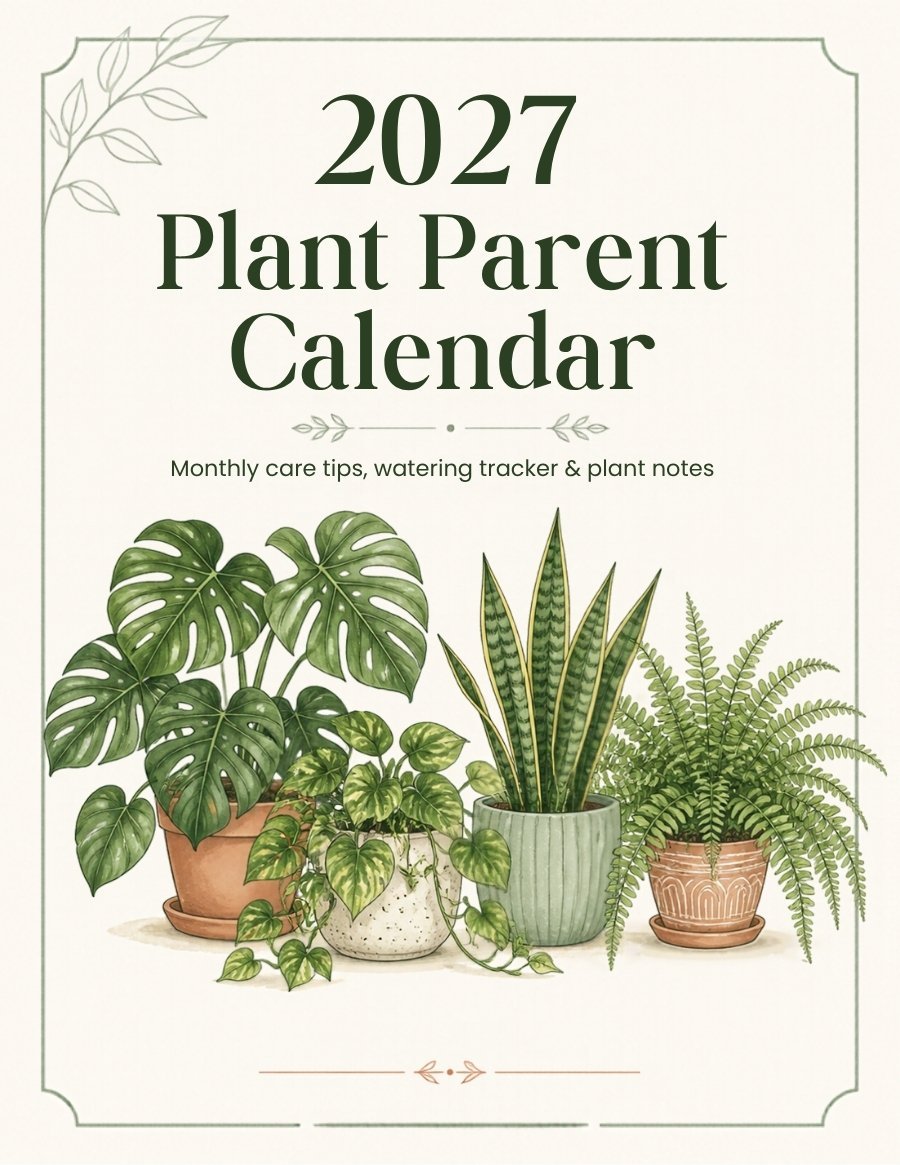
Get your free 2027 Plant Parent Calendar
14 beautiful printable pages to keep your houseplants happy all year. Enter your name and email and we'll send it straight to your inbox.
You're in!
Thank you, plant friend! 🪴
Your calendar is on its way to your inbox (check Promotions or Spam if you don't see it in a few minutes). You can also download it right now:
⬇ Download the 2027 calendar (PDF)