Special Offer: Use code ILOVEPLANTS for 25% off on all digital products! Shop Now →

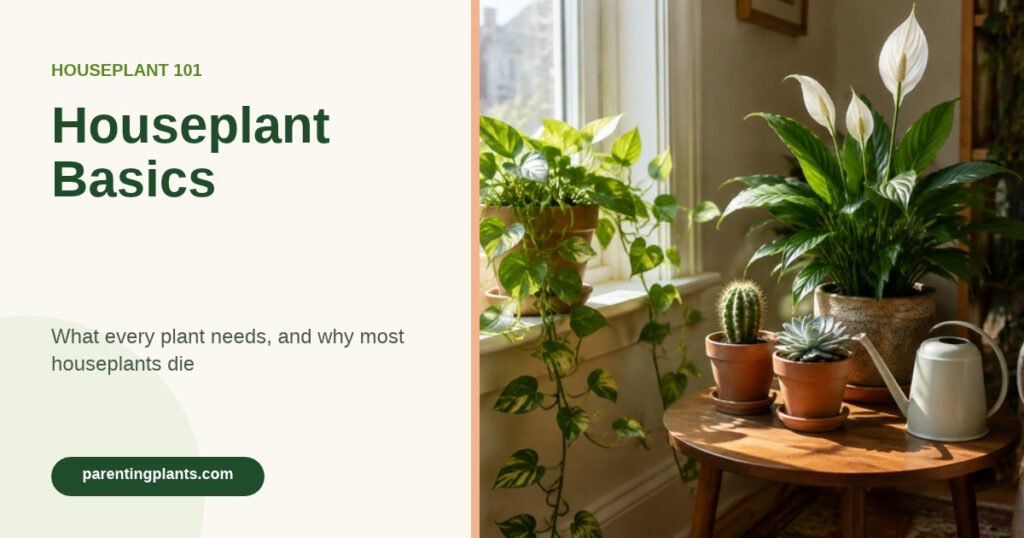
Every houseplant is a wild plant living somewhere it was never designed for: a box with walls, dry heated air and only one window. The good news is that plants are simple. They all need the same five things, and almost every plant that dies does so because one of those five things was missing or overdone. Understand them once, and every care guide you read afterwards will make sense.
Short answer: Every houseplant needs light, water, air at the roots, warmth and a little food. Most houseplants die from overwatering (roots suffocate in wet soil), the wrong light, pots with no drainage hole, cold drafts or heaters, and pests no one noticed. Match the plant to your light, water only when the soil tells you, and look at your plants once a week.
In this guide
The 5 things every houseplant needs
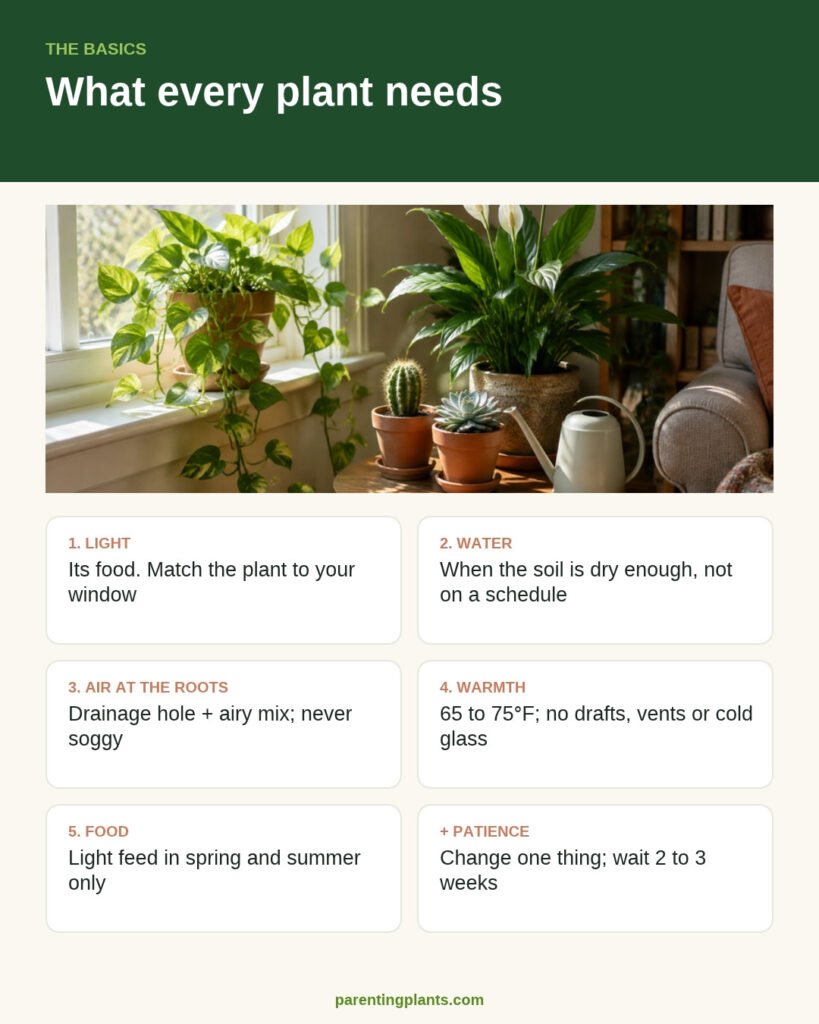
| Need | Why it matters | Most common mistake |
|---|---|---|
| Light | Plants make their own food from light | Putting a plant in a dark corner because it looks nice there |
| Water | Carries nutrients and keeps leaves firm | Watering on a schedule instead of checking the soil |
| Air at the roots | Roots breathe oxygen from the air pockets in soil | Soggy soil and pots with no drainage hole |
| Warmth | Most houseplants are tropical and dislike cold | Cold windows, drafty doors and blasting heaters |
| Food | Replaces nutrients used up from the potting mix | Feeding too much, or feeding in winter |
Notice what is not on the list: misting, talking to your plant, expensive gadgets or repotting into a giant pot. Get the five basics right and you’re ahead of most plant owners.
1. Light: the food factory
Light is a plant’s food. Through photosynthesis, leaves turn light, water and air into the sugars that fuel growth. No amount of watering or fertilizer can make up for too little light, which is why light is the first thing to get right.
- Indoor light is much weaker than it looks. A spot a few feet from a window can get only a fraction of the light right beside the glass.
- Most foliage plants want bright, indirect light: near a window, but out of hot direct sun.
- Succulents and cacti want direct sun for several hours a day.
- “Low-light” plants tolerate dim spots but still need some daylight. No plant lives in a windowless room without a grow light.
Quick light test: at midday, hold your hand a foot above where the plant will sit. A crisp, sharp shadow means bright light; a soft, fuzzy shadow means medium; barely any shadow means low light. Learn more in our light guide.
2 and 3. Water and air at the roots
Here’s the single most important idea in houseplant care: roots need air as much as water. Healthy soil is full of tiny air pockets. When you water, the water fills those pockets, then drains away and air moves back in. If the soil stays soggy, the roots can’t breathe, they start to rot, and the plant wilts and yellows even though it’s sitting in water.
- Water when the plant needs it, not on a schedule. Push a finger into the soil; most tropical plants are ready when the top inch or two is dry.
- Water thoroughly, until water runs out of the drainage holes, then empty the saucer.
- Always use a pot with a drainage hole. Without one, water collects at the bottom and roots rot.
- Use a light, airy potting mix, never garden soil, which packs down hard in pots.
A plant that’s drooping in wet soil is drowning, not thirsty. A plant drooping in dry, light soil needs a drink. Our watering and potting soil guides go deeper.
4. Warmth (and a little humidity)
Most popular houseplants come from tropical forests, so they’re happiest at the temperatures people like: about 65 to 75°F (18 to 24°C) during the day and a little cooler at night. Many are damaged below about 50°F (10°C).
- Keep plants away from heaters, radiators and air-conditioning vents.
- In winter, move them back from cold window glass and drafty doors.
- Avoid sudden changes, such as a cold car ride or moving from a warm room to a cold porch.
- Most plants cope with normal home humidity. Ferns, calatheas and other thin-leaved plants want more, especially when the heating is on.
More in our temperature guide and humidity guide.
5. Food
Potting mix holds only a limited supply of nutrients, and each watering washes some away. A light feed during the growing season keeps leaves green and new growth coming. The key word is light: too much fertilizer burns roots and browns leaf tips.
- Feed with a diluted houseplant fertilizer every 4 to 8 weeks in spring and summer.
- Don’t feed in winter, when growth slows, or in the first month after buying or repotting.
- Fertilizer is a vitamin, not a cure. It can’t fix low light or overwatering.
Details in our fertilizing guide.
Know your plant type
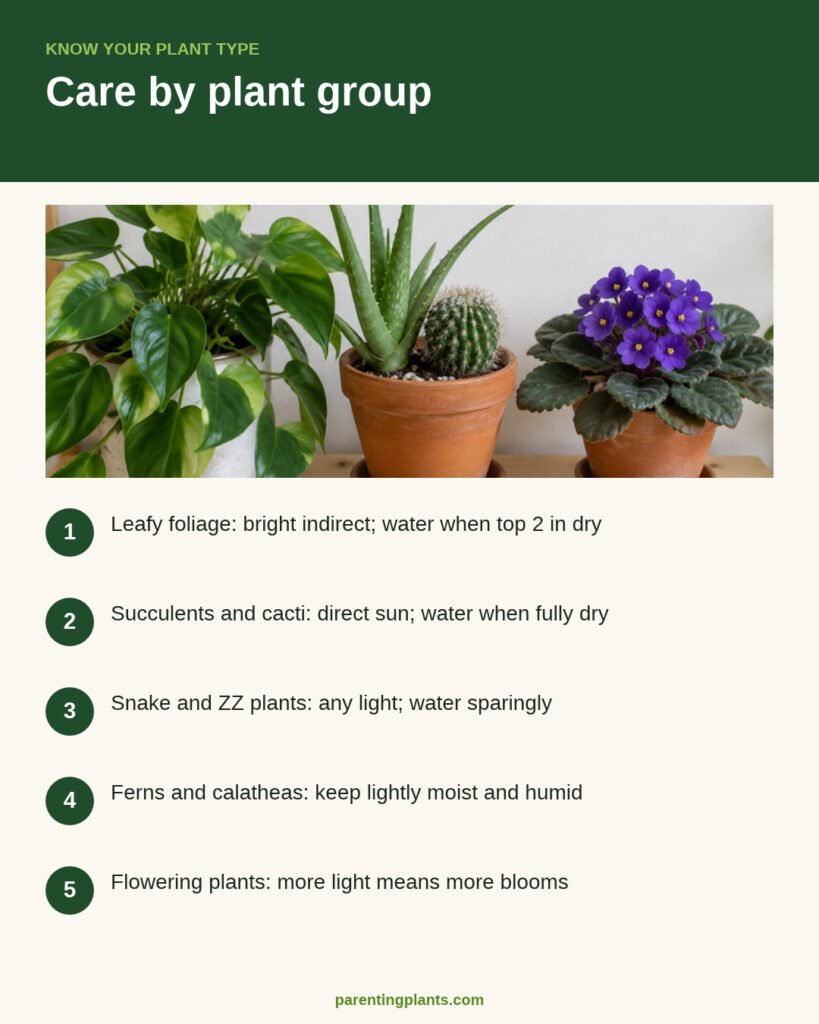
You don’t need to memorize hundreds of plants. Most houseplants fall into a few groups that share the same basic care. Find your plant’s group, then fine-tune with its own care guide.
| Type | Examples | Light | Water |
|---|---|---|---|
| Leafy tropical foliage | Pothos, philodendron, monstera, rubber plant | Bright, indirect | When the top 1 to 2 inches are dry |
| Succulents and cacti | Aloe, jade, echeveria, most cacti | Direct sun, several hours | Only when the soil is completely dry |
| Tough architectural plants | Snake plant, ZZ plant | Low to bright | Sparingly; let the soil dry out |
| Moisture and humidity lovers | Ferns, calatheas, peace lily | Medium, indirect | Keep lightly moist; never bone dry |
| Flowering plants | Orchids, African violets, poinsettia | Bright, indirect (more light = more flowers) | Varies; check the plant’s guide |
Lost the label? Snap a photo and use a plant identification app, then look up its care guide. Knowing the name is half the battle. Our list of 33 popular houseplant types covers the most common ones.
Why most houseplants die
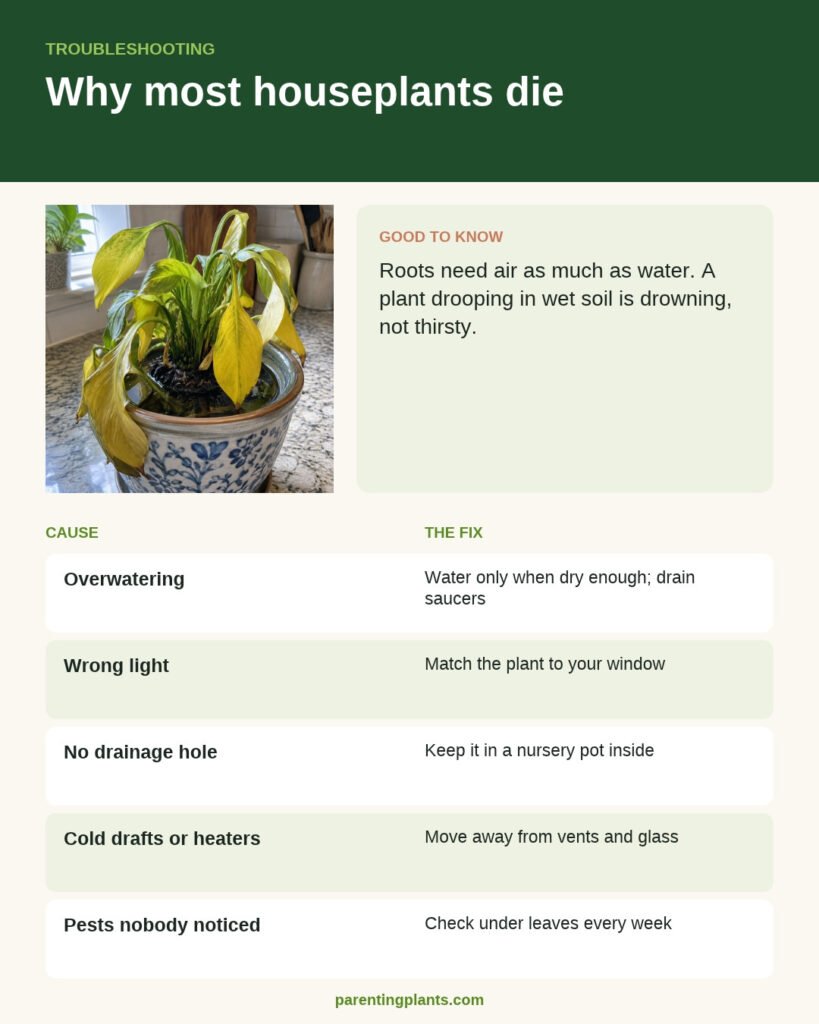
Houseplants rarely die suddenly or mysteriously. They nearly always die from one of these common, fixable problems:
| Cause | Warning signs | The fix |
|---|---|---|
| Overwatering | Yellow, limp leaves; wet soil; rotten smell; fungus gnats | Water only when the soil is dry enough; use a drainage hole. See root rot |
| Wrong light | Leggy stems and small leaves (too little), or bleached, scorched patches (too much) | Move it to light that matches its type |
| No drainage | Soil never dries; plant slowly declines | Keep it in a nursery pot inside the decorative pot |
| Underwatering | Crispy edges; soil pulling away from the pot; very light pot | Soak thoroughly; check more often in summer |
| Cold or heat | Sudden leaf drop, dark or mushy patches | Keep away from drafts, vents and cold glass |
| Pests | Webbing, white fluff, sticky leaves, speckling | Check leaves weekly; isolate and treat. See houseplant pests |
| Too much love | Constant moving, repotting, feeding or fussing | Pick a good spot and let it settle |
If your plant is already struggling, our guide on reviving a dying houseplant walks you through saving it step by step.
What’s normal (so you don’t panic)
New plant parents often think a plant is dying when it’s simply being a plant. These are usually normal:
- An old lower leaf yellows and drops now and then, as new leaves grow at the top.
- A new plant drops a few leaves in its first weeks while it adjusts to your home. See the first two weeks.
- Little or no growth in winter. Shorter days slow most plants down.
- Leaning toward the window. Rotate the pot a quarter turn each week.
- Flowers fade. Many flowering plants bloom for a season and then rest.
- Prayer plants and calatheas fold their leaves at night. It’s a natural daily rhythm.
6 golden rules for beginners
- Choose plants for the light you have, not the light you wish you had
- Check the soil with your finger before every watering
- Use pots with drainage holes and empty saucers after watering
- Keep plants away from heaters, vents and cold drafts
- Look closely at every plant once a week, including under the leaves
- Change one thing at a time and give it 2 to 3 weeks
Turn these into a habit with our 10-minute weekly care routine.
Your Houseplant 101 path
Ready for the next step? Work through these in order and you’ll go from first plant to confident plant parent:
- Read your light: work out what light you have
- Pick an easy beginner plant, low-light picks and pet-safe plants
- Buy a healthy plant
- Settle it in during the first two weeks
- Follow a simple weekly routine
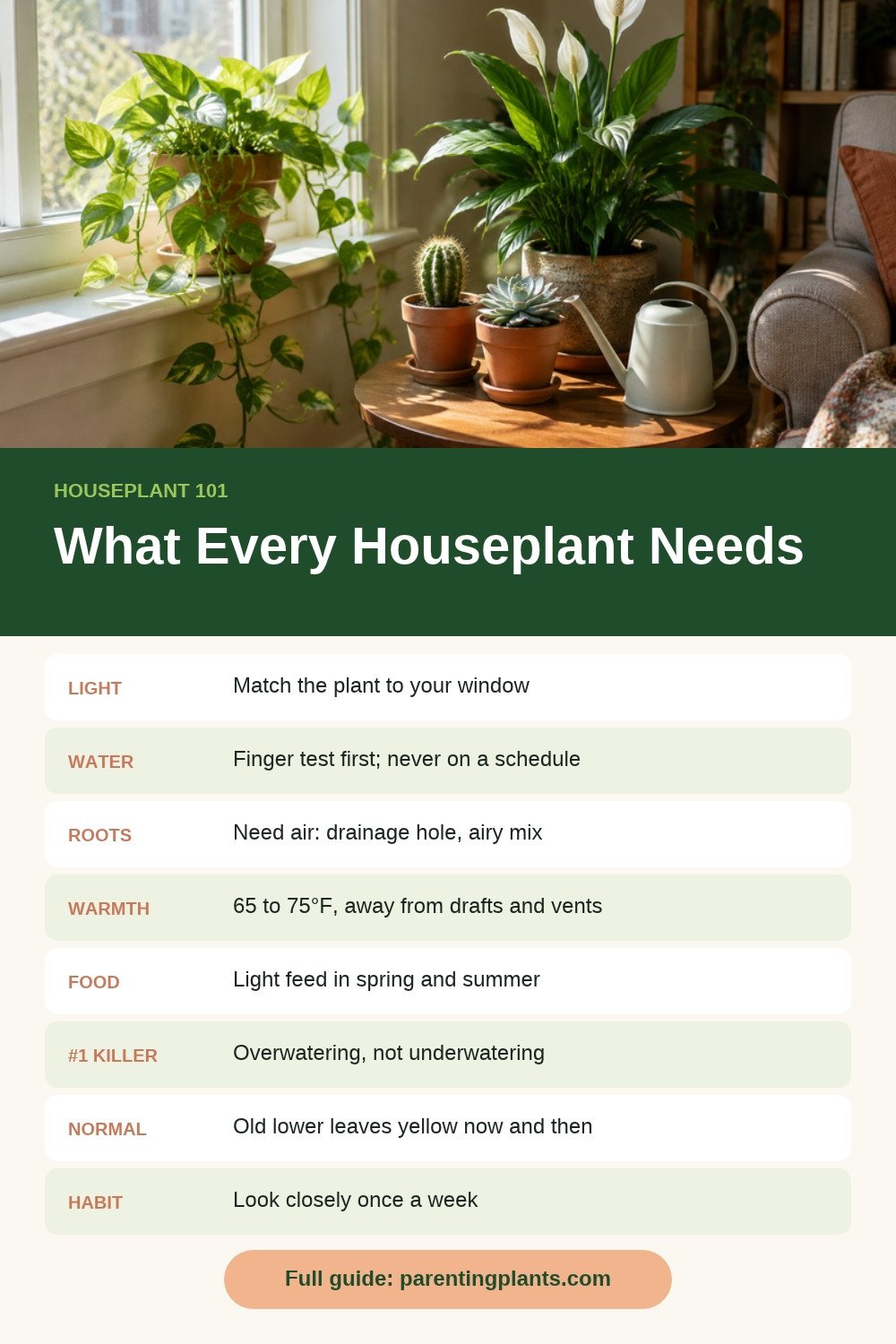
Save this for later: pin the cheat sheet below to your Pinterest plant board.
Is one of your plants already struggling?
The Houseplant Rescue Guide matches 26 common plant problems to a clear photo, then gives you simple steps to fix each one and stop it coming back. No jargon, 50 pages, with printable checklists.
Houseplant basics FAQ
What do houseplants need to survive?
Five things: light, water, air at the roots (well-drained soil), warmth, and a little food during the growing season.
What is the most common reason houseplants die?
Overwatering. Constantly wet soil drives the air out, so roots suffocate and rot. Water only when the soil is dry enough for that plant and use pots with drainage holes.
How do I know if my plant is overwatered or underwatered?
Feel the soil. Drooping or yellow leaves with wet soil usually mean overwatering; drooping, crispy leaves with dry, light soil mean the plant is thirsty.
How often should I water houseplants?
There’s no fixed schedule. Check the soil every week or so and water when the top inch or two is dry for most tropical plants, or when it’s completely dry for succulents.
Do houseplants need sunlight?
Yes. All plants need light to make food. Most leafy houseplants prefer bright, indirect light, while succulents and cacti need several hours of direct sun.
What is the easiest houseplant for beginners?
Pothos, snake plant, ZZ plant and spider plant are among the most forgiving. They tolerate a range of light and some missed waterings.
Sources and further reading
Want to go deeper? These university extension and expert resources cover the same topic:
- University of Illinois Extension: Houseplant care
- Oklahoma State University Extension: Houseplant care
- Iowa State University Extension: How to care for houseplants
- Royal Horticultural Society: Houseplant 101