Special Offer: Use code ILOVEPLANTS for 25% off on all digital products! Shop Now →

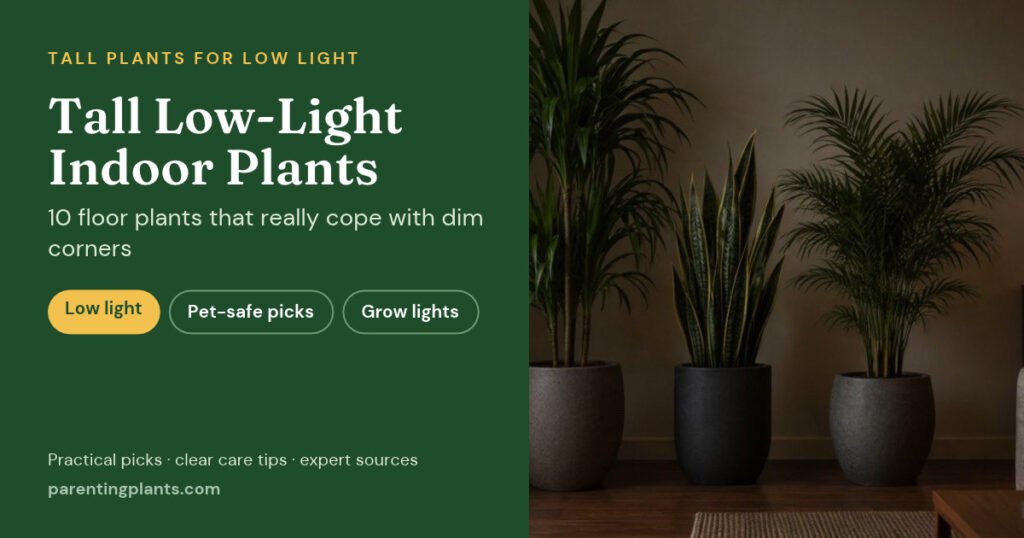
A tall plant can transform an empty corner, but corners are usually the darkest part of a room. That is the problem: most big, dramatic houseplants, such as fiddle leaf figs and birds of paradise, need bright light to stay healthy. Put them in a dim corner and they drop leaves within weeks.
This guide is honest about what works. We list the 10 tall plants that genuinely cope with low light, how tall each one gets indoors, which are safe for pets, and the tricks that help a big plant succeed in a shady spot.
Short answer: The best tall plants for low light are the Kentia palm, dracaena (‘Janet Craig’ and corn plant), tall snake plants, lady palm and ZZ plant. Kentia and lady palms are also non-toxic to cats and dogs. Buy a plant that is already the height you want, because tall plants grow very slowly in low light, and avoid fiddle leaf fig, bird of paradise and most ficus for dim corners.
In this guide
Tall low-light plants at a glance
Heights are typical for indoor plants in a home. Growth in low light is slow, so the size you buy is close to the size you will have for several years.
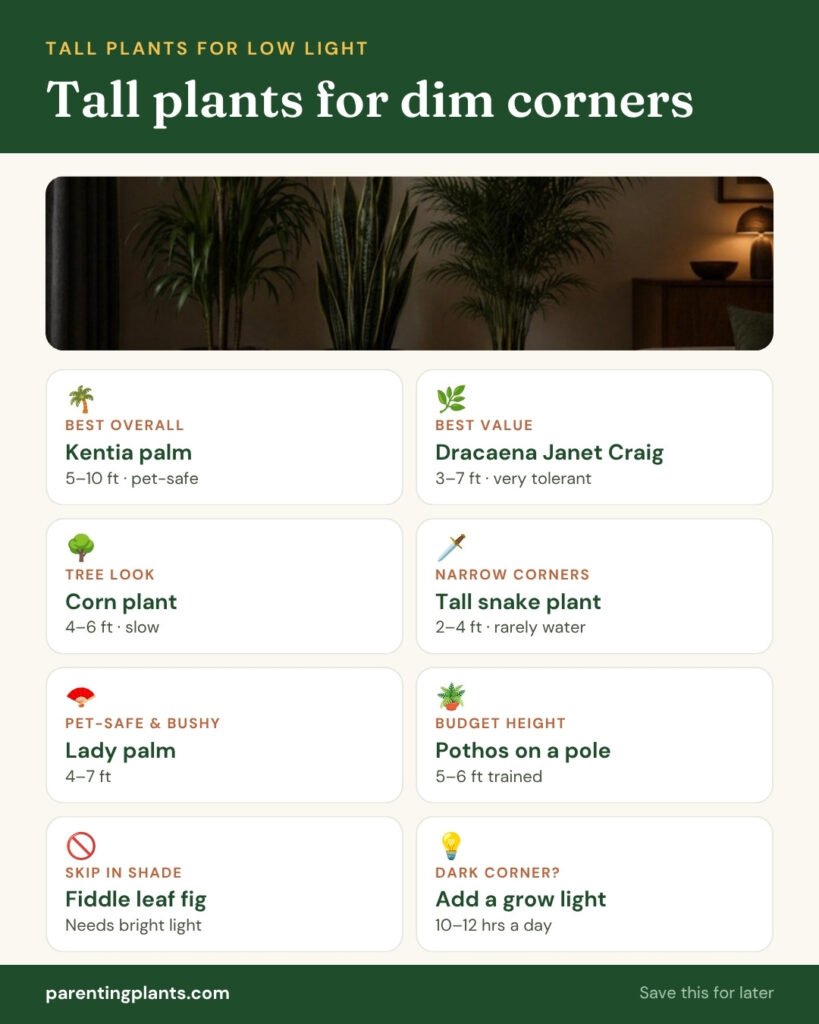
| Plant | Height indoors | Lowest light | Growth in low light | Pets |
|---|---|---|---|---|
| Kentia palm | 5–10 ft | Low to medium | Very slow | Safe |
| Dracaena (Janet Craig, Lisa) | 3–7 ft | Low | Slow | Toxic |
| Corn plant | 4–6 ft | Low to medium | Slow | Toxic |
| Snake plant (tall types) | 2–4 ft | Low | Very slow | Toxic |
| Lady palm | 4–7 ft | Low to medium | Very slow | Safe |
| ZZ plant | 2–3 ft | Low | Slow | Toxic |
| Parlor palm | 3–5 ft | Low to medium | Slow | Safe |
| Cast iron plant | 2–3 ft | Low | Very slow | Safe |
| Pothos or philodendron on a pole | 4–6 ft | Low to medium | Moderate | Toxic |
| Dumb cane (Dieffenbachia) | 3–5 ft | Medium | Moderate | Toxic |
Free Plant Care Tracker: Never forget a watering again. Get it free →
The honest truth about tall plants and low light
Big plants need more energy to support all those leaves. In low light they cannot make enough, so they hold still at best and slowly shrink at worst. That does not mean you cannot have a tall plant in a dim room, but it changes how you shop:
- Buy the height you want. A 2-foot Kentia palm will take many years to reach 6 feet in a shady corner. Paying more for a mature plant is worth it.
- Choose naturally slow, shade-adapted plants. Palms from forest understories, dracaenas and snake plants evolved in shade.
- Count the pot. A tall planter or plant stand adds 1 to 2 feet of height and lifts leaves closer to the window light.
- Accept slow growth. A tall plant in low light that keeps its leaves and looks healthy is a success.
Skip these for dim corners: fiddle leaf fig, bird of paradise, rubber plant, money tree, monstera and yucca all need medium to bright light. In a low-light corner they drop leaves, lean and stretch. They are great plants, just not for this job. See our fiddle leaf fig and bird of paradise guides if you have a bright spot instead.
The 10 best tall plants for low light
1. Kentia palm (Howea forsteriana)
Light: Low to medium, indirect · Water: When the top 1 to 2 inches are dry · Size: 5 to 10 ft indoors · Pets: Non-toxic to cats and dogs (ASPCA)
The classic tall palm for shade, and our top pick. Kentia palms have elegant, arching fronds and were grown in dim Victorian hotel lobbies for a reason: they tolerate low light far better than areca or majesty palms. They are also non-toxic to cats and dogs.
The catch is price and patience. Kentias grow very slowly, often producing only one or two new fronds a year, so nurseries charge more for tall specimens. Water when the top inch or two is dry, keep them away from heaters, and wipe fronds to deter spider mites.
2. Dracaena ‘Janet Craig’ and ‘Lisa’ (Dracaena fragrans)
Light: Low to medium, indirect · Water: When the top 1 to 2 inches are dry · Size: 3 to 7 ft · Pets: Toxic to cats and dogs (ASPCA)
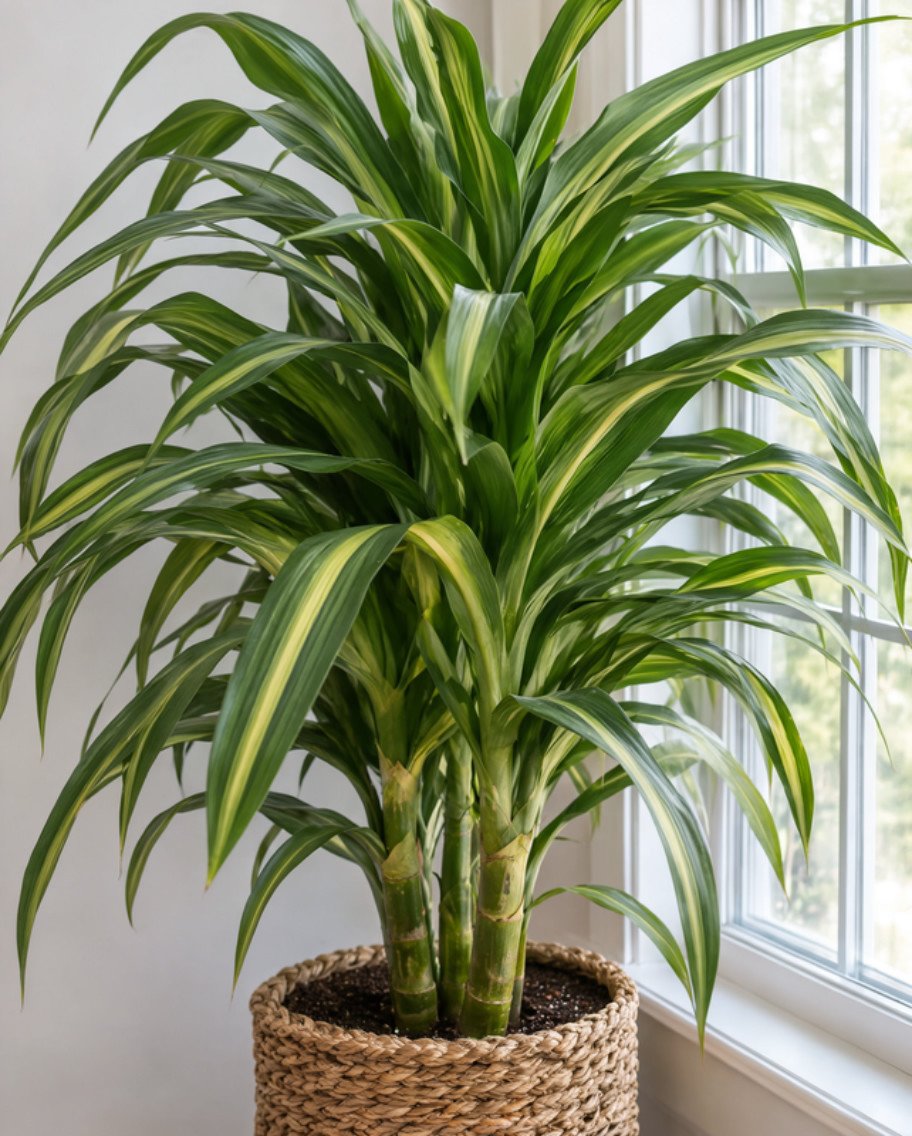
Dark green dracaenas are the most reliable tall plants for dim offices and corners. ‘Janet Craig’ has glossy, deep green strap leaves; ‘Lisa’ is similar but neater. They are often sold as multi-cane plants, giving instant height. Brown tips usually come from fluoride or salts in tap water, so flush the soil every few months.
➜ Full care: Dracaena ‘Janet Craig’ and ‘Lisa’ care guide
3. Corn plant (Dracaena fragrans ‘Massangeana’)
Light: Low to medium, indirect · Water: When the top 1 to 2 inches are dry · Size: 4 to 6 ft · Pets: Toxic to cats and dogs (ASPCA)
A tree-like plant with thick canes topped by tufts of yellow-striped leaves. It tolerates low light, though the yellow stripe fades in very dark spots. It is a good choice when you want a “small tree” look without the light needs of a ficus.
➜ Full care: Corn plant care guide
4. Tall snake plant varieties (Dracaena trifasciata ‘Laurentii’, ‘Zeylanica’, ‘Black Coral’)
Light: Low to bright, indirect · Water: Every 2 to 4 weeks · Size: 2 to 4 ft · Pets: Toxic to cats and dogs (ASPCA)
Snake plants give you vertical height in very little floor space, which makes them perfect for narrow corners and beside doors. Look for tall varieties such as ‘Laurentii’ (yellow edges), ‘Zeylanica’ or ‘Black Coral’, and stand them in a tall planter to add another foot. They grow very slowly in low light and need very little water.
➜ Full care: Tall snake plant varieties care guide
5. Lady palm (Rhapis excelsa)
Light: Low to medium, indirect · Water: When the top inch is dry · Size: 4 to 7 ft · Pets: Non-toxic to cats and dogs (ASPCA)
A bushy palm with fan-shaped leaves on bamboo-like stems. Lady palm is one of the most shade-tolerant palms you can grow indoors and is non-toxic to pets. Like the Kentia, it is slow and pricey, but it lives for decades. Keep the soil evenly moist and use filtered water if leaf tips brown.
6. ZZ plant (Zamioculcas zamiifolia)
Light: Low to bright, indirect · Water: Every 2 to 4 weeks · Size: 2 to 3 ft (taller on a stand) · Pets: Toxic to cats and dogs (ASPCA)
Mature ZZ plants reach about 3 feet, which is “tall” for a floor pot, and they handle the darkest corners. Put a large ZZ on a plant stand to raise it to eye level. It is the lowest-maintenance plant on this list.
➜ Full care: ZZ plant care guide
7. Parlor palm (Chamaedorea elegans)
Light: Low to medium, indirect · Water: When the top inch is dry · Size: 3 to 5 ft over time · Pets: Non-toxic to cats and dogs (ASPCA)
Usually sold small, but parlor palms slowly reach 3 to 5 feet indoors. Buy a large pot with several plants for a fuller look. It is affordable, pet-safe and very tolerant of low light.
➜ Full care: Parlor palm care guide
8. Cast iron plant (Aspidistra elatior)
Light: Low to medium, indirect · Water: When the top 2 inches are dry · Size: 2 to 3 ft · Pets: Non-toxic to cats and dogs (ASPCA)
Not truly tall, but its long, upright leaves reach 2 to 3 feet, and on a stand it fills a corner well. It is the toughest pet-safe plant for deep shade, cool rooms and hallways.
➜ Full care: Cast iron plant care guide
9. Pothos or philodendron on a moss pole (Epipremnum and Philodendron)
Light: Low to medium, indirect · Water: When the top 2 inches are dry · Size: 4 to 6 ft trained upright · Pets: Toxic to cats and dogs (ASPCA)
Here is a trick many people miss: trailing plants become tall plants when you give them something to climb. A pothos or heartleaf philodendron trained up a moss pole or coir pole grows larger leaves and can reach 5 to 6 feet, and it grows faster in low light than any palm. It is the most affordable way to get height in a dim room. See our philodendron guide too.
➜ Full care: Pothos care guide
10. Dumb cane (Dieffenbachia)
Light: Medium, indirect (copes with lower light) · Water: When the top inch is dry · Size: 3 to 5 ft · Pets: Toxic to cats and dogs (ASPCA)
Dieffenbachia has big, patterned leaves and grows fairly quickly. It manages lower light than many large-leaved plants, though it leans and loses lower leaves if too dark. Its sap is strongly irritating: wear gloves when pruning and keep it well away from pets and children.
Tall plants that are safe for pets
If you have cats or dogs, your best tall options for low light are the Kentia palm, lady palm and parlor palm, plus the shorter cast iron plant. All are listed as non-toxic by the ASPCA. Dogs knocking over or digging in large pots is a separate risk, so choose heavy, wide-based planters. More ideas: dog-safe houseplants and cat-safe houseplants.
How to help a tall plant thrive in low light
- Get it as close to the window as you can. Light falls off fast: a plant 3 feet from a window can get several times more light than one 8 feet away.
- Raise it up. A plant stand or tall pot lifts the leaves into brighter light.
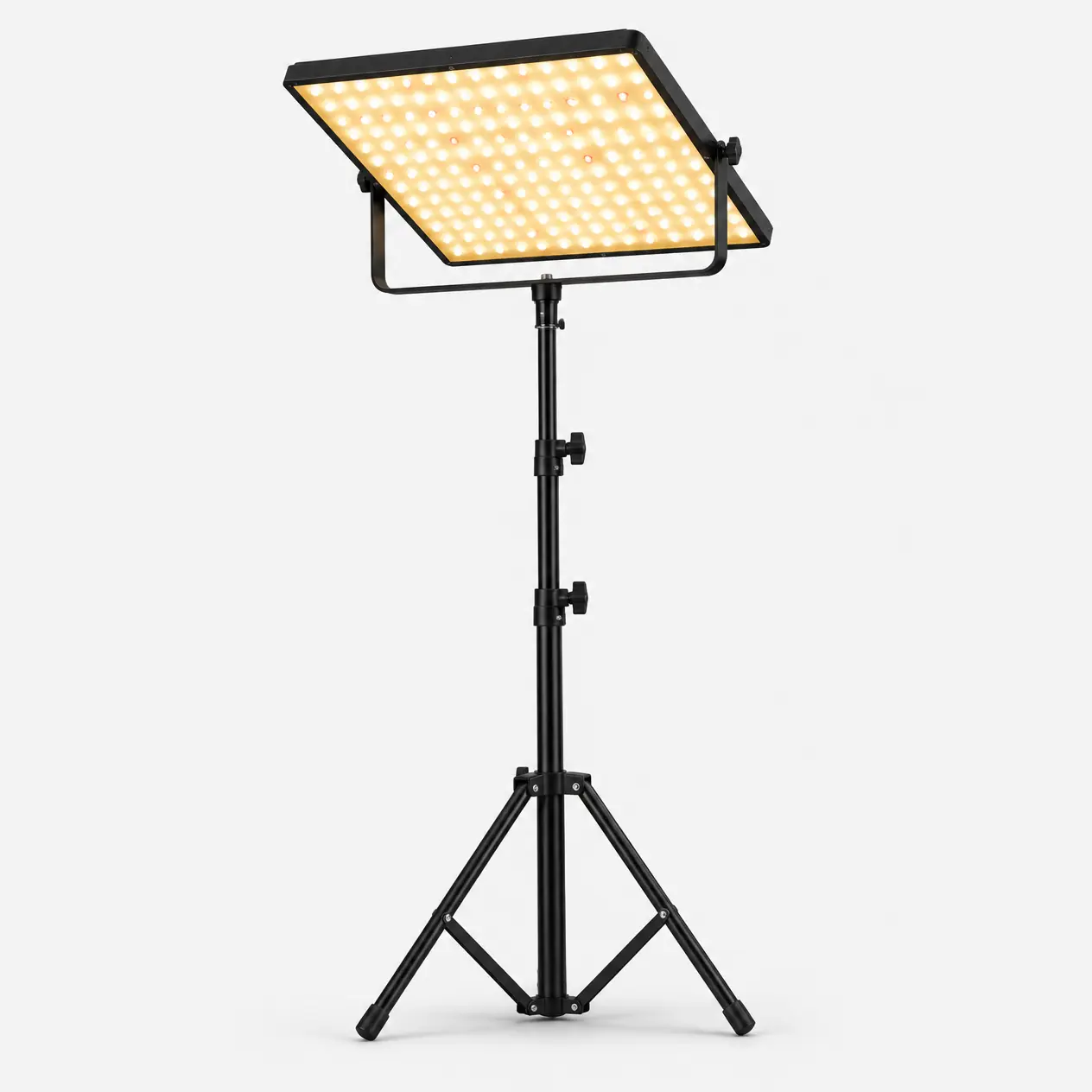
- Use a grow light. A floor-standing LED grow light or a full-spectrum bulb in a nearby floor lamp, on 10 to 12 hours a day, makes a dim corner viable for almost any plant.
- Water less. Big pots in low light dry very slowly. Check the soil several inches down with a finger or wooden skewer before watering. Our watering guide explains how.
- Rotate monthly so the plant does not lean toward the window.
- Dust the leaves. Big leaves collect a lot of dust, which blocks light. Wipe or shower them every month or two.
- Feed very little. Half-strength fertilizer a few times in spring and summer is plenty.
Buying tips for tall plants
- Check the listed height. Online sellers often include the pot in the height. Ask for the plant height alone.
- Look at the roots. Healthy roots are firm and pale; a sour smell means rot.
- Choose full plants. Several stems in one pot look better than one tall, sparse stem, and you cannot easily make a slow plant bushier later.
- Repot carefully. Tall plants in low light rarely need repotting; every 2 to 3 years into a pot just one size bigger is enough. See our repotting guide.
- Give it two weeks to settle. Some leaf yellowing after a move is normal. Our guide to a new houseplant’s first two weeks explains what to expect.
Common problems with tall plants in low light
| What you see | Likely cause | Fix |
|---|---|---|
| Lower leaves yellow and drop | Not enough light, or overwatering | Move closer to light; let soil dry more |
| Plant leans toward the window | Uneven light | Rotate a quarter turn every 2 to 4 weeks |
| Brown leaf tips (dracaena, palms) | Dry air, fluoride or salt build-up | Use filtered water; flush the soil |
| Fine webbing, speckled fronds | Spider mites (common on palms) | Shower the plant; treat with insecticidal soap |
| Soft, dark stem base | Root rot from overwatering | Check roots; see our root rot guide |
Quick checklist
- Choose shade-adapted plants: Kentia palm, dracaena, snake plant, ZZ
- Buy the height you want; growth in low light is slow
- Raise plants on a stand and keep them as close to a window as possible
- Water only when the soil is dry several inches down
- Rotate monthly and dust leaves
- Add a grow light for corners far from windows
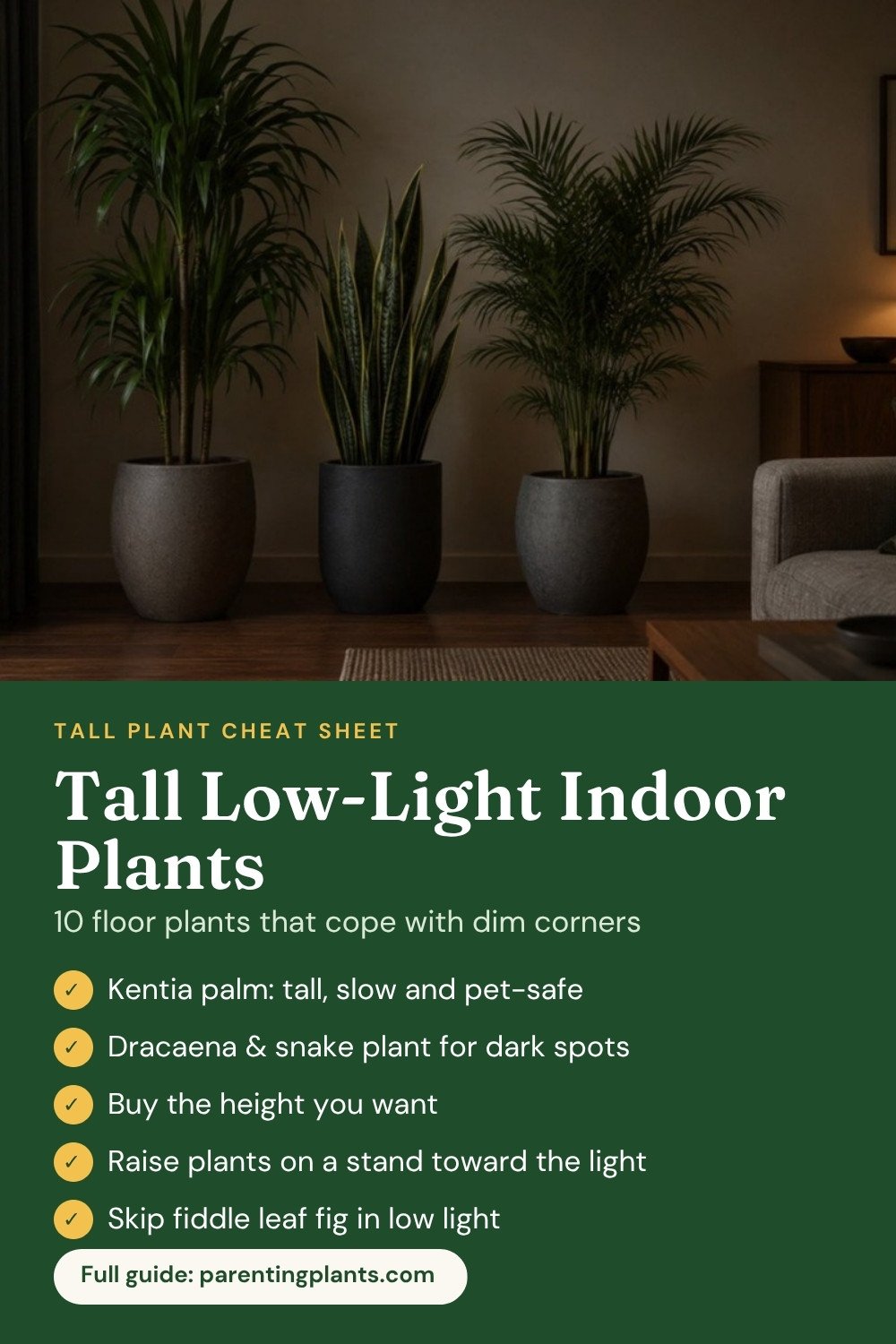
Save this for later: pin the cheat sheet below to your Pinterest plant board.
Want every plant’s care on one page?
The Houseplant Care Cards give you 30 printable one-page guides for popular houseplants: light, water, pet safety and quick fixes at a glance.
Tall low-light plants FAQ
What is the best tall plant for a dark corner?
The Kentia palm is the best large plant for low light and is safe for pets. Dark green dracaenas such as ‘Janet Craig’ are a more affordable alternative but are toxic to pets.
Can a fiddle leaf fig grow in low light?
No. Fiddle leaf figs need bright, indirect light and some direct sun. In a dim corner they drop leaves and stop growing.
Which tall indoor plants are safe for cats and dogs?
Kentia palm, lady palm and parlor palm are tall, low-light plants listed as non-toxic by the ASPCA.
How can I make a tall plant grow faster in low light?
Mainly by adding light. Move it closer to a window, raise it on a stand, or use an LED grow light for 10 to 12 hours a day. Fertilizer does not make up for low light.
How do I get a tall plant cheaply for a dark room?
Train a pothos or heartleaf philodendron up a moss pole. It grows faster than palms in low light and can reach 5 to 6 feet.
How often should I water a big plant in low light?
Only when the soil is dry a few inches down, which may be every 2 to 4 weeks. Large pots in dim rooms dry slowly, so overwatering is the main risk.
Sources and further reading
This guide was written by Manik at Parenting Plants and checked against the expert and university resources below. Read how we research and update our guides in our editorial guidelines.
- NC State Extension: Kentia palm (Howea forsteriana)
- NC State Extension: Lady palm (Rhapis excelsa)
- UF/IFAS Extension: Howea forsteriana: Kentia palm
- Penn State Extension: Palms as houseplants
- University of Florida IFAS Extension: Interior plants: selection and care
- ASPCA: Toxic and non-toxic plants list
Looking for a specific plant? Browse all our houseplant care guides A to Z.
Free tracker
Get the free Plant Care Tracker
A ready-made plant care tracker for Google Sheets and Notion that shows exactly which plants need water today, with 90 houseplants built in.
You're in!
Check your inbox, plant friend! 📩
Your free Plant Care Tracker is on its way. We've emailed you both versions, Google Sheets and Notion, plus a bonus printable 2027 plant calendar. It usually arrives within a few minutes.
Can't find it? Check your Promotions or Spam folder, and add manik@parentingplants.com to your contacts so you never miss a plant tip.